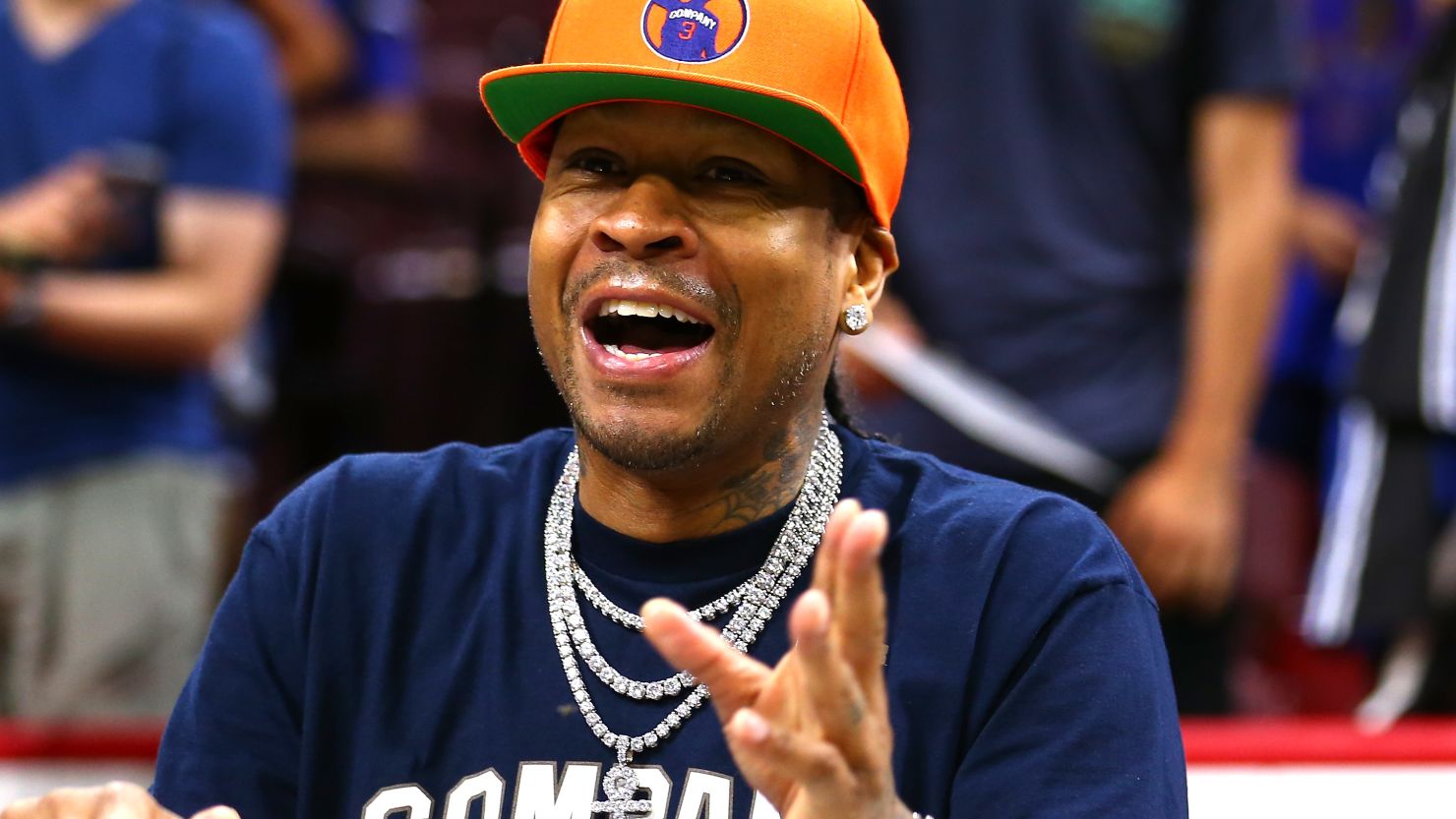
During his athletic prime between 2000 and 2005, Allen Iverson’s net worth was estimated to be between $50 million and $100 million. This valuation was driven by his $154.5 million in career NBA salary and a landmark lifetime endorsement deal with Reebok, which continues to provide him financial security today.
Allen Iverson, known globally as "The Answer," was more than just a basketball player; he was a cultural phenomenon who redefined the relationship between the NBA and hip-hop culture. While his on-court performance earned him an MVP trophy and eleven All-Star selections, his off-court financial life was equally complex. To understand his net worth in his prime, one must look past the total career earnings and examine the specific cash flows, endorsement structures, and lifestyle expenditures that defined his peak years.
The Financial Architecture of Iverson’s NBA Contracts
Allen Iverson's "prime" is generally defined by his tenure with the Philadelphia 76ers, specifically from his 1996 debut through his 2001 MVP season and ending around his trade to the Denver Nuggets in 2006. During this decade, the NBA salary cap was significantly lower than it is in 2026, yet Iverson was consistently one of the highest-paid athletes in the world.
The Rookie Scale and Early Extensions
Entering the league as the #1 overall pick in 1996, Iverson signed a standard rookie contract. However, it was his first major extension that signaled his entry into the financial elite. In 1999, he signed a six-year, $70.9 million contract extension with the 76ers. By the 2001-2002 season—immediately following his Finals appearance—he was earning roughly $11.25 million annually in base salary alone.
The Peak Salary Years
As the salary cap rose, so did Iverson’s take-home pay. During the mid-2000s, his annual salary crossed the $15 million threshold. In the 2004-2005 season, his salary reached $14.6 million, and by the time he was traded to Denver, he was earning over $17 million per year.
According to historical data from Spotrac, his total career earnings from NBA salaries alone totaled approximately $154,494,445. In his prime years, these salary checks were the foundation of a net worth that was bolstered by aggressive marketing.
The Reebok Lifetime Deal: A Financial Safety Net
If his NBA salary was the foundation, his partnership with Reebok was the skyscraper built upon it. In 2001, following his MVP season, Reebok realized that Iverson was their most valuable asset in the fight against Nike’s dominance. They signed him to a "lifetime" endorsement deal that is often cited as one of the most unique structures in sports history.
The Annual Stipend
Unlike many modern deals that are heavily back-loaded or performance-based, Iverson’s Reebok deal provided immediate and consistent liquidity. The agreement pays him an estimated $800,000 per year for life. During his prime, this was essentially "passive income" that sat on top of his $15M+ NBA salary, ensuring that even if he didn't play a single game, his cash flow remained in the top 1% of all earners globally.
The $32 Million Trust Fund
The most famous component of the Reebok deal is the deferred trust fund. Reebok set aside $32 million in a rainy-day fund that Iverson cannot access until he turns 55. As we stand in 2026, Iverson is now only four years away from accessing this lump sum (set for 2030). During his prime, this was a "hidden asset" that technically contributed to his net worth but was not liquid.
It is important to note that due to a divorce settlement with his ex-wife, Tawanna, Iverson will reportedly share a portion of this future payout, but the asset remains a core part of his long-term financial valuation.
The "Entourage Effect" and Prime Expenditures
To accurately assess Allen Iverson's net worth in his prime, one must account for the legendary "burn rate" of his wealth. Iverson was famously generous, often traveling with a crew of 50 or more friends and family members, known as "Cru Thik."
Lifestyle and Overhead
During the early 2000s, Iverson’s monthly expenses were rumored to exceed $300,000. These costs included:
- Luxury Real Estate: Maintaining multiple properties, including his mansion in Villanova, Pennsylvania.
- Vehicle Fleets: A rotating collection of luxury cars for himself and his inner circle.
- Legal Fees: Dealing with various off-court issues required high-priced legal counsel throughout the late 90s and early 2000s.
- Jewelry and Fashion: As a trendsetter, Iverson spent millions on custom jewelry, which, while valuable, often depreciates or carries high insurance costs.
While his income was massive, his net worth was constantly pressured by these high outlays. Financial analysts often point to Iverson as the primary example of why the NBA eventually implemented mandatory financial literacy programs for rookies.
Comparing Iverson’s Prime Wealth to Modern NBA Stars
In 2026, NBA salaries have skyrocketed, with "supermax" contracts exceeding $60 million per year. This can make Iverson’s prime earnings look modest by comparison. However, when adjusted for inflation and the "cultural capital" he possessed, Iverson’s wealth in the early 2000s was arguably more influential.
| Season | Team | Salary (Nominal) | Inflation Adjusted (2026 Est.) |
|---|---|---|---|
| 1996-97 | Philadelphia 76ers | $2,267,000 | ~$4,800,000 |
| 2000-01 | Philadelphia 76ers | $10,130,000 | ~$19,500,000 |
| 2004-05 | Philadelphia 76ers | $14,625,000 | ~$26,000,000 |
| 2008-09 | Detroit Pistons | $20,840,000 | ~$32,000,000 |
As shown in the table, Iverson’s $20.8 million salary in 2008 would be the equivalent of over $32 million in 2026. While he wasn't making $60 million a year, his purchasing power and status as a top-three earner in the league gave him a net worth profile similar to today's Tier-1 superstars.
Cultural Impact and Secondary Endorsements
Beyond Reebok, Iverson held several smaller but lucrative endorsement deals during his prime. These included partnerships with brands like Upper Deck, Sega (as the cover athlete for NBA 2K), and various international beverage companies.
Iverson’s marketability was unique. He didn't fit the "corporate-friendly" mold of Michael Jordan or Grant Hill. Instead, he appealed to an urban demographic that brands were desperate to reach. This "street-cred" allowed him to command higher appearance fees and more favorable terms in marketing contracts than many of his more "polished" peers. These secondary streams likely added an additional $2 million to $5 million annually to his prime income.
The "Broke" Narrative vs. Financial Reality
There have been persistent rumors since 2012 that Allen Iverson is "broke." This narrative stems largely from a 2012 court hearing where Iverson allegedly shouted, "I don't even have money for a cheeseburger!"
However, "broke" is a relative term for a man with a lifetime Reebok contract. While Iverson may have faced liquidity crises—meaning he didn't have cash on hand to pay immediate debts or divorce settlements—his net worth remained positive due to his future-dated assets and the annual $800,000 stipend.
In his prime, his net worth was heavily invested in lifestyle assets (cars, jewelry, real estate) rather than traditional stocks and bonds. This lack of diversification is what led to his later financial struggles, but at the peak of his career, he was undeniably one of the wealthiest athletes on the planet.
Factors That Influenced His Prime Net Worth
Several key factors contributed to the fluctuation of Iverson’s wealth during his peak years:
- Tax Jurisdictions: Playing in Philadelphia meant facing significant state and city wage taxes, which took a large bite out of his nominal salary.
- Agent Fees: Standard 3-4% agent fees and 10% manager fees were standard during his era, reducing his net take-home pay.
- Family Support: Iverson famously supported an extended family and a large group of friends, which acted as a continuous drain on his liquid net worth.
- The 2011 NBA Lockout: Although it occurred toward the end of his career, the general instability of NBA labor relations influenced how players viewed their wealth and savings during that era.
Expert Analysis: Wealth Management Lessons from the Iverson Era
Looking back from 2026, financial advisors often use Allen Iverson’s prime years as a case study. His career highlights the difference between income and wealth. Iverson had massive income, but his wealth was volatile because it was tied to high-burn lifestyle choices.
The Reebok trust fund is now seen as a stroke of genius by his advisors (specifically Pat Croce and his early management team). By creating a "forced savings" mechanism, they ensured that no matter how much Iverson spent in his prime, he would have a multi-millionaire status in his 50s and 60s.
FAQ
How much did Allen Iverson make in total NBA salary?
Allen Iverson earned exactly $154,494,445 in NBA salary over 14 seasons. His highest single-season salary was $20.8 million during the 2008-2009 season with the Detroit Pistons.
What is the Reebok trust fund worth?
The trust fund is valued at $32 million. Iverson is scheduled to gain full access to this fund when he turns 55, which will occur in the year 2030. He currently receives an $800,000 annual payment from Reebok as part of this lifetime agreement.
Was Allen Iverson the highest-paid player in his prime?
While he was always among the top earners, he was rarely the #1 highest-paid player. During his prime, players like Kevin Garnett and Shaquille O'Neal often had higher annual salaries due to the way their specific veteran extensions were structured.
How much of his net worth was lost to his entourage?
While there is no official balance sheet, reports from former associates suggest that Iverson spent tens of millions of dollars supporting his friends and family. This included buying homes, cars, and paying for travel expenses for dozens of people for over a decade.
Does Allen Iverson still have a net worth in 2026?
Yes. Despite his past liquidity issues, his net worth in 2026 is bolstered by his $800,000 annual Reebok stipend and the present value of his upcoming $32 million trust fund payout. Estimates place his 2026 net worth at approximately $15 million to $20 million.
Final Recommendation for Financial Enthusiasts
When analyzing the net worth of athletes like Allen Iverson, it is crucial to distinguish between career earnings and net worth. For those looking to build long-term wealth, the takeaway from Iverson's prime is the importance of "automatic" financial safeguards. If you are an athlete or a high-earner, establishing irrevocable trusts or deferred compensation plans—similar to Iverson’s Reebok deal—can protect your future self from the spending impulses of your "prime" years.