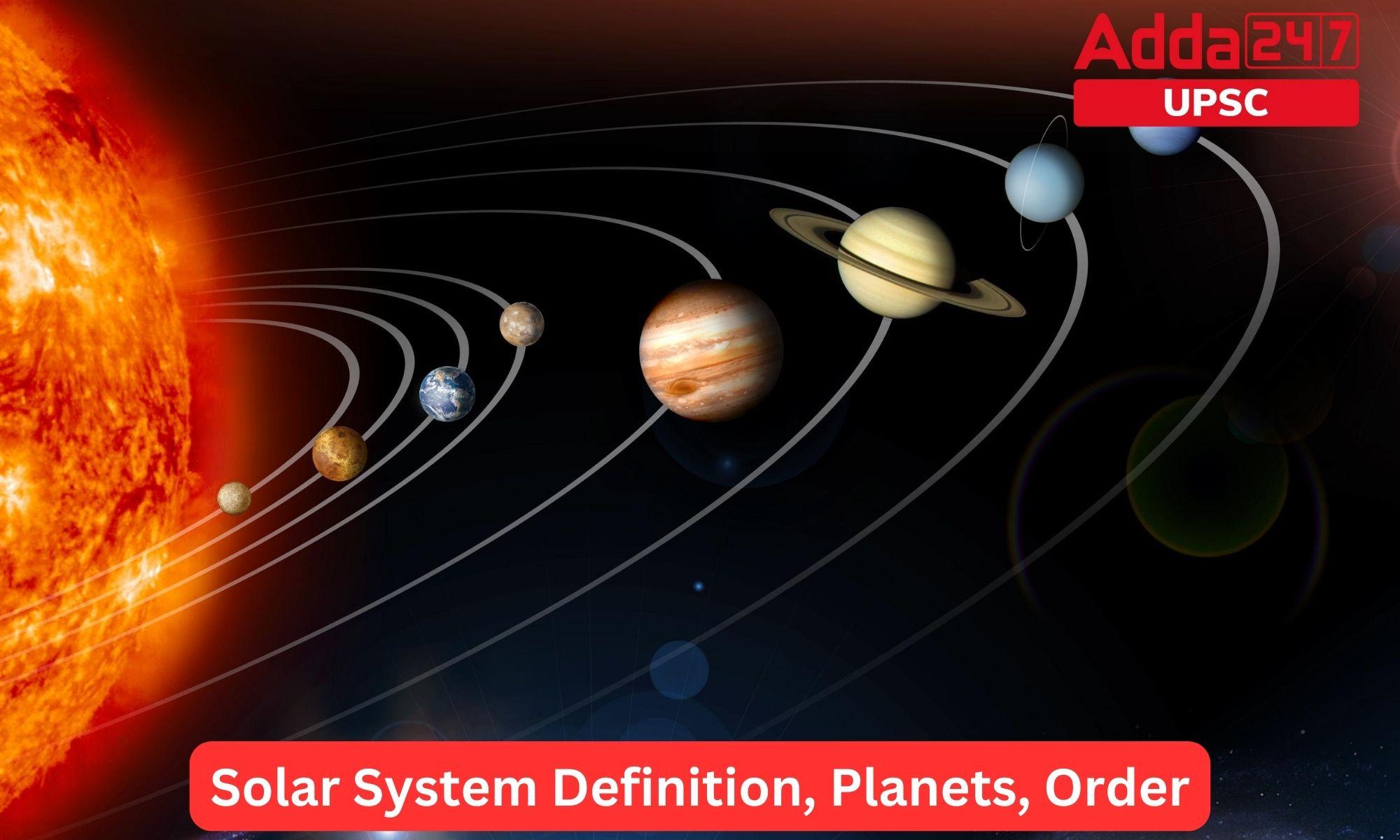
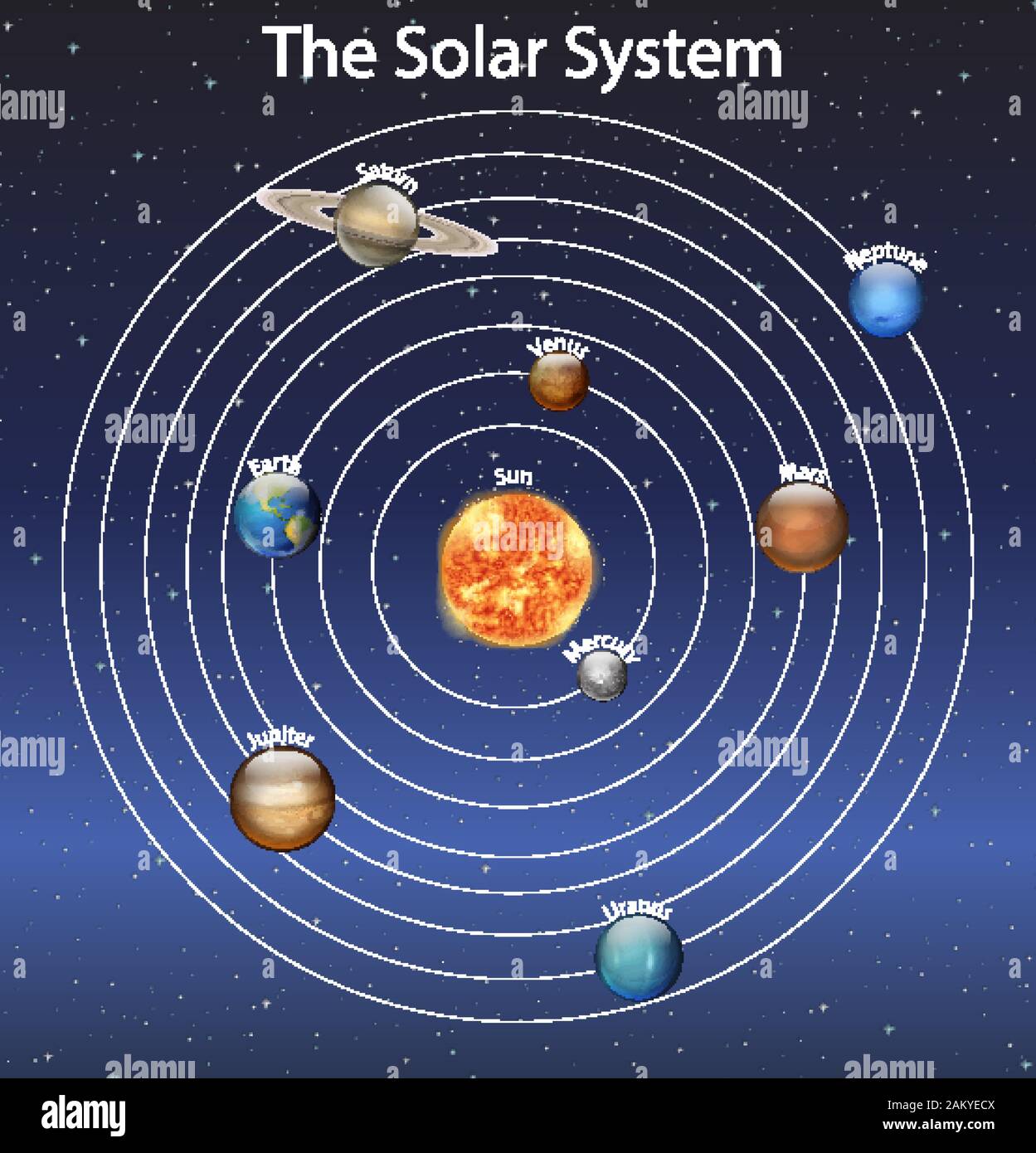
The eight planets of our solar system, in order of their increasing distance from the Sun, are Mercury, Venus, Earth, Mars, Jupiter, Saturn, Uranus, and Neptune. These celestial bodies are divided into the four inner terrestrial planets and the four outer giant planets, separated by the extensive Asteroid Belt.
As of 2026, our understanding of these worlds has been profoundly reshaped by a decade of high-resolution imaging from the James Webb Space Telescope (JWST) and ongoing robotic exploration. While the fundamental order remains unchanged since the International Astronomical Union (IAU) reclassified the solar system in 2006, the data we have regarding their atmospheres, core compositions, and potential for harboring life has expanded significantly. Understanding the planets in order is not merely an exercise in memorization; it is a study of how a single stellar nebula organized itself into a complex, tiered system of rocky, gaseous, and icy worlds.
The Architecture of the Solar System
The solar system is structured by gravity and heat. Near the Sun, where temperatures were historically too high for volatile gases to condense, we find the terrestrial planets. These are composed primarily of silicate rocks or metals with solid surfaces. Beyond the "frost line"—the distance from the Sun where it is cold enough for volatile compounds like water, ammonia, and methane to condense into solid ice grains—lie the Jovian planets.
This division is not accidental. In the early stages of the solar system's formation, solar winds pushed lighter elements further out, leaving heavier materials to coalesce into the inner planets. The outer planets, having much larger masses, were able to capture massive amounts of hydrogen and helium, growing to enormous sizes.
1. Mercury: The Scorched Messenger
Mercury is the closest planet to the Sun, orbiting at an average distance of approximately 36 million miles (58 million kilometers). Because of its proximity, it has the fastest orbital velocity of any planet, completing a trip around the Sun in just 88 Earth days.
Despite being the smallest planet—only slightly larger than Earth’s Moon—Mercury is incredibly dense, possessing a massive iron core that makes up about 85% of its radius. This suggests a violent early history, possibly involving a collision that stripped away much of its original rocky crust. Mercury lacks a substantial atmosphere, possessing only a thin exosphere of oxygen, sodium, hydrogen, and helium. Without an atmosphere to trap heat, the planet experiences the most extreme temperature fluctuations in the solar system, ranging from 800°F (430°C) during the day to -290°F (-180°C) at night.
2. Venus: Earth’s Toxic Twin
Second from the Sun is Venus, often called Earth’s sister planet due to their similar size and mass. However, the similarities end there. Venus is the hottest planet in our solar system, with surface temperatures averaging 864°F (462°C), hot enough to melt lead. This is caused by a "runaway greenhouse effect" triggered by a thick atmosphere composed of 96% carbon dioxide, with clouds of sulfuric acid.
Venus is unique for its retrograde rotation; it rotates on its axis in the opposite direction of most planets. This means the Sun rises in the west and sets in the east. Furthermore, its rotation is exceptionally slow; a single day on Venus lasts longer than a Venusian year. NASA and ESA missions scheduled for the late 2020s aim to investigate why Venus evolved so differently from Earth, despite their shared origins.
3. Earth: The Blue Marble
Earth is the third planet from the Sun and the only known celestial body to support life. Situated within the "Goldilocks Zone," or habitable zone, Earth maintains a distance that allows water to exist in liquid form on the surface. Its atmosphere, rich in nitrogen (78%) and oxygen (21%), provides the necessary conditions for complex biological processes and protects the surface from harmful solar radiation.
Earth’s planetary health is maintained by its active plate tectonics and a powerful magnetic field generated by its liquid iron outer core. This magnetic field, or magnetosphere, deflects the solar wind, preventing our atmosphere from being stripped away—a fate that likely befell Mars. As we monitor Earth in 2026, satellite data continues to track the critical shifts in our climate systems, emphasizing the planet's delicate equilibrium.
4. Mars: The Red Planet
Mars, the fourth planet, is a cold, desert world characterized by its reddish hue, which comes from iron oxide (rust) in its soil. It is about half the size of Earth but shares many geographical features, including polar ice caps, extinct volcanoes, and deep canyons. Valles Marineris, a canyon system on Mars, is ten times longer and several times deeper than the Grand Canyon on Earth.
Mars has been the primary focus of planetary exploration for decades. Evidence from rovers like Perseverance has confirmed that Mars once had liquid water on its surface, suggesting it may have been habitable in the distant past. The thin Martian atmosphere is 95% carbon dioxide, making it inhospitable to humans without life-support systems. Current research focuses on the Martian subsurface, where briny water or ice might still exist, potentially sheltering microbial life.
The Asteroid Belt: The Great Divide
Between Mars and Jupiter lies the Asteroid Belt, a vast region containing millions of rocky debris left over from the formation of the solar system. While often depicted in media as a dense minefield, the objects are actually so far apart that a spacecraft can usually pass through without encountering a single asteroid. The largest object in the belt is Ceres, which is classified as a dwarf planet.
5. Jupiter: The King of Planets
Jupiter is the fifth planet and the first of the gas giants. It is more than twice as massive as all the other planets in the solar system combined. Jupiter is composed primarily of hydrogen and helium, resembling a star that never grew large enough to ignite.
Its most famous feature is the Great Red Spot, a giant storm larger than Earth that has been raging for hundreds of years. Jupiter has a powerful magnetic field and at least 95 confirmed moons, including the four large Galilean moons: Io, Europa, Ganymede, and Callisto. Europa is of particular interest to astrobiologists because it is believed to hide a vast liquid water ocean beneath its icy crust, which missions like the Europa Clipper (launched in 2024 and currently in transit) aim to explore.
6. Saturn: The Ringed Jewel
Saturn, the sixth planet from the Sun, is most famous for its spectacular ring system. These rings are not solid but are composed of billions of individual pieces of ice and rock, ranging in size from microscopic dust grains to the size of houses. While other giant planets have rings, Saturn’s are the most extensive and visible.
Saturn is the least dense planet in the solar system; if there were an ocean large enough, the planet would float. Like Jupiter, it is a gas giant made mostly of hydrogen and helium. Its largest moon, Titan, is the only moon in the solar system with a substantial atmosphere and liquid lakes on its surface—though these lakes are filled with liquid methane and ethane rather than water.
7. Uranus: The Tilted Ice Giant
Uranus is the seventh planet and is classified as an "ice giant." Unlike the gas giants, Uranus and Neptune have a higher proportion of "ices" such as water, ammonia, and methane in their composition. The methane in its upper atmosphere absorbs red light, giving Uranus its distinct cyan or aquamarine color.
Uranus is unique because it rotates on its side. Its axis is tilted at an angle of 98 degrees, likely the result of a massive collision early in its history. This extreme tilt causes radical seasonal changes, as each pole gets 42 years of continuous sunlight followed by 42 years of darkness. Uranus also possesses a faint ring system and 28 known moons.
8. Neptune: The Windy Blue Giant
Neptune is the eighth and farthest known planet from the Sun, orbiting at a staggering distance of about 2.8 billion miles (4.5 billion kilometers). It is nearly four times the size of Earth and is also an ice giant. Neptune appears a deeper blue than Uranus, possibly due to an unidentified atmospheric component.
Neptune has the strongest winds in the solar system, reaching speeds of up to 1,200 miles per hour (2,000 kilometers per hour). It was the first planet located through mathematical prediction rather than direct observation. Its largest moon, Triton, is unique because it orbits the planet in a retrograde direction (opposite to the planet's rotation), suggesting it was once a Kuiper Belt object captured by Neptune’s gravity.
Comparative Planetary Data
The following table provides a technical comparison of the eight planets as recognized in 2026. Data is based on standard measurements provided by NASA’s Planetary Science Division.
| Planet | Type | Average Distance from Sun (AU*) | Diameter (km) | Surface Gravity (m/s²) | Moons |
|---|---|---|---|---|---|
| Mercury | Terrestrial | 0.39 | 4,879 | 3.7 | 0 |
| Venus | Terrestrial | 0.72 | 12,104 | 8.87 | 0 |
| Earth | Terrestrial | 1.00 | 12,756 | 9.81 | 1 |
| Mars | Terrestrial | 1.52 | 6,792 | 3.71 | 2 |
| Jupiter | Gas Giant | 5.20 | 142,984 | 24.79 | 95 |
| Saturn | Gas Giant | 9.54 | 120,536 | 10.44 | 146 |
| Uranus | Ice Giant | 19.18 | 51,118 | 8.69 | 28 |
| Neptune | Ice Giant | 30.06 | 49,528 | 11.15 | 16 |
*AU (Astronomical Unit) is the average distance from the Earth to the Sun, approximately 93 million miles.
The Status of Pluto and Dwarf Planets
A common point of confusion is the status of Pluto. From its discovery in 1930 until 2006, Pluto was considered the ninth planet. However, as telescopes became more powerful, astronomers discovered other objects in the Kuiper Belt (the region beyond Neptune) that were similar in size to Pluto, such as Eris.
In 2006, the International Astronomical Union (IAU) established three criteria for an object to be considered a planet:
- It must orbit the Sun.
- It must have sufficient mass to assume a nearly round shape (hydrostatic equilibrium).
- It must have "cleared the neighborhood" around its orbit.
Pluto fails the third criterion because its orbit is shared by many other objects in the Kuiper Belt. Consequently, Pluto was reclassified as a dwarf planet. Other recognized dwarf planets include Ceres (in the Asteroid Belt), and Haumea, Makemake, and Eris (in the Kuiper Belt).
The Search for Planet Nine
Despite the eight-planet model being firmly established, many astronomers believe there is evidence for a ninth major planet far beyond Neptune. This hypothetical "Planet Nine" is predicted to be about five to ten times the mass of Earth. Its existence is inferred from the unusual clustering of orbits of distant Kuiper Belt objects, which suggests they are being gravitationally influenced by a massive, unseen body. As of 2026, sky surveys using the Vera C. Rubin Observatory are actively searching for this elusive member of our solar system.
Frequently Asked Questions
Which planet is the closest to Earth?
While Venus is often the planet that comes closest to Earth in its orbit, Mercury is statistically the planet that spends the most time as Earth’s closest neighbor. This is because Mercury’s small orbit keeps it relatively near the Sun, and therefore near Earth, more frequently than Venus or Mars.
Why is Venus hotter than Mercury if Mercury is closer to the Sun?
Venus is hotter than Mercury because of its thick atmosphere composed mostly of carbon dioxide. This creates a powerful greenhouse effect that traps heat. Mercury, having almost no atmosphere, loses its heat back into space as soon as its surface turns away from the Sun.
What is the order of the planets from smallest to largest?
In order of size (diameter), the planets are: Mercury, Mars, Venus, Earth, Neptune, Uranus, Saturn, and Jupiter. Note that while Neptune is more massive than Uranus, Uranus is slightly larger in diameter.
How do I remember the order of the planets?
The most common mnemonic device for remembering the order (Mercury, Venus, Earth, Mars, Jupiter, Saturn, Uranus, Neptune) is: "My Very Educated Mother Just Served Us Noodles."
Are there any planets beyond Neptune?
No "major" planets have been confirmed beyond Neptune. However, there are numerous dwarf planets and millions of icy objects in the Kuiper Belt and the Oort Cloud. The hypothetical "Planet Nine" remains a subject of intense scientific investigation.
Next Steps for Exploration
To stay updated on planetary discoveries, individuals should follow official mission logs from space agencies. In 2026, the focus remains on the Artemis program’s lunar objectives and the ongoing analysis of Martian soil samples. For those interested in observational astronomy, using a basic telescope can reveal the phases of Venus, the craters of the Moon, and the moons of Jupiter, providing a first-hand connection to the order of our celestial neighborhood.