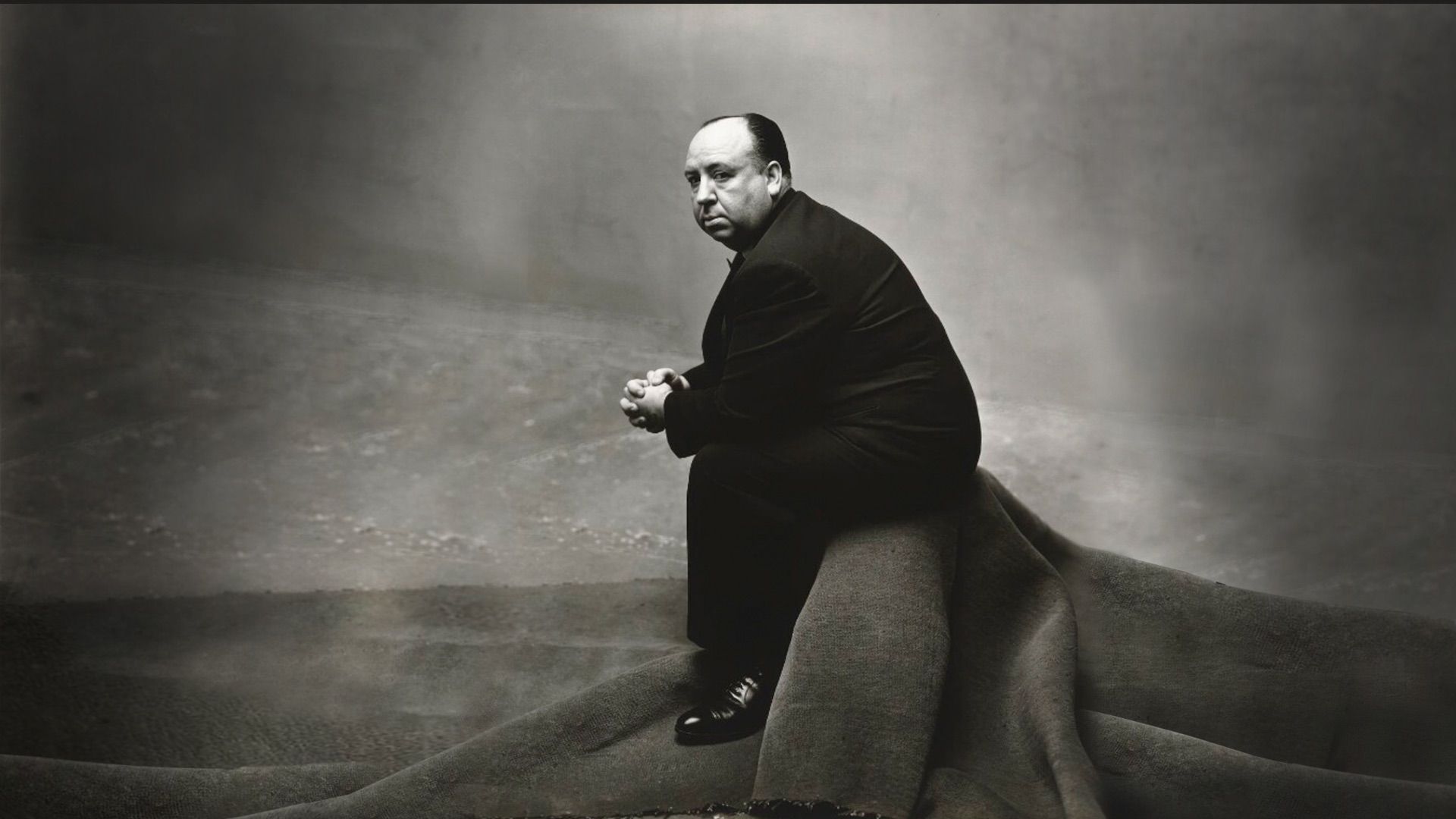
Alfred Hitchcock (1899–1980) redefined cinematic grammar by transforming narrative filmmaking into a precise psychological science. Widely recognized as the "Master of Suspense," he pioneered techniques in subjective camerawork, precise montage, and narrative tension, shifting audiences from passive observers into active, anxious participants through rigorous visual economy and sophisticated structural manipulation.
The Genesis of "Pure Cinema": Silent Roots and Expressionist Foundations
Alfred Joseph Hitchcock’s directorial philosophy originated in the silent film era, a formative period that shaped his lifelong commitment to what he termed "pure cinema"—the art of telling a story visually rather than relying on dialogue. Entering the film industry in 1920 as a title card designer for Famous Players-Lasky in London, Hitchcock rapidly absorbed the mechanics of art direction, screenwriting, and editing.
In 1924, Hitchcock travelled to the Babelsberg Studios in Berlin to work as an art director and assistant director on Anglo-German co-productions. There, he observed the masterworks of German Expressionism, watching directors like F.W. Murnau (The Last Laugh) and Fritz Lang (Metropolis) craft worlds dominated by distorted architectural geometry, dramatic chiaroscuro lighting, and thematic externalizations of psychological dread. This exposure fundamentally altered Hitchcock’s visual sensibility. Where British cinema was largely rooted in stage traditions and literary adaptations, German filmmakers utilized the camera as an expressive, emotional instrument.
When Hitchcock directed his breakthrough silent thriller, The Lodger: A Story of the London Fog (1926), these influences crystallized. To convey the claustrophobia of the upstairs tenant pacing above a family's living room, Hitchcock commissioned a transparent glass floor, filming the actor walking back and forth from below. This single shot bypassed the need for an explanatory title card, directly communicating an auditory sensation through purely visual means.
When synchronized sound arrived, Hitchcock refused to treat the medium as merely "photographed stage plays." His 1929 film Blackmail, widely recognized as Britain’s first feature-length sound film, demonstrated sound design used as an interior psychological tool. In a famous sequence where a traumatized woman sits at breakfast following a fatal self-defense stabbing, the ambient chatter of a neighbor fades into an indistinct murmur, with only the word "knife" repeatedly surging forward in volume. Hitchcock recognized that sound, like the visual image, should be subjective, highlighting emotional reality over mechanical realism.
The Mechanics of Suspense: Withholding, Disclosure, and the MacGuffin
Throughout his five-decade career, Hitchcock drew a sharp, systematic distinction between suspense and shock. In his historic 1962 conversations with French filmmaker François Truffaut, Hitchcock articulated this foundational principle through his famous "bomb under the table" analogy:
- Surprise (Shock): Four people sit around a table having an innocuous conversation about baseball. Suddenly, a bomb explodes under the table. The audience receives fifteen seconds of shock following fifteen minutes of mundane dialogue.
- Suspense: Four people sit around a table having the exact same conversation, but the audience is shown that an anarchist placed a bomb under the table set to detonate at one o'clock. A clock on the wall reads 12:45, then 12:55. The innocuous conversation now electrifies the scene because the audience possesses critical knowledge that the characters lack, generating prolonged, agonizing anticipation.
Suspense, for Hitchcock, was mathematically tied to information control. Shock produces a fleeting physical reaction; suspense creates an agonizing, intellectual-emotional partnership between the audience and the filmmaker.
Surprise : [Event Occurs Unannounced] -> 15 Seconds of Startled Reaction Suspense : [Danger Revealed to Viewer] -> Extended Tension -> Relieved or Shattered Expectations
The Anatomy of the MacGuffin
Central to Hitchcock's structural engineering was the MacGuffin—a narrative catalyst that characters pursue with life-or-death intensity, but which ultimately matters little to the audience or the actual dramatic core of the film.
In The 39 Steps (1935), the MacGuffin is a set of military aircraft engine blueprints; in North by Northwest (1959), it is microfilm containing "government secrets"; in Psycho (1960), it is the stolen $40,000 cash packet, which functions as an elaborate narrative decoy before Marion Crane ever reaches the Bates Motel. By treating the plot trigger as interchangeable, Hitchcock redirected audience attention away from mechanical exposition and toward relational dynamics, behavioral anomalies, and primal anxieties.
Visual Innovations and Subjective Camera Grammar
Hitchcock approached the camera not as an objective recorder of an actor’s performance, but as a deliberate eye guiding the viewer’s subconscious mind. Every lens choice, camera movement, and editorial cut was calibrated to evoke a specific physiological response.
1. Subjective Framing and the Kuleshov Effect
Hitchcock frequently employed the Kuleshov effect—a montage theory demonstrating that viewers derive more meaning from the interaction of two sequential shots than from a single shot in isolation. In Rear Window (1954), Hitchcock demonstrated this through a three-shot sequence:
- A close-up of protagonist L.B. Jefferies (James Stewart) looking outward.
- A cut to what he sees (a woman sunbathing or a mother playing with a puppy).
- A return cut to his face, now registering a smile.
Depending on the center image, the audience reads Jefferies as either an appreciative admirer or a sympathetic soul. By restricting the perspective almost entirely to Jefferies' apartment, the film transforms the audience into complicit voyeurs, raising uncomfortable questions about our own instinct to watch private human drama unfold.
2. The Dolly Zoom ("Vertigo Effect")
During the production of Vertigo (1958), Hitchcock wanted a visual method to simulate the disorienting physical sensation of acrophobia—the dizzying feeling of space pulling away while remaining anchored in place. Camera operator Irmin Roberts conceived the solution: simultaneously pulling the camera backward on a dolly track while zooming the lens forward (or vice versa).
This optical maneuver keeps the subject’s size constant within the frame while radically altering the background perspective, stretching the spatial depth and visual plane. The "dolly zoom" has since become one of the most widely quoted camera techniques in world cinema, used by directors to convey profound psychological vertigo, dread, or sudden revelation.
3. Extended Spatial Continuity: The Rope Experiment
In Rope (1948), Hitchcock challenged traditional editing conventions by attempting to construct an entire 80-minute feature out of continuous takes. Constrained by 35mm film magazines that held only ten minutes of footage, Hitchcock designed seamless disguised transitions—panning into the back of an actor’s dark jacket or across a wooden furniture seam—alternating with genuine straight cuts across reel changes. Walls on rollers moved silently out of the way on soundstages to accommodate the massive technicolor camera cranes. While Hitchcock later described the experiment as an artistic indulgence that abandoned the dynamic possibilities of montage, the film remains an essential study in theatrical blocking, lighting transitions, and spatial choreography.
4. Mathematical Montage: The Shower Scene
Conversely, the shower sequence in Psycho (1960) stands as the pinnacle of expressive, rhythmic montage. Lasting approximately 45 seconds, the sequence incorporates roughly 78 camera setups and 52 cuts. Hitchcock used a high-speed series of tight close-ups—the slashing knife, bare limbs, spraying water, the drain, and the victim's open eye—creating an impression of graphic butchery without the knife ever visibly puncturing flesh on screen. The violence occurs primarily within the mind of the viewer, driven by dynamic cuts synchronized with Bernard Herrmann’s screeching string score.
Landmark Filmography and Technical Milestones
The following table contextualizes Hitchcock's most influential films, illustrating the specific technical developments, structural motifs, and thematic ideas introduced throughout his career:
| Film Title & Year | Primary Visual Innovation | Narrative Device / Motif | Psychological Subtext |
|---|---|---|---|
| The 39 Steps (1935) | Rapid-fire visual transitions (e.g., scream turning into a train whistle) | The "Wrong Man" framed by unknown forces; early pure MacGuffin | Paranoia regarding institutional competence and geopolitical instability |
| Shadow of a Doubt (1943) | Deep-focus staging; expressive low-angle framing | The sinister double (Doppelgänger); poison under the surface of small-town America | Destruction of domestic innocence and moral complacency |
| Rope (1948) | Real-time continuous long takes; roving technicolor dolly choreography | Real-time parlor drama; dynamic blocking under spatial restriction | Nietzschean hubris, privilege, and casual moral nihilism |
| Rear Window (1954) | Strictly unified visual perspective; apartment set as optical panopticon | The compulsive spectator; parallel domestic vignettes | Voyeurism, ethical detachment, and post-war alienation |
| Vertigo (1958) | Dolly zoom (zolly); saturation-heavy Technicolor lighting (green/red symbolism) | Necrophilic romantic obsession; manufactured identity | The tragedy of male control, projection, and existential loss |
| North by Northwest (1959) | Wide-open-space suspense (Crop Duster scene); dynamic VistaVision scale | Absurdist mistaken identity; global corporate-state espionage | Dehumanizing bureaucratic systems and fractured personal identity |
| Psycho (1960) | High-speed, rhythmic montage; jarring mid-film protagonist substitution | The false lead; split personality; abrupt genre shift | Repressed trauma, voyeuristic complicity, and irrational dread |
| The Birds (1963) | Complex optical yellow-screen composite shots; synthetic electronic sound design | Inexplicable natural catastrophe; absence of narrative explanation | Primal vulnerability, apocalyptic dread, and unresolved family tension |
The Collaborative Architecture: Beyond the Auteur Myth
While Hitchcock was an assertive self-promoter who branded himself as an singular auteur—even adopting his distinctive profile sketch as an international trademark—his mastery depended on an elite ensemble of creative partners.
Alma Reville
Hitchcock’s wife and closest artistic adviser, Alma Reville, was a talented editor and screenwriter in her own right. From his silent days to his final productions, Hitchcock relied on her sharp narrative instincts. She served as the final arbiter of his scripts and rough cuts. During the post-production of Psycho, Reville famously spotted that Janet Leigh’s corpse blinked in the shower scene, saving the film from an embarrassing continuity error before theatrical distribution.
Bernard Herrmann
Composer Bernard Herrmann fundamentally reshaped the emotional texture of Hitchcock’s mid-century masterpieces. Herrmann moved away from lush, European late-romantic scores, using radical orchestrations that mirrored psychological states:
- In Vertigo, Herrmann’s spiraling, unresolved arpeggios evoke obsession and cyclical grief.
- In North by Northwest, a frenzied fandango provides structural kinetic propulsion.
- In Psycho, Herrmann restricted the instrumentation exclusively to a string orchestra, creating an abrasive, percussive palette that Hitchcock openly credited for amplifying the film's dramatic tension.
Saul Bass
Graphic designer Saul Bass revolutionized title design through his work on Vertigo, North by Northwest, and Psycho. Using kinetic typography, stark geometric forms, and Lissajous spiral curves, Bass created conceptual overtures that framed the audience’s psychological expectations before the first frame of live action appeared. Bass was also credited as pictorial consultant on Psycho, drafting storyboards for the climactic shower and staircase sequences.
Edith Head and Robert Burks
Costume designer Edith Head worked alongside Hitchcock to codify the visual presence of the iconic "Hitchcock Blonde" (exemplified by Grace Kelly, Kim Novak, and Tippi Hedren). Head's meticulous costuming utilized precise color palettes—such as Grace Kelly's sophisticated gowns in Rear Window or Kim Novak's grey suit in Vertigo—to communicate vulnerability, emotional detachment, or deceptive duplicity.
Simultaneously, cinematographer Robert Burks lensed twelve of Hitchcock’s films, working with complex technicolor lighting schemes, custom optics, and difficult VistaVision set architectures that defined Hitchcock’s golden American period.
Core Psychological Themes and Visual Motifs
Hitchcock’s filmography consistently addresses distinct psychological anxieties, weaving recurring thematic motifs directly into the visual staging:
1. The "Wrong Man" and Institutional Failure
A recurring trope in Hitchcock’s work is the ordinary citizen thrust into a nightmare of mistaken identity, chased simultaneously by shadowy villains and the police (The 39 Steps, Saboteur, The Wrong Man, North by Northwest). Hitchcock harbored a lifelong fear of authority, famously rooted in a childhood incident where his father had him briefly locked in a local police cell to teach him what happened to "naughty boys." In his cinematic universe, institutional bodies—the police, courts, and intelligence agencies—are consistently depicted as indifferent, bureaucratic, or dangerously incompetent, offering no shelter to the falsely accused.
2. The Doppelgänger and Moral Transference
Hitchcock was fascinated by the thin line separating normalcy from psychopathy. In Shadow of a Doubt, young Charlie shares a telepathic, affectionate bond with her namesake, Uncle Charlie, who is secretly a serial killer targeting wealthy widows. In Strangers on a Train (1951), tennis star Guy Haines crosses paths with psychopathic socialite Bruno Antony, leading to a dynamic where Bruno carries out Guy's unspoken, dark desire to be rid of his wife. Hitchcock visualizes this transference through intersecting shadows, crisscrossing railroad tracks, and mirrored framing, reminding viewers of the latent evil within human nature.
3. Voyeurism and Complicity
Long before modern digital discourse examined media spectatorship, Hitchcock made the audience aware of their own voyeuristic impulses. By aligning the camera's gaze with the optical perspectives of peeping Toms, private investigators, and predatory killers, Hitchcock leaves viewers uneasy about their own appetite for spectacle. In Psycho, as Norman Bates watches Marion Crane undress through a peephole, the camera places the viewer in Norman's optical position; when Marion's car briefly stops sinking into the swamp, the audience instinctively hopes it will disappear, momentarily wishing for the killer to escape detection.
Practical Application: How to Study and Apply Hitchcockian Grammar
For contemporary directors, editors, and screenwriters, Hitchcock's methodologies provide practical tools for narrative construction. The following workflow demonstrates how to translate Hitchcock’s grammar into modern visual projects:
Map the Information Disparity (Suspense Auditing):
- Before filming or writing a scene, map out what the audience knows versus what the characters know.
- If a scene lacks momentum, introduce a ticking clock or reveal a hidden threat to the viewer while keeping the character in the dark.
Decide Between Dialogue and Visual Action:
- Script a crucial emotional transition without permitting the characters to speak.
- Use an expressive prop, an eye-line match, a shift in lighting, or a deliberate change in camera distance to convey psychological development.
Establish Spatial Geography Before Deconstruction:
- Before deploying rapid montage or disorienting edits, establish the physical environment clearly (as Hitchcock did with the courtyard in Rear Window).
- When an audience understands the spatial boundary conditions of a scene, violations of that space generate far greater shock and disorientation.
Isolate Detail Through Optical Isolation:
- Avoid generic master-shot coverage. Cut directly into extreme close-ups of meaningful objects (a coffee cup, a key, an open window) to charge the environment with narrative consequence.
Frequently Asked Questions
What is the primary difference between surprise and suspense according to Hitchcock?
Surprise occurs when an unexpected event suddenly happens without warning, creating an intense but brief shock lasting only a few seconds. Suspense occurs when the audience is given vital information that the characters do not possess—such as the presence of a hidden explosive or an approaching killer—producing an agonizing, drawn-out period of psychological tension as the viewer anticipates the inevitable outcome.
What is a MacGuffin, and what is its role in storytelling?
A MacGuffin is a narrative device, object, or goal that motivates the actions of the characters and propels the plot forward, but ultimately has little direct importance to the central themes of the story. Examples include stolen government secrets, smuggled diamonds, or missing microfilm. For Hitchcock, the MacGuffin was merely an excuse to set the characters in motion, allowing the film to focus instead on their psychological and interpersonal friction.
Why did Hitchcock choose to shoot Psycho in black and white?
Hitchcock opted to shoot Psycho in black and white for both budgetary and aesthetic reasons. Following the expensive, Technicolor production of North by Northwest, he wanted to make an economical picture utilizing his fast-moving Alfred Hitchcock Presents television crew. Artistically, he recognized that the violent shower sequence would appear excessively gruesome and repulsively visceral in bright red Technicolor, whereas high-contrast black-and-white cinematography added a moody, Expressionist tone and kept the violence stylized.
How did Alma Reville influence Hitchcock's filmography?
Alma Reville was Alfred Hitchcock’s wife, intellectual partner, and most trusted creative collaborator. A former film editor and continuity supervisor, she read scripts, refined dialogue, suggested editorial pacing, and held final review over rough cuts. Hitchcock relied deeply on her critical eye; she frequently caught plot holes, structural dead-ends, and visual inconsistencies that had slipped past other production members.
What is the "dolly zoom" and what effect does it create?
The dolly zoom, developed for Hitchcock’s 1958 film Vertigo, is a camera technique where the camera lens zooms in while the camera dolly physically rolls backward, or zooms out while rolling forward. This optical contradiction keeps the primary subject roughly the same size in the frame while causing the background field of view to warp and stretch. It visually reproduces the sensation of falling, disorientation, or internal panic.
Recommended Next Steps for Film Students and Creators
To best understand Alfred Hitchcock's visual mastery, observe his techniques systematically:
- Watch Rear Window with the Sound Muted: Analyze how Hitchcock introduces each neighbor, their primary conflict, and their personality traits purely through visual behavior, camera panning, and spatial relationships.
- Read the Hitchcock/Truffaut Interviews: Study the definitive 1966 book Hitchcock/Truffaut, which documents film-by-film conversations detailing his technical experiments, artistic regrets, and structural philosophies.
- Storyboard an Information-Disparity Scene: Create an eight-panel storyboard illustrating a scenario where two characters have a standard conversation while a hidden danger looms nearby. Focus on using sightlines and subjective cuts rather than spoken dialogue to build tension.