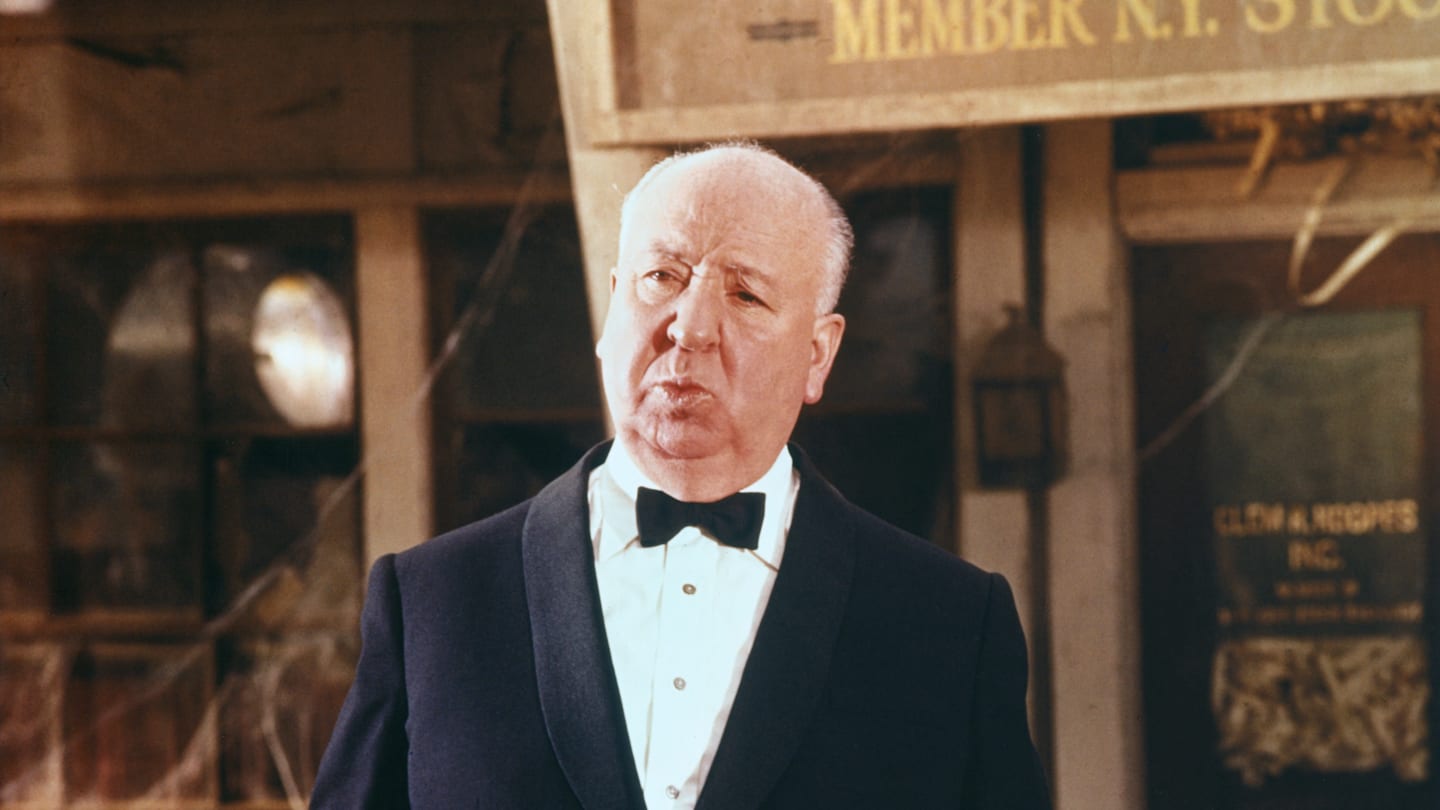
Alfred Hitchcock movies appear on Netflix only occasionally, as the platform rarely holds long-term global licensing rights to his core catalog. While specific titles cycle into select regional libraries for limited windows, most of Hitchcock's acclaimed films reside on dedicated classic platforms like The Criterion Channel or studio-owned services such as Peacock and Max.
Finding classic cinema on modern subscription video-on-demand (SVOD) platforms can be frustrating. Streaming algorithms favor recent originals and high-engagement licensed modern titles, leaving twentieth-century cinema scattered across shifting catalogs. If you opened Netflix hoping to queue Rear Window, Vertigo, or Psycho, understanding the complex rights ecosystem behind Hitchcock’s filmography will save you time and help you find the highest-quality restorations available.
The Current State of Alfred Hitchcock Movies on Netflix
Netflix operates primarily as a creator of original content and a curator of contemporary studio licenses. Classic Hollywood films—particularly those produced between the 1930s and 1960s—make up a minuscule fraction of Netflix’s active catalog in North America and Western Europe.
Hitchcock’s filmography encompasses more than fifty feature films, spanning his silent cinema days in the United Kingdom through his golden era in Hollywood. Because these titles are owned by several competing studios and production estates, no single streaming service retains perpetual, exclusive worldwide rights to his entire body of work.
- Hitchcock Rights Ecosystem
- Universal Pictures: Vertigo, Rear Window, Psycho, The Birds, Rope
- Warner Bros.: North by Northwest, Strangers on a Train
- Disney / ABC: Rebecca, Notorious, Spellbound (Selznick era)
- Public Domain / BFI: The 39 Steps, The Lady Vanishes, The Lodger
When a Hitchcock film does land on Netflix, it typically does so under a temporary, non-exclusive domestic window. For example, Universal Pictures occasionally licenses Psycho or The Birds to Netflix for three- to six-month intervals before rotating them back to NBCUniversal's proprietary streaming platforms or cable networks. Outside the United States, Netflix regional libraries (such as the UK, Japan, or South Korea) negotiate localized deals, meaning a title available to a subscriber in London may be completely absent for a viewer in New York or Toronto.
Why Hitchcock’s Filmography Is Fractured Across Platforms
To understand why searching for "Alfred Hitchcock" on Netflix often yields unrelated psychological thrillers or true-crime documentaries, one must examine how the director’s catalog was financed, distributed, and inherited. Hitchcock worked across five decades with multiple production entities, creating distinct intellectual property pockets.
The Universal Pictures Core ("The Hitchcock Five" and Beyond)
The largest and most coveted block of Hitchcock’s output belongs to Universal Pictures. This includes what film historians call the "Five Lost Hitchcocks"—films whose rights reverted to Hitchcock personally and were later sold to Universal by his estate in 1983:
- Rope (1948)
- Rear Window (1954)
- The Trouble with Harry (1955)
- The Man Who Knew Too Much (1956 remake)
- Vertigo (1958)
Universal also owns Shadow of a Doubt (1943), Psycho (1960), The Birds (1963), Marnie (1964), Torn Curtain (1966), Topaz (1969), Frenzy (1972), and Family Plot (1976). Because Universal prioritizes building the catalog value of its own streaming service, Peacock, it rarely grants extended licensing windows to Netflix unless part of a broader corporate package.
The Warner Bros. Collection
Hitchcock spent a productive mid-century stretch working with Warner Bros., yielding several foundational masterpieces:
- Strangers on a Train (1951)
- Dial M for Murder (1954)
- I Confess (1953)
- The Wrong Man (1956)
- North by Northwest (1959, produced under Metro-Goldwyn-Mayer, whose pre-1986 library is owned by Warner Bros. Discovery)
Warner Bros. Discovery systematically routes these titles through its flagship service, Max, or leases them to classic-film services like Turner Classic Movies (TCM). Netflix rarely bids on these individual catalog titles because Warner's internal valuations favor internal retention.
The David O. Selznick Productions
Hitchcock’s transition to American cinema was orchestrated by independent producer David O. Selznick. This fruitful yet contentious creative partnership produced Rebecca (1940)—the only Hitchcock film to win the Academy Award for Best Picture—as well as Spellbound (1945) and The Paradine Case (1947). Notorious (1946) was also developed under Selznick before being sold to RKO Radio Pictures.
The rights to the Selznick catalog experienced a tortuous corporate path, eventually landing with the Walt Disney Company through its acquisition of ABC and related entertainment properties. Disney rarely licenses these titles to Netflix, occasionally making them available on Hulu or specialty rental services.
The British Era and Public Domain Traps
Before arriving in Hollywood, Hitchcock directed dozens of silent films and early sound thrillers in Britain during the 1920s and 1930s, including Blackmail (1929), The 39 Steps (1935), Sabotage (1936), and The Lady Vanishes (1938).
Due to copyright lapses, several of these titles fell into the public domain in the United States. Consequently, dozens of low-budget digital aggregators upload washed-out, unrestored copies to free ad-supported streaming television (FAST) platforms. Netflix explicitly avoids low-resolution public domain assets to maintain high visual standards across its platform, meaning you will almost never see these early British gems hosted there.
Where to Stream Alfred Hitchcock Films
Because Netflix cannot be relied upon for a consistent Hitchcock retrospective, cinephiles must look to services that prioritize historical film preservation or direct-studio catalog ownership.
| STREAMING SERVICE | BEST SUITED FOR |
|---|---|
| The Criterion Channel | Restored British classics, audio commentaries, scholarly deep-dives, rotating curated seasons |
| Peacock | Core Universal titles (Vertigo, Rear Window, Psycho, The Birds) |
| Max / TCM | Warner Bros. titles (North by Northwest, Dial M for Murder, Strangers on a Train) |
| Kanopy / Hoopla | Free institutional access (via public libraries and universities) to early British works |
| VOD (Apple / Prime) | Permanent digital ownership of pristine 4K UHD HDR / Dolby Vision transfers |
1. The Criterion Channel
For film enthusiasts who value archival quality, The Criterion Channel remains the gold standard. While titles rotate monthly, Criterion frequently features curated collections dedicated to Hitchcock, featuring original British Film Institute (BFI) restorations of his early thrillers, accompanied by supplemental interviews, scholarly essays, and audio commentaries.
2. Peacock
Because Peacock is the direct-to-consumer arm of NBCUniversal, it serves as the home base for the bulk of Hitchcock's post-1940 output. If you are looking to stream Vertigo, The Birds, or Rear Window on demand within the United States without paying per-title rental fees, Peacock is the primary platform to check first.
3. Max (formerly HBO Max)
Max maintains access to the Turner Classic Movies library. It regularly hosts North by Northwest, Strangers on a Train, and Dial M for Murder. The platform typically streams these films in stable high definition sourced directly from Warner Bros.' digital restoration archives.
4. Kanopy and Hoopla
If you hold a library card from a participating public library or an active university login, you can access Kanopy and Hoopla for free. These platforms frequently offer high-quality transfers of Hitchcock's British cinema—such as The 39 Steps, Young and Innocent (1937), and The Man Who Knew Too Much (1934 original)—without ad interruptions.
5. Digital Video on Demand (VOD)
When subscription services fail to carry a specific title, digital storefronts such as Apple TV, Amazon Prime Video, Fandango at Home (formerly Vudu), and Google Play offer individual rentals (typically $3.99 to $4.99) and digital purchases ($9.99 to $14.99). In many cases, these storefronts provide access to pristine 4K UHD masters with High Dynamic Range (HDR10 and Dolby Vision) that exceed the bitrates offered on standard SVOD platforms.
Guide to Alfred Hitchcock's Major Works and Availability
The following reference guide details Hitchcock’s most celebrated films, their corporate rights holders, their primary streaming avenues, and critical notes on restoration quality.
| Film Title | Release Year | Primary Studio Rights | Common Streaming Destinations | Recommended Viewing Quality |
|---|---|---|---|---|
| The 39 Steps | 1935 | Public Domain / ITV / BFI | The Criterion Channel, Kanopy, Tubi | Look for the BFI or Criterion digital restoration; avoid generic public domain streams. |
| The Lady Vanishes | 1938 | Public Domain / BFI | The Criterion Channel, Max, Kanopy | Criterion 2K transfer preserves crisp black-and-white contrast. |
| Rebecca | 1940 | Disney / ABC / Selznick | Digital VOD (Apple/Amazon), occasional Criterion runs | Criterion 4K restoration scan restores original silver-halide grain. |
| Shadow of a Doubt | 1943 | Universal Pictures | Peacock, Digital VOD | Universal 4K digital restoration accurately renders Joseph Valentine's cinematography. |
| Notorious | 1946 | Disney / ABC / Selznick | Digital VOD, The Criterion Channel | 4K digital restoration from original nitrate elements is superior to standard cable rips. |
| Rope | 1948 | Universal Pictures | Peacock, Digital VOD | 4K UHD master fixes color-registration issues inherent to early three-strip Technicolor. |
| Strangers on a Train | 1951 | Warner Bros. | Max, TCM, Digital VOD | Warner Bros. 1080p/4K master sourced from fine-grain master positives. |
| Dial M for Murder | 1954 | Warner Bros. | Max, Digital VOD | Look for the native 2D/3D dual restoration master to appreciate camera blocking. |
| Rear Window | 1954 | Universal Pictures | Peacock, Digital VOD | 4K HDR master restores vibrant Technicolor dye-transfer balance. |
| To Catch a Thief | 1955 | Paramount Pictures | Paramount+, Digital VOD | Paramount 4K VistaVision restoration provides high clarity. |
| Vertigo | 1958 | Universal Pictures | Peacock, Digital VOD | 4K UHD presentation preserves Robert Burks’ complex VistaVision lighting schemes. |
| North by Northwest | 1959 | Warner Bros. (MGM) | Max, Digital VOD | 4K restoration from original 65mm VistaVision negative preserves detail. |
| Psycho | 1960 | Universal Pictures | Peacock, occasional Netflix windows | 4K UHD uncut version includes brief censored frames omitted from original US prints. |
| The Birds | 1963 | Universal Pictures | Peacock, occasional Netflix windows | 4K master balances sodium-vapor optical composite shots without excessive digital noise reduction. |
Technical Considerations: Stream Quality and Restorations
Watching an Alfred Hitchcock film via an ad-supported streaming site or an unauthorized upload often ruins the experience. Hitchcock was a technical perfectionist who composed his shots with precise lenses, color timings, and optical effects.
The VistaVision Advantage
During the mid-to-late 1950s, Hitchcock embraced Paramount’s proprietary large-format process, VistaVision. Unlike standard 35mm film, which ran vertically through cameras, VistaVision ran 35mm film horizontally. This yielded a negative area nearly double the size of standard frames, resulting in unmatched fine detail, richer grain structure, and exceptional depth of field.
Vertigo, To Catch a Thief, and Rear Window were shot using this high-resolution format. When these films are compressed down to standard-definition streams or poorly encoded web files, the visual dimensionality is lost. To experience these films as intended, choose streaming platforms or digital purchases that offer 4K UHD with HDR10 or Dolby Vision. These transfers reproduce the wide color gamut of Technicolor prints without crushing shadow detail.
The Audio Mix: Original Mono vs. Modern 5.1 Remixes
Another critical consideration is sound design. Hitchcock worked closely with composers like Bernard Herrmann and sound editors to craft precise mono audio tracks.
In the late 1990s and early 2000s, studios produced 5.1 surround-sound remixes for DVD and Blu-ray releases. Many of these remixes introduced newly recorded Foley effects—such as modern footsteps or synthetic tire screeches—which altered Hitchcock's original sound design. Premium restorations available on boutique services or high-end digital purchases often include both the restored original uncompressed theatrical mono track and the modern surround remix, allowing viewers to choose historical fidelity over multichannel novelty.
How to Check If Hitchcock Movies Are on Netflix in Your Region
Because streaming distribution rights change at the start of every calendar month, an Alfred Hitchcock film could appear on Netflix with little advance warning. Rather than manually typing titles into the search bar, use these practical methods to track availability:
- Use Specialized Streaming Aggregators: Websites like JustWatch or Reelgood monitor global catalogs daily. Set your country profile, enter specific Hitchcock titles, and toggle the Netflix filter to see whether the film is currently licensed in your territory.
- Search by Director Metadata: On Netflix, typing "Director: Alfred Hitchcock" into the search bar activates the platform's metadata tags. If a title is active in your catalog, it will populate first. If nothing is licensed, Netflix’s algorithm will present visually similar thrillers or modern titles tagged with "suspenseful" and "psychological."
- Monitor Netflix Category Codes: Netflix organizes content using numerical category IDs. While there is no dedicated numeric code exclusively for Hitchcock, the code for Classic Thrillers (46588) or Classic Movies (31574) will reveal any mid-century mystery currently licensed under his tradition.
Frequently Asked Questions
Why aren't Alfred Hitchcock films permanently available on Netflix?
Netflix focuses on proprietary original programming and modern licensed films that drive subscriber acquisition and retention. Hitchcock's catalog is owned by multiple legacy studios—primarily Universal Pictures and Warner Bros.—who choose to retain their premier classic assets for their own streaming platforms or license them under short-term, rotating contracts.
Did Alfred Hitchcock create any content directly for television that might be on Netflix?
Hitchcock hosted and directed episodes of the anthology series Alfred Hitchcock Presents (1955–1962) and The Alfred Hitchcock Hour (1962–1965). These television series are owned by Universal Television and are not available on Netflix. They stream primarily on Peacock, Roku Channel, or Freevee.
Are there any Hitchcock remakes or inspired projects on Netflix?
Yes. Netflix produced and released an original adaptation of Daphne du Maurier's novel Rebecca in 2020, directed by Ben Wheatley and starring Lily James and Armie Hammer. While not a direct remake of Hitchcock’s 1940 film, it adapts the same source material. Netflix also features modern thrillers heavily indebted to Hitchcockian tropes, such as The Woman in the Window (2021).
Is it legal to watch Hitchcock's British films on YouTube or free sites?
Several of Hitchcock's British films—such as The 39 Steps and The Lady Vanishes—are in the public domain in the United States, meaning anyone can legally host or stream them without paying royalties. However, these public domain versions are often taken from degraded multi-generation VHS or 16mm prints. For an acceptable viewing experience, seek out authorized British Film Institute (BFI) restorations on platforms like Criterion or Kanopy.
Which Alfred Hitchcock movie is the easiest to find streaming online?
Psycho and The Birds are the most readily accessible worldwide. Because Universal Pictures frequently licenses them for seasonal events (such as autumn horror campaigns), they cycle regularly through platforms like Peacock, Starz, Netflix, and Amazon Prime Video.
Recommended Next Steps
If you want to explore Alfred Hitchcock's filmography without getting trapped in streaming licensing dead-ends, follow this clear viewing pathway:
- Audit Your Current Subscriptions: Before paying for digital rentals, check Peacock for the Universal titles (Rear Window, Vertigo, Psycho) and Max for the Warner Bros. films (North by Northwest, Dial M for Murder).
- Leverage Your Local Library: Connect your library card to Kanopy or Hoopla to watch his formative 1930s British thrillers in restored high definition at zero cost.
- Rent or Buy 4K Transfers for Key Masterpieces: For visual landmarks shot in VistaVision (Vertigo, Rear Window, North by Northwest), rent or purchase them on Apple TV or Amazon VOD rather than waiting for compressed streaming releases. The difference in black levels, color saturation, and print clarity provides the definitive cinematic experience.