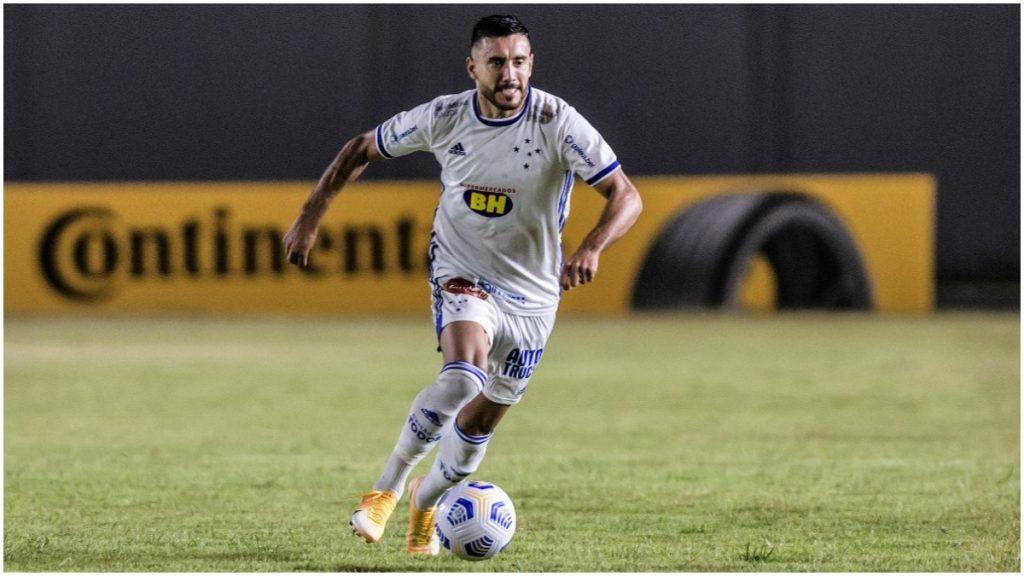
Alan Ruschel is a Brazilian professional footballer, primarily known as a versatile left-back and midfielder, whose career is defined by an extraordinary return to the pitch following the 2016 Chapecoense air disaster. As of 2026, he remains a symbol of survival and sporting perseverance in global football.
The Early Professional Path of Alan Ruschel
Born Alan Luciano Ruschel on August 23, 1989, in Taquara, Rio Grande do Sul, the defender’s journey began in the youth ranks of Juventude. Like many Brazilian full-backs, Ruschel was developed with an emphasis on technical proficiency, crossing ability, and the stamina required to cover the entire length of the flank. His early years at Juventude provided a solid foundation, showcasing his ability to balance defensive duties with offensive support.
Between 2008 and 2013, Ruschel navigated the competitive landscape of Brazilian state and national leagues. His performances earned him a move to Internacional, one of Brazil's "Big Twelve" clubs. While at Internacional, he faced intense competition for starting spots, leading to several loan spells. These loans were crucial, as they allowed him to gain consistent first-team minutes at clubs like Chapecoense and Athletico Paranaense.
It was during his first stint with Chapecoense in 2013 that the club began its meteoric rise through the Brazilian divisions. Ruschel’s playing style—characterized by precise positioning and a disciplined approach to the "Lateral Esquerdo" (left-back) role—made him a valuable asset for a team looking to establish itself in the Série A.
The 2016 Chapecoense Tragedy and Survival
The narrative of Alan Ruschel’s life and career is inextricably linked to the events of November 28, 2016. LaMia Flight 2933, carrying the Chapecoense squad to the first leg of the Copa Sudamericana final in Medellín, Colombia, crashed due to fuel exhaustion. Of the 77 people on board, 71 perished. Ruschel was one of only six survivors and one of three players to survive the impact.
His survival was often described as a miracle, influenced by a last-minute seat change. Originally seated toward the back of the aircraft, Ruschel was asked by club director Cadu Gaúcho to move forward to allow journalists to sit together. He initially resisted but eventually moved next to goalkeeper Jakson Follmann. This decision likely saved his life, as the tail section of the aircraft suffered the most catastrophic damage.
Immediate Medical Challenges
Following the crash, Ruschel’s professional future was the least of his concerns. He suffered multiple injuries, the most severe being a fractured tenth thoracic vertebra (T10). Spinal injuries of this magnitude often result in permanent paralysis. Surgeons in Colombia performed emergency stabilization, and the global football community watched with bated breath to see if the defender would ever walk again, let alone play.
The recovery process was grueling. It required not only physical rehabilitation to regain core strength and mobility but also immense psychological fortitude. Ruschel underwent months of physiotherapy, focusing on spinal alignment and the gradual re-engagement of his lower-limb muscles. His recovery became a focal point for the grieving city of Chapecó, serving as a beacon of hope during the club’s reconstruction.
The Return to the Pitch: A Global Milestone
The most significant moment in Ruschel’s post-accident career occurred on August 7, 2017, less than a year after the tragedy. In a friendly match for the Joan Gamper Trophy against FC Barcelona at the Camp Nou, Ruschel started the match and played 35 minutes. When he was substituted, the 74,000-strong crowd gave him a standing ovation—a gesture that transcended club rivalries and celebrated human resilience.
His return to competitive football was not merely a ceremonial act. Ruschel was determined to be evaluated on his merits as a footballer rather than his status as a survivor. In September 2017, he made his official return in a Copa Sudamericana match against Flamengo. This marked the completion of one of the most remarkable comebacks in the history of professional sports.
Technical Analysis of His Playing Style Post-Recovery
The physical toll of the accident necessitated an evolution in Ruschel’s playing style. Before 2016, he was a traditional Brazilian wing-back, relying on explosive pace to overlap wingers. Post-recovery, he demonstrated a more cerebral approach to the game.
- Positional Intelligence: Realizing he could no longer rely solely on raw speed, Ruschel improved his reading of the game. He became adept at cutting off passing lanes and anticipating opposition movements, reducing the need for high-speed recovery sprints.
- Versatility in Midfield: His technical skills allowed him to transition into a central or wide midfield role. In these positions, his vision and crossing ability remained elite, while the defensive burden was shared with center-backs.
- Leadership and Captaincy: Ruschel’s experience made him a natural leader. He eventually took over the captain’s armband at Chapecoense, providing a vital link between the club's tragic past and its ambitious future.
Success and Career Transitions (2019–2025)
In 2020, Ruschel achieved a professional milestone that many thought impossible. He captained Chapecoense to the Campeonato Brasileiro Série B title. Lifting the trophy was a symbolic moment, proving that the club had successfully rebuilt and that he remained a top-tier professional.
Following his success at Chapecoense, Ruschel sought new challenges, leading to stints at other major Brazilian clubs:
- Cruzeiro (2021): A move to one of Brazil's most historic clubs, where he provided veteran presence during a difficult period for the "Raposa."
- América Mineiro (2021-2022): A loan move that saw him return to Série A football, proving his durability over a long season.
- Londrina and Juventude (2023-2025): Returning to his roots at Juventude, he played a vital role in their campaigns, often utilized as a tactical substitute or a starting left-back in high-pressure matches.
By 2026, Ruschel’s career is viewed through the lens of longevity. In an era where physical demands on full-backs are higher than ever, his ability to remain competitive into his mid-30s is a testament to his professional discipline and the quality of his initial rehabilitation.
Statistical Overview and Career Milestones
The following table outlines the key phases of Alan Ruschel’s career, highlighting his resilience across different levels of Brazilian football.
| Period | Primary Club | Role/Achievement | Impact |
|---|---|---|---|
| 2008–2013 | Juventude | Emerging Talent | Established himself as a reliable Série B/C defender. |
| 2014–2015 | Internacional | Squad Rotation | Gained experience at a top-tier Libertadores-competing club. |
| 2016 | Chapecoense | Starting Left-Back | Part of the historic squad that reached the Sudamericana Final. |
| 2017–2019 | Chapecoense | Survivor & Captain | Returned to play at Camp Nou; symbolized club rebirth. |
| 2020 | Chapecoense | Série B Champion | Captained the team to a national title and Série A promotion. |
| 2021–2024 | Various (Cruzeiro/América) | Veteran Leader | Demonstrated consistent performance in high-pressure environments. |
| 2025–2026 | Juventude/Professional Status | Senior Statesman | Focused on mentorship and tactical versatility. |
Legal and Contractual Legacy
Beyond the pitch, Alan Ruschel’s career has also involved complex legal navigations regarding the 2016 accident. As a survivor, he has been a prominent figure in the ongoing discussions regarding compensation for the victims' families and the survivors themselves. These legal battles have often focused on the responsibilities of the airline, the insurance companies, and the oversight of football federations.
His stance has consistently been one of seeking justice and ensuring that such a tragedy never recurs due to administrative negligence. This aspect of his life highlights the burden carried by survivors—the "survivor's guilt" often mentioned in his interviews is balanced by a fierce commitment to the memory of his fallen teammates.
Frequently Asked Questions
What was the specific injury Alan Ruschel suffered in the crash?
Alan Ruschel suffered a fractured T10 vertebra, which is located in the lower-middle section of the back. This type of injury is high-risk for causing paraplegia. He also sustained multiple lacerations and head trauma. His recovery without permanent neurological deficit is considered a significant medical success, attributed to rapid surgical intervention and intense physical therapy.
How long did it take for Alan Ruschel to return to football?
He returned to the field for a non-competitive match against Barcelona approximately nine months after the accident (August 2017). His first full competitive match occurred shortly after, in September 2017. This timeline is exceptionally short for an athlete recovering from spinal surgery.
Which clubs did Alan Ruschel play for after leaving Chapecoense?
After his primary stints at Chapecoense, Ruschel played for Cruzeiro, América Mineiro, Londrina, and returned to his original club, Juventude. His ability to secure contracts at these levels post-accident silenced critics who believed he would only be able to play at a ceremonial or lower-league level.
Did Alan Ruschel win any major trophies after the accident?
Yes, his most notable achievement was winning the 2020 Campeonato Brasileiro Série B with Chapecoense. As the team captain, he was the one to lift the trophy, marking a definitive end to the "reconstruction" era of the club and proving his continued effectiveness as a professional athlete.
Is Alan Ruschel still playing in 2026?
In 2026, Alan Ruschel is in the final stages of his playing career or transitioning into a coaching or ambassadorial role. At 36-37 years old, he is regarded as a senior statesman of Brazilian football, often sought after for his leadership qualities and his unique perspective on overcoming adversity.
How did the accident change his playing style?
Physically, Ruschel became less of a "speed-dependent" wing-back and more of a "position-dependent" defender. He moved into midfield more frequently in his later career, utilizing his passing range and tactical awareness to influence the game while managing the physical demands on his back and joints.
The Continuing Impact of Alan Ruschel
The story of Alan Ruschel, the Brazilian defender, is more than a sports biography; it is a case study in human endurance. For young athletes, he represents the importance of mental health and psychological resilience in the face of career-ending trauma. For the football world, he remains the living memory of the "Eternal Chape," ensuring that the tragedy of 2016 is remembered not just for the loss, but for the strength of those who remained.
For those following Brazilian football in 2026, Ruschel stands as a reminder that the "beautiful game" is defined as much by what happens during the recovery process as what happens during the ninety minutes on the pitch. His career serves as a roadmap for navigating professional sports with dignity, regardless of the obstacles encountered.