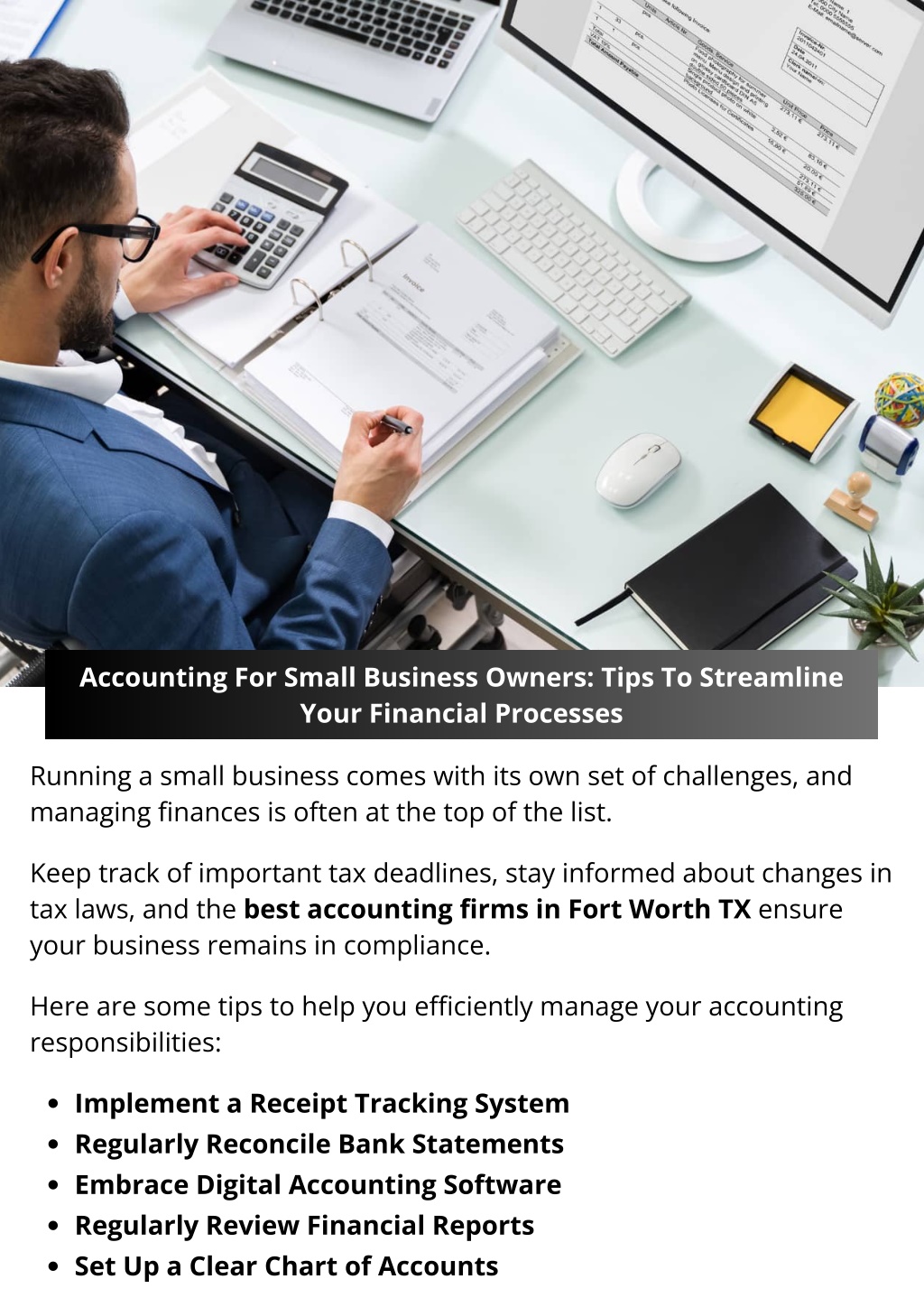
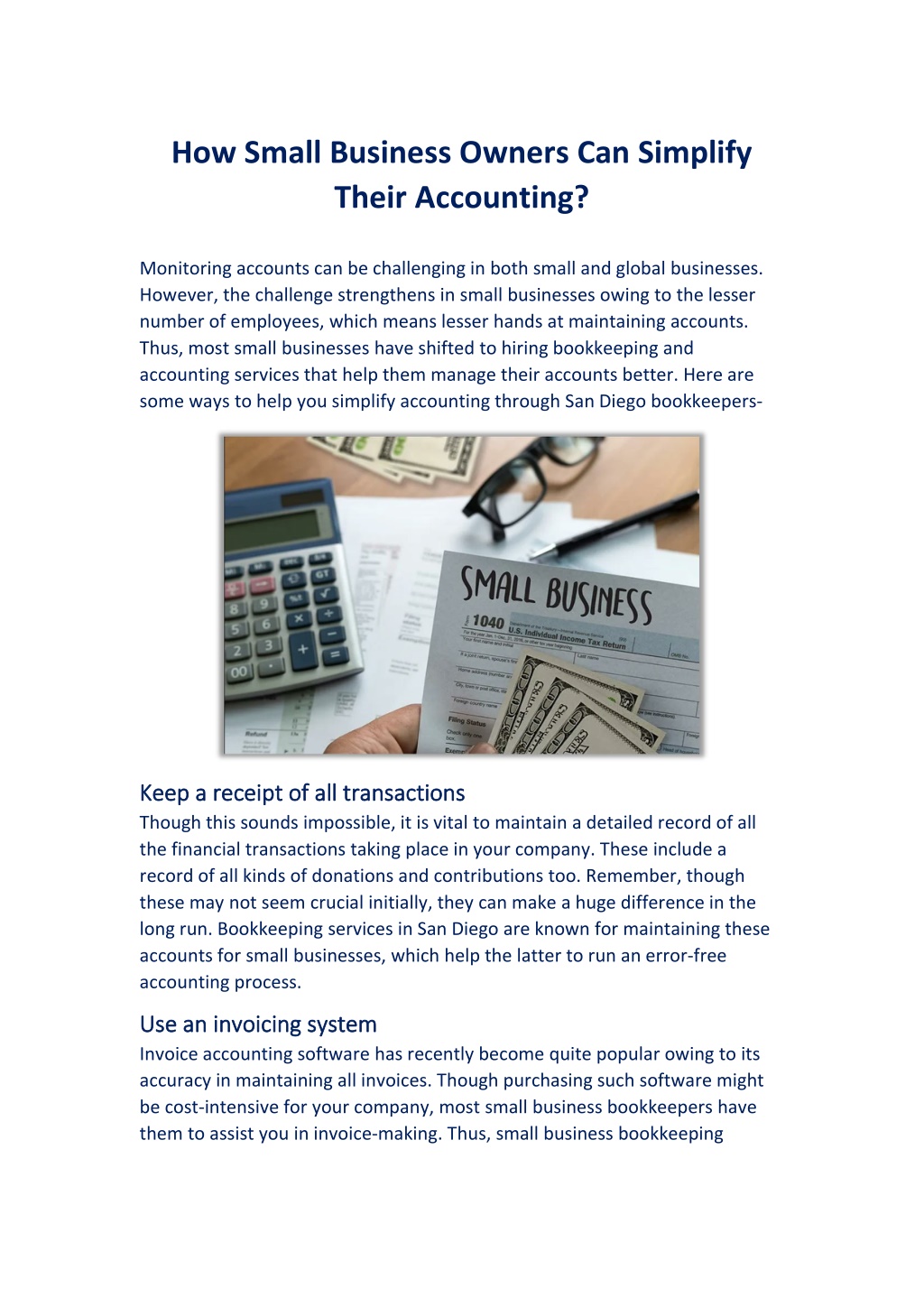
Accounting for small business owners involves the systematic recording, reporting, and analysis of financial transactions to maintain regulatory compliance and inform strategic decision-making. By implementing rigorous bookkeeping practices, reconciling accounts, and preparing accurate financial statements, business owners gain the clarity necessary to manage cash flow, secure financing, and fulfill tax obligations with precision and confidence.
Establishing a Financial Foundation
Effective accounting begins long before tax season. It requires a structured approach to how your business moves money. For a small business, the distinction between personal and business finances is the first and most critical rule. Commingling funds creates significant liability risks and makes auditing an impossible task. You must open a dedicated business checking account and, if possible, a business credit card to ensure every transaction is traceable.
Once your accounts are separated, you must choose an accounting method: cash-basis or accrual-basis. Cash-basis accounting is the simplest form, where revenue is recorded when money is received and expenses are recorded when they are paid. Most very small businesses and sole proprietorships find this sufficient. Accrual-basis accounting, however, records revenue when it is earned and expenses when they are incurred, regardless of when the cash actually changes hands. While more complex, accrual accounting provides a more accurate long-term picture of a business’s financial health and is often required for businesses with inventory or those seeking external investment.
The Core Components of Accounting
To maintain a clear financial overview, every small business owner should master four key financial documents. These reports are the pulse of your operations and are essential for any communication with lenders, investors, or tax authorities.
1. The Balance Sheet
The balance sheet provides a snapshot of your company’s financial position at a specific point in time. It follows the fundamental accounting equation: Assets = Liabilities + Equity. Assets are what you own (cash, inventory, equipment), liabilities are what you owe (loans, accounts payable), and equity is the owner’s investment in the company.
2. The Income Statement (Profit and Loss)
Often called a P&L, this document summarizes your revenues, costs, and expenses during a specific period. It tells you whether your business is profitable by showing your "bottom line"—net income—after all expenses have been subtracted from total revenue.
3. The Cash Flow Statement
This report tracks the actual cash entering and leaving your business. It is vital because a business can be profitable on paper (accrual accounting) but still fail because it lacks the liquid cash to pay bills, payroll, or rent. Monitoring cash flow allows you to predict shortfalls before they become crises.
4. The General Ledger
The general ledger acts as the master record of every financial transaction since the business began. It acts as the "source of truth" that informs the other three reports. In modern accounting, the ledger is typically maintained automatically by accounting software.
Selecting the Right Accounting Tools
In 2026, manual bookkeeping via spreadsheets is rarely advisable for growing businesses. Cloud-based accounting software offers automation that minimizes human error and saves dozens of hours monthly. When selecting software, consider your business’s specific needs, such as integration with your payment processor or e-commerce platform.
| Feature | Spreadsheet (Excel/Google Sheets) | Cloud Accounting Software |
|---|---|---|
| Automation | Minimal (Manual data entry) | High (Bank feed integration) |
| Accuracy | High risk of manual error | Low risk (Audit trails included) |
| Collaboration | Basic shared files | Real-time multi-user access |
| Reporting | Manual creation required | Automated real-time reporting |
| Scalability | Limited | High |
Most modern platforms provide mobile applications that allow you to photograph receipts immediately, ensuring that expense tracking occurs in real-time. Choosing software that complies with standard GAAP (Generally Accepted Accounting Principles) ensures that when you eventually provide data to an accountant or tax preparer, the information is ready for review without expensive cleanup.
Managing Ongoing Requirements
Accounting is not a yearly task; it is a recurring operational process. Consistency is what prevents the end-of-year scramble that many entrepreneurs dread.
Monthly Reconciliations
Reconciliation is the process of comparing your internal records with your bank and credit card statements. If your ledger shows $10,000 in the bank but your statement shows $9,800, you must identify the $200 discrepancy. This might be a missing receipt, a bank fee you forgot to record, or an error. Reconciling monthly catches these issues when they are small and easy to resolve.
Accounts Receivable and Payable
Managing accounts receivable (money owed to you) is crucial for maintaining cash flow. Establish clear payment terms with your clients—such as "Net 30"—and follow up immediately on overdue invoices. Similarly, managing accounts payable (money you owe) ensures you don't miss payments, which can harm your credit score and vendor relationships. Late payment fees are an unnecessary drain on your business's capital.
Tax Compliance
As a business owner, you are responsible for various taxes, including payroll taxes, sales taxes, and income taxes. Depending on your business structure—whether you are a sole proprietorship, LLC, or corporation—your tax obligations will differ. Always maintain a separate "tax bucket" or savings account where you deposit a percentage of your revenue every month. By the time quarterly estimated taxes or annual tax returns are due, the funds should already be set aside.
Working with Professionals
While software can handle the mechanics, it cannot provide strategy. There is a distinct difference between a bookkeeper and a CPA (Certified Public Accountant).
- Bookkeepers focus on the daily, weekly, and monthly recording of transactions and ensuring the books are balanced.
- CPAs focus on tax planning, complex financial analysis, and strategic advisory services.
As your business grows, the cost of hiring professional help is almost always offset by the tax savings and strategic insights they provide. A professional can help you navigate complicated tax codes, advise on depreciation schedules for expensive equipment, and help you structure your business to maximize tax efficiency. Always consult with a licensed professional before making major financial decisions, such as taking on debt or significantly changing your business structure.
Common Mistakes to Avoid
Many small business owners fall into traps that compromise their financial integrity. By identifying these early, you can protect your business:
- Ignoring Receipt Retention: Even with digital tools, you must maintain proof of business expenses. The IRS generally requires documentation for all deductible business expenses.
- Neglecting Payroll Taxes: If you have employees, payroll tax compliance is the most strictly enforced area of accounting. Mistakes here can lead to significant government penalties and interest.
- Forgetting to Pay Yourself: Many owners reinvest everything into the business and forget to draw a salary. This leads to personal financial instability. Determine a sustainable salary for yourself and treat it as a formal business expense.
- Mixing Business and Personal Expenses: Never use your business account for personal errands. It creates a "piercing the corporate veil" issue that could endanger your limited liability protections.
Frequently Asked Questions
How often should I review my financial statements? You should review your P&L and Balance Sheet at least once a month. This cadence allows you to spot trends, such as rising costs in a specific department or a dip in sales, and adjust your operational strategy before the quarter ends.
What is the most important accounting task for a new business? The most important task is the establishment of a formal bank account and the consistent tracking of every single business transaction. Without a clean, separated set of records, every subsequent accounting decision is built on a flawed foundation.
Do I really need professional accounting software? For any business generating revenue or planning to grow, the answer is yes. Software provides security, audit trails, and reporting capabilities that are virtually impossible to maintain manually as your volume of transactions increases.
What is the difference between tax avoidance and tax evasion? Tax avoidance is the legal utilization of the tax regime to your advantage, such as claiming legitimate business deductions. Tax evasion is the illegal non-payment or underpayment of taxes through misrepresentation. Always work within the framework of tax law; never engage in evasion.
How long should I keep my financial records? In general, you should retain business records for at least three to seven years. Tax returns and supporting documentation should be kept in a secure, backed-up digital format to protect against fire, theft, or data corruption.
Conclusion and Next Actions
Accounting is not merely about tracking expenses; it is the language of your business. By separating your finances, automating your bookkeeping, reconciling accounts monthly, and working with professional advisors, you transform your business from a guessing game into a data-driven enterprise.
Your next action: Review your last three months of business transactions. If you are still commingling funds or using a spreadsheet, research cloud-based accounting software that integrates with your current bank and begin the migration process today. Clear, accurate records are your greatest asset in planning for the future of your business.