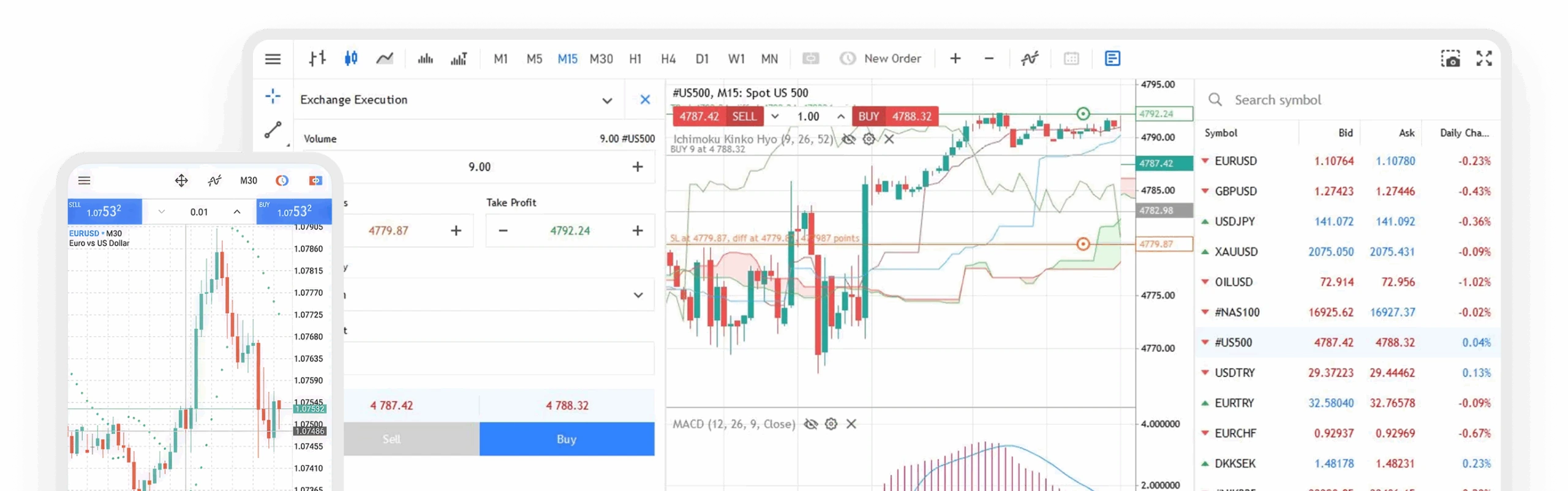
MetaTrader 5 (MT5) serves as a multi-asset institutional and retail trading platform, offering advanced charting, multi-threaded strategy testers, and support for multiple financial markets. As online trading infrastructure evolves, the ways traders and brokers utilize MT5 are shifting. Understanding these developments helps market participants optimize their execution speed, risk management protocols, and overall platform utility in a competitive environment.
1. Shift Toward Multi-Asset and Cross-Market Trading Capabilities
Historically, retail forex platforms were built primarily for spot foreign exchange and simple contract-for-difference (CFD) products. Over recent years, the structural demand for diversification has driven a significant shift toward genuine multi-asset capabilities within MT5. Unlike its predecessor, MetaTrader 4 (MT4), which was engineered monolithically for forex execution, MT5 was designed from the ground up to accommodate centralized and decentralized markets simultaneously.
Traders today increasingly use a single MT5 terminal to manage exposure across spot forex, stock CFDs, commodities, cryptocurrencies, and futures indices. This architectural shift alters portfolio management practices. Traders can hedge currency risk directly by taking positions in correlated commodities or global equities without switching platforms or maintaining multiple account balances across disparate brokers.
Furthermore, brokers have adapted their liquidity aggregation models to feed multiple asset classes into MT5 via FIX protocol bridges. This integration means users experience unified margin requirements, consolidated reporting, and streamlined risk calculations across diverse instruments. Consequently, the platform is no longer viewed strictly as a forex terminal, but as a comprehensive command center for global macro trading.
2. Advanced Algorithmic Trading and Multi-Threaded Backtesting
Algorithmic trading via Expert Advisors (EAs) has undergone a technical transformation driven by improvements in MQL5 and the platform's native execution environment. While MT4 relied on single-threaded testing that often required hours or days to evaluate complex strategies, MT5 utilizes a distributed, multi-threaded strategy tester.
This technical change allows traders to leverage local computer cores as well as the MQL5 Cloud Network to run optimization passes on historical data exponentially faster.
| Feature | MetaTrader 4 (MT4) | MetaTrader 5 (MT5) |
|---|---|---|
| Architecture | Single-threaded | 64-bit, multi-threaded |
| Strategy Testing | Single-core local execution | Multi-core & MQL5 Cloud Network |
| Depth of Market (DoM) | Not natively supported | Native level 2 pricing (DoM) |
| Pending Order Types | 4 basic types | 6 types (including buy/sell stop) |
The integration of the MQL5 Cloud Network enables retail traders to rent thousands of computers worldwide to crunch historical ticks in minutes. Additionally, object-oriented programming (OOP) in MQL5 allows developers to write modular, scalable, and secure code compared to the procedural limitations of MQL4. This capability has narrowed the performance gap between institutional proprietary trading systems and retail algorithmic setups.
3. Integration of Native Depth of Market and Level 2 Pricing
Transparency in order execution has become a baseline requirement for modern retail traders. A major change in MT5 usage is the widespread adoption of its native Depth of Market (DoM) window. In traditional forex retail environments, traders viewed only the top of the book—the best available bid and ask prices.
MT5 provides level 2 pricing data directly from liquidity providers, displaying volume distribution at various price levels. This feature is particularly valuable for exchange-traded derivatives and ECN (Electronic Communication Network) forex feeds where order book liquidity directly impacts slippage and execution quality.
Traders utilize the DoM feature to execute scalping strategies, place limit orders with microsecond precision, and gauge large institutional absorption levels. Brokers, in turn, have restructured their feed connections to support transparent DoM transmission, moving away from opaque market-maker models toward direct market access (DMA) style execution environments.
4. Cloud-Based Infrastructure and Mobile-First Flexibility
The deployment infrastructure supporting MT5 has shifted dramatically toward cloud-based Virtual Private Servers (VPS) and enhanced mobile ecosystems. Because algorithmic trading systems and automated risk management tools require uninterrupted uptime and low latency to execution servers, relying on a home desktop running on consumer internet connections has become obsolete for serious traders.
MetaQuotes’ built-in virtual hosting service allows users to rent a secure, low-latency VPS directly from the platform interface with a single click, synchronizing Expert Advisors and copy-trading subscriptions instantly. This infrastructure ensures that EAs execute trades 24/7 without interruption from power outages or network drops.
Simultaneously, mobile utilization has evolved beyond simple portfolio monitoring. Modern MT5 mobile apps for iOS and Android feature advanced interactive charts, technical indicators, and analytical objects that closely mirror desktop functionality. While heavy strategy development still occurs on desktop workstations, mobile execution and alert management now form a core component of daily workflow for active market participants.
5. Stricter Regulatory Compliance and Account Segregation
The regulatory landscape governing retail forex and CFD brokerages has tightened globally under authorities such as the Australian Securities and Investments Commission (ASIC), the UK Financial Conduct Authority (FCA), and the Cyprus Securities and Exchange Commission (CySEC). These regulatory pressures have directly influenced how brokers configure and maintain MT5 environments.
Brokers must enforce stricter leverage limits, robust negative balance protection, and clear segregation of retail client funds. MT5 provides institutional-grade risk management modules that help compliance officers monitor margin calls, exposure limits, and leverage tiers automatically.
For users, this means that opening an MT5 account today involves more rigorous identity verification (KYC), suitability assessments, and standardized risk disclosure than in previous years. While these steps add friction to the onboarding process, they provide greater financial security and operational transparency across regulated jurisdictions.
Frequently Asked Questions
Is MetaTrader 5 completely replacing MetaTrader 4?
While MT5 has grown significantly in market share due to its multi-asset support and advanced architecture, MT4 remains actively used by a dedicated segment of the retail forex community. However, MetaQuotes and the vast majority of institutional liquidity providers focus their primary software updates, security patches, and developmental resources on MT5.
Can I run my old MT4 Expert Advisors on MT5?
No. MT4 uses the MQL4 programming language, while MT5 uses MQL5. Because the two languages and platform architectures are fundamentally different, Expert Advisors, scripts, and indicators written for MT4 must be rewritten or refactored into MQL5 to function on MT5.
Does MT5 support hedging, or is it strictly netting?
MT5 supports both hedging and netting account systems. While it was originally launched with a default netting system (where multiple positions in the same symbol are combined into one), MetaQuotes introduced a hedging option that allows traders to hold multiple opposing positions in the same currency pair, matching the account behavior commonly preferred by forex traders.
How does the MQL5 Cloud Network work for backtesting?
The MQL5 Cloud Network allows users to utilize idle computing power from thousands of computers worldwide to accelerate the optimization of trading robots. By distributing different parameter sets of a strategy across the network, a backtest that would take days on a single home computer can be completed in minutes.
What should I check before choosing an MT5 broker?
Traders should verify the broker's regulatory status with recognized financial authorities, examine the execution model (ECN vs. market maker), review fee structures (spreads, commissions, swap rates), and check whether the broker offers native support for the specific asset classes and account types (hedging vs. netting) they intend to use.
Final Recommendation
To maximize the benefits of modern MT5 features, traders should first audit their current broker's infrastructure to ensure they have access to true multi-asset feeds, native Depth of Market data, and reliable cloud VPS hosting. If you are transitioning legacy systems from older platforms, allocate sufficient time to refactor custom indicators and Expert Advisors into MQL5 to leverage the platform's multi-threaded execution capabilities safely and efficiently. Always verify regulatory protections and test any automated strategies thoroughly in a demo environment before deploying live capital.
MetaDescription: Explore 5 key changes shaping forex MT5 use today, including multi-asset trading, advanced cloud backtesting, level 2 pricing, and stricter rules.