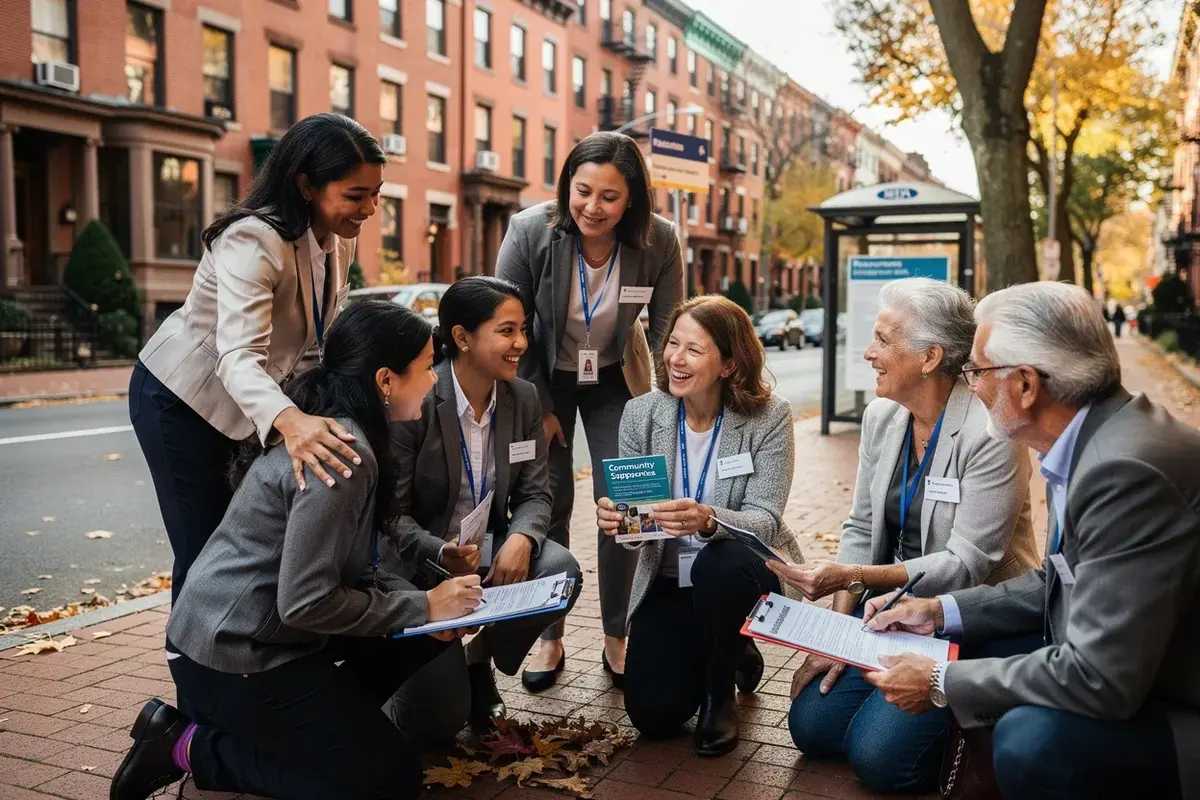
Pursuing a Master of Social Work (MSW) online offers aspiring clinical and macro social workers the flexibility to balance professional and personal commitments while completing accredited graduate education. These programs typically combine rigorous virtual coursework with local field placement hours to ensure graduates meet state licensure requirements.
Introduction to Online Master of Social Work (MSW) Programs
The demand for licensed clinical and macro social workers continues to expand across healthcare, mental health, school systems, and community advocacy organizations. For working professionals and non-traditional students, traditional on-campus graduate education is often logistically impossible. Online Master of Social Work (MSW) programs bridge this gap by delivering core theoretical, ethical, and policy coursework through asynchronous and synchronous digital platforms.
However, earning an MSW online does not mean studying entirely behind a screen. Because professional social work requires supervised, hands-on intervention experience, every reputable online MSW program mandates local field practicum placements. Choosing the right program involves balancing institutional accreditation, specialization options, field placement support, tuition costs, and the structural flexibility of the curriculum. Understanding these variables ensures that candidates select a graduate path that aligns seamlessly with their career goals and state licensure prerequisites.
Understanding Accreditation and Licensure Standards
Before evaluating individual institutions, prospective students must prioritize programmatic accreditation. For social work in the United States, the gold standard is accreditation by the Council on Social Work Education (CSWE).
Why CSWE Accreditation Matters
Graduating from a CSWE-accredited MSW program is a mandatory prerequisite in nearly every U.S. jurisdiction to sit for the Association of Social Work Boards (ASWB) examinations, such as the Licensed Master Social Worker (LMSW) or Licensed Clinical Social Worker (LCSW) exams. Programs that lack CSWE accreditation frequently leave graduates unable to pursue professional licensure or clinical practice, regardless of their academic performance.
When reviewing online programs, applicants should verify whether the institution maintains regional accreditation alongside specialized CSWE programmatic approval. Regional accreditation ensures overall institutional stability and the transferability of credits, while CSWE accreditation validates the specific social work curriculum.
Key Factors in Selecting an Online MSW Program
Evaluating online graduate programs requires looking beyond marketing materials and examining operational details. Several core criteria differentiate top-tier programs from average offerings:
- Field Placement Assistance: Securing a qualified internship site can be one of the most stressful parts of graduate school. Programs with dedicated field placement coordinators who actively partner with agencies in the student's local geographic area provide a distinct advantage.
- Curriculum Structure (Traditional vs. Advanced Standing): Students who hold a Bachelor of Social Work (BSW) from a CSWE-accredited program can often complete an Advanced Standing MSW in one year. Those with undergraduate degrees in unrelated fields must complete a Traditional track spanning two to four years.
- Asynchronous vs. Synchronous Learning: Asynchronous classes allow students to complete assignments and view lectures on their own schedule within weekly deadlines. Synchronous classes require attendance at live virtual lectures, offering more direct engagement with faculty and peers.
- Cost and Financial Aid: Tuition rates vary widely between public in-state institutions, public out-of-state options, and private universities. Students should calculate total program costs, including technology fees, books, and campus immersion requirements.
5 Best Online Social Work Masters Programs for 2026
Evaluating programs based on academic reputation, CSWE accreditation status, student support services, and flexibility reveals five standout institutions offering exceptional online MSW pathways.
1. Fordham University (Online MSW)
Fordham University’s Graduate School of Social Service offers a robust online MSW program rooted in clinical practice and social justice. Known for its rigorous New York clinical heritage, the program prepares students to address complex urban and rural challenges.
- Standout Features: Offers both traditional and advanced standing tracks, multiple entry terms per year, and comprehensive field placement support that leverages a vast national network of agency partners.
- Focus Areas: Clinical practice with individuals, families, and groups, with specialized coursework available in leadership and evaluation.
2. University of Denver (MSW@Denver)
The Graduate School of Social Work at the University of Denver delivers a highly regarded online MSW designed to cultivate change agents and mental health practitioners. The curriculum emphasizes sustainable change and policy advocacy.
- Standout Features: Interactive digital coursework combined with mandatory short-term immersion experiences on campus. The program emphasizes mental health and trauma-informed care.
- Focus Areas: Mental health, health and wellness, children and youth, and global social work.
3. Case Western Reserve University (Online MSW)
Case Western Reserve University’s Jack, Joseph and Morton Mandel School of Applied Social Sciences offers an online MSW that consistently ranks among the top graduate social work programs in the nation. The curriculum emphasizes a scientific approach to human behavior and social environment.
- Standout Features: Offers extensive specializations and a dedicated field placement team that assists distance learners in securing approved local agency placements.
- Focus Areas: Children, youth, and families; mental health; community centers; and older adults.
4. Simmons University (Online MSW)
Simmons University in Boston provides a well-established online MSW program, known historically as SocialWork@Simmons. The curriculum focuses heavily on clinical social work practice, trauma-informed care, and empowerment of marginalized populations.
- Standout Features: Fully online coursework featuring live, face-to-face virtual classes taught by distinguished faculty, alongside structured field education training.
- Focus Areas: Clinical mental health, trauma work, and medical social work.
5. University of Southern California (USC Suzanne Dworak-Peck School of Social Work)
USC offers a prominent online MSW program (Virtual Academic Center) that merges asynchronous learning with dynamic live seminars. The curriculum prepares students for leadership roles in both clinical and macro social work settings.
- Standout Features: Global network of alumni, strong institutional branding, and a curriculum structured around professional competencies defined by the CSWE.
- Focus Areas: Adult mental health, children and families, and public school social work.
Comparison of Featured Online MSW Programs
The following table outlines key structural elements of the top-rated online MSW programs, helping prospective applicants compare format flexibility, prerequisites, and primary concentrations.
| Institution | Program Format | Advanced Standing Available? | Primary Concentrations | Field Placement Support |
|---|---|---|---|---|
| Fordham University | Asynchronous & Synchronous | Yes | Clinical Practice, Leadership | Dedicated placement coordinators |
| University of Denver | Synchronous & Asynchronous | Yes | Mental Health, Trauma, Children/Youth | Regional and local agency networking |
| Case Western Reserve University | Flexible Online | Yes | Mandel Leadership, Mental Health, Aging | Comprehensive national placement assistance |
| Simmons University | Live Virtual Classes + Online | Yes | Clinical Social Work, Trauma Practice | Guided placement matching process |
| University of Southern California | Live Seminars + Online Modules | Yes | Clinical & Macro Practice Pathways | National field placement infrastructure |
Navigating Field Practicum Requirements
Field education is universally recognized as the "field lab" of social work education. CSWE standards require online MSW students to complete a minimum number of supervised direct-practice hours—typically around 900 hours for traditional track students and 500 hours for advanced standing students.
Finding and Securing an Agency Placement
Unlike traditional on-campus programs where faculty might directly assign local internships, online students often participate in a collaborative placement process. Candidates should understand several operational realities regarding field work:
- Geographic Flexibility: Most online universities permit students to complete field hours at approved human services agencies in their home communities, provided the agency has a Master of Social Work supervisor on staff.
- Employment-Based Placements: Some universities allow students to complete a portion of their field hours at their current place of employment, provided the placement tasks are distinct from regular job duties and supervised by an independent MSW practitioner.
- Background Checks and Clearances: Because social work students frequently work with vulnerable populations—including children, psychiatric patients, and older adults—agencies almost universally require comprehensive criminal background checks, fingerprinting, drug screenings, and specific immunizations before fieldwork begins.
Financial Considerations and Tuition Strategies
Investing in an online MSW is a significant financial commitment. Tuition rates vary dramatically between public state universities and private research institutions, ranging anywhere from $400 to over $1,500 per credit hour.
Managing Educational Costs
- Federal Financial Aid: Accredited online MSW programs qualify for federal Direct Unsubsidized Loans and Graduate PLUS loans through the Free Application for Federal Student Aid (FAFSA).
- Employer Assistance and Loan Forgiveness: Many community mental health centers, hospitals, and child welfare agencies offer tuition reimbursement programs. Additionally, graduates working in qualifying non-profit or public sector organizations may be eligible for the federal Public Service Loan Forgiveness (PSLF) program after making 120 qualifying monthly payments.
- Scholarships and Stipends: Students should investigate department-specific scholarships, behavioral health workforce expansion grants, and tribal education grants that target social work candidates.
Common Mistakes to Avoid When Choosing an Online Program
Applying to graduate school requires careful attention to detail. Steering clear of common missteps can save students time, money, and academic frustration:
- Ignoring State Licensure Portability: If a student plans to move across state lines after graduation, they must ensure their online MSW program meets the educational requirements of the destination state. State licensing boards frequently update educational mandates regarding specific coursework (e.g., human sexuality, substance abuse, or domestic violence).
- Overlooking Technology Requirements: Online learning demands a reliable high-speed internet connection, a modern computer, and comfort with complex learning management systems and virtual meeting software.
- Underestimating Time Management: Balancing synchronous classes, asynchronous reading, discussion boards, and 16 to 20 hours of weekly field placement requires disciplined time management. Treat study hours with the same gravity as an in-person job.
Frequently Asked Questions
Are online MSW degrees respected by employers compared to traditional degrees?
Yes. Accredited online MSW programs award the exact same degree as their on-campus counterparts. Because universities rarely designate "online" on the physical diploma, employers evaluate candidates based on their licensure status, field placement experience, and interview performance rather than the delivery mode of their coursework.
How long does it take to complete an online MSW program?
Traditional track programs typically take two years of full-time study or three to four years of part-time study. Advanced standing programs, designed exclusively for those with a Bachelor of Social Work, can be completed in one year full-time or two years part-time.
Can I complete my field placement hours at my current job?
Many universities permit employment-based field placements under strict guidelines. The agency must be approved by the school's field office, and your daily internship tasks must be educational in nature, separate from your regular employment duties, and overseen by an approved MSW field instructor.
Do online MSW programs require campus visits?
Some online MSW programs are entirely virtual, while others require brief, mandatory on-campus immersion weekends or seminars once or twice during the program. Prospective applicants should carefully review program syllabi to identify any mandatory travel requirements.
What is the difference between a clinical and macro social work concentration?
Clinical social work focuses on direct mental health assessment, diagnosis, psychotherapy, and individual counseling. Macro social work focuses on community organizing, public policy advocacy, program evaluation, non-profit administration, and large-scale social reform.
Practical Next Steps for Prospective Applicants
To transition from research to application, prospective students should execute a structured preparation plan:
- Audit Prerequisites: Review undergraduate transcripts to ensure completion of prerequisite coursework, such as introductory statistics, sociology, or psychology.
- Request Information Packets: Reach out to admissions counselors at your top three choice institutions to verify application deadlines, tuition rates, and upcoming cohort start dates.
- Prepare Recommendation Letters: Identify academic or professional references early, ensuring they can speak to your writing ability, interpersonal skills, and ethical commitment to human services.
- Draft the Personal Statement: Craft a compelling, reflective essay articulating your motivation for entering the social work profession, relevant volunteer or work experience, and your long-term career aspirations.