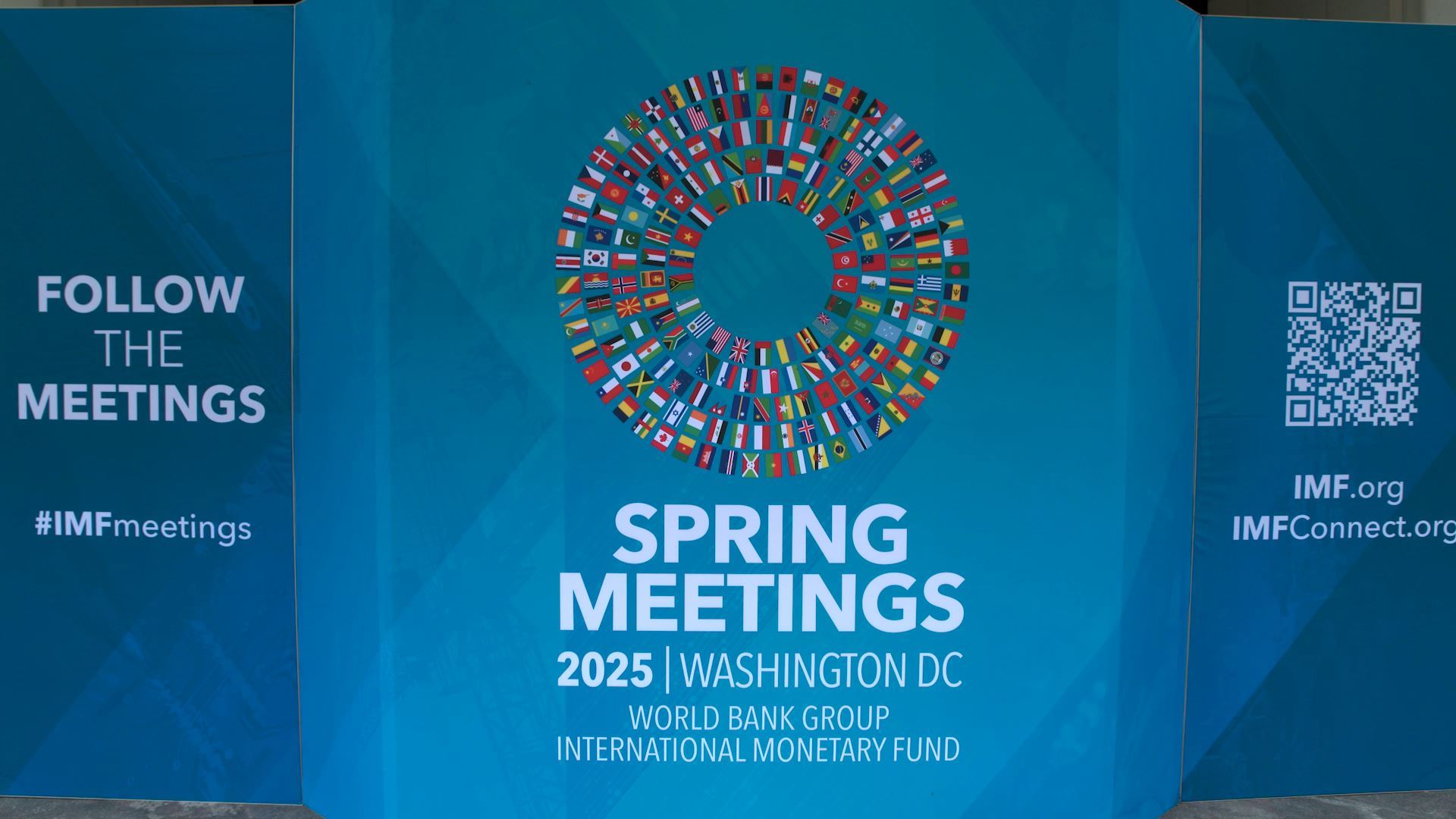
The 2026 Spring Meetings of the World Bank Group (WBG) and the International Monetary Fund (IMF) bring together central bank governors, ministers of finance, civil society representatives, private sector executives, and academics to Washington, D.C., in mid-April 2026. The weeklong summit addresses critical global economic challenges, including sovereign debt restructuring, climate finance, poverty alleviation, and multilateral development bank reforms.
Overview of the World Bank Group and IMF Spring Meetings
The Spring Meetings serve as one of the two primary annual governance gatherings for the international financial institutions established at Bretton Woods in 1944. Held every spring in Washington, D.C., at the joint headquarters of the World Bank Group and the International Monetary Fund, these meetings set the strategic policy directions for the global economy over the subsequent fiscal cycles. By contrast, the Annual Meetings take place in Washington two out of every three years and in a designated member country every third year.
The primary objective of the 2026 Spring Meetings is to foster international monetary cooperation, secure global financial stability, facilitate international trade, promote high employment and sustainable economic growth, and reduce poverty worldwide. As economic conditions present complex multilateral friction—ranging from stubborn core inflation in developed markets to mounting debt service burdens across low-income and emerging economies—the 2026 summit functions as the premier international forum for coordinating fiscal, monetary, and development strategies.
Attendance at the Spring Meetings spans several distinct delegate groups:
- Official Delegates: Finance ministers, central bank governors, and high-level advisors representing the 190 member nations of the International Monetary Fund and the World Bank Group.
- Civil Society Organizations (CSOs): Representatives from non-governmental organizations, trade unions, community advocates, policy institutes, and academic bodies participating in designated policy forums.
- Press and Media: Accredited international journalists, financial correspondents, and broadcast crews covering real-time announcements, press conferences, and report launches.
- Private Sector and Industry Leaders: Executives from commercial banking, investment firms, sovereign wealth funds, and private equity platforms seeking insights into macroeconomic policy directions and co-financing opportunities.
Governance Framework and Committee Structure
The formal work of the Spring Meetings is anchored by two core advisory bodies whose deliberations produce the official communiqués framing global policy priorities.
- WBG / IMF Boards of Governors & Joint Secretariat
- International Monetary and Financial Committee (IMFC)
- Sovereign Debt, Inflation, Liquidity & Financial System
- Development Committee (Joint Ministerial Body)
- Global Poverty, Infrastructure Financing & MDB Reform Agenda
- International Monetary and Financial Committee (IMFC)
International Monetary and Financial Committee (IMFC)
The IMFC consists of 24 members drawn from the pool of governors representing the IMF’s member jurisdictions, reflecting the composition of the IMF Executive Board. The committee meets twice a year—during the Spring and Annual Meetings—to advise the IMF Board of Governors on the management and oversight of the international monetary and financial system.
During the 2026 sessions, the IMFC focuses on evaluating global liquidity conditions, reviewing central bank balance sheet policy outcomes, monitoring global spillovers from elevated interest rates, and assessing the adequacy of the IMF's precautionary lending facilities and quota allocation structures.
The Joint Development Committee
Formally known as the Joint Ministerial Committee of the Boards of Governors of the Bank and the Fund on the Transfer of Real Resources to Developing Countries, the Development Committee also comprises 24 members, typically ministers of finance or development. Its primary mandate is to advise the Boards of Governors on critical development issues and the allocation of financial resources to low-income and middle-income nations.
In 2026, the Development Committee centers its work on expanding the lending capacity of Multilateral Development Banks (MDBs), reviewing progress on the World Bank’s evolution roadmap, and optimizing capital adequacy frameworks to mobilize additional private sector co-investments for climate transition and global health security.
Civil Society Policy Forum (CSPF)
Running parallel to the official ministerial meetings, the Civil Society Policy Forum (CSPF) provides a structured platform for open dialogue between civil society organizations, institutional staff, executive directors, and international policymakers. The CSPF features dozens of panel discussions, workshops, and roundtables covering topics such as gender equality, human rights, debt transparency, tax justice, and environmental protections.
Key Policy Agendas for the 2026 Sessions
The economic landscape of 2026 demands concentrated multilateral coordination. The agenda for the 2026 Spring Meetings centers on four interconnected policy pillars:
1. Global Macroeconomic Stabilization and Disinflation Trajectories
While global supply chains have normalized following post-pandemic distortions, fiscal authorities and monetary policymakers confront the complex legacy of high interest rates and accumulated public debt. The 2026 discussions focus on preserving price stability without inducing growth stagnation, managing structural fiscal deficits, and navigating divergent monetary paths across major central banks. The IMF presents updated growth forecasts and policy recommendations within its flagship publication releases, including the World Economic Outlook (WEO), the Global Financial Stability Report (GFSR), and the Fiscal Monitor.
2. Sovereign Debt Restructuring and the Common Framework
A central theme of the 2026 meetings is addressing severe debt distress in developing and vulnerable middle-income economies. High debt service costs continue to crowd out basic public spending on healthcare, education, and infrastructure. Delegates focus on improving the speed, predictability, and transparency of debt restructurings under the G20 Common Framework for Debt Treatments, while expanding mechanisms like dynamic debt suspensory clauses and climate-resilient debt clauses (CRDCs) for countries vulnerable to natural disasters.
3. Multilateral Development Bank (MDB) Evolution
Building on structural updates implemented over recent years, the World Bank Group and regional development counterparts present concrete outcomes regarding their operational and financial reforms. Priorities include:
- Implementing enhanced balance sheet optimization measures to stretch existing capital bases.
- Expanding equity-to-loan ratios and deploying hybrid capital instruments.
- Establishing standardized political risk insurance structures to catalyze private foreign direct investment (FDI) into emerging markets.
4. Climate Resilience, Just Transition, and Energy Access
Securing scaled-up climate finance remains essential to reaching international net-zero and climate resilience targets. The 2026 meetings review allocations from the IMF's Resilience and Sustainability Trust (RST) and the World Bank's specialized climate financing vehicles. Key discussions concentrate on bridging the gap between concessionary public funding and private private sector finance, particularly for renewable energy infrastructure in Sub-Saharan Africa, Latin America, and Southeast Asia.
Registration, Accreditation, and Participation Guidelines
Access to the 2026 Spring Meetings headquarters in Washington, D.C., is strictly regulated. All attendees must secure formal accreditation prior to arrival; on-site registration for unaccredited individuals is not available.
- Online Accreditation Portal Submission
- Delegates (ED Office)
- CSOs & Media (Review Team)
- Visitors/Exec (Guest System)
- Official Approval Notification & Registration Code
- In-Person Badge Collection at D.C. Main Registration Center
Delegation and Official Registration
Government official credentials must be requested through the office of the respective Executive Director representing the country at either the IMF or the World Bank Group. Delegations typically include ministers, central bank governors, state secretaries, and technical advisors.
Civil Society Organizations (CSOs)
CSOs must submit an online application via the dedicated WBG/IMF Civil Society Portal several weeks in advance of the meetings. Applications require documentation verifying the organization’s legal status, mission statement, non-profit classification, and clear policy relevance to the meeting's topics. Approved CSO representatives receive access badges granting entry to the Civil Society Policy Forum and designated open-access sessions.
Press and Media Accreditation
Journalists must apply through the IMF and World Bank Group joint press registration system. Applicants must submit official press credentials, such as a valid press card issued by a recognized national government or professional media association, proof of assignment from a recognized news organization, and recent samples of published work on financial or development matters.
Guest and Private Sector Access
Private sector executives, commercial bankers, academics, and financial market participants may register under the "Guest" category. Guest registration opens weeks before the event and requires sponsorship or approval from an Executive Director's office or the Joint Secretariat. Due to space constraints inside the headquarters buildings, guest badges may grant limited access to main policy corridors and selected open seminars.
Summary of Participant Categories and Access Levels
| Participant Category | Target Audience | Primary Access Level | Registration Channel | Key Credential Requirements |
|---|---|---|---|---|
| Official Delegates | Finance Ministers, Central Bank Governors, Staff | Universal access to all business sessions, IMFC, Development Committee, and restricted floors | IMF/WBG Executive Director Offices | Official government nomination and diplomatic credentials |
| CSO Delegates | NGO Directors, Researchers, Labor Leaders, Advocates | Full access to Civil Society Policy Forum (CSPF), public seminars, and open briefings | Joint WBG/IMF CSO Online Portal | Organizational proof, mission statement, and operational relevance |
| Press & Media | Correspondents, Photojournalists, Broadcast Crews | Access to Media Center, official press conferences, report launches, and public panels | Joint Press Accreditation System | Valid press pass, assignment letter, and recent financial reporting samples |
| Guests & Observers | Financial Executives, Institutional Investors, Academics | Access to public seminars, side events, non-restricted atrium areas, and partner hubs | Guest Registration Portal / Executive Director Sponsorship | Professional verification, institutional sponsorship, and early clearance |
Event Logistics, Security, and Travel Information
Attending the Spring Meetings in Washington, D.C., requires careful coordination regarding security protocols, international travel documentation, transit, and accommodation.
Venue Footprint and Layout
The 2026 Spring Meetings are hosted across adjacent institutional buildings in the Foggy Bottom neighborhood of Washington, D.C.:
- World Bank Group Headquarters (MC Building): 1818 H Street NW, Washington, DC 20433.
- World Bank Additional Facilities: I, J, and F Buildings along 18th and 19th Streets NW.
- IMF Headquarters 1 (HQ1): 700 19th Street NW, Washington, DC 20431.
- IMF Headquarters 2 (HQ2): 1900 Pennsylvania Avenue NW, Washington, DC 20431.
A secure perimeter connecting these buildings is established by the United States Secret Service, U.S. Park Police, District of Columbia Metropolitan Police Department, and IMF/WBG Security Services.
Security Procedures and Access Protocols
All badged attendees must clear magnetic scanning equipment and physical bag inspections at designated security checkpoints around the perimeter. High-traffic entry points are located along H Street NW, Pennsylvania Avenue NW, and 19th Street NW.
To avoid delays, participants should observe the following guidelines:
- Wear badge credentials visibly at all times inside the perimeter and institutional complexes.
- Do not carry large luggage, packages, or restricted items into the security perimeter.
- Allow at least 30 to 45 minutes for security screening during peak morning arrivals (08:00 to 10:00 EDT).
Visa Requirements for International Participants
International participants entering the United States for the Spring Meetings must secure appropriate U.S. visa documentation well in advance:
- Official Delegates: Typically require G-2 diplomatic visas issued by U.S. embassies or consulates.
- CSOs, Press, Guests, and Private Sector Attendees: Generally enter using a B-1 business visa or an approved ESTA authorization under the Visa Waiver Program (VWP) for eligible foreign nationals.
Official confirmation letters issued by the WBG/IMF Joint Secretariat or Civil Society Team must be included in U.S. visa applications to facilitate timely processing by foreign consular posts. Guidance on entry procedures and visa category specifications can be verified directly via the U.S. Department of State Visa Services portal.
Local Transportation and Navigation
Due to extensive street closures around H Street NW, 18th Street NW, 19th Street NW, and Pennsylvania Avenue NW, motor vehicle traffic inside the immediate footprint is heavily restricted. Attendees are strongly encouraged to utilize public transportation.
The nearest Washington Metropolitan Area Transit Authority (WMATA) Metrorail stations include:
- Farragut West Station: Served by the Blue, Orange, and Silver Lines (exit toward 18th Street NW for immediate access to the World Bank MC Building).
- Farragut North Station: Served by the Red Line (located three blocks north along Connecticut Avenue and L Street NW).
- Foggy Bottom-GWU Station: Served by the Blue, Orange, and Silver Lines (located three blocks west along I Street NW).
Route schedules, system updates, and fare card purchases can be verified using the official Washington Metropolitan Area Transit Authority resources.
Remote Participation and Virtual Streaming Options
For individuals unable to attend the physical summit in Washington, D.C., the World Bank Group and International Monetary Fund provide extensive digital platforms broadcasting major events in real time across multiple official languages (English, French, Spanish, Arabic, Russian, and Chinese).
World Bank Live and IMF Digital Hubs
Key flagship events, open policy roundtables, press briefings, and analytical report presentations are accessible globally via digital streaming platforms:
- World Bank Live: Streamed via World Bank Live, featuring real-time commentary, audience Q&A modules, and downloadable policy summaries.
- IMF Live and Digital Press Center: Streamed through the main IMF platform, hosting live webcasts of regional economic outlook briefings and the IMF Managing Director’s press conferences.
Digital CSPF Access
Select Civil Society Policy Forum panel sessions are recorded or live-streamed to enable global civil society participation. Remote viewers can submit written questions to panelists during designated public feedback windows, ensuring broader democratic engagement in global financial discussions.
Common Attendee Pitfalls and Operational Checklist
To ensure a seamless experience at the 2026 Spring Meetings, participants should consult this operational checklist before traveling:
- Verify Accreditation Status: Ensure that formal registration approval has been confirmed in writing before booking non-refundable travel and accommodation.
- Check Passport Validity: Ensure your passport has at least six months of remaining validity beyond your planned departure date from the United States.
- Apply Early for U.S. Visas: Submit visa applications at least 60 to 90 days prior to departure to avoid administrative delays at U.S. embassies.
- Reserve Accommodations Early: Hotel inventory in Downtown D.C., Foggy Bottom, Dupont Circle, and Penn Quarter fills rapidly. Secure lodging early to minimize travel distance to the perimeter.
- Schedule Badge Pickup Early: Collect registration badges at designated off-peak times (such as the Sunday or Monday preceding the main committee sessions) to avoid severe morning rush-hour queues.
- Download Event Applications: Install the official IMF/World Bank Spring Meetings mobile application to view real-time agenda changes, room assignments, building maps, and transit updates.
Frequently Asked Questions
What are the dates for the 2026 Spring Meetings in Washington, D.C.?
The 2026 Spring Meetings take place in mid-April 2026. Official committee meetings, plenary sessions, press conferences, and the Civil Society Policy Forum run concurrently throughout the week at the joint headquarters facilities.
Can members of the general public attend the 2026 Spring Meetings in person?
No. Physical entry to the headquarters complex and perimeter is restricted strictly to accredited delegates, CSOs, media, and approved guests. However, members of the general public can view public seminars, press briefings, and major speeches via World Bank Live and official IMF streaming channels without prior registration.
What is the difference between the Spring Meetings and the Annual Meetings?
The Spring Meetings are held every year in April at the joint headquarters of the IMF and World Bank Group in Washington, D.C. The Annual Meetings are held in Washington two out of every three years, and in an invited member country every third year during September or October. While both feature IMFC and Development Committee meetings, the Annual Meetings represent the formal annual gathering of the Boards of Governors.
How do non-governmental organizations apply to participate in the Civil Society Policy Forum?
Non-governmental organizations, labor groups, and policy institutes must apply through the joint WBG/IMF CSO online portal during the designated registration window, which closes several weeks prior to the event. CSOs must submit proof of organizational status and demonstrate policy relevance to receive accreditation.
Which metro station is closest to the World Bank and IMF headquarters?
Farragut West (Blue, Orange, and Silver Lines) is the closest Metrorail station, located one block from the World Bank MC Building and two blocks from IMF HQ1 and HQ2. Farragut North (Red Line) and Foggy Bottom-GWU (Blue, Orange, Silver Lines) are both within short walking distance.
Strategic Action Plan for Attendees and Participants
To optimize participation in the 2026 Spring Meetings, stakeholders should execute the following steps according to their role:
- For Official Delegates: Confirm credential filings through your jurisdiction’s Executive Director office, verify bilateral meeting room reservations inside HQ1 and MC buildings, and align bilateral priorities with published committee agendas.
- For Civil Society Representatives: Finalize panel proposals prior to portal submission deadlines, coordinate joint advocacy briefs with international network partners, and utilize the CSPF platform to directly engage institutional leaders.
- For Private Sector Executives: Register early through sponsor channels, monitor publication schedules for the World Economic Outlook and regional reports, and utilize side-event networking hubs around Foggy Bottom to discuss co-financing opportunities.
- For Virtual Participants: Subscribe to event notification alerts on World Bank Live and the IMF Digital Hub, download analytical flagship reports upon release, and engage with live streaming sessions through official interactive chat portals.