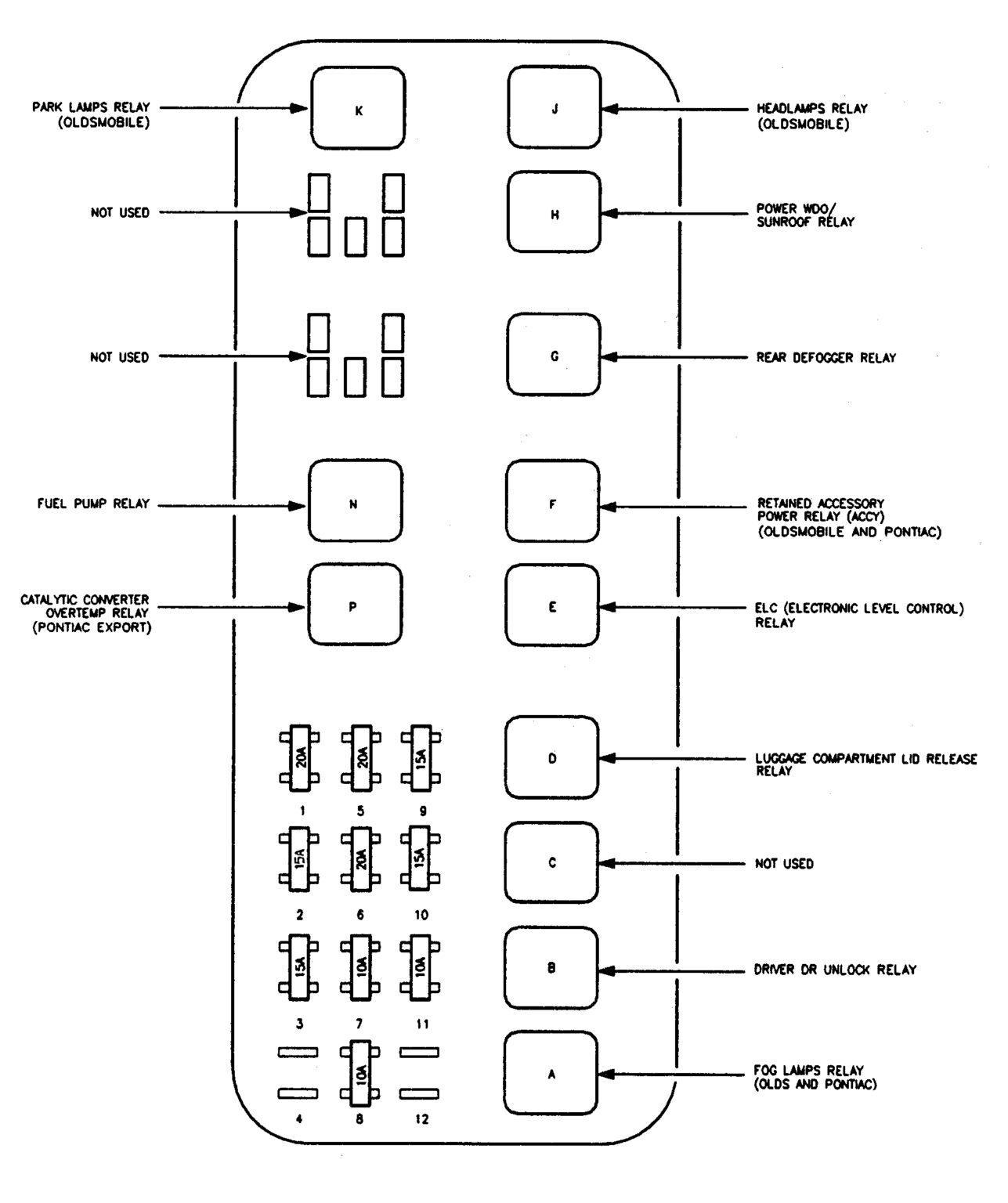
The 2004 Buick LeSabre features two primary fuse box locations: one beneath the rear passenger-side seat protecting internal accessories like the radio and power windows, and another under the hood near the battery housing high-amp engine management components, fuel pump relays, and cooling fans.
Navigating the electrical architecture of a 2004 Buick LeSabre requires a clear understanding of its fuse box layouts, amperage ratings, and circuit protection responsibilities. As these full-size sedans age, electrical accessories, power windows, lighting modules, and fuel system components occasionally experience interruptions. Knowing how to correctly read the fuse box diagram, locate blown fuses, and test circuits safely saves both diagnostic time and repair costs. This comprehensive guide details the dual-location fuse system of the 2004 Buick LeSabre, offering clear breakdowns of circuit allocations, common troubleshooting procedures, and preventative maintenance strategies.
Overview of the 2004 Buick LeSabre Electrical Architecture
The 2004 Buick LeSabre relies on a robust General Motors platform powered by the reliable 3.8L V6 engine (Series III L36). Its electrical system is split into multiple zones to segregate heavy-duty engine bay demands from sensitive cabin electronics. Separating these zones prevents electrical noise from interfering with comfort and safety features while protecting the vehicle's body control module (BCM) and powertrain control module (PCM).
Automotive fuses serve as sacrificial safety devices designed to melt when current exceeds a specific amperage threshold. This prevents wiring harnesses from overheating, melting insulation, or sparking electrical fires. Understanding the layout of the 2004 Buick LeSabre fuse box diagrams allows owners and technicians to quickly isolate whether an inoperative component stems from a simple blown fuse, a faulty relay, or a deeper wiring fault.
Locating the Fuse Panels in a 2004 Buick LeSabre
Unlike vehicles that crowd all fuses into a single cramped dashboard panel, the 2004 Buick LeSabre splits its electrical protection duties between an interior compartment and an engine bay compartment.
1. The Interior (Rear Seat) Fuse Panel
Despite the battery being located under the rear seat on many GM vehicles of this era, the interior fuse panel is housed specifically underneath the rear passenger-side seat cushion.
- Accessing the Panel: To reach this panel, you must lift or remove the bottom cushion of the rear seat. On most LeSabre models, this is achieved by pulling firmly upward on the front edge of the seat cushion to release the wire retaining clips, then sliding the cushion out of the vehicle.
- Protected Systems: This panel controls comfort and convenience accessories, including the power windows, door locks, radio, HVAC blower motor controls, interior courtesy lights, instrument cluster, and seat adjustments.
2. The Under-Hood (Engine Compartment) Fuse Block
The secondary electrical center is located in the engine bay, situated on the driver's side near the front fender and windshield washer fluid reservoir.
- Accessing the Panel: Release the plastic or metal clips securing the black protective cover, and lift the cover straight up. The underside of this cover typically features an embossed diagram or label detailing fuse and relay locations, though physical reference guides provide much greater detail.
- Protected Systems: This box manages high-amperage components essential for vehicle operation, such as the fuel pump, engine cooling fans, ignition system, anti-lock braking system (ABS) module, horn, air conditioning compressor clutch, and primary charging system links.
Comprehensive Breakdown of Interior and Under-Hood Fuses
To assist with diagnostics, the following sections outline the standard configuration of circuits found within the 2004 Buick LeSabre fuse panels. Always cross-reference these descriptions with the physical stampings on your vehicle's fuse block cover.
Interior Fuse Panel Circuit Allocation
The interior panel primarily houses standard mini and ATO-style fuses ranging from 2 amperes to 30 amperes.
- Radio / Infotainment: Protected by a dedicated 10A to 15A fuse, cutting power here disables the head unit and clock displays.
- Power Windows: Managed by a high-current circuit breaker or robust 30A fuse located in the interior panel to handle the simultaneous load of multiple window motors.
- HVAC Controls: Typically tied to a 10A fuse powering the electronic climate control head and blower motor relay triggers.
- Instrument Cluster: Powered by a low-amperage (5A to 10A) fuse ensuring gauge operation and warning indicators function properly.
- Body Control Module (BCM): Feeds various logic circuits and interior lighting timers through multiple fused paths.
Under-Hood Fuse Box Circuit Allocation
The engine compartment center handles heavy loads and includes electromechanical relays alongside high-amperage cartridge fuses.
- Fuel Pump Relay and Fuse: A critical circuit for starting and running. If the 20A fuel pump fuse or associated relay fails, the engine will crank continuously but fail to start due to a lack of fuel pressure.
- Cooling Fans: High-capacity fuses (typically 30A to 40A) protect the low-speed and high-speed cooling fan relays, preventing engine overheating in heavy traffic.
- ABS System: Heavy-duty cartridge fuses manage the electronic brake control module and hydraulic pump motor.
- Horn and Exterior Lighting: Dedicated fuses ensure compliance with safety laws by maintaining horn and headlight functionality independent of interior cabin loads.
| Fuse Box Location | Primary Amperage Range | Common Protected Components | Diagnostic Priority |
|---|---|---|---|
| Rear Seat (Interior) | 2A – 30A | Radio, Power Windows, BCM, HVAC Controls | Check first for non-working accessories or cabin electronics. |
| Engine Bay (Under-Hood) | 10A – 50A+ | Fuel Pump, Cooling Fans, ABS, Ignition, Horn | Check first for crank-no-start conditions or overheating. |
Step-by-Step Guide to Testing and Replacing Fuses
When an electrical accessory fails in your 2004 Buick LeSabre, replacing a fuse is a straightforward maintenance task. However, blindly swapping fuses without understanding the root cause often leads to repeated electrical failures.
Tools Required
- Fuse puller tool (often stored inside the under-hood fuse box cover) or needle-nose pliers.
- Multimeter with continuity testing capabilities or a 12V test light.
- Replacement fuses of matching amperage ratings and physical sizes.
Replacement Procedure
- Turn Off the Ignition: Ensure the key is removed from the ignition switch and all accessories are turned off to prevent electrical arcing.
- Locate the Correct Fuse: Consult the diagram corresponding to the failed component (interior seat panel or engine bay box).
- Extract the Fuse: Grip the fuse securely with the fuse puller or needle-nose pliers and pull straight up. Avoid twisting, which can bend or break the terminal blades.
- Inspect the Fuse Element: Look through the translucent plastic housing. A healthy fuse displays an unbroken metal strip connecting both prongs. A blown fuse displays a melted, charred, or separated gap in the metal strip.
- Verify with a Multimeter: If visual inspection is inconclusive, set a digital multimeter to the continuity (ohms) setting. Touch the meter probes to the two metal tabs on top of the fuse. A beep or a reading near zero ohms indicates a good fuse; an open loop (OL) indicates a blown fuse.
- Install the Replacement: Insert a new fuse matching exact color and amperage rating. Never install a higher-amperage fuse to solve a recurring electrical short, as this creates a serious fire hazard.
Common Electrical Issues and Troubleshooting in the 2004 Buick LeSabre
While the 2004 Buick LeSabre is celebrated for its mechanical durability, certain electrical quirks appear as these vehicles age. Understanding these patterns streamlines troubleshooting.
1. Crank-No-Start Caused by Fuel Pump Relay or Fuse
If the engine cranks normally but refuses to catch, listen closely for the faint whirring sound of the fuel pump priming for two seconds when you turn the key to the "ON" position (without cranking). If you hear nothing, inspect the under-hood fuel pump fuse and swap the fuel pump relay with an identical relay (such as the horn relay) to test for component failure.
2. Intermittent Power Window Failures
Power window failure on older LeSabres frequently points to wire fatigue inside the rubber accordion boot between the driver's door frame and the door itself. If the interior fuse is intact and the window switch clicks without moving the glass, inspect the wiring harness for severed copper strands before replacing the window regulator motor.
3. Parasitic Battery Drain
A dead battery after sitting overnight suggests a parasitic draw. Common culprits in the 2004 LeSabre include a trunk light switch that fails to turn off when the trunk closes, an aftermarket radio installation wired incorrectly into constant power, or a stuck RAP (Retained Accessory Power) relay keeping modules awake. Using a multimeter in series with the negative battery cable allows you to pull individual fuses one by one until the current drop identifies the offending circuit.
Professional Advice and Safety Limitations
Working with automotive electrical systems demands caution. Always disconnect the negative battery terminal before servicing heavy-duty under-hood power distribution blocks or working near the alternator output wires. Never bypass a fuse with wire, foil, or a nail. If a newly replaced fuse blows immediately upon installation, stop troubleshooting and consult a certified professional mechanic or automotive electrician, as this indicates a direct short to ground in the wiring harness.
Frequently Asked Questions
Where is the fuse box located on a 2004 Buick LeSabre?
The 2004 Buick LeSabre has two fuse boxes. The interior fuse panel is located underneath the rear passenger-side seat cushion. The second fuse box is located in the engine compartment on the driver's side near the front fender and washer fluid reservoir.
What causes a fuse to blow repeatedly in a 2004 Buick LeSabre?
A repeatedly blowing fuse indicates an active electrical short, a pinched wire touching bare metal, or an accessory drawing excessive current beyond the circuit's design limit. Installing a higher-amperage fuse to stop it from blowing is dangerous and can cause wiring fires.
Can I use a different amperage fuse if I run out of the correct one?
No. You should only install a replacement fuse with the exact same amperage rating specified by the manufacturer. Using a lower-amperage fuse may cause it to blow prematurely, while using a higher-amperage fuse removes the safety barrier designed to protect your vehicle's wiring harness.
How do I know if a fuse is blown without pulling it out?
Many modern fuses feature transparent housings allowing visual inspection of the internal metal filament. However, you can also test fuses without removal by using a multimeter set to DC voltage or continuity, touching the two small test points on top of each fuse while it remains seated in the panel.
Does the 2004 Buick LeSabre have relays inside the fuse box?
Yes. The under-hood engine compartment fuse box houses several electromechanical relays that control high-current systems like the fuel pump, cooling fans, horn, and air conditioning compressor clutch alongside standard fuses.