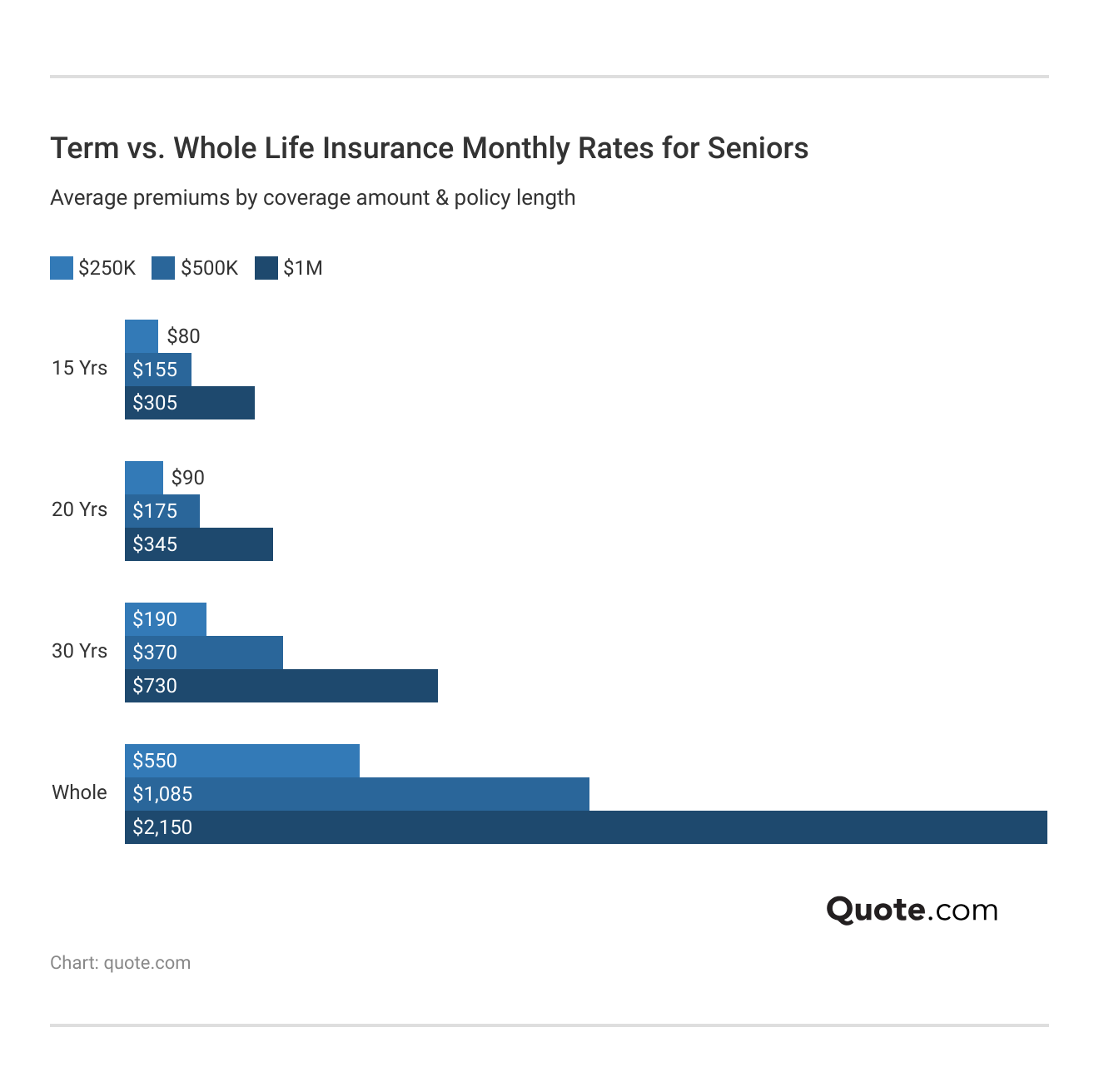
For seniors aged 50 to 70, securing a 20-year term life insurance policy for under $25 per month is achievable, provided the death benefit is modest and the applicant is in relatively good health. Most healthy individuals in their early 50s can secure $50,000 to $100,000 in coverage within this budget, while those over 60 may be limited to $10,000 to $25,000.
The Feasibility of a $25 Monthly Budget for Senior Term Life
In 2026, the landscape of life insurance for seniors has become increasingly segmented. When searching for "20-year term insurance for seniors under 25," the "25" almost universally refers to a monthly premium budget of $25. While this is considered a "budget" tier in the insurance industry, it is a highly popular bracket for seniors who are looking to cover specific, finite financial obligations without overextending their retirement income.
A 20-year term is a significant commitment for an insurance carrier providing coverage to a senior. If you are 60 years old, a 20-year term protects you until age 80. Statistically, the risk of mortality increases sharply during these two decades, which is why premiums are higher for seniors than for younger adults. However, by adjusting the death benefit (the payout amount), it is entirely possible to keep the cost under the $25 threshold.
For many seniors, the goal isn't a million-dollar legacy; it is "mortgage protection" or "final expense" coverage. If you have 15 years left on a mortgage or want to ensure your spouse has a cushion for a specific period, a 20-year term provides a fixed premium and a guaranteed payout if death occurs within that window. In 2026, insurers use advanced algorithmic underwriting to offer these smaller-face-value policies with minimal hassle, making the $25/month price point a competitive entry level for healthy applicants.
Maximum Age Limits for 20-Year Term Policies
Not every senior can qualify for a 20-year duration. Insurance companies set maximum "issue ages" for different term lengths. As of 2026, most major carriers have the following general cutoffs for 20-year term products:
- Ages 50–60: Almost all carriers offer 20-year terms. This is the "sweet spot" for finding rates under $25, especially for those seeking $50,000 or more in coverage.
- Ages 60–65: Coverage is still widely available, but the $25 budget will buy significantly less death benefit—often dropping to the $20,000–$30,000 range.
- Ages 65–70: This is the upper limit for most 20-year term products. Some companies stop offering 20-year terms at age 65, while others extend to 70 for exceptionally healthy non-smokers.
- Age 70+: It is extremely rare to find a 20-year term policy starting at age 70 or older. At this stage, insurers typically pivot to 10-year terms or permanent whole life products because the actuarial probability of outliving a 20-year term at age 90 is low.
If you are 70 and require coverage for 20 years, you may need to look at "Universal Life" products with a no-lapse guarantee, though these will almost certainly exceed a $25 monthly budget.
How Underwriting Classes Impact Your Premium
When you apply for life insurance, you are assigned an underwriting class based on your health, lifestyle, and family history. This class is the primary determinant of whether your 20-year term will stay under $25.
Preferred Best and Preferred
These classes are reserved for seniors with excellent health markers—optimal blood pressure, healthy cholesterol ratios, and no history of chronic illness. If you fall into this category, your $25 budget goes much further. A 55-year-old female in the Preferred Best category might secure $100,000 of 20-year term coverage for approximately $22 per month.
Standard and Standard Plus
Most seniors fall into the "Standard" category. This covers individuals with managed health conditions, such as high blood pressure or well-controlled Type 2 diabetes. In 2026, medical advancements and better data modeling allow insurers to offer Standard rates to seniors who might have been rated "Substandard" a decade ago. For a Standard applicant, $25 might buy $40,000 to $50,000 of coverage at age 55.
Tobacco Ratings
Smoking is the single most significant factor that will push a senior’s premium over $25. Tobacco users typically pay 2x to 4x more than non-smokers. For a senior smoker, even a small $10,000 20-year term policy will likely exceed $25 per month.
Estimating Coverage: 20-Year Term Rates Under $25/Month
The following table provides estimated death benefits available for a $25 maximum monthly premium in 2026. These figures assume a non-smoker in "Standard" or "Preferred" health.
| Age at Issue | Gender | Est. Coverage (Standard Health) | Est. Coverage (Preferred Health) |
|---|---|---|---|
| 50 | Female | $75,000 - $85,000 | $100,000 - $125,000 |
| 50 | Male | $55,000 - $65,000 | $80,000 - $95,000 |
| 55 | Female | $45,000 - $55,000 | $70,000 - $85,000 |
| 55 | Male | $30,000 - $40,000 | $45,000 - $60,000 |
| 60 | Female | $25,000 - $35,000 | $40,000 - $50,000 |
| 60 | Male | $15,000 - $20,000 | $25,000 - $35,000 |
| 65 | Female | $10,000 - $15,000 | $20,000 - $25,000 |
| 65 | Male | Under $10,000 (Rare) | $10,000 - $15,000 |
Note: Rates vary significantly by carrier and specific medical history. These are estimates based on 2026 market trends.
Simplified Issue vs. Fully Underwritten Policies
Seniors have two primary paths when applying for a 20-year term: Fully Underwritten and Simplified Issue.
Fully Underwritten Policies
This traditional route involves a detailed medical questionnaire and often a "paramedical exam" (blood draw, physical measurements). Because the insurer gets a clear picture of your health, these policies offer the lowest possible rates. If you want to maximize the amount of coverage you get for your $25, this is the best option. In 2026, many "fully underwritten" policies now use "accelerated underwriting," which pulls data from your Electronic Health Records (EHR) to skip the physical exam if your records are clean.
Simplified Issue (No-Exam)
Simplified issue policies skip the medical exam and rely on a shorter health questionnaire and pharmacy record checks. These are faster to obtain but are generally more expensive per dollar of coverage. A senior might choose this if they have minor health issues they fear might disqualify them from "Preferred" rates or if they simply want to avoid needles. However, staying under $25 with a simplified issue 20-year term is difficult for anyone over age 55 due to the higher "convenience" pricing.
Key Factors Influencing Senior Life Insurance Costs
Beyond age and health, several secondary factors determine if your policy will fit within a $25 budget.
- Gender: Biologically, women have a longer life expectancy than men. Consequently, life insurance rates for women are lower. A 60-year-old woman can often get 20% to 30% more coverage than a 60-year-old man for the same $25 premium.
- Family History: Even if you are healthy, a family history of early-onset heart disease or cancer (before age 60) can prevent you from getting "Preferred" rates, potentially pushing your premium for a specific death benefit above $25.
- Lifestyle Risks: Activities like SCUBA diving, private piloting, or frequent travel to high-risk zones can lead to "flat extra" charges. For a senior on a budget, these activities are often the difference between a $24 premium and a $35 premium.
- Policy Riders: Adding riders such as "Living Benefits" (which allow you to access the death benefit if you are diagnosed with a terminal or chronic illness) or "Waiver of Premium" (which pays the premium if you become disabled) adds to the cost. To stay under $25, seniors often have to forgo these optional add-ons.
Common Mistakes Seniors Make When Buying Term Insurance
Navigating the insurance market in 2026 requires avoiding common pitfalls that can lead to overpaying or buying the wrong product.
- Buying Too Much Duration: Many seniors instinctively look for a 20-year term because it feels "safe." However, if your only major debt is a mortgage with 12 years remaining, a 15-year term will be significantly cheaper and still meet your needs. By shortening the term to match the actual need, you can often increase the death benefit while keeping the premium under $25.
- Overlooking the "Renewability" Clause: Most term policies allow you to renew annually after the 20-year term ends. However, the price jumps exponentially at that point. Seniors should not rely on renewability but rather treat the 20-year mark as the definitive end of the coverage.
- Neglecting the "Conversion" Rider: A conversion rider allows you to turn your term policy into a permanent whole-life policy without a medical exam. In 2026, this is a standard feature in many policies. For a senior, this is a valuable safety net; if you develop a health condition during the 20-year term, you can "lock in" permanent coverage before the term expires.
- Ignoring the Credit Rating of the Carrier: A $25 policy is only good if the company can pay the claim 15 or 20 years from now. Always check the A.M. Best or Standard & Poor’s rating of the insurer. Stick with companies rated A- or better.
Alternatives if a 20-Year Term is Unattainable for $25
If your health or age makes a 20-year term for $25 impossible, consider these intent-aligned alternatives:
10-Year or 15-Year Term
Shortening the term length is the most effective way to lower the premium. A 65-year-old man who cannot find a 20-year term for $25 can likely find a 10-year term for that price with a $25,000 death benefit.
Final Expense (Whole Life)
If the goal is specifically to cover burial and funeral costs, a small whole life policy (Final Expense) may be better. While the "cost per thousand" is higher than term insurance, the policy never expires as long as you pay the premiums. You can often find a $10,000 Final Expense policy for a senior in the $25-$35 range.
Guaranteed Issue Life Insurance
If you have significant health issues (e.g., recent heart attack, active cancer treatment), you will not qualify for a 20-year term. Guaranteed Issue policies have no health questions. However, they usually have a "graded death benefit," meaning if you die within the first two years, the beneficiaries only receive the premiums paid plus interest. These are typically small policies ($5,000 - $25,000) and are a last resort.
Frequently Asked Questions
Can I get a 20-year term life policy at age 70 for under $25?
In 2026, it is highly unlikely to find a 20-year term for a 70-year-old at this price point. At age 70, the risk to the insurer over 20 years is high. A $25 budget at this age would typically only cover a 10-year term with a very small death benefit (under $10,000) or a small final expense policy.
Does "under 25" refer to the age of the senior or the price?
In the context of senior life insurance, "under 25" almost always refers to the monthly premium cost ($25). A "senior" is generally defined as someone 50 or older, making "senior under age 25" a contradiction in terms.
Will my premiums increase during the 20-year term?
No. As long as you purchase a "Level Term" policy, your premiums are guaranteed to stay exactly the same for the entire 20-year period. This is one of the primary advantages for seniors on a fixed income, as it protects against inflation and rising costs.
What happens if I outlive the 20-year term?
If you are still living after 20 years, the coverage simply expires. You do not receive any money back unless you specifically purchased a "Return of Premium" (ROP) rider. However, ROP riders are expensive and would likely push your monthly premium well above the $25 budget.
Can I apply for a $25 policy online without talking to an agent?
Yes, in 2026, many "insurtech" platforms allow seniors to apply and receive an instant decision for smaller policies (under $100,000). These platforms use automated underwriting to verify your identity and health history in real-time.
Final Recommendation for Seniors
If you are looking for 20-year term insurance for seniors under $25, your first step should be to determine exactly how much coverage you need. If you are in your 50s, aim for a fully underwritten policy to maximize your death benefit. If you are in your 60s, be prepared for a smaller payout—around $15,000 to $30,000—to keep the price within your budget. Always compare at least three different carriers, as "senior-friendly" insurers often have vastly different rates for the same health conditions. Finally, prioritize policies with a conversion rider, giving you the flexibility to maintain coverage if your needs change as you approach the end of the term.