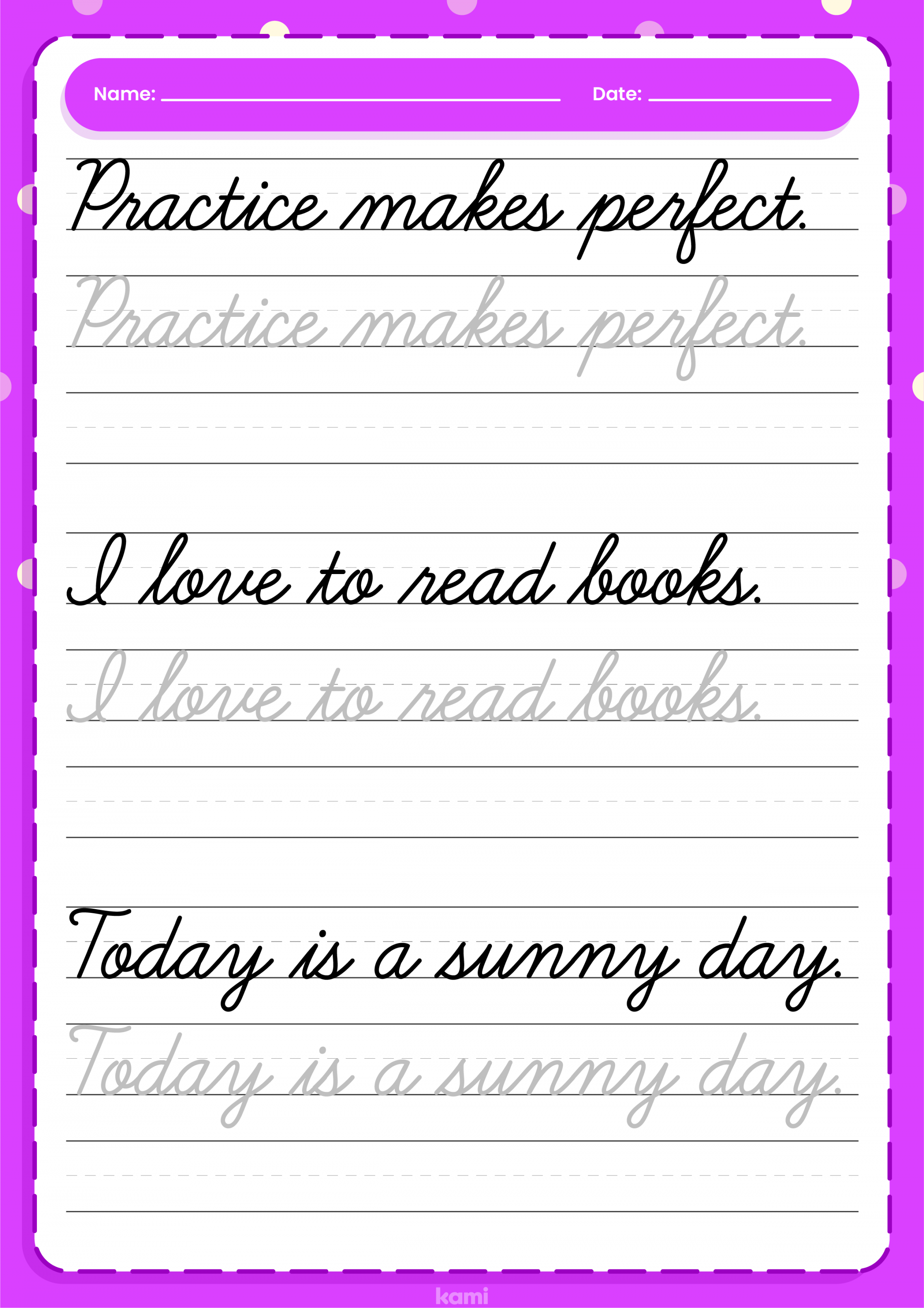
A 20 prompt 3rd grade writing worksheet PDF is a structured printable educational document featuring twenty distinct creative, narrative, or informational writing prompts tailored for eight- and nine-year-old students to build foundational literacy, grammar, and composition skills.
Understanding the Scope of 3rd Grade Writing Worksheets
The transition into third grade marks a critical milestone in elementary education. Students shift away from simply learning how to decode words and form basic sentences toward using writing as a tool for communication, expression, and critical thinking. A comprehensive writing worksheet featuring twenty targeted prompts provides educators, homeschooling parents, and tutors with a versatile framework to guide this developmental leap. These worksheets bridge the gap between structured sentence writing and longer paragraph development.
At this developmental stage, children are expected to expand their vocabulary, organize their thoughts logically, and begin mastering narrative, opinion, and informational writing genres. Utilizing a curated set of twenty prompts allows instructors to maintain continuity while introducing varied topics that spark imagination. Whether used in a classroom setting during morning work or as a supplemental resource at home, a well-designed PDF resource eliminates the friction of daily lesson planning while ensuring students receive balanced practice across multiple writing modalities.
Core Developmental Milestones in Third-Grade Writing
Before assigning writing prompts, it is helpful to understand the cognitive and motor milestones typical of third-grade students. Children in this age group are generally between eight and nine years old. Their fine motor skills are sufficiently developed to handle sustained handwriting or basic keyboarding, allowing them to focus more cognitive energy on content generation, spelling patterns, and punctuation rather than physical transcription.
Cognitively, third graders are moving out of the purely egocentric stage of storytelling. They can conceptualize plots with clear beginnings, middles, and ends. They understand the concept of a main idea and supporting details. Furthermore, state educational standards—such as the Common Core State Standards for English Language Arts—stipulate that third-grade writers should be able to:
- Write opinion pieces on topics or texts, supporting a point of view with reasons.
- Write informative or explanatory texts to examine a topic and convey ideas clearly.
- Write narratives to develop real or imagined experiences or events using effective technique, descriptive details, and clear event sequences.
- With guidance and support from peers and adults, develop and strengthen writing as needed by planning, revising, and editing.
A robust twenty-prompt worksheet directly supports these standards by offering a mix of opinion-based questions, narrative scenarios, and informational writing challenges within a single cohesive document.
Anatomy of an Effective 20-Prompt Writing Resource
Not all writing worksheets are created equal. An effective PDF resource must balance creative freedom with structural scaffolding. When designing or selecting a 20-prompt third-grade writing worksheet PDF, several structural and pedagogical elements must be present to ensure maximum educational value.
- Clear Hook: Captures student interest immediately
- Core Task: Defines whether it's narrative/opinion/etc
- Scaffolding: Provides vocabulary words or sentence starters
- Output Space: Offers appropriately lined writing space
Categorization of Prompts
A high-quality worksheet does not rely on twenty random questions. Instead, it categorizes prompts into distinct genre buckets. A balanced distribution typically features:
- Narrative Prompts (7–8 items): Focus on storytelling, character development, and creative imagination (e.g., "Write a story about waking up and discovering you can fly").
- Opinion Prompts (6–7 items): Require students to take a stance and justify it with reasons (e.g., "Is it better to live in the city or the country? Why?").
- Informational/Expository Prompts (5–6 items): Challenge students to explain a process, describe an object, or share factual knowledge (e.g., "Explain the steps required to plant a seed and watch it grow").
Visual Layout and Readability
For third graders, the physical layout of a PDF heavily influences engagement. Fonts should be clean, legible, and sized appropriately (typically 12pt to 14pt sans-serif or primary-grade print fonts). Ample white space prevents cognitive overload. If the worksheet is designed for direct writing, it should include standard primary-ruled lines with a dotted midline to reinforce proper letter formation and spacing. If it is designed as a prompt generator for a separate notebook, the prompts should be numbered clearly from 1 to 20 with dedicated check-boxes so students can track their completed work.
Categorized Overview of Third-Grade Writing Prompts
To illustrate the variety found in top-tier educational PDFs, the following table breaks down sample prompt types, their primary educational focus, and the specific writing skills they cultivate in third-grade learners.
| Prompt Category | Sample Prompt Example | Primary Educational Focus | Target Skill Developed |
|---|---|---|---|
| Narrative | "Imagine your pet could talk for one day. What is the first thing you two would talk about?" | Creative storytelling and dialogue | Use of quotation marks and narrative voice |
| Opinion | "What is the best season of the year? Provide three reasons to support your choice." | Argumentative structure and justification | Linking words (because, therefore, additionally) |
| Informational | "Describe how to make your favorite sandwich step-by-step." | Expository sequencing and clarity | Transition words (first, next, then, finally) |
| Reflective | "Write about a time you made a mistake and what you learned from it." | Personal reflection and metacognition | Descriptive language and emotional vocabulary |
| Imaginative | "If you could invent a brand-new school subject, what would it be and what would you do in class?" | Divergent thinking and concept explanation | Detail elaboration and sentence variety |
Pedagogical Strategies for Implementing Writing Prompts
Handing a student a worksheet and telling them to write twenty prompts in one sitting is a recipe for burnout and frustration. Third-grade attention spans and fine motor stamina require a structured, phased implementation strategy. Educators and parents should treat a 20-prompt PDF as an ongoing curriculum repository rather than a single-use test.
Daily Warm-Ups and Bell Ringers
One of the most effective ways to utilize a multi-prompt document is through daily or weekly rotations. Assigning one prompt every morning as a bell-ringer activity gets students writing immediately upon entering the classroom or starting the homeschool day. This low-stakes writing practice builds fluency. Because the stakes are low—focused on idea generation rather than perfection—students feel freer to take creative risks.
The Writing Process Integration
Even though worksheets are compact, they should still encourage the fundamental stages of the writing process: prewriting, drafting, and revising. Teachers can guide students through the following routine for selected prompts:
- Brainstorming (5 minutes): Students jot down keywords, bullet points, or draw a quick sketch related to the prompt.
- Drafting (10–15 minutes): Students write their response, focusing on getting their ideas down on paper without obsessing over minor spelling errors.
- Revising and Editing (5–10 minutes): Using a colored pen or pencil, students check for capital letters at the beginning of sentences, end punctuation, and spelling of high-frequency words.
Accessing, Downloading, and Formatting Printable PDFs
Finding reliable educational resources online requires knowing where to look and how to verify file safety and educational quality. Countless teacher-author marketplaces, educational blogs, and government literacy initiatives offer free or low-cost PDFs containing writing prompts.
Verification and File Safety
When downloading educational PDFs from the internet, always ensure the file originates from a reputable educational platform, verified teacher network, or established publishing house. Check that the file extension ends strictly in .pdf and avoid downloading executable files or compressed archives from unknown sources.
Printing and Digital Adaptation
Most worksheets are formatted for standard letter paper (8.5 x 11 inches). When printing, ensure your printer settings are adjusted to "Actual Size" or "Fit to Printable Area" to prevent the margins from cutting off the prompt text or writing lines.
Furthermore, with the rise of digital classrooms utilizing tablets and laptops, many modern PDFs are formatted as fillable forms or interactive documents. Students can open the PDF using applications like Adobe Acrobat Reader, Kami, or Apple Books and type their answers directly into text boxes, or educators can project the prompt on an interactive whiteboard for whole-class group writing sessions.
Comparative Evaluation of Writing Worksheet Formats
To help educators choose the right format for their specific classroom or home environment, the following comparison highlights the trade-offs between traditional static printouts, fillable digital PDFs, and bound prompt journals.
| Format Type | Accessibility & Setup | Student Engagement | Best Use Case | Limitations |
|---|---|---|---|---|
| Static Printable PDF | Instant print; requires physical paper and pencils. | High tactile engagement; excellent for handwriting practice. | Daily morning work, traditional classrooms, quiet writing centers. | Requires ongoing paper/printer maintenance; no built-in spell check. |
| Fillable Digital PDF | Requires device access and PDF annotation software. | Moderate-to-high for tech-savvy learners; builds typing skills. | 1:1 device classrooms, remote learning, hybrid models. | Screen fatigue; less effective for practicing cursive or print handwriting. |
| Bound Prompt Journal | Pre-printed book format; zero digital setup. | High sense of ownership and long-term portfolio building. | Homeschool portfolios, end-of-year keepsake writing books. | Fixed content; cannot easily add, remove, or rearrange individual prompts. |
Common Challenges and Troubleshooting
Even with engaging prompts, educators often encounter hurdles when teaching third-grade writing. Anticipating these challenges allows for proactive intervention.
Overcoming Writer's Block
Third graders frequently stare at a blank page, paralyzed by not knowing how to start.
- Solution: Teach specific sentence-starter formulas. For opinion prompts, encourage phrases like "I firmly believe that..." or "In my opinion...". For narrative prompts, suggest starting with sound effects ("Boom!") or dialogue ("Watch out!" screamed Leo).
Stamina and Length Deficits
Children may write a single sentence and declare they are finished.
- Solution: Establish clear expectations using visual checklists. For third grade, a standard prompt response should ideally consist of a minimum of five to seven sentences (a complete paragraph or short multi-paragraph response). Encourage the use of expanding questions: Instead of just answering what happened, prompt them to explain why and how.
Mechanics Over Content Fixation
Some students refuse to write because they are afraid of misspelling a word, which stifles their creative flow.
- Solution: Emphasize a two-pass writing method. Assure students that the first draft is for ideas only. Tell them: "Get your thoughts on paper first; we will fix the spelling and punctuation during the editing phase."
Frequently Asked Questions
What specific grade level is a 20-prompt writing worksheet best suited for?
These worksheets are primarily designed for third-grade students (ages 8–9). However, they can also serve as advanced enrichment for high-achieving second graders or as supportive intervention and remedial practice for fourth graders who need reinforcement in basic composition and paragraph structure.
How many prompts should a student complete each week?
A sustainable pace is two to three prompts per week. This allows adequate time for brainstorming, drafting, editing, and teacher feedback without overwhelming the student's daily schedule or causing writing fatigue.
Are printable writing worksheets aligned with school educational standards?
High-quality worksheets designed by experienced educators align directly with core standards such as the Common Core State Standards (CCSS), focusing on narrative development, opinion justification, and informative explanation. Always review the worksheet preview to ensure alignment with your specific regional curriculum.
Can these PDF prompts be used for digital learning platforms?
Yes. Many modern educational PDFs are interactive or fillable. If a PDF is static, teachers can still upload the document to platforms like Google Classroom, Seesaw, or Canvas as an image or read-only background, allowing students to type their responses into digital text boxes or submit photos of handwritten work.
How can I help a student who struggles with spelling during creative writing?
Encourage invented spelling during the initial drafting phase so the flow of ideas is not interrupted. Provide a portable word wall, a personal dictionary, or phonetic spelling charts nearby. Reserve spelling corrections and grammar checks strictly for the revision stage of the writing process.
Practical Next Actions
To successfully implement a 20-prompt writing worksheet in your educational environment, take the following steps:
- Download or source a verified 3rd-grade writing prompt PDF that balances narrative, opinion, and informational genres.
- Review the prompts in advance to select those that best match your current thematic unit or student skill level.
- Establish a routine—such as a Tuesday/Thursday writing block or daily morning warm-up—to introduce prompts incrementally.
- Provide constructive, positive feedback focused on idea expansion and clear structure rather than red-ink overcorrection, fostering a lifelong love of writing.