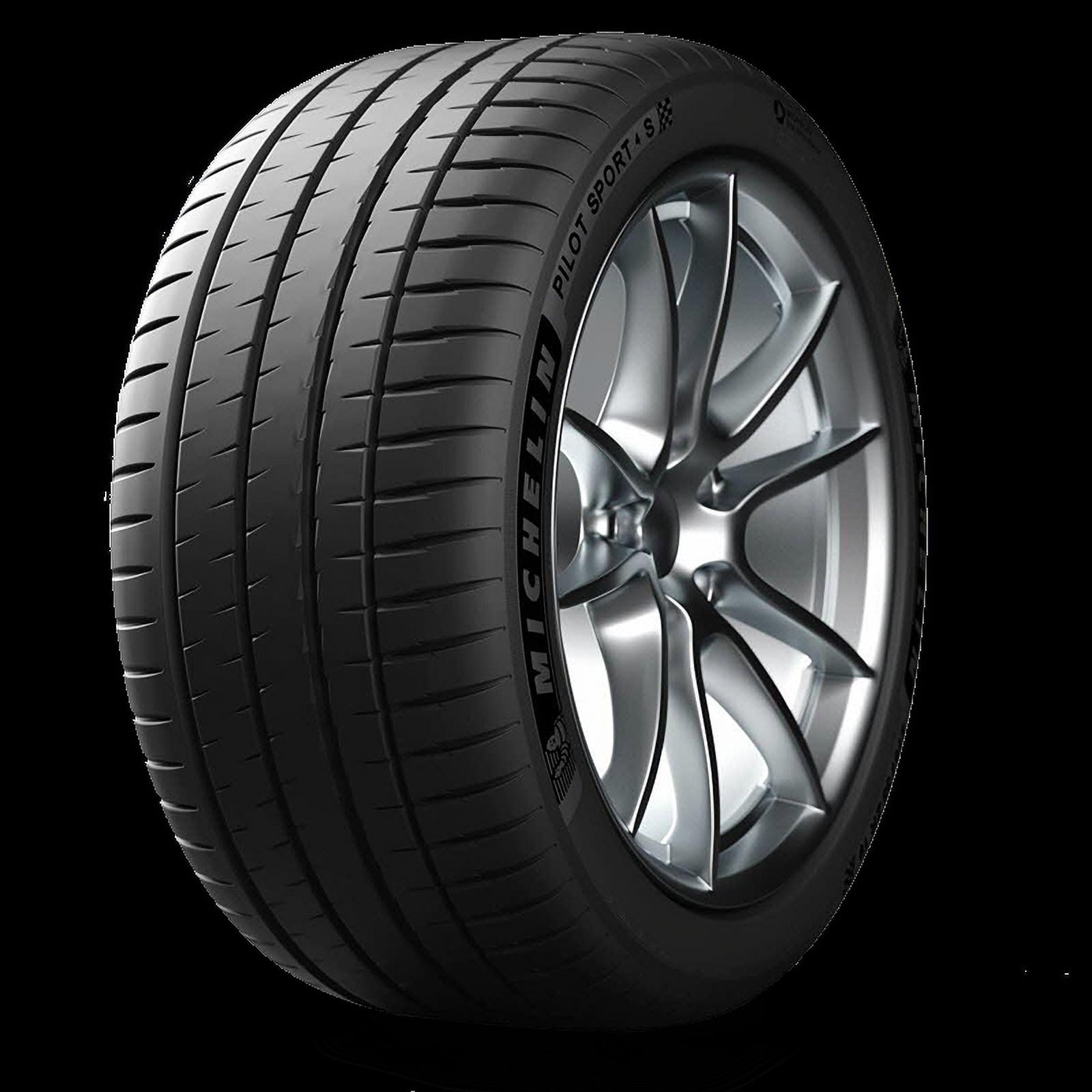
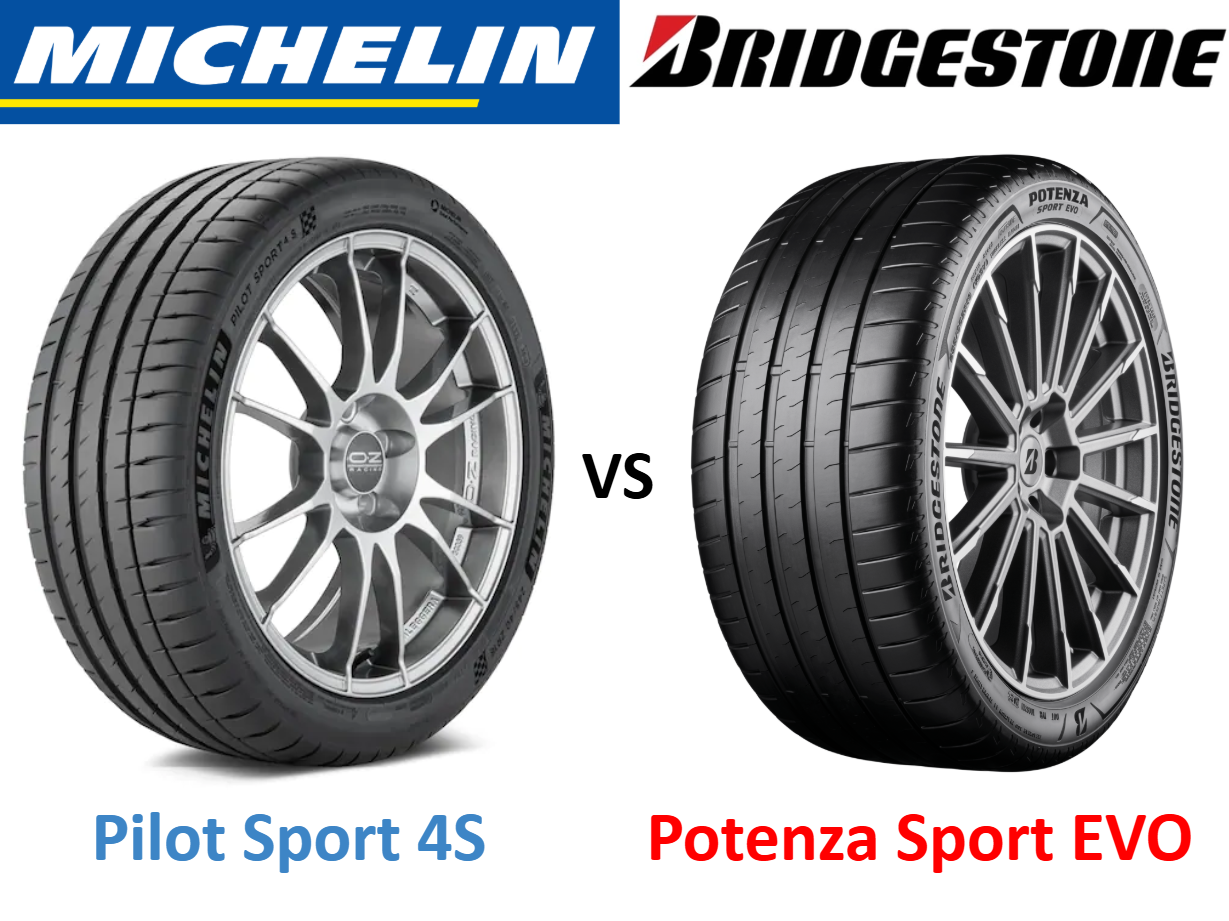
The Michelin Pilot Sport 4S (PS4S) is a Max Performance Summer tire designed for optimal operation between 70°F (21°C) and 130°F (54°C). Performance degrades significantly below 45°F (7°C), as the rubber compound loses elasticity, risking both a loss of traction and permanent structural damage known as compound cracking in sub-freezing environments.
Understanding the Chemistry of the Michelin Pilot Sport 4S
To understand the temperature range of the Michelin Pilot Sport 4S, one must first look at the sophisticated chemical engineering that defines it. As of 2026, the PS4S remains a benchmark in the Max Performance Summer category because of its Multi-Compound Technology. This involves using different rubber elastomers on the outboard and inboard sides of the tread.
The outboard side typically features a "hybrid" elastomer designed for dry grip, which is highly effective at conforming to the road surface at high speeds. The inboard side utilizes functionalized polymers and silica for wet grip and braking. Both of these chemical sets are "tuned" for warmth. In tire chemistry, this is related to the Glass Transition Temperature ($T_g$). This is the point at which a polymer changes from a flexible, "rubbery" state to a hard, "glassy," and brittle state. For a summer tire like the PS4S, that transition begins much earlier than it does for an all-season or winter tire.
When the ambient temperature drops, the molecules within the PS4S tread move more slowly. This reduced molecular mobility means the tire cannot deform into the microscopic irregularities of the asphalt. If the tire cannot deform, it cannot create friction. This is why drivers often report a "wooden" or "plastic" feel when driving on these tires in early spring or late autumn mornings.
The Critical Lower Threshold: The 45°F (7°C) Rule
The most important temperature for any Michelin Pilot Sport 4S owner to remember is 45°F (7°C). This is the industry-standard threshold where summer compounds begin to lose their competitive advantage over all-season tires.
Performance Loss and Braking Distances
As temperatures dip below 45°F, the braking distance of the PS4S increases exponentially. Even on dry pavement, a cold PS4S will take significantly longer to stop the vehicle than it would at 75°F. This occurs because the rubber has hardened, effectively reducing the "contact patch" that is actually interacting with the road. In 2026, with the high torque of modern electric and hybrid performance vehicles, this loss of grip is even more pronounced during aggressive acceleration or regenerative braking.
The Danger of "Compound Cracking"
If you continue to operate or even move a vehicle equipped with PS4S tires in temperatures below 20°F (-7°C), you risk permanent physical damage. This is known as compound cracking or cold cracking. Because the rubber has become brittle, the physical stress of the tire flexing as it rotates can cause the tread blocks to crack or even separate from the carcass.
Michelin specifically warns that tires showing such cracks must be replaced, as the structural integrity of the tread is compromised. These cracks are not merely cosmetic; they are failures in the polymer bonds. If your vehicle has been sitting in a garage where temperatures dropped below freezing, it is recommended to let the tires warm up naturally to at least 40°F before moving the car or adjusting the air pressure.
The Optimal Operating Window: 70°F to 130°F
While the PS4S can be driven safely at 50°F, it does not truly "wake up" until the internal carcass and surface tread reach approximately 70°F (21°C). This is the "sweet spot" where the viscoelastic properties of the rubber are perfectly balanced for high-performance driving.
Street vs. Track Temperatures
On the street, the Michelin Pilot Sport 4S is a class leader because it reaches this operating window quickly through normal driving. However, it is important to distinguish between ambient temperature and tire temperature. On a 60°F day, spirited driving can easily bring the tire temperatures up into the 90°F range, providing excellent grip.
On a closed circuit or track, the PS4S can handle higher temperatures, but it is not a dedicated "R-compound" or "semi-slick" tire. If the tire temperature exceeds 160°F (71°C), the compound can become "greasy." At this point, the rubber is too soft, and the tire will begin to slide more, lead to accelerated wear, and eventually "chunk" (where small pieces of the tread peel off). For 2026 track enthusiasts, monitoring tire pressures is the best way to manage these heat gains; as the air inside heats up, pressure rises, which can further reduce the contact patch if not bled off.
Managing Temperature Transitions and Seasonal Storage
Living with a Max Performance Summer tire requires a proactive approach to the seasons. In many temperate climates, there are "shoulder months" (typically March/April and October/November) where the temperature fluctuates wildly between day and night.
Morning Caution
If you are driving a car equipped with PS4S tires in 2026 during a cool morning (e.g., 42°F), you must drive with extreme caution for the first 10 to 15 miles. Friction from the road and internal "hysteresis" (the heat generated by the tire flexing) will eventually raise the tire temperature, but until that happens, your electronic stability control (ESC) and ABS systems will likely trigger much earlier than usual.
Storage Guidelines
If you live in a region where winter temperatures regularly stay below 40°F, the tires should be removed and stored. Michelin recommends:
- Storing tires indoors in a temperature-controlled environment.
- Keeping them away from ozone-producing motors (like a furnace or refrigerator).
- Avoiding any movement or "unstacking" of the tires if they are currently below freezing.
| Temperature Condition | Ambient Temperature Range | Impact on PS4S Performance | Recommendation |
|---|---|---|---|
| Optimal Grip | 70°F to 130°F (21°C - 54°C) | Maximum lateral Gs, shortest braking, high feedback. | Peak performance driving. |
| Functional | 45°F to 70°F (7°C - 21°C) | Reduced grip, rubber feels firmer, requires warm-up. | Drive with moderate caution. |
| Marginal/Unsafe | 32°F to 45°F (0°C - 7°C) | Significant loss of traction, hard rubber, increased ABS intervention. | Switch to Winter/All-Season tires. |
| Critical Danger | Below 20°F (-7°C) | Risk of permanent compound cracking and structural failure. | Do not move or drive. |
Technical Depth: How Heat Affects Tire Pressure
In 2026, tire pressure monitoring systems (TPMS) are more advanced than ever, often providing real-time temperature data alongside PSI readings. It is vital to understand the relationship between these two metrics for the Michelin Pilot Sport 4S.
For every 10°F change in ambient temperature, your tire pressure will change by approximately 1 PSI. If you set your pressures to 35 PSI in a 75°F garage and drive out into a 40°F morning, your tires may drop to 31 or 32 PSI. Lower pressure increases the "flex" of the tire, which actually helps generate heat faster, but it also compromises the sidewall stiffness that the PS4S is known for.
Conversely, if you are driving aggressively on a hot day, a 35 PSI cold start can easily balloon to 42 PSI. This over-inflation makes the tire "round out," focusing the heat on the center of the tread and reducing the size of the contact patch. For the PS4S, maintaining the manufacturer-recommended "cold" pressure is essential for ensuring the tire stays within its intended temperature operating profile.
Common Misconceptions About Summer Tires
Many drivers believe that if the road is dry, the temperature does not matter. This is a dangerous fallacy. The Michelin Pilot Sport 4S is a "Summer" tire not just because of its tread pattern (which is designed to evacuate water), but because of its molecular temperature range.
Even on a bone-dry road at 30°F, the PS4S will have significantly less grip than a dedicated winter tire. The winter tire uses a "High-Silica" compound that remains soft and pliable in freezing temperatures, allowing it to "grip" the road surface. The PS4S, by contrast, becomes as hard as a hockey puck.
Another misconception is that "warming up" the tires by swerving (slaloming) like a Formula 1 driver is effective on the street. In reality, the most effective way to build heat in a PS4S on a cool day is through gentle, consistent braking and acceleration, which generates internal heat through the carcass of the tire rather than just surface friction.
Frequently Asked Questions
Can I drive the Michelin Pilot Sport 4S in the snow if the temperature is above freezing?
No. You should never drive the PS4S in snow or on ice, regardless of the temperature. The tread pattern of a Max Performance Summer tire lacks "sipes"—the tiny slits found in winter tires that bite into ice and snow. The large, solid tread blocks of the PS4S will act like skis, providing almost zero traction. Furthermore, the compound is not designed to handle the thermal shock of freezing slush.
How long does it take for PS4S tires to warm up?
In 2026 performance vehicles, it typically takes 10 to 15 minutes of steady driving at 45-55 mph to bring the internal tire temperatures from a "cold" 50°F ambient start up to a functional 75°F-80°F. If you are driving in a city with frequent stops, it may take longer, as you aren't generating as much constant deflection in the sidewalls.
Will one cold night ruin my tires?
A single night of sub-freezing temperatures will not ruin your Michelin Pilot Sport 4S tires as long as the vehicle remains stationary. The danger occurs when the tires are flexed while the rubber is in its "glassy" brittle state. If your car is parked in a driveway during a cold snap, wait for the sun or ambient air to warm the tires back above 40°F before driving.
Why do my tires "chatter" or "hop" when turning in the cold?
This phenomenon is often called "Ackermann chatter." In cold temperatures, the rubber on the outer edge of the tire is too hard to "scrub" or slip smoothly across the pavement during a tight turn (like backing out of a driveway). Instead, the tire loses and regains grip in rapid succession, causing a jumping or thumping sensation. While alarming, this is a clear signal that your tires are below their effective temperature range.
Is the Michelin Pilot Sport 4S "All-Season" if I live in a warm climate like Florida?
In a climate where temperatures rarely drop below 50°F, the PS4S can be used year-round as your primary tire. However, it is still technically a summer tire. In 2026, many drivers in "Sun Belt" states choose the PS4S for its superior wet braking during tropical rainstorms, as its functionalized polymer compound performs exceptionally well in warm-wet conditions.
Final Recommendation for 2026 Drivers
The Michelin Pilot Sport 4S remains one of the finest performance tires ever produced, but its excellence is contingent upon its operating environment. To ensure both your safety and the longevity of the tire, follow the "45 and 20" rule:
- Below 45°F: Exercise extreme caution; braking and cornering limits are significantly reduced.
- Below 20°F: Do not drive or move the vehicle to avoid permanent compound cracking.
If you live in a region where you experience a true winter, the best complement to the PS4S is a dedicated set of winter tires or a high-performance all-season tire (like the Michelin Pilot Sport All Season 4). Transitioning your tires in the late autumn is not just a matter of performance—it is a necessary step to protect your investment in one of the world's most capable tire designs.