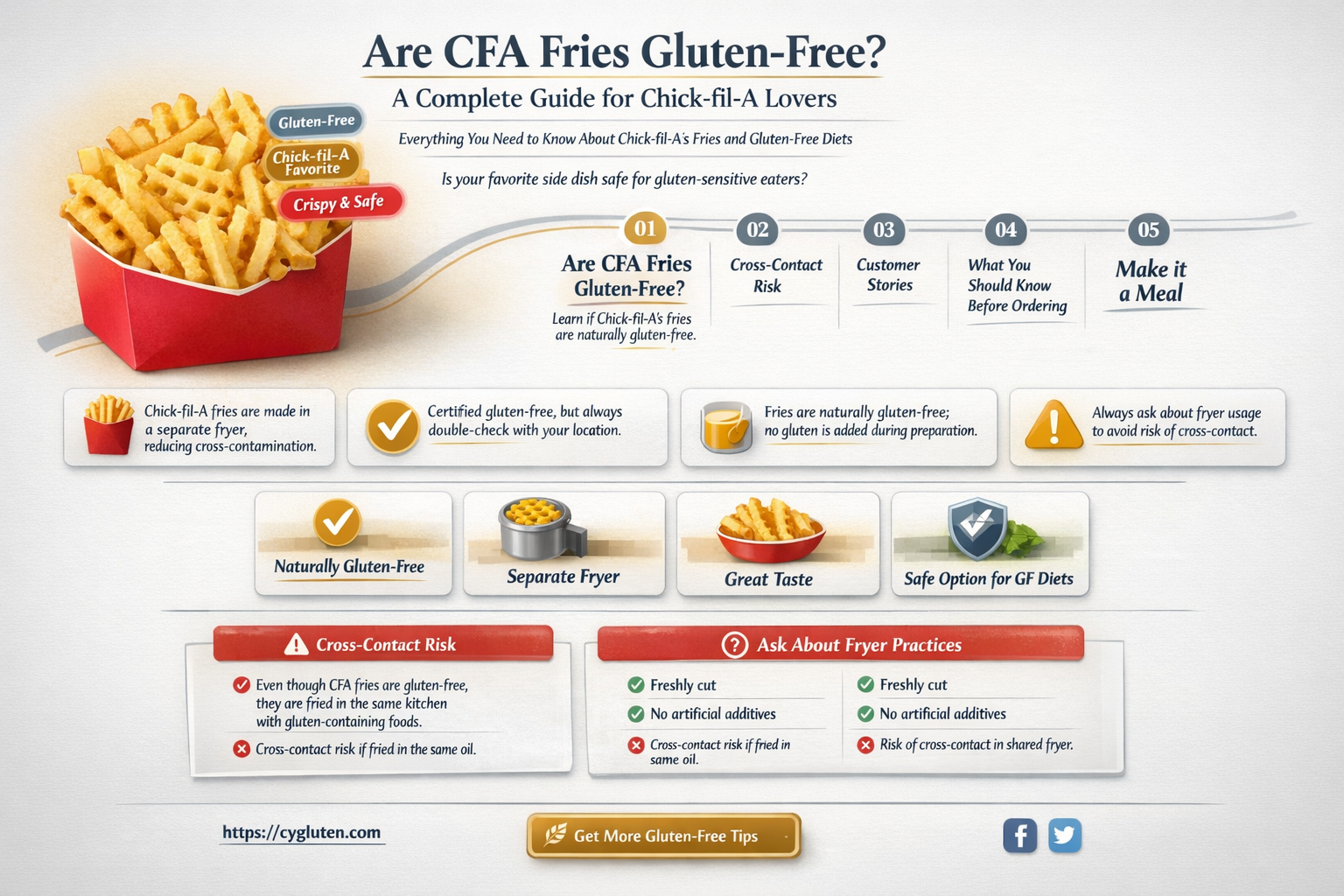
Chick-fil-A Waffle Potato Fries are both gluten-free and dairy-free as of 2026. They are prepared with three simple ingredients: potatoes, canola oil, and sea salt. Most importantly, Chick-fil-A utilizes dedicated fryers specifically for their fries, which significantly reduces the risk of cross-contamination with gluten-containing breaded chicken products.
Navigating fast-food menus with dietary restrictions like Celiac disease, gluten intolerance, or a dairy allergy requires more than just looking at an ingredient list. You must account for sourcing, preparation methods, and the potential for cross-contact in a high-volume kitchen. Chick-fil-A has long been a leader in the fast-food industry for allergen transparency, particularly for those avoiding gluten and milk derivatives.
The Ingredient Breakdown: What is in a Chick-fil-A Fry?
To understand why Chick-fil-A Waffle Potato Fries are considered safe for most gluten-free and dairy-free diets, we must look at the simplicity of their recipe. Unlike some competitors that add "natural beef flavors" (which can contain wheat or milk) or flour-based coatings to enhance crispiness, Chick-fil-A maintains a minimalist approach.
1. The Potatoes
Chick-fil-A uses real potatoes, grown specifically for the brand. These are washed, sliced into the iconic waffle shape with the skin left on, and then flash-frozen before being shipped to individual restaurants. Potatoes are naturally gluten-free and dairy-free.
2. The Cooking Oil
The fries are cooked in 100% refined canola oil. Canola oil is a plant-based fat derived from the rapeseed plant. It is naturally free of gluten and dairy proteins. While some people express concern over highly refined oils, from an allergen perspective, the refining process typically removes the proteins that trigger allergic reactions. However, for those with a specific rapeseed or canola allergy, this remains the primary oil used for all frying outside of the chicken pressure cookers.
3. Sea Salt
Once the fries emerge from the oil, they are tossed with sea salt. There are no anti-caking agents containing gluten or dairy-based seasonings added at this stage.
The Technical Advantage: Dedicated Fryers
The most critical factor for the gluten-free community is not just the ingredients, but the cooking environment. In most fast-food establishments, "naturally gluten-free" fries are rendered unsafe because they are cooked in the same oil as breaded chicken or onion rings. This process, known as cross-contamination or cross-contact, introduces wheat proteins into the oil, which then permeate the fries.
As of 2026, Chick-fil-A maintains a strict operational standard where Waffle Potato Fries are cooked in dedicated fryers. These fryers are separate from the pressure cookers used to prepare the breaded chicken fillets and nuggets. Because the breaded chicken is fried in peanut oil within closed systems, and the fries are cooked in canola oil in open vats, the risk of gluten transfer is exceptionally low compared to the industry standard.
Gluten-Free Status: Celiac vs. Gluten Sensitivity
For individuals with Celiac disease, even "trace amounts" of gluten (typically defined as more than 20 parts per million) can cause intestinal damage. Chick-fil-A does not label its fries as "Certified Gluten-Free," a distinction that requires third-party auditing and a completely sterile environment. Instead, they use the term "Gluten-Friendly" or list them as having "no gluten-containing ingredients."
Cross-Contact Risks in 2026
Despite the dedicated fryers, a commercial kitchen is a busy environment. Potential risks include:
- Shared Handling: Staff members may handle breaded chicken and then touch the fry scoop or salt shaker without changing gloves.
- Airborne Flour: In some locations, the flour used for breading chicken can become airborne, though Chick-fil-A's specialized breading stations are designed to minimize this.
- Crumb Transfer: A stray piece of breading from a chicken nugget could theoretically fall into the fry vat, although the high volume of fry production and strict cleaning protocols make this rare.
For those with non-celiac gluten sensitivity, these fries are generally considered very safe. Those with Celiac disease should always inform the staff of an "allergy" rather than a "preference," which often triggers additional safety protocols like glove changes.
Dairy-Free and Vegan Considerations
Chick-fil-A fries are a staple for those on a dairy-free or vegan diet. Unlike McDonald’s fries in the United States—which historically used a beef flavoring containing milk derivatives—Chick-fil-A's fries contain no milk, butter, or lactose.
The lack of dairy extends to the frying process as well. Since no dairy-based products are typically fried in the canola oil vats, the risk of milk protein cross-contact is lower than the risk of gluten cross-contact. For vegans, the fries are also compliant, as they contain no animal fats or byproducts, provided the customer is comfortable with the fries being prepared in a facility that also handles meat.
Comparing Chick-fil-A Sides: Gluten and Dairy Status
While the Waffle Potato Fries are the most popular side, Chick-fil-A offers other options. It is important to distinguish which are safe for various dietary needs.
| Menu Item | Gluten-Free Ingredients? | Dairy-Free Ingredients? | Preparation Note |
|---|---|---|---|
| Waffle Potato Fries | Yes | Yes | Dedicated Canola Oil Fryer |
| Hash Browns | Yes | Yes | Shared Fryer with Fries (Breakfast) |
| Kale Crunch Side | Yes | Yes | Prepared in prep area; contains nuts |
| Fruit Cup | Yes | Yes | Naturally GF/DF |
| Greek Yogurt Parfait | No (Granola contains Gluten) | No (Contains Milk) | Cross-contact risk with granola |
| Side Salad | Yes (without toppings) | No (if cheese is added) | Dressing varies by type |
Detailed Analysis of Hash Browns
Chick-fil-A's breakfast Hash Browns are essentially small, coin-shaped versions of their fries. They share the same ingredient profile: potatoes, canola oil, and salt. In most locations, Hash Browns are cooked in the same dedicated fryers used for the Waffle Potato Fries.
However, consumers should be aware that during the transition from breakfast to lunch, the oil in these fryers is reused. As long as only fries and hash browns are cooked in that specific oil, the gluten-free and dairy-free integrity remains intact.
The Role of Canola Oil vs. Peanut Oil
One of the most frequent points of confusion at Chick-fil-A is the use of two different oils.
- Refined Peanut Oil: Used for all breaded chicken (Sandwiches, Nuggets, Strips). While highly refined peanut oil is generally considered safe by the FDA for those with peanut allergies because the protein is removed, it is the medium where the wheat-based breading lives.
- Refined Canola Oil: Used exclusively for Waffle Potato Fries and Hash Browns.
By keeping the fries in canola oil and the chicken in peanut oil, Chick-fil-A creates a physical barrier between the gluten-containing breading and the potatoes. This is the primary reason why their fries are a "go-to" for the gluten-free community.
Ordering Safely: Tips for 2026
To ensure the highest level of safety when ordering Chick-fil-A fries in 2026, follow these best practices:
- Use the Chick-fil-A App: The app allows you to view the most current ingredient lists and often includes "Allergen" filters. In 2026, the digital interface has become more sophisticated, allowing users to flag a "Severe Allergy" which alerts the kitchen staff more prominently than a verbal request.
- Communicate at the Window: Even if you order via the app, confirm with the team member that you have a gluten or dairy allergy. This ensures they take extra care with the fry scoop and packaging.
- Check the Dipping Sauces: While the fries are safe, many sauces contain dairy or gluten. For example, the Chick-fil-A Sauce and Honey Mustard are generally safe, but always verify the current 2026 formulations as ingredients can shift.
- Avoid the "Fry Well-Done" Hack: Some customers ask for fries to be cooked longer for extra crispiness. While this is usually fine, in some busy locations, "well-done" fries might be moved to a different station or handled differently, slightly increasing the risk of cross-contact.
Common Misconceptions About Fast Food Fries
There are several myths regarding the safety of fast-food fries that often lead to unnecessary avoids or dangerous mistakes.
Myth: All fries are just potatoes, so they are all gluten-free. Many chains use a "clear coat" of starch to keep fries crispy during transport. This starch is often derived from wheat. Additionally, shared fryers are the rule, not the exception, in the fast-food industry.
Myth: Frying at high temperatures kills gluten. Gluten is a protein, not a bacteria. While heat can denature proteins, the temperatures used in commercial frying (350°F to 375°F) are nowhere near high enough to "destroy" the gluten protein to the point that it wouldn't trigger an autoimmune response in someone with Celiac disease.
Myth: Peanut oil contains gluten. Pure oil does not contain gluten. The gluten in Chick-fil-A's chicken comes from the flour breading, not the oil itself. However, because the oil contains the flour particles, the oil becomes a carrier for gluten.
Expert Guidance for Severe Allergies
If you have an anaphylactic allergy to milk or severe Celiac disease, you must weigh the risks of any fast-food environment. While Chick-fil-A’s protocols are among the best in the quick-service industry, they are not a medical facility.
The Celiac Disease Foundation notes that cross-contact is the most significant hurdle for patients dining out. If a restaurant is exceptionally busy, the likelihood of a mistake increases. If you see a kitchen that appears disorganized or staff members who are not following hygiene protocols, it is safer to skip the fries on that visit.
Summary of Findings for 2026
As we look at the Chick-fil-A menu in 2026, the Waffle Potato Fries remain one of the few reliable options for people managing multiple dietary restrictions. Their simplicity—potatoes, oil, and salt—combined with the operational decision to use dedicated fryers, sets them apart from nearly every other major fast-food chain.
Frequently Asked Questions
Are Chick-fil-A fries fried in the same oil as the chicken? No. Chick-fil-A fries are fried in 100% refined canola oil in dedicated vats. The breaded chicken is cooked in refined peanut oil in separate pressure cookers. This separation is key to their gluten-free status.
Does Chick-fil-A use any wheat-based coatings on their fries? No. Unlike some other fast-food chains that use flour-based coatings to ensure crispiness, Chick-fil-A Waffle Potato Fries rely solely on the potato's natural starches and the waffle-cut shape to achieve their texture.
Are the fries safe for someone with a severe milk allergy? The ingredients are dairy-free, and they are cooked in oil that does not intentionally contain dairy. However, as with all fast food, there is a small risk of cross-contact from other menu items containing cheese or milk (like milkshakes or sandwiches) being handled in the same kitchen.
Are Chick-fil-A fries vegan? Yes, the fries are vegan. They contain no animal products and are fried in vegetable-based (canola) oil. They are a popular choice for those following a plant-based diet.
Can I eat the Hash Browns if I have a gluten allergy? Yes, the Hash Browns use the same gluten-free ingredients as the fries and are typically cooked in the same dedicated canola oil fryers. Always confirm with the specific location that they do not share fryers with breaded breakfast items like chicken biscuits.
Final Recommendation
For those seeking a gluten-free and dairy-free treat in 2026, Chick-fil-A Waffle Potato Fries are a highly safe option. To ensure the best experience, use the mobile app to check for any local ingredient variations and clearly communicate your allergy to the staff. While no fast-food environment is 100% risk-free, Chick-fil-A's use of dedicated fryers and simple ingredients makes their fries a gold standard for allergen-conscious dining.