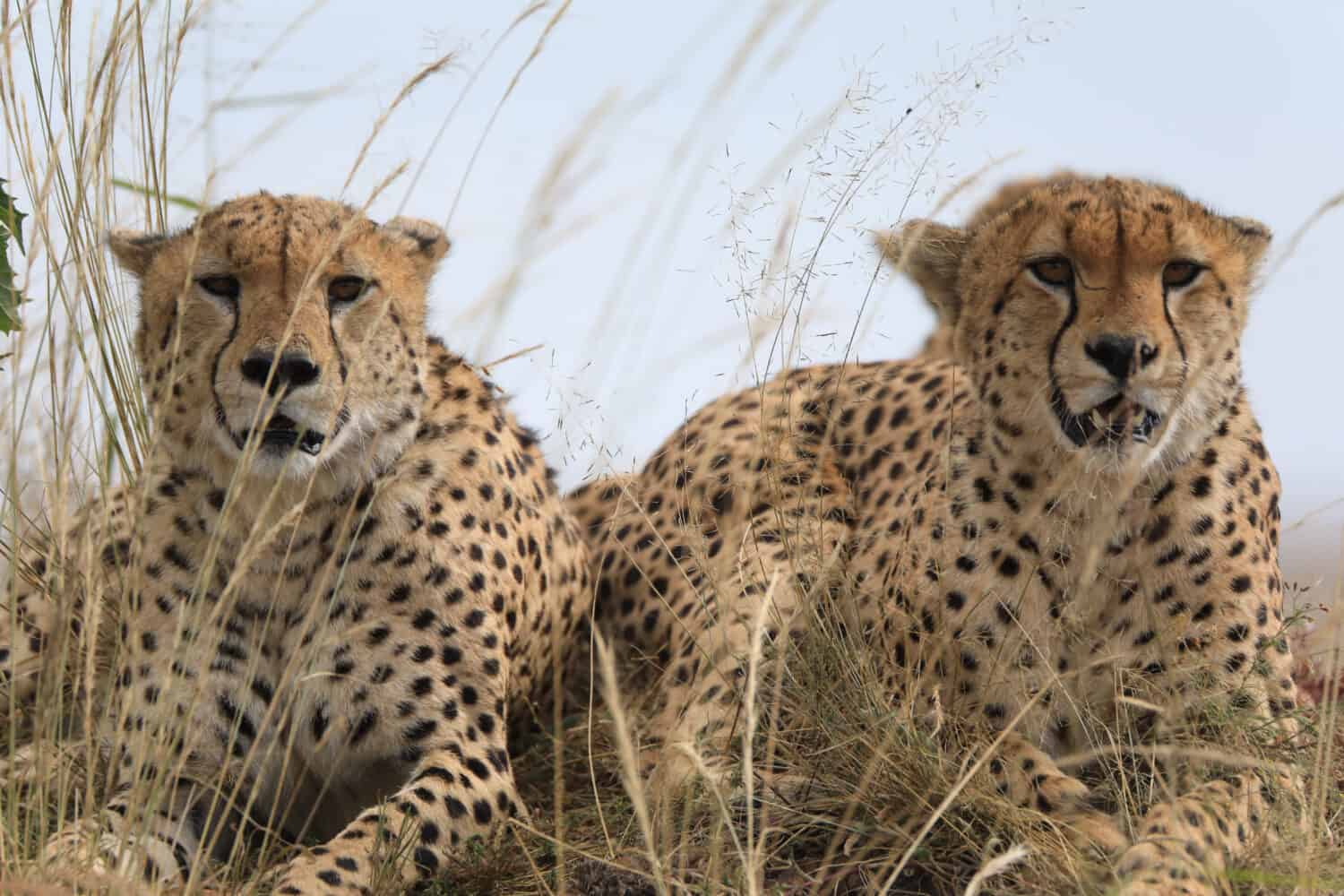
Cheetahs are not considered pack animals in the traditional biological sense. Instead, they exhibit a unique, "semi-social" structure where sociality is divided by gender. Females are almost entirely solitary, living alone or with their dependent cubs, while males often form small, permanent groups of two or three called coalitions, typically consisting of brothers.
Unlike wolves or lions, which form large, multi-generational groups with complex hierarchies (packs or prides), the cheetah’s social life is a specialized evolutionary compromise. This structure allows the world’s fastest land animal to balance the need for territorial defense with the physical limitations of its specialized, high-speed hunting style. Understanding whether a cheetah is "social" requires looking at the distinct life paths of males and females, their reproductive strategies, and the environmental pressures of the African and Iranian landscapes they inhabit.
The Dual Social Structure of Cheetahs
To answer the question of whether cheetahs are pack animals, one must first define what a "pack" is. In zoology, a pack usually refers to a social group of conspecific animals that hunt and live together, often led by a dominant pair (as seen in African wild dogs or wolves). Cheetahs do not fit this mold. Their social organization is bifurcated based on biological needs and reproductive success.
Male Coalitions: A Brotherhood of Survival
The most social aspect of cheetah life is found among males. Upon reaching maturity (around 18 to 24 months), brothers from the same litter will often stay together for life. This group is known as a coalition. In some cases, a solitary male may be accepted into an existing group of unrelated males, though this is less common.
The primary driver for male coalitions is not necessarily hunting efficiency, but territorial acquisition and defense. A single male cheetah finds it nearly impossible to hold a territory against a group of two or three other males. By forming a coalition, they can defend a high-quality territory—usually one that overlaps with the home ranges of several females—thereby increasing their chances of mating. Research by the Cheetah Conservation Fund has shown that males in coalitions tend to be healthier and live longer than solitary males, as they can better defend their kills and their land.
The Solitary Life of Females
In contrast to males, female cheetahs are strictly solitary once they leave their mother. They do not form bonds with other females, even their sisters. A female's life is defined by a massive home range rather than a strictly defended territory. While a male coalition might defend a territory of 30 to 50 square kilometers, a female may roam over 1,500 square kilometers following the migration of prey species like Thomson's gazelles.
The only time a female cheetah is seen with others is when she is raising cubs. She is the sole provider, responsible for hunting, teaching, and protecting her offspring for up to 18 to 22 months. This solitary existence is a calculated trade-off; a single adult cheetah is more inconspicuous to predators like lions and hyenas, which are the leading cause of cub mortality.
Hunting Mechanics and Sociality
One of the most significant reasons cheetahs have not evolved into pack hunters like lions or wolves is their specialized physiology. Cheetahs are built for acceleration and speed, not for the endurance or brute force required for the "hold-and-drag" tactics of pack hunting.
Individual vs. Cooperative Hunting
While male coalitions do occasionally hunt together to take down larger prey, such as wildebeest or zebras, the majority of cheetah hunts are individual efforts. Even within a coalition, one male often takes the lead while the others follow.
The cheetah’s hunting method involves a high-speed sprint that lasts less than a minute. This creates a massive amount of metabolic heat and physical exhaustion. Because a cheetah must rest for 20 to 30 minutes after a kill to recover its breath and cool its body, it is highly vulnerable to kleptoparasitism—the theft of its prey by other predators. In a large pack, the commotion of multiple cats might attract lions or spotted hyenas more quickly. By hunting alone or in very small groups, cheetahs minimize their profile on the savanna.
The Impact of Kleptoparasitism
In ecosystems like the Serengeti, cheetahs lose a significant percentage of their kills to larger predators. Living in a large pack would theoretically help defend a kill, but the "cost of admission" for a pack is too high. A 120-pound cheetah cannot effectively fight off a 400-pound lion or a clan of hyenas, regardless of how many cheetahs are present. Evolution has favored the "eat-fast-and-hide" strategy over the "stay-and-defend" strategy.
Comparing Social Structures in the Felidae Family
To understand where the cheetah fits in the animal kingdom, it is helpful to compare it with other big cats. The following table highlights the differences in social units, hunting styles, and territorial behaviors as of 2026 data.
| Feature | Cheetah (Male) | Cheetah (Female) | Lion | Leopard |
|---|---|---|---|---|
| Social Unit | Coalition (2–3 members) | Solitary / Motherhood | Pride (5–40 members) | Solitary |
| Primary Social Bond | Siblings (usually) | None (except cubs) | Multi-generational Kin | None |
| Territoriality | High (Small, defended) | Low (Large home range) | Very High (Defended) | Very High (Defended) |
| Hunting Strategy | Mostly Individual / Opportunistic Group | Strictly Individual | Highly Cooperative | Strictly Individual |
| Dominance Hierarchy | Egalitarian (No Alpha) | N/A | Complex / Hierarchical | N/A |
| Cub Care | None | Sole Provider | Communal (Crèche) | Sole Provider |
Communication and Interaction Within Groups
Because cheetahs are not pack animals with a central "alpha," their communication is less about maintaining a hierarchy and more about avoiding conflict and identifying kin.
Vocalizations
Unlike the "four big cats" (Lion, Tiger, Leopard, Jaguar), cheetahs cannot roar. They possess a fixed hyoid bone that allows them to purr both on the inhale and exhale, similar to domestic cats. Their social vocalizations include:
- Chirping: A bird-like sound used by mothers to call cubs or by coalition members to find one another.
- Stuttering: A rhythmic moan used during mating or when meeting familiar individuals.
- Hissing and Spitting: Used in agonistic (aggressive) encounters to signal a desire for space.
Scent Marking
For a semi-social species, scent is the primary "bulletin board" for communication. Male coalitions spend a significant amount of time marking "play trees" or prominent landmarks with urine and feces. These marks tell other males to stay away and signal to females the health and presence of potential mates. Females also use scent marking to indicate their reproductive status, allowing males to find them during their short estrus cycles.
The Evolutionary Why: Why Not Packs?
The question of why cheetahs aren't pack animals boils down to niche specialization. In the evolutionary arms race of the African savanna, every predator has a "gimmick."
- Lions use power and numbers.
- Leopards use stealth and climbing.
- Hyenas use endurance and bone-crushing strength.
- Cheetahs use unrivaled speed.
Speed is a "solitary" trait. To reach 60–70 mph, a cheetah must be lean, lightweight, and aerodynamically optimized. Maintaining a large social group requires a massive amount of food. A lion pride can take down a buffalo that feeds 20 cats. A cheetah's primary prey—the gazelle—is small. If 10 cheetahs lived in a pack, they would have to kill five or six gazelles every day just to survive. The energy expenditure required for ten high-speed chases is far higher than the energy required for one cooperative lion hunt. Thus, the cheetah’s social structure is perfectly calibrated to its caloric needs and its physical limitations.
Conservation Status and Social Behavior in 2026
As we look at the state of the species in 2026, the cheetah’s social structure is a double-edged sword for conservation. Because females require massive home ranges, they are particularly susceptible to habitat fragmentation. When a landscape is broken up by farms or roads, a solitary female may find herself unable to find enough prey or, more importantly, unable to find a male coalition for mating.
According to the IUCN Red List, cheetahs remain "Vulnerable," with some subspecies, like the Asiatic cheetah in Iran, being "Critically Endangered." Conservationists now focus on creating "wildlife corridors" that respect the cheetah's social needs—allowing males to hold small territories while giving females the vast, connected spaces they need to roam.
In captive breeding programs, understanding that cheetahs are not pack animals is vital. If two unrelated females are housed together, the stress can prevent them from breeding. Conversely, male brothers must be kept together to ensure their psychological well-being.
Frequently Asked Questions
1. Do cheetahs ever hunt in packs?
No, cheetahs do not hunt in packs. Male coalitions (usually 2-3 brothers) may occasionally cooperate to take down larger prey like a wildebeest calf, but this is a small-scale partnership, not the organized pack hunting seen in wolves or African wild dogs.
2. Can a solitary male cheetah survive without a coalition?
Yes, many males live solitary lives, especially if they were the only male in their litter. However, solitary males are "floaters." They rarely manage to hold a permanent territory and must constantly dodge established coalitions. They typically have lower reproductive success.
3. Why are female cheetahs solitary?
Females are solitary to better protect their cubs from predators and to avoid the high caloric cost of sharing small kills. A solitary female is less likely to attract the attention of lions and hyenas, which are the greatest threat to her offspring.
4. Is there an alpha cheetah in a coalition?
Research indicates that cheetah coalitions are remarkably egalitarian. There is no clear "alpha" or "beta" hierarchy. Decisions, such as when to move or when to hunt, appear to be mutual, and there is very little aggression between coalition members.
5. How do cheetahs recognize their coalition members?
Cheetahs use a combination of vocalizations (chirping), scent, and visual recognition. Because coalitions are almost always composed of brothers, the bond is formed during their first 18 months of life while living with their mother.
Final Recommendation for Wildlife Enthusiasts
If you are interested in observing cheetah social behavior, the best approach is to support reputable eco-tourism and conservation organizations that prioritize habitat connectivity. Understanding that a "group" of cheetahs is almost certainly a band of brothers or a mother with her cubs changes the way we view their survival struggle. To help protect these unique social structures, consider supporting the Panthera organization, which works extensively on the "Cheetah Program" to mitigate human-wildlife conflict and preserve the vast landscapes these solitary females and social males require to survive.