Workers’ compensation laws are undergoing significant transformations in 2026 as state legislatures and federal agencies adapt to a post-pandemic economic landscape. Key changes include expanded coverage for mental health conditions like PTSD, stricter regulations on AI-driven claims processing, and refined definitions for "workplace" boundaries in remote and hybrid work environments.
The workers' compensation system, originally designed as a "grand bargain" between employers and employees, is facing its most complex era since its inception in the early 20th century. As we navigate 2026, the traditional boundaries of what constitutes a work-related injury are being redrawn. For business owners, legal professionals, and employees, staying ahead of these legislative shifts is no longer optional; it is a prerequisite for financial and physical security.
The Evolution of Remote and Hybrid Work Coverage
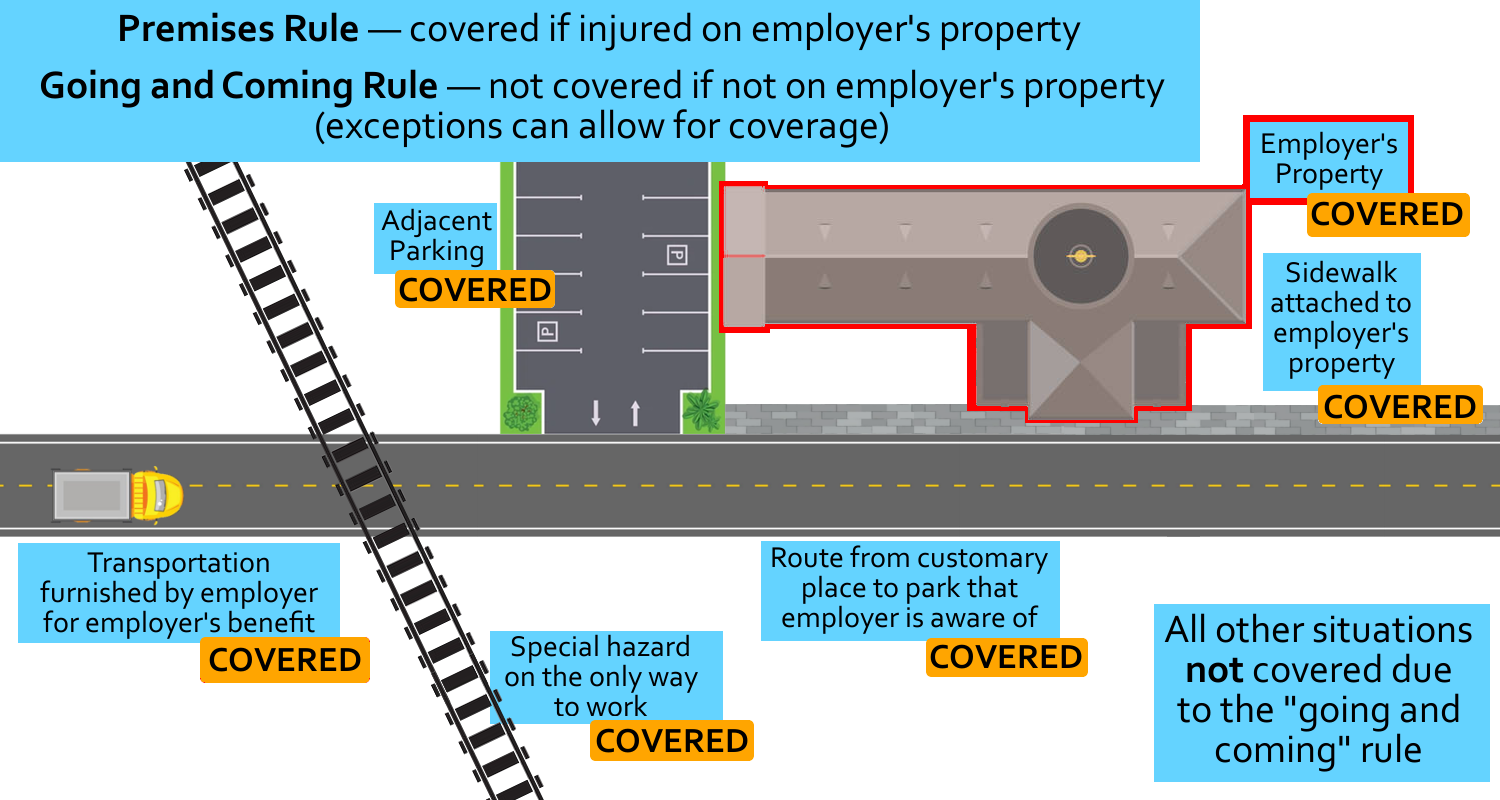
One of the most pressing questions in 2026 is how workers' compensation applies to the millions of professionals who operate out of home offices or third spaces. Historically, the "Coming and Going Rule" prevented employees from claiming benefits for injuries sustained during a commute. However, as the line between home and office remains blurred, several states have introduced legislation in 2026 to clarify the "exclusive work zone" concept.
Defining the Work-from-Home Boundary
New 2026 statutes in states like California and New York are moving toward a more granular definition of the "domestic workplace." For an injury to be compensable in 2026, many jurisdictions now require the employee to demonstrate that the injury occurred within a designated workspace during established working hours. This prevents "slip and fall" claims occurring in a kitchen or bathroom from being automatically attributed to the employer, unless a direct nexus to a work task can be proven.
Employer Liability and Ergonomics
There is also a growing legislative push to hold employers accountable for the ergonomic setups of remote workers. In 2026, we are seeing the first wave of "Digital Ergonomics" mandates, where employers must provide or subsidize equipment that meets Occupational Safety and Health Administration (OSHA) standards even in private residences. Failure to do so is increasingly being used as evidence of negligence in disputed workers' compensation cases.
Expanding Mental Health and PTSD Presumptions
Perhaps the most significant humanitarian shift in workers' compensation laws this year involves the recognition of "mental-mental" claims. These are claims where a psychological injury occurs without a preceding physical trauma.
PTSD and First Responders
As of 2026, over 30 states have enacted or expanded "rebuttable presumption" laws for first responders. These laws assume that a diagnosis of Post-Traumatic Stress Disorder (PTSD) is work-related unless the employer can prove otherwise. What is new in 2026 is the expansion of these protections to include healthcare workers, social workers, and even certain educators who have experienced secondary trauma in the line of duty.
Chronic Stress and Burnout
While most states still require a specific traumatic event to trigger a mental health claim, 2026 has seen a rise in "Cumulative Stress" legislation. This recognizes that long-term exposure to high-pressure environments can lead to debilitating psychological conditions. Legislative bodies are currently debating the threshold for these claims to ensure they are reserved for clinical diagnoses rather than general job dissatisfaction.
The Role of AI in Claims Management and Legal Scrutiny
The integration of Artificial Intelligence (AI) into the insurance industry has reached a tipping point in 2026. While AI can speed up claim approvals, it has also faced criticism for "algorithmic bias" in claim denials.
The "Human-in-the-Loop" Requirement
New 2026 regulations from the National Association of Insurance Commissioners (NAIC) and state insurance departments now frequently mandate a "Human-in-the-Loop" (HITL) protocol. This means that while an AI can recommend a denial of benefits based on data patterns, a licensed human claims adjuster must review and sign off on the final decision. This change aims to protect workers from "black box" decisions that they cannot easily appeal.
Transparency and Data Privacy
Furthermore, 2026 laws in several jurisdictions require insurance carriers to disclose when AI is being used to surveil claimants or predict recovery timelines. This transparency is intended to level the playing field, allowing injured workers and their attorneys to challenge the data sets used to justify premature "Return to Work" orders.
Gig Economy and Independent Contractor Classification
The "ABC Test" and similar worker classification frameworks continue to be a battleground for workers' compensation eligibility in 2026. The distinction between an independent contractor and an employee determines who pays for the insurance and who is entitled to benefits.
Portable Benefits Models
In 2026, several states are experimenting with "Portable Benefits" legislation. This model allows gig workers—such as delivery drivers and freelance consultants—to contribute to a state-managed workers' compensation fund that follows them from project to project, regardless of the platform they are using. This reflects a shift away from the rigid binary of "employee" versus "contractor" toward a more flexible safety net for the modern workforce.
Federal Alignment and the Department of Labor
The U.S. Department of Labor (DOL) has issued updated guidance for 2026 that narrows the criteria for independent contractor status. This federal push is designed to reduce "misclassification," which currently costs the workers' compensation system billions in unpaid premiums every year.
Medical Marijuana and Opioid Alternatives
The intersection of state-legalized cannabis and federal prohibition continues to create friction in workers' compensation systems. However, 2026 marks a turning point as more administrative law judges rule in favor of medical marijuana reimbursement in specific cases.
| Feature | Traditional Opioid Treatment | Medical Cannabis (2026 Status) |
|---|---|---|
| Federal Status | Legal (Schedule II) | Rescheduled (Schedule III pending/implemented) |
| Reimbursement | Standard in all states | Allowed in ~10 states; contested in others |
| Addiction Risk | High; strict monitoring required | Low to moderate; non-lethal |
| Efficacy for Pain | High (Short-term) | Moderate to High (Chronic/Neuropathic) |
| 2026 Trend | Phasing out for non-acute pain | Increasing as a "Reasonable & Necessary" cost |
In 2026, we are seeing a "Medical Necessity" standard being applied more frequently. If a physician can prove that medical marijuana is more effective and less dangerous than opioids for a specific worker's chronic pain, insurance carriers in states like New Jersey, New Mexico, and Pennsylvania are increasingly being ordered to cover the costs, despite federal ambiguity.
Benefit Adjustments and Inflationary Pressures
Inflation has significantly impacted the cost of living, and workers' compensation benefits are adjusting to keep pace. In 2026, many states have implemented automatic Cost of Living Adjustments (COLA) for permanent total disability and death benefits.
Maximum and Minimum Weekly Rates
Most state workers' compensation boards update their maximum weekly compensation rates annually based on the State Average Weekly Wage (SAWW). For 2026, these rates have seen a 4-6% increase across the board in most industrial states. This ensures that injured workers are not pushed into poverty due to the rising costs of housing and food while they are unable to work.
Medical Fee Schedules
To combat the rising cost of healthcare, state regulators are also updating medical fee schedules for 2026. These schedules dictate how much a doctor or hospital can charge for treating a work-related injury. The goal is to balance fair compensation for providers with the need to keep workers' compensation insurance premiums affordable for small business owners.
Practical Steps for Employers and Employees in 2026
Given these rapid changes, both parties in the employment relationship must take proactive steps to ensure compliance and protection.
For Employers:
- Update Remote Work Policies: Clearly define "work hours" and "workspace" in your employment contracts to mitigate domestic injury claims.
- Conduct Ergonomic Assessments: Use virtual or in-person audits to ensure home offices meet safety standards.
- Review AI Disclosures: If your insurance carrier uses AI for claims processing, ensure they are compliant with 2026 transparency laws.
- Invest in Mental Health: Proactive "Employee Assistance Programs" (EAPs) can reduce the likelihood of high-cost PTSD or chronic stress claims.
For Employees:
- Document Everything: If injured at home, take photos of the workspace and note the exact time and task you were performing.
- Understand Your Classification: If you are a gig worker, check if your state has implemented a portable benefits fund for 2026.
- Advocate for Evidence-Based Care: If you require alternative pain management (like medical cannabis), ensure your physician documents the failure of traditional treatments to support a reimbursement claim.
Frequently Asked Questions
Can I get workers' compensation if I am injured while working at a coffee shop?
In 2026, this depends heavily on your employer's remote work policy. If your employer has authorized "work from anywhere," the injury may be compensable. However, if your policy specifies a "designated home office," an injury at a public coffee shop might be denied under the theory that you were not in a controlled, authorized workspace.
What is a "rebuttable presumption" in mental health claims?
A rebuttable presumption means the law assumes your condition (like PTSD) was caused by your job. The burden of proof shifts to the employer or insurance company to provide evidence that the condition was caused by something outside of work. In 2026, these presumptions are becoming more common for high-stress professions beyond just police and fire services.
Are 2026 workers' compensation rates higher than last year?
Yes, in almost every state, the maximum weekly benefit has increased for 2026 to reflect the State Average Weekly Wage. These adjustments usually take effect on July 1st or January 1st, depending on the state’s fiscal cycle.
Does the 2026 rescheduling of marijuana affect workers' comp?
While the move to Schedule III reduces some legal barriers, it does not automatically force all insurance companies to pay for medical marijuana. However, it provides a stronger legal basis for "Reasonable and Necessary" treatment claims in workers' compensation courts.
What happens if an AI denies my claim in 2026?
Under 2026 transparency laws, you have the right to request a review by a human adjuster. You are also entitled to know what data points the AI used to reach its conclusion. If a human did not review the denial, the decision may be legally invalid in many jurisdictions.
Practical Recommendation
As 2026 unfolds, the most critical action for anyone involved in a workers' compensation matter is to verify the specific statutes of their state. Because workers' compensation is primarily governed at the state level, a "legal" treatment or "covered" injury in one state may be excluded in another. Consult with a qualified workers' compensation attorney or your state's Workers' Compensation Board to ensure you are operating under the most current 2026 guidelines.