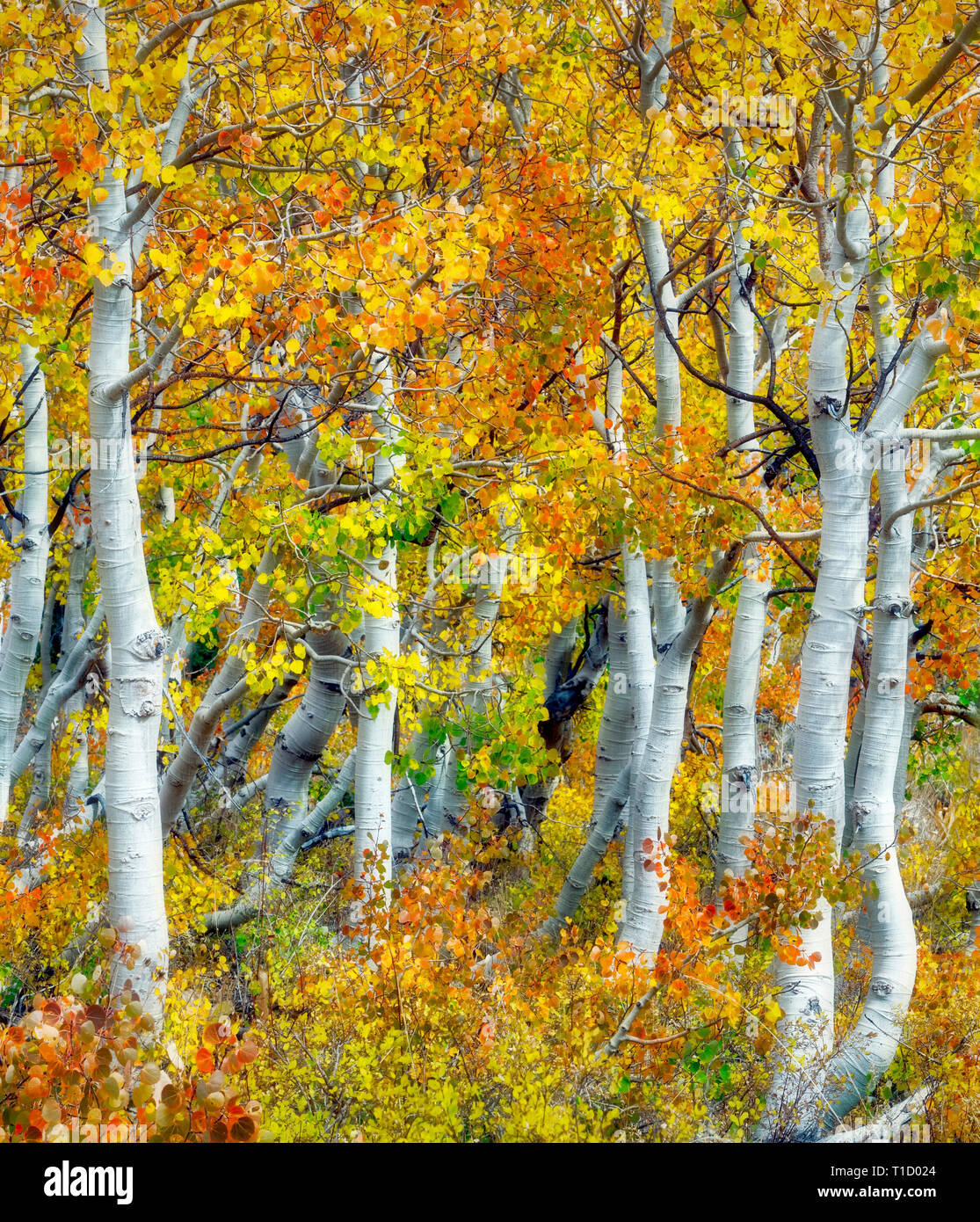
Quaking aspens (Populus tremuloides) achieve their iconic golden seasonal color through the degradation of green chlorophyll, which unmasks yellow carotenoid pigments already present in the leaves. Beyond their aesthetic value, these trees serve as a keystone ecological species, providing critical habitat, supporting high levels of biodiversity, and acting as primary successional pioneers in fire-prone landscapes.
The Chemistry of Transition: Why Aspen Leaves Turn Gold
The autumn transformation of aspen foliage is not an "arrival" of new pigment, but rather the strategic withdrawal of primary photosynthetic components. Throughout the summer, aspen leaves are saturated with chlorophyll, the pigment responsible for capturing sunlight and facilitating photosynthesis. Chlorophyll is highly dominant and masks other pigments within the leaf structure.
As the year 2026 progresses into the autumnal equinox, the reduction in daylight—known as photoperiodism—signals the tree to begin preparing for dormancy. The tree starts to form an abscission layer at the base of the leaf petiole (the stalk connecting the leaf to the branch). This layer restricts the flow of nutrients and water, leading to the rapid breakdown of chlorophyll molecules.
The Role of Carotenoids and Xanthophylls
As chlorophyll fades, the underlying carotenoids and xanthophylls become visible. These pigments are responsible for the brilliant yellows and oranges that define aspen groves in the Rocky Mountains and across the boreal forests of Canada. Unlike chlorophyll, which is constantly being synthesized and destroyed during the growing season, carotenoids are relatively stable and remain in the leaf plastids until the leaf eventually drops.
While the majority of aspens turn a uniform golden-yellow, certain clones may exhibit shades of orange or even muted reds. This variation is often attributed to the production of anthocyanins, which are water-soluble pigments produced in the leaf’s cell sap in response to high sugar concentrations and bright light. When cool, crisp nights are followed by sunny days, the synthesis of anthocyanins increases, occasionally tinting the gold with deeper hues.
Environmental Variables and Peak Timing
The timing of peak color in 2026 depends on a delicate balance of moisture, temperature, and light.
- Photoperiod: This is the most consistent factor, as the number of daylight hours on a specific date remains constant year over year.
- Temperature: Cool nights (above freezing) are ideal for triggering the cessation of chlorophyll production. Sudden, hard freezes can kill the leaf tissue before the color has a chance to develop, leading to "brown-outs."
- Moisture: Severe drought in the preceding summer months can lead to early leaf drop or duller colors. Conversely, a healthy growing season with adequate late-summer rain ensures that the leaves remain on the branches long enough for the full chemical transition to occur.
The Clonal Colony: One Organism, Many Trees
One of the most biologically fascinating aspects of aspen foliage is its uniformity within a specific "stand." Because aspens primarily reproduce through vegetative suckering (root sprouting), what appears to be a forest of individual trees is often a single genetic individual, known as a clonal colony.
Genetic Synchronicity
Within a single clone, every leaf will generally turn color at the exact same time. This creates the striking visual effect of a sharp line on a mountainside where one group of trees is bright gold while the neighbor is still deep green. This synchronicity is a direct result of shared DNA; the trees are responding to environmental triggers with identical physiological timing.
Pando and Large-Scale Colonies
The most famous example is Pando, located in the Fishlake National Forest of Utah. Pando is a single male quaking aspen clone that covers approximately 106 acres and is estimated to weigh over 6,000 metric tons. In 2026, researchers continue to monitor Pando’s health, as its foliage provides vital data on how ancient clonal organisms respond to shifting climate patterns. The sheer scale of such colonies means that the seasonal color change is not just a local event but a massive physiological shift of an organism that may be thousands of years old.
The Ecological Role of Aspen Forests
Aspens are often described as "keystone species" because they support a disproportionately large number of other organisms relative to their abundance. Unlike coniferous forests, which tend to have dark, acidic understories, aspen groves are "leaky" to sunlight. The thin, shimmering leaves allow a high percentage of solar radiation to reach the forest floor.
Biodiversity Hotspots
The increased light availability in aspen stands fosters a lush understory of grasses, wildflowers, and shrubs. This diverse vegetation provides forage and nesting sites for a wide array of species.
- Avian Habitat: Numerous bird species, including the Flammulated Owl and various woodpeckers, rely on the soft wood of older aspens for cavity nesting.
- Ungulates: Elk and mule deer frequent aspen groves for both cover and high-quality forage. The bark itself is nutrient-rich and serves as a vital food source for wintering wildlife.
- Invertebrates: Aspen foliage supports a specialized community of insects, including the larvae of various lepidoptera (butterflies and moths), which in turn support insectivorous birds.
Hydrological Impacts and Soil Enrichment
Aspen forests play a significant role in the water cycle. Because they are deciduous, they allow more snow to reach the ground during the winter compared to dense evergreen canopies. This snowpack melts more slowly in the spring under the shade of newly budding leaves, improving local groundwater recharge. Furthermore, the annual shedding of nutrient-rich leaves creates a fertile, "mull" soil profile that is significantly higher in nitrogen and carbon than the soils found in adjacent pine or spruce forests.
Aspens as Pioneer Species in Successional Ecology
In the context of forest dynamics, aspens are quintessential pioneer species. They are among the first to colonize an area following a major disturbance, such as a wildfire, landslide, or clear-cutting.
Fire Adaptation
Aspens have a complex relationship with fire. While the thin bark of an individual tree makes it susceptible to fire damage, the colony as a whole is remarkably resilient. The root system, protected deep underground, is often stimulated by the heat of a fire. Once the overstory is removed, the roots send up thousands of new "suckers," leading to a rapid re-establishment of the forest. This makes aspens a critical component of post-fire stabilization, preventing soil erosion and quickly restoring canopy cover.
Successional Transition
As an aspen grove matures, it creates the conditions necessary for more shade-tolerant species, such as subalpine fir or Engelmann spruce, to take root. Over decades, these conifers eventually overtop the aspens, shading them out. Without further disturbance, the aspen grove will eventually transition into a conifer forest. Therefore, maintaining aspen health across a landscape often requires periodic disturbance to reset the successional clock.
Comparative Dynamics of Foliage and Growth
To better understand how aspens compare to other common North American deciduous trees, the following table outlines key differences in their seasonal and ecological profiles.
| Feature | Quaking Aspen (P. tremuloides) | Sugar Maple (A. saccharum) | Paper Birch (B. papyrifera) |
|---|---|---|---|
| Primary Fall Color | Golden Yellow | Red, Orange, Yellow | Bright Yellow |
| Growth Habit | Clonal (Root Suckering) | Individual Seedlings | Individual/Small Clumps |
| Successional Stage | Early (Pioneer) | Late (Climax) | Early to Mid |
| Bark Type | Smooth, photosynthetic | Rough, furrowed (mature) | Peeling, papery |
| Soil Preference | Wide range, prefers moist | Rich, well-drained | Moist, acidic |
| Longevity (Individual) | 50–150 years | 200–400 years | 80–140 years |
Challenges and Management in 2026
As of 2026, aspen populations face several stressors that impact their foliage health and long-term viability. One of the primary concerns is Sudden Aspen Decline (SAD), a phenomenon characterized by the rapid dieback of aspen overstories. SAD is often linked to acute drought stress and high temperatures, which weaken the trees and make them more susceptible to secondary pests like the bronze poplar borer and various canker fungi.
Impacts of Overgrazing
In many parts of the Western United States, excessive herbivory by elk and domestic livestock poses a threat to aspen regeneration. When young suckers are grazed before they can grow beyond the "browse line," the colony cannot replace older, dying trees. This leads to "senescent" stands where no young trees exist to sustain the grove's future.
Conservation Strategies
Current management practices in 2026 focus on:
- Prescribed Fire: Reintroducing fire to stimulate root suckering and clear out encroaching conifers.
- Exclosures: Building fences around vulnerable young stands to protect them from overgrazing until they reach a height of 6–8 feet.
- Assisted Migration: In some regions, foresters are experimenting with planting aspen genotypes that are better adapted to the warmer, drier conditions predicted for the mid-21st century.
Frequently Asked Questions
Why do aspen leaves "quake" or shimmer?
The leaves of quaking aspens have a uniquely flattened petiole (stem) that is attached at a 90-degree angle to the leaf blade. This anatomical feature makes the leaves unstable in even the slightest breeze. The "quaking" serves an ecological purpose: it reduces the wind resistance on the branches, potentially preventing limb breakage, and helps distribute sunlight more evenly through the canopy, allowing lower leaves to photosynthesize more effectively.
Can I determine the sex of an aspen tree by its foliage?
No, the foliage itself does not indicate the sex of the tree. Aspens are dioecious, meaning individual clones are either male or female. The difference is only visible in the spring when they produce catkins. Male catkins produce pollen, while female catkins produce seeds encased in cotton-like fluff. However, since most reproduction is clonal, large swathes of forest may all be of the same sex.
Is the white powder on aspen bark related to its leaves?
The white, chalky substance on the bark is actually composed of dead cork cells. Interestingly, this bark is photosynthetic. Beneath the white powder is a layer of green tissue that allows the tree to produce sugars even in the early spring or late fall when no leaves are present. This provides the aspen with a competitive metabolic advantage over other deciduous trees.
How does elevation affect the color of aspen foliage?
Higher elevation groves generally turn color earlier than those in the valleys. This is due to the lower temperatures at higher altitudes, which accelerate the breakdown of chlorophyll. In 2026, observers often note a "wave" of gold that starts at the subalpine fringe and moves downward toward the foothills over a period of two to three weeks.
Why do some aspen leaves have black spots in the fall?
Black spots on autumn foliage are often caused by fungi, such as Marssonina leaf spot. While these spots can be unsightly and may lead to premature leaf drop in particularly wet years, they rarely cause permanent damage to the health of the clonal colony.
Practical Recommendations for Observation and Conservation
For those seeking to experience the seasonal beauty of aspen foliage in 2026, timing and location are paramount. High-latitude regions like the Yukon or Alaska peak as early as late August, while the southern reaches of the Rocky Mountains in New Mexico may not peak until mid-October.
If you are a landowner with aspens on your property, prioritize the health of the root system. Avoid heavy soil compaction near the trees and ensure that young suckers are protected from deer or elk browsing if you wish to see the stand persist for future generations. Monitoring for signs of Sudden Aspen Decline—such as rapid thinning of the upper canopy—is essential for early intervention and management.