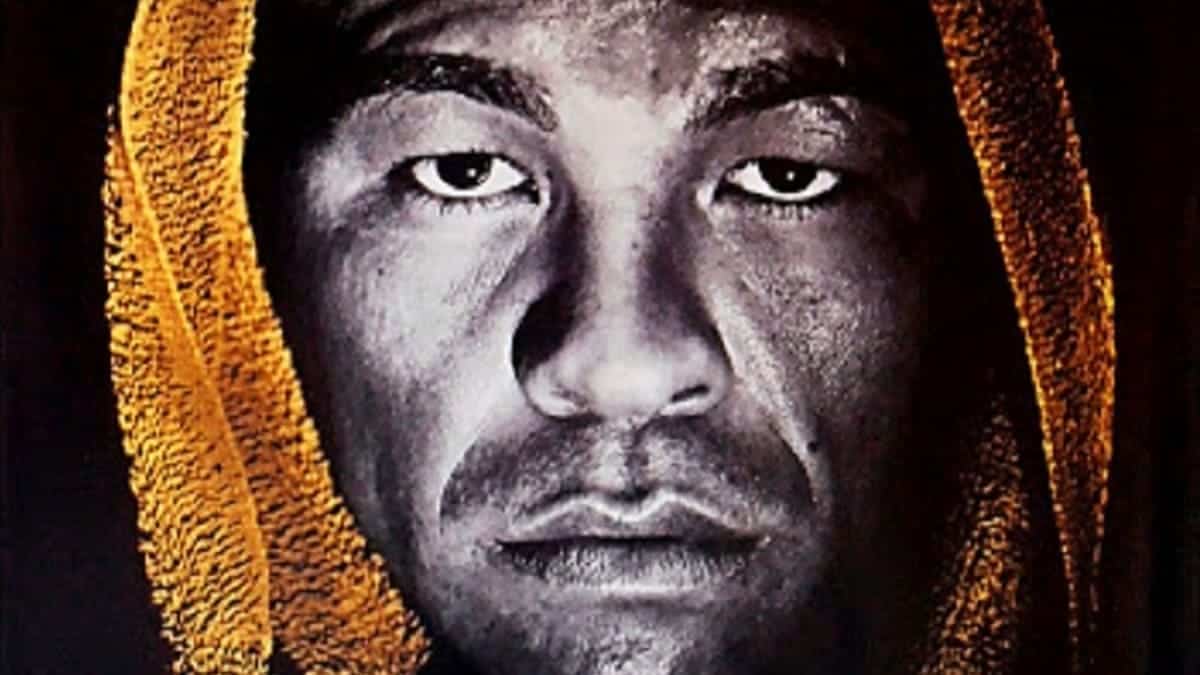
Arturo Gatti’s legacy is a comprehensive record of professional excellence defined by 40 wins, 9 losses, and two world titles across multiple weight classes. Known for his legendary trilogies and unmatched resilience, his career record stands as a definitive benchmark for bravery and fan-centric competition in modern boxing history.
The Foundation of a Warrior: Arturo Gatti’s Early Professional Career
The professional record of Arturo Gatti, widely known by his ring name "Thunder," began in 1991. To understand the legacy Gatti left behind, one must analyze the early 1990s, where his aggressive style first caught the attention of the boxing world. Born in Italy and raised in Montreal, Canada, Gatti eventually made Jersey City his professional home, a move that fundamentally shaped his identity as a blue-collar fighter.
In his early years, Gatti was more than just a brawler; he possessed significant hand speed and a devastating left hook. By 1995, he had already amassed a record that positioned him for a world title shot. On December 15, 1995, Gatti defeated Tracy Harris Patterson to capture the IBF Junior Lightweight Championship. This victory was a milestone, marking the beginning of his status as a "television fighter"—someone whose style was so explosive that networks like HBO clamored to broadcast his bouts.
The defense of this title against fighters like Wilson Rodriguez and Gabriel Ruelas solidified his reputation. The 1997 fight against Ruelas was particularly significant, as it was named Fight of the Year by The Ring magazine. This pattern of winning high-drama, high-damage fights became the hallmark of his record. Even in the mid-1990s, analysts noted that Gatti’s legacy would not just be about championships, but about the sheer volume of punishment he could endure while remaining a threat to his opponents.
The Statistical Reality: Analyzing the 40-9 Record
When reviewing Arturo Gatti’s legacy, the raw numbers tell an impressive story of longevity and power. Over a 16-year career, Gatti competed in 49 professional bouts. His 40 victories included 31 knockouts, reflecting a knockout percentage of approximately 63%. This statistic is crucial because it highlights that despite his reputation for taking punches, he was an exceptionally dangerous offensive force.
His losses, totaling nine, often occurred against the absolute elite of the sport or during periods where his physical style had taken a visible toll on his body. Notable defeats against Oscar De La Hoya in 2001 and Floyd Mayweather Jr. in 2005 are often cited by critics to argue that Gatti struggled against top-tier technical wizards. However, the legacy of a fighter like Gatti is rarely measured by wins and losses alone. Instead, it is measured by the quality of the "W" and the nature of the "L."
Weight Class Transitions
Gatti’s ability to move between weight classes is a vital part of his detailed record. He held titles and competed at a high level in several divisions:
- Junior Lightweight (130 lbs): Where he won his first major world title.
- Lightweight (135 lbs): A period marked by brutal wars with Ivan Robinson.
- Junior Welterweight (140 lbs): Where he won the WBC title and found a second wind in his career under the tutelage of trainer Buddy McGirt.
Each transition required a different tactical approach. In the lower weights, Gatti relied on raw speed and chin. In the higher weights, especially during the latter half of his career, he attempted to evolve into a more disciplined "boxer-puncher," demonstrating a technical depth that is often overlooked in favor of his "Blood and Guts" reputation.
The Micky Ward Trilogy: The Centerpiece of the Gatti Record
No detailed record of Arturo Gatti’s legacy is complete without a deep dive into the 2002–2003 trilogy against Micky Ward. This series of fights is often regarded as the greatest trilogy in the history of the sport. It did not just define Gatti’s career; it redefined the expectations for modern boxing matches.
The first fight, taking place on May 18, 2002, in Uncasville, Connecticut, is frequently cited as one of the greatest sporting events of the 21st century. Despite losing a majority decision, Gatti’s stock rose higher in defeat than most fighters’ do in victory. The ninth round of that fight is legendary, featuring a sustained exchange of power punches that seemed to defy human endurance.
Gatti won the second and third fights of the trilogy, showing significant tactical growth. Under Buddy McGirt, Gatti used his jab and lateral movement to outbox Ward, proving he was more than just a human punching bag. The trilogy concluded with a mutual respect between the two fighters that remains a poignant chapter in boxing lore. By the time the final bell rang in their third bout, the two men had become inseparable in the annals of history, their names forever linked by the 30 rounds of hell they shared.
The Technical Evolution Under Buddy McGirt
A common misconception in the record of Arturo Gatti is that he was purely a brawler. This narrative changed significantly in the early 2000s when he teamed up with former champion Buddy McGirt. The "McGirt Era" is a fascinating subset of Gatti’s legacy because it represents a conscious effort to preserve the fighter’s health while maximizing his scoring potential.
During this period, Gatti captured the vacant WBC Junior Welterweight title by defeating Gianluca Branco in 2004. He successfully defended the title twice, most notably against Leonard Dorin with a clinical body shot knockout. This version of Gatti was more patient. He utilized a stinging jab and improved head movement, which allowed him to prolong his career at the elite level.
However, the "old" Gatti would still emerge when he was hurt. This instinctual return to brawling was both his greatest strength and his greatest vulnerability. The detailed record shows that while he could box beautifully, his heart often demanded he fight in the trenches—a trait that made him the "Human Highlight Film" but also led to the physical decline seen in his final bouts against Carlos Baldomir and Alfonso Gomez.
Career Milestone Comparison
The following table outlines the pivotal moments that define Arturo Gatti's professional record and his path to the Hall of Fame.
| Year | Opponent | Result | Title/Significance | Legacy Impact |
|---|---|---|---|---|
| 1995 | Tracy Harris Patterson | Win (UD) | IBF Junior Lightweight Title | First major world championship. |
| 1997 | Gabriel Ruelas | Win (TKO 5) | Title Defense | Fight of the Year; cemented "Thunder" persona. |
| 1998 | Ivan Robinson I | Loss (SD) | Non-title | Fight of the Year; showed Gatti's vulnerability and heart. |
| 2002 | Micky Ward I | Loss (MD) | Non-title | Considered the "Fight of the Century" by many. |
| 2003 | Micky Ward III | Win (UD) | Trilogy Conclusion | Confirmed Gatti's ability to adjust and outbox. |
| 2004 | Gianluca Branco | Win (UD) | WBC Junior Welterweight Title | Second division world title. |
| 2005 | Floyd Mayweather Jr. | Loss (RTD 6) | Title Loss | Highlighted the gap between Gatti and P4P elites. |
Posthumous Recognition and the Hall of Fame
Arturo Gatti’s career ended in 2007, but his legacy was formally immortalized in 2013 when he was inducted into the International Boxing Hall of Fame (IBHOF). His induction was a point of debate among some purists who pointed to his nine losses and his struggles against technical masters. However, the IBHOF committee recognized that Gatti’s contribution to the sport was foundational.
Boxing is an entertainment industry as much as it is a sport, and few athletes in history provided more value to the fans than Gatti. His presence ensured high ratings and sold-out arenas. The "Gatti Era" at Boardwalk Hall in Atlantic City became a legendary chapter in the city’s history, with fans traveling from across the continent to witness his fights.
The criteria for his legacy, as viewed from the perspective of 2026, focuses on three pillars:
- Inspiration: Gatti’s "never quit" attitude has become a teaching tool for young boxers.
- Safety and Durability: His career is often studied in the context of sports medicine and the long-term impact of high-damage fighting styles.
- Sportsmanship: His relationship with Micky Ward remains the gold standard for how rivals can transition from combat to lifelong friendship.
The Controversy and Final Record
The legacy of Arturo Gatti is unfortunately shadowed by the circumstances of his death in July 2009 in Porto de Galinhas, Brazil. While the initial Brazilian investigation ruled it a suicide, a subsequent private investigation commissioned by his family and associates suggested foul play.
For historians and fans, the controversy surrounding his passing does not diminish his record in the ring, but it adds a layer of tragedy to the "Thunder" narrative. In the years following his death, various documentaries and books have attempted to provide a "detailed record" of his final days. However, in the context of boxing, his legacy remains centered on the 49 times he stepped through the ropes. He lived his life with the same intensity he fought with, which is why he remains one of the most beloved figures in the sport’s history.
Common Myths vs. Facts in the Gatti Record
When researching Arturo Gatti’s legacy, several myths often surface. It is important to distinguish between the legend and the verified facts of his career.
- Myth: Gatti was only a brawler who couldn't box.
- Fact: Gatti was a two-time Golden Gloves champion as an amateur and showed high-level technical skills in his victories over Gianluca Branco and Leonard Dorin.
- Myth: He never won a "real" world title.
- Fact: He held major world titles from both the IBF and the WBC, two of the four primary sanctioning bodies in boxing.
- Myth: He had a "weak" chin.
- Fact: Gatti actually had a legendary chin; most of the "knockdowns" he suffered were the result of cumulative damage or balance issues rather than a single punch's inability to take a hit. He frequently recovered from shots that would have knocked out lesser men.
Expert Guidance: How to Study Gatti’s Career
For those looking to understand the technical nuances of Arturo Gatti’s legacy, a chronological viewing of his major bouts is recommended. Starting with his early 130-pound title run shows his athletic peak. Moving into the Ivan Robinson fights illustrates the transition into a "warrior" who relied more on heart than defense. Finally, the Ward trilogy and the subsequent fights under Buddy McGirt show the maturation of a fighter trying to reconcile his aggressive instincts with the necessity of longevity.
Researchers should look to the International Boxing Hall of Fame for official induction records and The Ring Magazine archives for contemporary accounts of his "Fight of the Year" performances. These sources provide the necessary context to understand why a fighter with nine losses is held in higher regard than many undefeated champions.
FAQ
What was Arturo Gatti's professional boxing record?
Arturo Gatti finished his career with a professional record of 40 wins and 9 losses, with 31 of those wins coming by way of knockout. His career spanned from 1991 to 2007, during which he became a two-weight world champion.
How many times did Arturo Gatti win Fight of the Year?
Arturo Gatti was a participant in The Ring magazine's "Fight of the Year" four times (1997 vs. Ruelas, 1998 vs. Robinson, 2002 vs. Ward, and 2003 vs. Ward). This remains one of the highest tallies for any single fighter in the history of the award, highlighting his impact on the sport's excitement.
In which weight classes did Arturo Gatti hold world titles?
Gatti held major world titles in two weight classes. He was the IBF Junior Lightweight Champion (130 lbs) from 1995 to 1998 and the WBC Junior Welterweight Champion (140 lbs) from 2004 to 2005.
Is Arturo Gatti in the Boxing Hall of Fame?
Yes, Arturo Gatti was inducted into the International Boxing Hall of Fame in 2013, his first year of eligibility. His induction was a tribute to his immense popularity, his participation in several of the greatest fights in history, and his two-division championship status.
Who was Arturo Gatti's most famous trainer?
While he worked with several trainers, Buddy McGirt is often credited with the most significant tactical evolution of Gatti's career. Under McGirt, Gatti transitioned from a pure brawler to a more disciplined boxer-puncher, which helped him capture the WBC title late in his career.
Practical Recommendation: To truly appreciate the record Arturo Gatti left behind, enthusiasts should view the "Gatti-Ward" trilogy in its entirety. Beyond the highlights, the full fights reveal the tactical adjustments and the psychological warfare that define elite-level boxing. For historians, focusing on his 1995–1997 title defenses provides the best evidence of his raw athletic talent before his style became primarily focused on endurance and power exchanges.