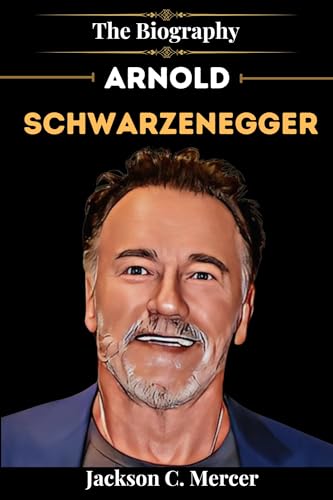
Arnold Schwarzenegger was born on July 30, 1947, in Thal, a small village bordering the Styrian capital of Graz, Austria. His early roots are characterized by a modest post-war upbringing in a rural forester's house, a disciplined environment shaped by his father’s police background, and a transformative athletic awakening that began in local Graz gyms.
The Geography of Thal: A Village Defined by Tradition
Thal bei Graz is situated in the rolling hills of Styria, often referred to as the "Green Heart" of Austria. In 1947, the village was a quiet, predominantly agricultural community. Unlike the bustling metropolitan centers of Europe, Thal provided a backdrop of rugged natural beauty and traditional values. For Schwarzenegger, this environment was both a sanctuary and a catalyst for his desire to see the wider world.
The specific location of his birth and childhood is a former forester’s lodge located at Linakstraße 9 (formerly designated as High Street 145). This yellow, two-story building was constructed in the late 19th century and lacked many modern amenities during Arnold’s youth. As of 2026, the building stands as the officially sanctioned Arnold Schwarzenegger Museum, preserving the exact conditions under which the future governor was raised.
Living Conditions in Post-War Styria
The immediate post-WWII era in Austria was marked by scarcity and reconstruction. The Schwarzenegger family lived on the second floor of the forester’s house. For much of his childhood, the residence had no indoor plumbing, no central heating, and no electricity—features that were only installed as the Austrian "Economic Miracle" began to reach rural areas in the 1950s.
Schwarzenegger has frequently recounted the daily chore of carrying heavy buckets of water from a nearby well to the house. While physically demanding, these early experiences instilled a baseline of functional strength and a "no-excuses" work ethic. The lack of luxury was not unique to his family but was a common thread among the village youth, creating a community bound by shared hardship and resilience.
Family Dynamics and the Influence of Gustav and Aurelia
To understand Arnold’s early roots, one must examine the complex relationship he had with his parents. His father, Gustav Schwarzenegger, was a local police chief and a former member of the Sturmabteilung (SA) during the war—a fact that Arnold has addressed with transparency in recent years to highlight the dangers of extremism. Gustav was a strict disciplinarian who valued athletic competition and military-style order.
The Impact of Parental Discipline
Gustav’s approach to parenting was rigorous. Arnold and his older brother, Meinhard, were often required to "earn" their breakfast by performing calisthenics. This environment fostered a competitive rivalry between the two brothers, as they vied for their father’s approval through sports and chores. While this upbringing was stern, it provided the psychological scaffolding for Arnold’s future "mental toughness."
In contrast, his mother, Aurelia Jadrny Schwarzenegger, provided the emotional core of the household. Known for her warmth and dedication to her sons, she maintained the household under difficult conditions. The balance between Gustav's rigid expectations and Aurelia's domestic stability created a tension that Arnold eventually channeled into his singular focus on bodybuilding.
Educational Foundations and First Athletic Steps
Arnold attended the local primary school in Thal before moving on to secondary education in Graz. His teachers remembered him as a cheerful, albeit average, student who was well-liked by his peers. However, his true education occurred outside the classroom, in the forests of Thal and the sports fields of the region.
Initially, Schwarzenegger’s athletic interests were conventional for an Austrian boy. He played soccer (football), participated in track and field, and practiced swimming in the Thalersee, a local lake that remains a popular recreation spot in 2026. It was through soccer that he first encountered the weight room; his coach suggested weight training to strengthen the players' legs.
The Discovery of the "Iron"
At age 15, Arnold made a pivotal decision to abandon soccer in favor of bodybuilding. This was a radical choice in 1960s Austria, where bodybuilding was viewed as a fringe activity performed by "circus strongmen." He began training at the Union-Gym in Graz, a basement facility that lacked modern equipment but possessed a community of dedicated lifters.
He was mentored by older athletes like Karl Gerstl and Kurt Marnul, the latter of whom was the first "Mr. Austria." These men introduced Arnold to the magazines of Joe Weider and the films of Reg Park. Park, a British bodybuilder who played Hercules in Italian "sword-and-sandal" movies, became Arnold’s blueprint for success. He realized that physical development could be a passport to Hollywood and the United States.
Military Service: The Tank Driver of the Panzerbataillon 4
In 1965, at age 18, Arnold fulfilled his mandatory service in the Austrian Army. He served in the Panzerbataillon 4 (4th Tank Battalion) based in Graz. He was trained as a tank driver, operating the M47 Patton tank. Despite the rigors of military life, Arnold remained obsessed with his training. He stored weights in the tank and trained during maneuvers, often waking up hours before his fellow soldiers to complete his routines.
The Junior Mr. Europe Incident
The most famous anecdote from his military roots involves the 1965 Junior Mr. Europe contest in Stuttgart, Germany. Arnold went AWOL (absent without leave) from his base to compete in the event. He won the title, but upon his return to the barracks, he was sentenced to several days in the military prison (the "brig"). However, the officers were so impressed by his victory that they eventually supported his training, even providing him with extra meat and milk to fuel his growth. This period solidified his reputation as a man who would bypass any rule to achieve his goals.
Significant Locations and Milestones (1947–1968)
The following table summarizes the key locations and events that defined Arnold Schwarzenegger’s early years before his move to the United States.
| Year | Milestone | Primary Location | Context |
|---|---|---|---|
| 1947 | Birth | Thal, Austria | Born in the second-floor apartment of the forester's house. |
| 1953 | Starting School | Volksschule Thal | Early education focusing on core subjects and local history. |
| 1960 | Athletic Shift | Thalersee / Graz | Transitioned from soccer to weight training at the Union-Gym. |
| 1962 | First Competition | Graz, Austria | Competed in local Styrian weightlifting and bodybuilding meets. |
| 1965 | Military Service | Graz/Mühlau | Served as an M47 tank driver; won Junior Mr. Europe. |
| 1966 | Mr. Universe (London) | London, UK | Placed second in his first major international competition. |
| 1967 | Youngest Mr. Universe | London, UK | Won the NABBA Mr. Universe title at age 20. |
| 1968 | Move to America | Los Angeles, USA | Relocated to work with Joe Weider at Gold's Gym. |
The Cultural Heritage of Styria in Schwarzenegger’s Identity
Even as a global superstar and American politician, Schwarzenegger has never severed his ties to his Styrian roots. The "Steirischer Panther" (Styrian Panther), the heraldic animal of his home province, remains a symbol he frequently references. His distinctive accent, which he famously refused to lose despite Hollywood pressure, is a direct linguistic link to the valleys of Styria.
The Arnold Schwarzenegger Museum in Thal
For those researching his early life in 2026, the Arnold Schwarzenegger Museum is the definitive resource. Opened in 2011, the museum contains original artifacts, including:
- His childhood bed and the original kitchen stove.
- The first set of dumbbells he used in Graz.
- A replica of the M47 Patton tank he drove in the army.
- Memorabilia from his first bodybuilding victories in Europe.
The museum not only catalogs his success but emphasizes the "start from zero" philosophy that defines his early biography. It serves as a pilgrimage site for fans who want to see the physical reality of his humble beginnings.
Traveling to Thal: A Guide for Historians and Fans
Visiting the birthplace of Arnold Schwarzenegger is a straightforward journey for those traveling through Central Europe. Thal is located approximately 4 kilometers (2.5 miles) west of Graz.
- Access from Graz: The village is accessible via the GVB (Graz Transport) bus lines or a short taxi ride from the Graz main train station (Hauptbahnhof).
- The Thalersee Trail: A popular walking path leads from the outskirts of Graz through the woods to the Thalersee lake. This is the same path Arnold often ran as part of his early cardiovascular training.
- The Parish Church of St. James: While in Thal, visitors often visit the local church, which features unique architectural elements designed by the artist Ernst Fuchs. This was the spiritual center of the community during Arnold's youth.
The preservation of these sites is managed by the local municipality and the Schwarzenegger family’s estate, ensuring that the historical accuracy of his roots remains intact for future generations.
Frequently Asked Questions
Was Arnold Schwarzenegger's father a member of the Nazi party?
Yes, historical records confirmed that Gustav Schwarzenegger applied for membership in the National Socialist Party in 1938 and was a member of the SA. Arnold has been very vocal about this in recent years, particularly in his 2023 documentary and public service announcements, using his father's story as a cautionary tale about the misery and hate that followed that era. He has stated that his father was a "broken man" after the war.
Did Arnold really live in a house with no running water?
Yes. The forester's house in Thal, where he lived until his late teens, did not have modern plumbing during his early childhood. Water had to be fetched from a well. This was not uncommon in rural Styria in the late 1940s, but it remains a stark contrast to the luxury Schwarzenegger achieved later in life.
What happened to Arnold's brother, Meinhard?
Arnold’s older brother, Meinhard, died in a car accident in May 1971. He was driving under the influence at the time. Arnold was in the United States when it happened and did not attend the funeral, a decision he later attributed to his intense focus on training and a complicated relationship with his past, though he later supported Meinhard’s son, Patrick.
Is the house Arnold was born in still standing?
Yes, the house at Linakstraße 9 in Thal is perfectly preserved. It was converted into the Arnold Schwarzenegger Museum in 2011 with Arnold’s personal involvement. Many of the rooms have been restored to look exactly as they did in the 1940s and 50s.
Where can I see the tank Arnold Schwarzenegger drove in the army?
The original M47 Patton tank that Arnold drove during his service was tracked down by him decades later. He acquired it and eventually moved it to the United States. However, a similar model and extensive exhibits regarding his military service are available at the museum in Thal.
Practical Recommendation for Further Research
To fully grasp the "Early Roots" of Arnold Schwarzenegger beyond the physical locations, researchers should consult his 2012 autobiography, Total Recall: My Unbelievably True Life Story. While various biographies exist, his personal account provides the most granular detail regarding the psychological impact of his Austrian upbringing. Additionally, for those planning a visit, the Official Graz Tourism Portal provides updated travel schedules and seasonal information for the Thal region. Understanding the socio-economic landscape of 1950s Styria is essential to appreciating the magnitude of Schwarzenegger's eventual transition to the global stage.