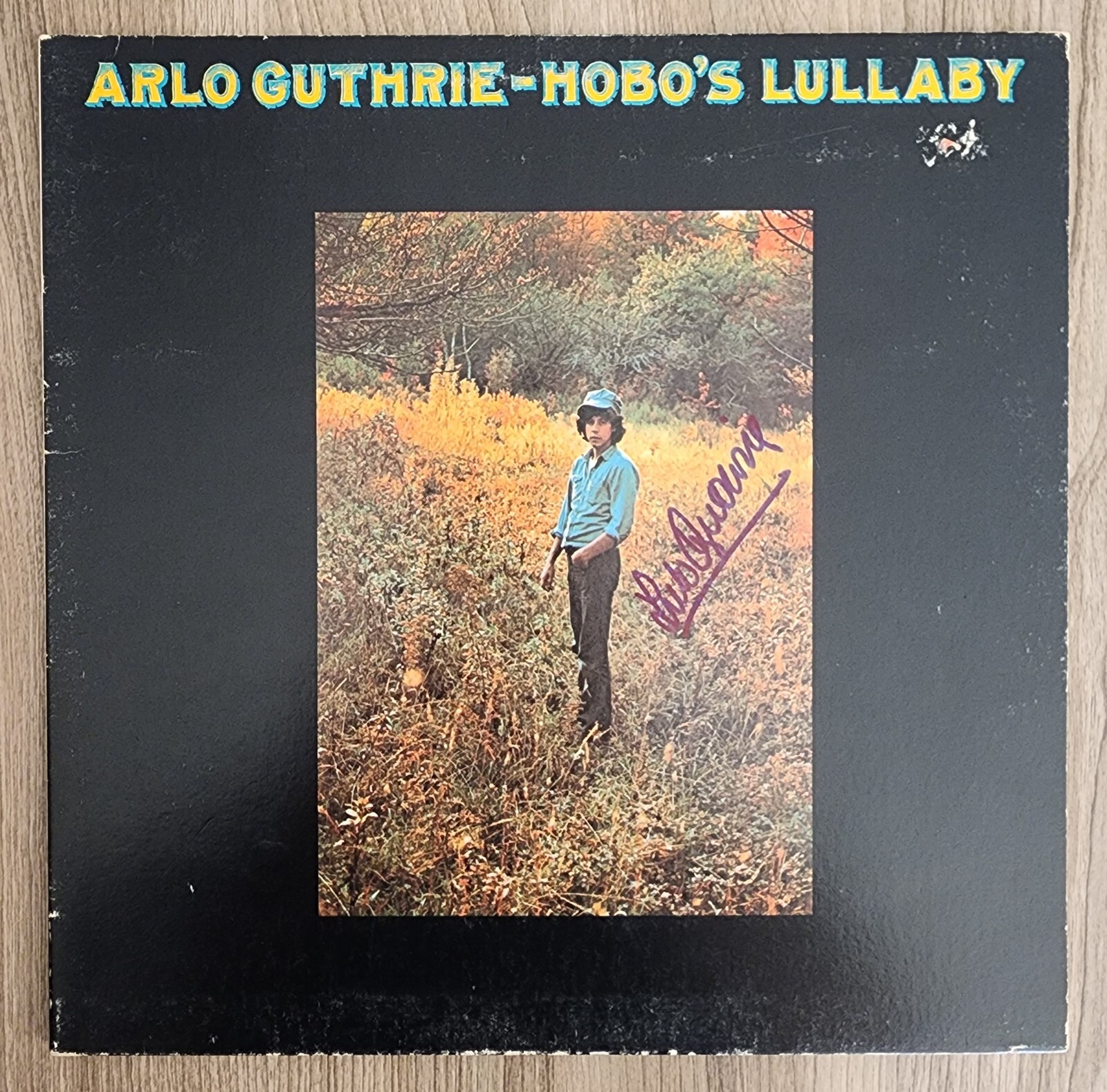
Arlo Guthrie is an American folk singer-songwriter and social activist best known for his storytelling ballad "Alice's Restaurant Massacree" and his cover of "City of New Orleans." Beyond his musical career, he is a dedicated philanthropist who founded the Guthrie Center, an interfaith foundation supporting community outreach and Huntington's Disease research.
Arlo Guthrie’s name is synonymous with the American folk revival and the counterculture movements of the 1960s. As the son of the legendary Woody Guthrie, Arlo inherited a mantle of social responsibility and musical storytelling that he carried for over five decades. While many recognize him for his 18-minute anti-war monologue or his performance at Woodstock, his lasting impact extends far beyond the stage. Now, in 2026, we look back at a career defined by artistic integrity and a deep commitment to humanitarian efforts through his foundation and community work.
The Foundation of a Folk Legend: Early Life and Roots
Born in Brooklyn, New York, in 1947, Arlo Davy Guthrie was immersed in the world of folk music from birth. His father, Woody Guthrie, was the voice of the Dust Bowl and the author of "This Land Is Your Land." His mother, Marjorie Mazia Guthrie, was a professional dancer with the Martha Graham Company. This environment provided Arlo with a unique education, blending the gritty realism of folk traditions with the discipline of formal performance.
During his childhood, the Guthrie household was a revolving door for musical giants. Figures like Pete Seeger, Lead Belly, and Ramblin’ Jack Elliott were not just influences; they were family friends. These interactions taught Arlo that music was not merely entertainment but a tool for social change and community building. This perspective would later form the backbone of his philanthropic philosophy.
The elder Guthrie’s battle with Huntington's Disease, a degenerative neurological disorder, cast a long shadow over Arlo's early life. Woody’s decline and eventual death in 1967 fundamentally shaped Arlo’s understanding of health advocacy. Witnessing his father’s struggle led Arlo and his mother to become early champions for Huntington's research, a cause that remains central to the Guthrie family’s philanthropic efforts today.
Alice’s Restaurant: From Local Incident to National Anthem
Arlo Guthrie’s breakthrough came in 1967 with the release of the album Alice’s Restaurant. The title track, "Alice’s Restaurant Massacree," is a satirical talking-blues piece based on a true story. The narrative recounts a series of events beginning on Thanksgiving Day in 1965, when Arlo and a friend were arrested for illegally dumping trash after finding the local dump closed for the holiday.
The song’s brilliance lies in its transition from a humorous anecdote about littering to a biting critique of the Vietnam War draft. By illustrating the absurdity of a bureaucracy that would reject a soldier for a littering conviction while simultaneously asking them to commit acts of violence, Guthrie captured the disillusionment of a generation.
The Cultural Impact of the Massacree
"Alice’s Restaurant" became more than a song; it became a Thanksgiving tradition. Radio stations across the United States began playing the full 18-minute track every Thanksgiving Day, a practice that continues into 2026. The song also inspired a 1969 feature film directed by Arthur Penn, in which Guthrie played himself. This success established Arlo as a distinct voice in folk music—one who could balance humor with profound social commentary without the overtly aggressive tone of some of his contemporaries.
Musical Evolution and the Woodstock Era
Following the success of his debut, Guthrie continued to evolve as an artist. His 1969 performance at the original Woodstock festival remains one of his most iconic moments. Arriving on stage during the rainy first day, his performance of "Coming into Los Angeles" became a standout moment of the documentary film and soundtrack, cementing his status as a pillar of the hippie movement.
In the early 1970s, Guthrie achieved his greatest commercial success with a cover of Steve Goodman’s "City of New Orleans." His rendition of the song, which chronicles a journey on the Illinois Central Railroad, reached the Top 20 on the Billboard charts. It demonstrated his ability to interpret the American experience through song, celebrating the landscape and the working-class people who inhabit it.
Throughout the 1970s and 1980s, Guthrie released a string of albums that explored folk, country, and rock influences. While he never achieved the same level of mainstream chart success as "City of New Orleans," he maintained a rigorous touring schedule, often performing with his children and long-time collaborators like Pete Seeger.
The Guthrie Center: A Vision of Interfaith Philanthropy
In 1991, Arlo Guthrie purchased the Old Saint James Church in Great Barrington, Massachusetts. This was the same church where the events described in "Alice’s Restaurant" began—the home of Alice and Ray Brock. Rather than turning the site into a museum dedicated to himself, Guthrie transformed it into the Guthrie Center, a secular, interfaith meeting place.
The Guthrie Center was founded on the principle of "Bring Your Own God." It serves as a sanctuary for people of all faiths, or no faith at all, to come together for community service and spiritual exploration. The center addresses a wide range of needs, demonstrating Guthrie’s commitment to localized, practical philanthropy.
Core Programs and Initiatives
- Community Lunch Program: The center hosts weekly community lunches, providing free meals to local residents regardless of their financial status. This program fosters social connection and addresses food insecurity in the Berkshire region.
- The Hootenanny: Continuing the folk tradition, the center hosts regular "Hoots" where local musicians can perform. These events keep the spirit of folk music alive and provide a platform for emerging artists.
- Huntington’s Disease Support: The Guthrie Center serves as a hub for information and support for families affected by Huntington’s Disease. It honors the legacy of Marjorie Guthrie, who founded the Committee to Combat Huntington’s Disease (now the Huntington’s Disease Society of America).
- Educational Outreach: The center provides space for workshops and seminars focusing on social justice, ecological sustainability, and the history of folk music.
The transformation of the church from a private residence to a community resource is perhaps Arlo Guthrie’s most significant contribution to his local community. It represents a physical manifestation of the values he championed in his music: inclusivity, empathy, and grassroots activism.
Advocacy for Huntington’s Disease and Medical Research
The shadow of Huntington's Disease (HD) is a significant thread in the Guthrie narrative. Because HD is a genetic disorder, Arlo lived for years under the uncertainty of whether he would develop the condition that took his father. While Arlo eventually tested negative for the gene, the experience fueled a lifelong dedication to medical advocacy.
In 2026, the Guthrie family remains one of the most prominent voices in the fight against HD. Their work involves not just fundraising for research, but also advocating for patient rights and genetic privacy. Arlo has often used his platform to speak about the importance of scientific progress while emphasizing the dignity of those currently living with the disease.
Through the Woody Guthrie Foundation and the Guthrie Center, the family has helped fund research initiatives that have brought us closer to effective treatments. Arlo’s approach to philanthropy is characterized by this blend of personal history and public advocacy, making his efforts feel deeply authentic to his audience.
Arlo Guthrie’s Career and Philanthropic Timeline
The following table outlines the key milestones in Arlo Guthrie’s life, highlighting the intersection of his musical achievements and his charitable work.
| Year | Event/Milestone | Impact/Significance |
|---|---|---|
| 1947 | Born in Brooklyn, NY | Beginning of a legacy rooted in folk tradition. |
| 1965 | The Thanksgiving Arrest | The real-life inspiration for "Alice's Restaurant." |
| 1967 | Release of Alice's Restaurant | Established Guthrie as a major folk artist and anti-war voice. |
| 1969 | Woodstock Performance | Iconic performance of "Coming into Los Angeles." |
| 1972 | "City of New Orleans" | His biggest commercial hit; revitalized interest in train travel songs. |
| 1991 | Founding of the Guthrie Center | Transformation of a historic site into an interfaith community hub. |
| 2020 | Retirement from Touring | Shifted focus toward archival work and the Guthrie Center. |
| 2026 | Legacy Preservation | Ongoing operation of the Guthrie Center and digital archiving of his work. |
Retirement and the Preservation of a Legacy
In October 2020, Arlo Guthrie announced his retirement from professional touring. Citing health concerns—specifically a series of mini-strokes—he decided that he could no longer provide the level of performance his fans deserved. However, "retirement" for Arlo Guthrie did not mean disappearing from the public eye.
In the years leading up to 2026, he has focused on preserving his vast archive of music, stories, and family history. This includes digitizing rare recordings and working with the Woody Guthrie Center in Tulsa, Oklahoma, to ensure that the Guthrie family’s contributions to American culture are accessible to future generations.
His retirement also allowed him to spend more time overseeing the Guthrie Center’s operations. Even without a national tour, his influence persists through his children—Abe, Cathy, Annie, and Sarah Lee Guthrie—who are all accomplished musicians in their own right. They carry on the family tradition of touring and social activism, often incorporating their father’s philanthropic goals into their own careers.
The Philosophical Impact of a "Folk Legend"
Arlo Guthrie’s status as a folk legend is not just about the songs he wrote; it is about the philosophy he lived. Unlike many celebrities whose philanthropy is managed by distant boards, Guthrie’s work has always been hands-on and local. Whether it is serving soup at the Guthrie Center or testifying before Congress about medical research, his activism is personal.
He redefined what it means to be a "protest singer." While his father’s era was defined by the labor movement and the Great Depression, Arlo’s era was defined by the civil rights movement and the Vietnam War. He approached these issues not with anger, but with a sense of "common sense" storytelling. By making people laugh, he made them listen. This unique ability to use humor as a bridge for social change is perhaps his greatest artistic contribution.
Frequently Asked Questions
Does Arlo Guthrie still perform in 2026?
Arlo Guthrie retired from professional touring in 2020. While he no longer embarks on national tours, he occasionally participates in special events, live-streamed storytelling sessions, or local benefits for the Guthrie Center. His focus is now on archival projects and supporting the next generation of Guthrie musicians.
Where is the Guthrie Center located, and can I visit it?
The Guthrie Center is located at the Old Saint James Church in Van Deusenville (Great Barrington), Massachusetts. It is open to the public and continues to host community events, interfaith services, and musical performances. Visitors often visit to see the site of the famous "Alice's Restaurant" incident and to participate in the center's community programs.
Is Arlo Guthrie related to the Woody Guthrie Center in Tulsa?
Yes, the Woody Guthrie Center in Tulsa, Oklahoma, houses the archives of Arlo’s father. While Arlo’s personal philanthropic focus is the Guthrie Center in Massachusetts, he has worked closely with the Tulsa center to preserve his father’s legacy and ensure that the family’s historical documents are curated and protected.
What is "Alice's Restaurant" actually about?
The song is a satirical monologue about an arrest for illegal dumping on Thanksgiving in 1965. Guthrie uses the absurdity of being deemed "unfit for military service" because of a minor littering conviction to criticize the draft and the inconsistencies of the U.S. government during the Vietnam War.
How did Huntington's Disease affect the Guthrie family?
Woody Guthrie died from complications of Huntington's Disease in 1967. Arlo’s mother, Marjorie, became a leading advocate for the disease. While Arlo does not have the gene for the condition, the family remains deeply involved in fundraising and advocacy to find a cure for this hereditary neurological disorder.
Who are Arlo Guthrie's children?
Arlo has four children: Abe Guthrie, Cathy Guthrie, Annie Guthrie, and Sarah Lee Guthrie. All four are involved in the music industry or social activism, continuing the "family business" of folk music and community service. Sarah Lee Guthrie, in particular, has gained significant acclaim as a folk artist.
Practical Recommendation for Fans and Philanthropists
For those looking to engage with Arlo Guthrie’s legacy in 2026, the most effective path is to support the Guthrie Center. Unlike large-scale charities, the Guthrie Center operates on a community-focused model where small donations have a direct, visible impact on local food security and social programs.
Furthermore, exploring the digital archives hosted by the Woody Guthrie Center provides a deeper understanding of the socio-political context that shaped Arlo’s music. By studying the lineage of folk music from Woody to Arlo and now to his children, listeners can appreciate how music serves as a living history of the American spirit. Whether through attending a "Hoot" in Massachusetts or supporting Huntington's Disease research, participating in the Guthrie legacy means committing to the idea that a single person—with a guitar and a story—can indeed change the world.