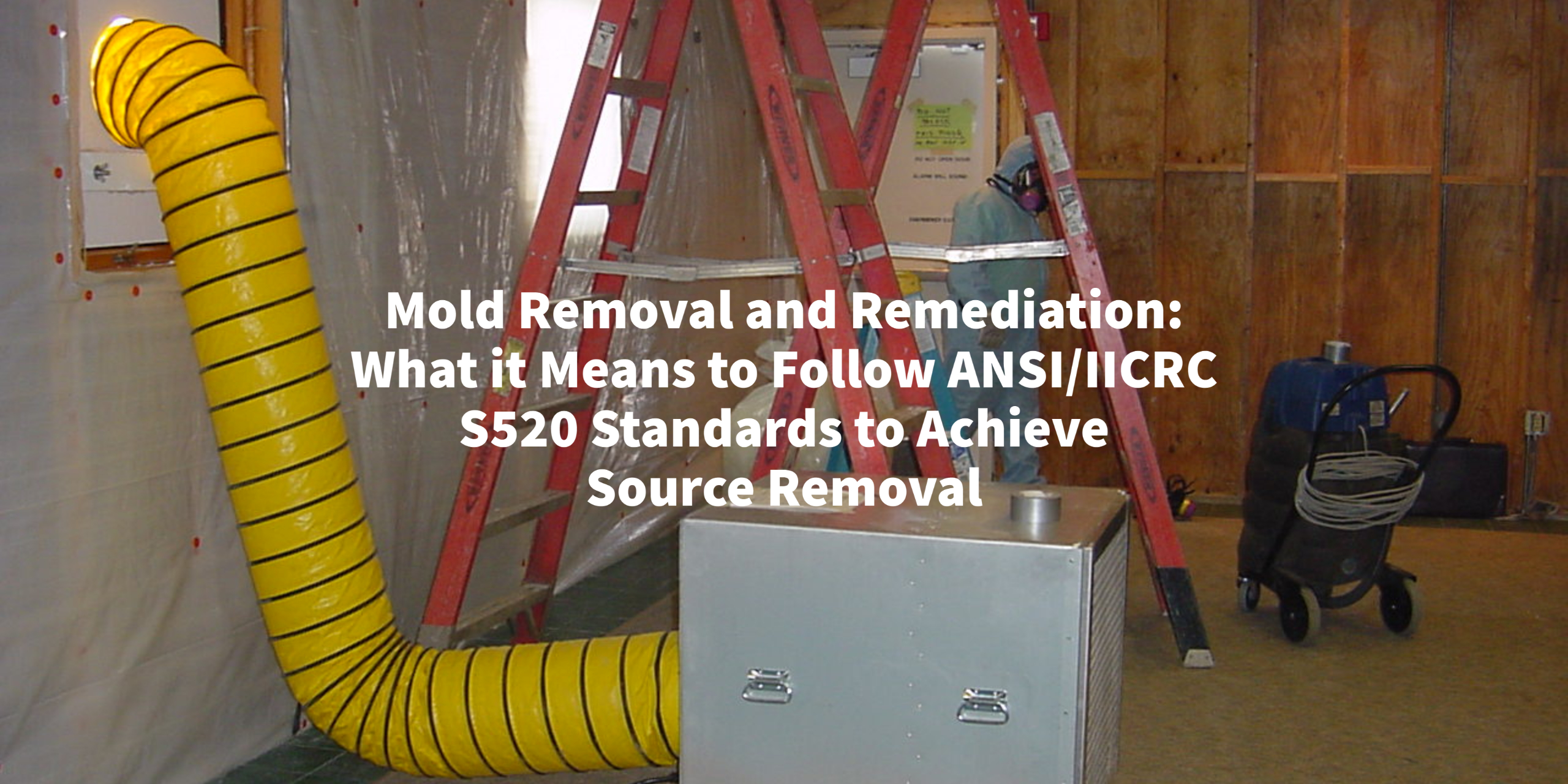
The ANSI/IICRC S520 Standard and Reference Guide for Professional Mold Remediation is the recognized benchmark for assessing, containing, and remediating fungal contamination in indoor environments. Developed by the Institute of Inspection, Cleaning and Restoration Certification (IICRC) and accredited by the American National Standards Institute (ANSI), it outlines science-based protocols emphasizing moisture control, physical spore removal, worker protection, and independent clearance verification.
Understanding the ANSI/IICRC S520 Framework
The IICRC publishes procedural standards that establish consensus-based rules for the inspection, cleaning, and restoration industries. Within this ecosystem, the ANSI/IICRC S520 focuses specifically on professional mold remediation. The publication consists of two distinct components: the Standard itself, which defines mandatory and recommended procedures using specific modal verbs (such as shall, should, and may), and the companion Reference Guide, which offers in-depth background science, engineering principles, and contextual rationale.
ANSI/IICRC S520 Document Structure
- Procedural Standard (Mandatory & Recommended Rules: shall, should, may)
- Companion Reference Guide (Scientific Rationale, Engineering Principles, Building Science)
The core philosophy of the S520 is that mold remediation is fundamentally a physical removal process, not a chemical treatment or masking exercise. Fungal ecology within a structure changes when excess moisture interacts with organic building materials. Rather than relying on disinfectants or encapsulants to "kill" mold, the S520 mandates identifying and fixing the underlying water source, physically extracting fungal growth and settled spores, and restoring the indoor environment to a normal ecological balance.
ANSI accreditation ensures that the S520 undergoes rigorous periodic review by a balanced consensus body comprising indoor air quality (IAQ) consultants, restoration contractors, public health experts, and equipment manufacturers. This process ensures the standard reflects current advancements in building science, industrial hygiene, and microbiology.
The Three Fungal Conditions Defined by S520
To evaluate contamination severity and establish appropriate remediation scopes, the S520 classifies indoor environments into three distinct fungal conditions. Understanding these conditions allows professionals to prescribe precise engineering controls and cleaning methodologies.
| Indoor Fungal Conditions | Description |
|---|---|
| Condition 1: Normal Ecology | Normal background fungal populations & spores. |
| Condition 2: Settled Spores | Atypical settled spores/fragments; NO growth. |
| Condition 3: Actual Growth | Active or dormant fungal growth on materials. |
Condition 1 (Normal Fungal Ecology)
Condition 1 represents an indoor environment that has not been adversely affected by mold growth or abnormal spore deposition. The fungal types and concentrations inside the structure reflect normal background levels comparable to outdoor air in the immediate geographic area. Microscopic spores and fungal fragments may be present on surfaces, but they exist at typical baseline quantities without active colonization or visible amplification.
Condition 2 (Settled Spores or Fungal Fragments)
Condition 2 describes an indoor surface or environment that contains settled fungal spores or hyphal fragments at levels atypical for a normal indoor space, but where active growth is not present on the immediate surfaces. Condition 2 typically occurs when spores from a nearby active mold source (Condition 3) migrate through air currents and settle on adjacent unimpacted materials, or when improper previous cleanup efforts scattered spores throughout a building. Remediation for Condition 2 requires specialized cleaning (such as HEPA vacuuming and damp wiping) rather than demolition of structural materials.
Condition 3 (Actual Fungal Growth)
Condition 3 refers to an indoor environment characterized by the presence of actual fungal growth—active or dormant—attached to structural assemblies, finishes, or contents. This includes visible mold colonies, subterranean growth within cavity walls, and microscopic hyphal mat development confirmed by laboratory analysis. Condition 3 requires physical containment, controlled removal of non-restorable porous materials, and thorough decontamination of surrounding semi-porous and non-porous surfaces.
Roles and Separation of Responsibilities: IEP vs. Mold Remediator
A fundamental pillar of the ANSI/IICRC S520 is the strict separation of roles between assessment professionals and remediation contractors. This division prevents conflicts of interest and protects property owners by ensuring objective evaluation.
Independent Roles in Remediation
- Independent Environmental Professional (IEP)
- Conducts initial assessment
- Prepares work scope/protocol
- Performs sampling & analysis
- Conducts final PRV testing
- Remediation Contractor (Remediator)
- Establishes safety protocols
- Builds physical containment
- Executes physical removal
- Manages structural drying
Independent Environmental Professional (IEP)
An IEP is an individual who possesses the education, training, certification, and field experience necessary to perform environmental assessments, design remediation protocols, and evaluate indoor air quality. According to the S520, the IEP operates independently from the remediation contractor performing the physical work. The IEP’s responsibilities include:
- Conducting baseline inspections and sampling (air, surface, or bulk) to characterize contamination.
- Developing a written Remediation Work Plan (RWP) or scope of work tailored to the facility.
- Defining clearance criteria based on building usage and baseline data.
- Performing independent Post-Remediation Verification (PRV) to inspect and sample the space after remediation work is completed.
Mold Remediation Contractor
The remediation contractor is responsible for executing the physical scope of work outlined in the remediation protocol while adhering to safety regulations and standard operating procedures. The remediator's duties include:
- Designing and constructing engineering controls, negative air pressure zones, and physical containment barriers.
- Enforcing worker health and safety plans in compliance with OSHA guidelines.
- Removing damaged porous building materials and cleaning semi-porous and non-porous assemblies.
- Managing drying equipment to restore structural materials to baseline moisture standards.
The S520 explicitly discourages a single firm from performing both the initial/clearance IEP role and the actual remediation work on high-risk projects, as self-policing introduces financial and professional bias.
Step-by-Step Mold Remediation Workflow Under S520 Standards
Following a structured workflow ensures that fungal contaminants are isolated, removed, and verified without spreading spores into uncontaminated areas (Condition 1 spaces).
S520 Remediation Workflow
- Initial Assessment & Scope Definition (IEP / Contractor)
- Safety Control & Containment Setup (Critical Barriers & NAMs)
- Source Control & Moisture Mitigation
- Physical Removal & HEPA Sandwich Cleaning
- Post-Remediation Verification (PRV) & Clearance Testing
1. Project Assessment and Safety Planning
Before physical work begins, professionals assess the extent of damage, identify hidden moisture sources, and determine structural safety. Personal protective equipment (PPE) requirements are established based on the scope of contamination. Worker safety gear typically includes:
- Respiratory Protection: N95, half-face elastomeric respirators with P100 filters, or Powered Air-Purifying Respirators (PAPR) depending on spore concentrations.
- Protective Clothing: Disposable suit ensembles (e.g., Tyvek) covering body, hair, and footwear.
- Eye and Hand Protection: Non-vented goggles and heavy-duty nitrile or butyl gloves.
2. Containment and Engineering Controls
To prevent cross-contamination during demolition and cleaning, engineering controls are established to isolate Condition 2 and Condition 3 areas.
- Source Isolation: Covering localized small-scale growth with plastic sheeting before handling.
- Local Containment (Mini-Containment): Used for localized remediation (e.g., under 10 square feet of affected area), utilizing polyethylene sheeting enclosures around the immediate work surface.
- Full Containment: Used for extensive contamination. Involves sealing all openings, supply/return HVAC vents, and doors with 6-mil polyethylene sheeting, creating a dedicated decontamination chamber (airlock) for worker entry and waste egress.
- Negative Pressure Maintenance: Negative Air Machines (NAMs) equipped with High-Efficiency Particulate Air (HEPA) filtration units continuously exhaust air out of the containment zone (ideally outdoors). This creates a continuous negative pressure differential relative to adjacent spaces, preventing airborne spores from escaping containment boundaries.
3. Moisture Identification and Elimination
Mold growth cannot sustain itself without moisture. The S520 stresses that physical removal is incomplete if the moisture driver remains unaddressed. Remediation crews use moisture meters, thermo-hygrometers, and infrared thermal imaging to identify plumbing leaks, rainwater intrusion, foundation seepage, or elevated relative humidity (above 60%). The water source must be corrected, and structural building elements dried to acceptable baseline dry standards before final enclosure.
4. Physical Removal of Contaminated Materials
Material disposition depends on substrate porosity:
- Porous Materials: Gypsum wallboard, ceiling tiles, fiberglass insulation, carpet, and upholstered furniture experiencing Condition 3 growth cannot be completely decontaminated. They must be carefully cut, double-bagged in 6-mil polyethylene bags inside containment, misted with water to prevent dust generation, and safely removed.
- Semi-Porous Materials: Dimensional lumber, timber framing, and plywood can often be preserved if structural integrity remains intact. Remediators remove surface growth through mechanical abrasion (e.g., wire brushing, HEPA-sanded techniques, or controlled media blasting with dry ice or soda) combined with HEPA vacuuming.
- Non-Porous Materials: Glass, metals, sealed concrete, and hard plastics are non-porous and can be thoroughly cleaned without demolition.
5. The HEPA Cleaning Sandwich Technique
To achieve deep decontamination, S520-compliant technicians execute a precise cleaning sequence known colloquially as the "HEPA sandwich":
- First Pass HEPA Vacuuming: Slow, thorough vacuuming of all surfaces inside containment using a true HEPA vacuum (99.97% efficiency at 0.3 microns) to capture dry particulate.
- Damp Wiping: Wiping surfaces with a neutral detergent solution or appropriate EPA-registered cleaning agent to remove remaining surface film and microscopic residue.
- Final Pass HEPA Vacuuming: A final HEPA vacuuming pass after damp surfaces have dried completely, removing any residual settled particles dislodged during damp wiping.
Standardized Fungal Conditions Comparison Table
The following matrix contrasts the three fungal conditions defined by the ANSI/IICRC S520 standard, detailing their physical characteristics, scope requirements, and typical verification indicators.
| Condition Metric | Condition 1 (Normal Ecology) | Condition 2 (Settled Spores) | Condition 3 (Actual Growth) |
|---|---|---|---|
| Primary Visual State | Clean, dry building materials; no visible amplification or discoloration. | Dislodgeable dust accumulation; no visible active fungal hyphae or mycelial mats. | Visible fungal growth, active sporulation, or mycelial mats on substrates. |
| Microscopic / Lab Profile | Spore counts match ambient regional baseline; typical outdoor-indoor balance. | Elevate spore counts relative to baseline; fungal fragments present; no active hyphal growth. | High spore concentrations, presence of marker fungi (Stachybotrys, Chaetomium, Aspergillus/Penicillium), hyphal structures. |
| Typical Moisture Status | Equilibrium moisture content within normal operating limits (RH < 60%). | Historical or brief moisture spike that has dried, or proximity to active moisture source. | Active water intrusion, plumbing leak, high surface condensation, or severe humidity (> 70%). |
| Required Engineering Controls | None required beyond standard construction housecleaning practices. | Mini-containment or localized dust suppression during cleaning; HEPA filtration. | Full polyethylene containment, airlocks, continuous negative pressure (NAMs), HEPA exhaust. |
| Remediation Scope | Routine maintenance and standard housekeeping. | HEPA vacuuming, damp wiping of surfaces, indoor air filtration; no structural demolition needed. | Demolition and disposal of porous materials; mechanical abrasion of framing; HEPA sandwich cleaning. |
| Primary PRV Objective | Baseline reference point. | Surface spore load returned to Condition 1 levels; zero settled particulate accumulation. | Absence of growth; dry structural substrate; air/surface spore counts returned to Condition 1. |
Post-Remediation Verification (PRV) and Clearances
Post-Remediation Verification is the formal process of inspecting and evaluating a containment area to confirm that remediation efforts have successfully restored the environment to Condition 1. Performed by an Independent Environmental Professional, PRV follows a structured multi-phase assessment.
Post-Remediation Verification (PRV)
- Phase 1: Visual Inspection (Zero dust & debris)
- Phase 2: Moisture Verification (Dry standard met)
- Phase 3: Sampling & Evaluation (Bioaerosols & bio-swabs return to C1)
Phase 1: Visual Inspection
The IEP conducts an exhaustive visual inspection inside containment before any containment barriers are dismantled or encapsulants (if approved) are applied. The IEP verifies:
- Total absence of visible fungal growth or staining on structural framing, masonry, and remaining finishes.
- Absolute cleanliness: freedom from dust, debris, dry drywall residue, and lingering waste materials.
- Correct execution of physical scope without missed building cavities.
If dust, debris, or residual staining is identified during visual inspection, the containment fails immediately, and the remediation contractor must re-clean the space.
Phase 2: Moisture Verification
The IEP checks the moisture levels of all remaining structural elements using direct-read moisture meters. Materials must meet established baseline "dry standards" (typically below 16% Wood Moisture Equivalent for structural lumber, depending on climate and material type) to ensure that remaining structures will not support secondary mold growth.
Phase 3: Environmental Sampling (Clearance Testing)
When specified in the initial assessment protocol, the IEP collects quantitative samples inside the containment zone while negative air machines remain off or running in recalculation mode (depending on the protocol). Sampling approaches may include:
- Spore Trap Air Samples: Comparing indoor containment airborne spore counts and spore types to concurrent outdoor baseline control samples. Containment air should show significantly lower or equivalent spore concentrations, with an absence of elevated indicator species (e.g., Stachybotrys chartarum, Trichoderma, or Memnoniella).
- Surface Swab/Tape Lift Samples: Assessing suspect surfaces to confirm that settled spore concentrations match Condition 1 benchmarks.
Once the visual inspection passes, moisture levels are confirmed normal, and laboratory sample analyses indicate acceptable spore levels, the IEP issues a written Pass / Clearance Report. Only after receiving written clearance may the contractor dismantle containment barriers and hand the space back for reconstruction.
Common Pitfalls and Misconceptions in Mold Remediation
Despite widespread publication of the ANSI/IICRC S520, misunderstandings persist across both commercial and residential sectors. Avoiding these common mistakes ensures compliance and long-term building health.
Over-Reliance on Chemical Fogging and Encapsulants
A prevalent misconception is that thermal fogging, ozone generation, or spraying antimicrobial chemicals eliminates the need for physical removal. The S520 makes it clear that dead mold spores can remain allergenic, toxic, and inflammatory to sensitive individuals.
Remediation Approaches
- Incorrect (Chemical Only):
- Mold Growth
- Spray Biocide/Fog
- Dead Mold Left in Place (Allergens & Toxins Remain)
- S520 Compliant (Physical):
- Mold Growth
- Contain & Vacuum
- Physical Removal & Drying (Restores Condition 1)
Relying on chemical fogs alone leaves dead biomass and spores embedded within wall cavities. Antimicrobial agents are strictly supplemental tools to be used after physical removal and HEPA vacuuming, not as substitutes for containment and demolition of compromised porous components.
Encapsulating Moisture or Contaminated Substrates
Applying opaque primers or sealants over framing lumber before verifying structural dryness traps moisture inside wood assemblies. This practice causes hidden wood rot, structural decay, and eventual re-emergence of mold through the sealer. Sealants should only be applied when specifically requested by an IEP, and only after the substrate has passed visual inspection, moisture verification, and clearance testing.
Neglecting HVAC Decontamination
Remediating a room while failing to assess, isolate, and clean the associated heating, ventilation, and air conditioning (HVAC) system leads to rapid re-contamination. If a building's air handler operated during a Condition 3 event, fungal spores likely accumulated on ductwork liners, cooling coils, and supply diffusers. HVAC systems must be evaluated and cleaned according to national standards such as NADCA (National Air Duct Cleaners Association) ACR guidelines alongside S520 containment work.
Frequently Asked Questions
What is the main difference between IICRC S500 and IICRC S520?
The IICRC S500 is the Standard for Professional Water Damage Restoration, which focuses on managing liquid water intrusion, structural drying, and extraction. The IICRC S520 is the Standard for Professional Mold Remediation, focusing specifically on fungal ecology, biohazard containment, spore control, and physical removal of microbial growth. While water damage (S500) often leads to mold growth (S520) if left unaddressed, they govern distinct restoration scopes.
Does the ANSI/IICRC S520 require the use of chemical biocides or bleach?
No. The S520 emphasizes physical removal of fungal contamination rather than chemical extermination. While disinfectants or antimicrobials may be used as optional sanitizing steps on hard surfaces, the standard explicitly notes that biocides cannot replace physical extraction, HEPA vacuuming, and moisture control. Furthermore, standard household bleach is not recognized by the standard as an effective long-term remediation method for porous substrates.
Why does S520 advocate for hiring an Independent Environmental Professional (IEP)?
The S520 advocates for an IEP to establish an objective, unbiased evaluation of indoor air quality and remediation success. If the same company that performs the cleanup also conducts its own clearance testing, an inherent conflict of interest arises. Independent verification protects building occupants by ensuring clearance decisions are based purely on scientific criteria.
What happens if a containment zone fails Post-Remediation Verification clearance?
If an IEP's visual inspection or sampling analysis reveals remaining dust, active growth, elevated moisture, or atypical spore counts, the containment zone fails PRV. The remediation contractor must keep containment barriers and engineering controls in place, identify the cause of failure, re-clean or re-dry the area using HEPA sandwich techniques, and schedule a second PRV inspection with the IEP.
Can plaster or concrete affected by mold be saved under S520 guidelines?
Yes. Non-porous and semi-porous materials like poured concrete, masonry blocks, and sound plaster can usually be retained. Because fungal hyphae typically cannot penetrate deeply into dense non-porous substrates, the S520 permits mechanical surface cleaning—such as HEPA vacuuming, damp wiping with detergent, or controlled abrasive blasting—to restore the material to Condition 1 without structural demolition.
Strategic Recommendations for Property Owners and Professionals
To ensure full compliance with the ANSI/IICRC S520 standard and achieve long-term environmental safety, property managers, IAQ professionals, and restoration contractors should implement the following steps:
- Retain Independent Professionals: Always engage an independent IEP to write the work scope and perform clearance testing on major contamination projects, keeping assessment separate from remediation execution.
- Prioritize Moisture Control: Investigate and resolve all plumbing leaks, roof penetrations, and relative humidity issues before closing up wall cavities or rebuilding structures.
- Insist on True HEPA Controls: Verify that all negative air machines, vacuum systems, and air scrubbers utilize certified HEPA filtration units tested to capture particles down to 0.3 microns at 99.97% efficiency.
- Follow the Standard Sequence: Maintain strict adherence to the sequence of containment setup, source removal, HEPA sandwich cleaning, structural drying, and PRV before re-occupancy or reconstruction.
By adhering to the established rules of the ANSI/IICRC S520, restoration professionals ensure high-quality indoor environmental remediation, while building owners gain verifiable proof that their properties have been safely restored to normal indoor ecology.