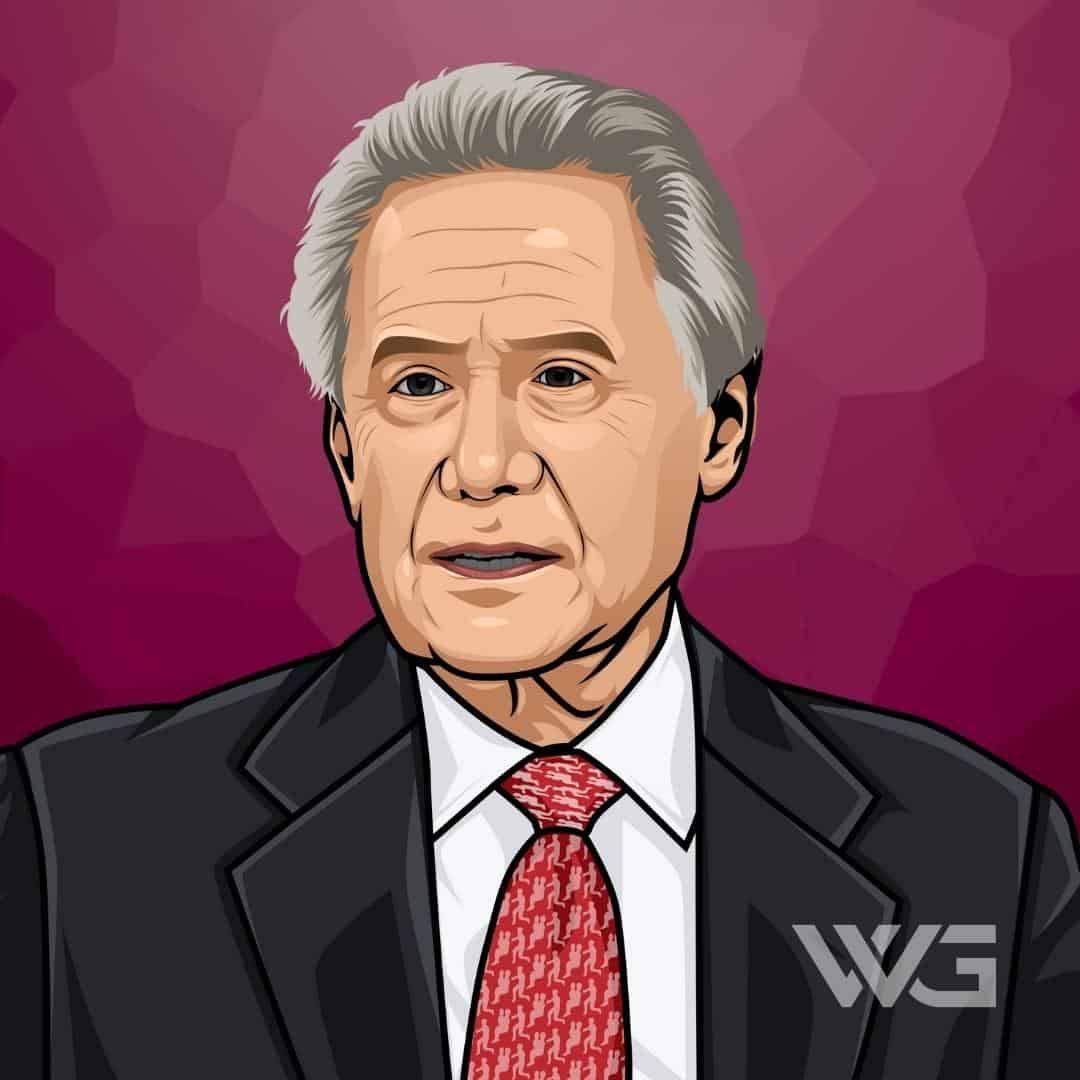
Philip Anschutz represents one of the most successful private wealth accumulation stories in modern history, with an estimated net worth fluctuating between $15 billion and $17 billion. Rather than relying on a single publicly traded corporation, his fortune stems from a multi-industry conglomerate spanning energy, real estate, telecommunications, professional sports, and global live entertainment.
Who Is Philip Anschutz and How Big Is His Fortune?
Philip Forbes Anschutz is an American billionaire businessman who built his wealth through The Anschutz Corporation, a private holding company headquartered in Denver, Colorado. Unlike tech founders whose wealth is tied directly to volatile public equities, Anschutz’s valuation reflects a diversified portfolio of physical, real-world assets, land rights, commercial real estate, and dominant market franchises.
Estimates from major wealth trackers like the Forbes Billionaires Index and the Bloomberg Billionaires Index consistently rank Anschutz among the 100 wealthiest individuals in the world. However, evaluating his net worth requires understanding that most of his holdings are privately held. Valuation methodologies rely on enterprise valuations of comparable publicly traded entities, revenue multiples of private subsidiaries, recorded land holdings, and verified transaction histories.
THE ANSCHUTZ CORPORATION
- AEG Entertainment
- Crypto.com Arena
- Goldenvoice
- LA Kings/Galaxy
- Energy & Resource
- TransWest Express
- Wind Power
- Oil & Land Rights
- Real Estate
- Broadmoor
- Sea Island
- Ranches
Anschutz’s financial trajectory is notable for his ability to cycle capital out of maturing industries—such as traditional oil extraction and rail infrastructure—and reinvest the proceeds into secular growth sectors like telecommunications fiber networks, venue management, and renewable energy transmission.
Deconstructing the Fortune: Core Wealth Engines
Understanding the Anschutz net worth in context requires examining the five distinct pillars that generate his annual cash flow and underlying asset appreciation.
1. Energy and Natural Resources: From Oil to Wind Power
The foundation of the Anschutz fortune originated in the natural resources sector. In the 1960s, Anschutz took control of his father's oil drilling company, Circle A Drilling, and expanded its wildcatting operations. His major financial breakthrough occurred in the late 1970s with the discovery of the Anschutz Ranch East field on the Utah-Wyoming border—one of the largest natural gas and oil discoveries in North America at the time.
Mobil Oil purchased a 50% interest in the field for $500 million in 1982, providing Anschutz with immense liquidity during a broader energy market downturn.
Rather than abandoning energy, his holding company pivoted toward the clean energy transition:
- Chokecherry and Sierra Madre Wind Energy Project: Located in Carbon County, Wyoming, this initiative represents one of the largest onshore wind farm developments in North America, designed to house up to 1,000 wind turbines.
- TransWest Express Transmission Line: A 732-mile high-voltage direct current (HVDC) transmission line engineered to move wind-generated electricity from Wyoming across Colorado and Utah into Nevada and Southern California power grids.
2. Transport Infrastructure and Telecommunications
In 1988, Anschutz acquired the Southern Pacific Railroad for $1.8 billion, merging it with the Denver and Rio Grande Western Railroad. After restructuring the entity to improve operational efficiency, he sold Southern Pacific to Union Pacific Railroad in 1996 for $5.4 billion, retaining a massive stake in Union Pacific stock and valuable land rights.
Crucially, Anschutz retained the right-of-way access along the railroad lines. He leveraged these linear corridors to lay thousands of miles of fiber-optic cables, laying the groundwork for Qwest Communications. When Qwest went public in 1997, Anschutz's stake grew exponentially, providing capital that he systematically liquidated prior to the early 2000s telecommunications crash.
3. Live Entertainment and Venues: Anschutz Entertainment Group (AEG)
Perhaps the most visible component of his wealth is Anschutz Entertainment Group (AEG), a wholly owned subsidiary of The Anschutz Corporation. AEG is one of the world's largest presenters of sports and live music events, controlling an unrivaled global portfolio of entertainment venues.
Key AEG assets and operations include:
- Major Arenas and Stadiums: AEG owns, operates, or manages premier facilities worldwide, including Crypto.com Arena (formerly the Staples Center) in Los Angeles, The O2 Arena in London, Uber Arena (formerly Mercedes-Benz Arena) in Berlin, and the Barclays Arena in Hamburg.
- Goldenvoice and Festivals: AEG Presents operates Goldenvoice, the concert promotion powerhouse behind the annual Coachella Valley Music and Arts Festival and the Stagecoach Festival, which generate substantial annual ticket and sponsorship revenue.
- AXS Ticketing: AEG established AXS as a digital ticketing and venue software platform to capture vertical margins across primary ticketing, secondary resale markets, and event access control.
4. Professional Sports Franchises
Anschutz was an early pioneer in modern sports real estate monetization. He recognized that controlling both the sports franchise and the physical building in which it plays creates dual compounding asset values.
- Los Angeles Kings (NHL): Anschutz purchased the LA Kings out of bankruptcy in 1995 alongside Edward P. Roski Jr., transforming the franchise into a two-time Stanley Cup champion and anchor tenant for Crypto.com Arena.
- LA Galaxy (MLS): A co-founder and major financial backer of Major League Soccer (MLS) during its fragile early years, Anschutz once owned up to six MLS teams simultaneously to keep the league solvent. He consolidated his soccer holdings into the LA Galaxy, acquiring global icon David Beckham in 2007—a transaction that reshaped commercial soccer in North America.
- Historic Lakers Minority Stake: Anschutz held a controlling 27% minority stake in the Los Angeles Lakers along with first-right-of-refusal privileges for decades before liquidating the position in 2021 to industrialist Mark Walter and Todd Boehly at an enterprise valuation reported near $5 billion.
5. Luxury Hospitality, Real Estate, and Media
The Anschutz portfolio includes an extensive collection of trophy real estate and private land holdings across North America:
- Iconic Resorts: The Anschutz Corporation owns The Broadmoor, a historic five-star resort in Colorado Springs, and Sea Island, a luxury coastal resort in Georgia.
- Agricultural Land: Anschutz ranks among the top private landowners in the United States, holding hundreds of thousands of acres of agricultural, ranching, and mineral-rights land across Colorado, Wyoming, and Texas.
- Clarity Media Group: His media holdings include The Washington Examiner, The Denver Gazette, and The Gazette (Colorado Springs), providing localized and political media presence.
Financial Analysis: Liquidity, Asset Valuation, and Private Capital Strategy
Understanding the true nature of Philip Anschutz’s net worth requires analyzing the operational philosophy of his family office and holding company.
ANSCHUTZ CAPITAL ALLOCATION MODEL
- Capital Source: Resource Cash, Liquidations, Dividends
- Reinvestment Engine: Private Holding Company (No Public Debt Pressure)
- Target Assets: Real Estate, Franchises, Clean Energy
Low Leverage and Capital Preservation
Unlike private equity sponsors that load acquired portfolio companies with high-yield debt to maximize internal rates of return (IRR), The Anschutz Corporation generally maintains conservative leverage. By utilizing internally generated cash flow from asset sales—such as historic oil divestments and public stock sales—Anschutz self-funds long-term development projects.
This low-leverage model allows his enterprises to survive deep macroeconomic downturns. For instance, during the live event shutdowns of 2020–2021, AEG was able to absorb massive operational cash burns without undergoing forced asset sales or equity dilutive restructurings.
Counter-Cyclical Market Positioning
A recurring theme in Anschutz's financial career is buying distressed or undervalued physical assets during market downturns and holding them through multi-decade appreciation cycles. Examples include:
- Purchasing railroad assets when the rail industry faced deregulation and declining profitability in the late 1980s.
- Acquiring urban land in downtown Los Angeles at distressed valuations in the late 1990s to build the Staples Center and L.A. LIVE district.
- Purchasing sports franchises before national media rights contracts expanded exponential cash flows for professional leagues.
Financial Disclaimer: Values attributed to private companies, real estate holdings, and personal wealth represent third-party analytical estimates based on market multiples, public land records, and industry benchmarks. They do not constitute verified audited balance sheets or personal financial statements.
Comparative Breakdown of Anschutz Asset Classes
The table below summarizes the core segments of Philip Anschutz's investment portfolio, detailing primary holdings, revenue drivers, and relative liquidity levels.
| Business Division / Holding | Key Assets & Brands | Primary Revenue Drivers | Valuation Basis & Asset Profile | Liquidity Profile |
|---|---|---|---|---|
| AEG Facilities & Venues | Crypto.com Arena, The O2 Arena, L.A. LIVE, Uber Arena | Venue management fees, concessions, naming rights, suite leases | High enterprise multi-billion valuation; cash flow generative | Low (Privately Held) |
| Live Entertainment & Events | Goldenvoice, Coachella Festival, AXS Ticketing, AEG Presents | Ticket sales, primary/secondary ticketing fees, festival sponsorships | High margin; recurring operational cash flow | Moderate (Operating Cash Flow) |
| Sports Franchises | Los Angeles Kings (NHL), LA Galaxy (MLS) | Regional & national broadcasting rights, sponsorships, stadium revenue | Premium trophy asset valuations; low correlation to broader equities | Low (Illiquid Private Equity) |
| Clean Energy Infrastructure | TransWest Express HVDC Line, Chokecherry & Sierra Madre Wind | Long-term power purchase agreements (PPAs), transmission tariffs | Long-term infrastructure assets; heavy upfront capital expenditure | Illiquid Long-Term Capital |
| Hospitality & Real Estate | The Broadmoor, Sea Island Resort, Wyoming & Colorado Ranches | Room rates, golf memberships, agricultural leases, land appreciation | High real-property backing; historic, non-replicable holdings | Very Low (Physical Real Estate) |
| Media & Publishing | Clarity Media Group, Washington Examiner, Denver Gazette | Advertising revenues, digital subscriptions, print distributions | Niche strategic media value | Low (Private Media) |
Philanthropy and Wealth Preservation Architecture
A comprehensive look at Anschutz's net worth must account for his capital preservation structures and philanthropic transfers, which reduce taxable estate exposure while funding long-term institutional programs.
The Anschutz Foundation
The bulk of Anschutz’s charitable giving flows through The Anschutz Foundation, a private philanthropic entity based in Denver. The foundation concentrates its grantmaking in medical research, higher education, human services, and civic development throughout the Rocky Mountain region.
Major philanthropic commitments include:
- Anschutz Medical Campus: Located in Aurora, Colorado, the University of Colorado Anschutz Medical Campus received hundreds of millions of dollars in philanthropic funding from Anschutz, creating a world-class academic medical and research center.
- Cultural and Civic Endowments: Multi-million-dollar contributions to the Denver Art Museum, American Museum of Western Art, and educational institutions across Colorado.
ANSCHUTZ ESTATE PRESERVATION
- Operating Portfolio: Commercial Assets & Real Estate (Generates Yield)
- Tax-Free Transfers
- Philanthropic / Trust Structure: Anschutz Foundation
- Anschutz Medical Campus
- Academic Endowments
Multigenerational Family Wealth Preservation
Like many historic American fortunes, the Anschutz wealth is structured through family trusts, private holding companies, and land conservancies designed to pass equity to heirs while minimizing federal estate taxes. By converting operational enterprises into asset-backed real estate and infrastructure, the portfolio generates long-term depreciation tax shelters that offset operational revenue across divisions.
Strategic Lessons for Investors and Wealth Analysts
Analyzing the context of Philip Anschutz's net worth provides several strategic takeaways for portfolio management, corporate finance, and long-term asset allocation:
- Prioritize Real-World Bottlenecks: Whether controlling rights-of-way for fiber optic deployment, owning the premier entertainment arena in a major metropolitan market, or constructing high-voltage transmission lines across state lines, Anschutz consistently invests in physical infrastructure that competitors cannot easily duplicate.
- Vertical Value Capture: Rather than owning only a sports team or only a building, AEG owns the team, the venue, the surrounding real estate district, and the ticketing provider. This structure captures revenue at every link in the consumer value chain.
- Patience Over Quarterly Benchmarks: Because the primary investment vehicle is private, Anschutz can sustain decades-long development horizons—such as the 15+ year planning and permitting phase for the TransWest Express transmission project—without pressure from public equity analysts.
- Decoupling Wealth from Public Volatility: By holding a portfolio grounded in land, infrastructure, and unique entertainment venues, Anschutz's net worth remains insulated from daily stock market fluctuations.
Frequently Asked Questions
What is Philip Anschutz’s main source of net worth?
Philip Anschutz made his initial fortune in oil and gas drilling, followed by massive gains in railroad acquisitions and telecommunications (Qwest). Today, his net worth is primarily driven by his ownership of The Anschutz Corporation, which controls Anschutz Entertainment Group (AEG), extensive real estate holdings, energy transmission assets, and sports franchises.
Does Philip Anschutz still own the Los Angeles Lakers?
No. Philip Anschutz sold his 27% minority stake in the Los Angeles Lakers in July 2021 to Mark Walter and Todd Boehly, co-owners of the Los Angeles Dodgers. However, AEG retains its long-term lease agreement with the Lakers to play their home games at Crypto.com Arena.
What sports teams does Philip Anschutz currently own?
Anschutz currently owns the Los Angeles Kings of the National Hockey League (NHL) and the Los Angeles Galaxy of Major League Soccer (MLS) through AEG. Historically, he owned interests in several other MLS teams, including the Houston Dynamo, D.C. United, and Chicago Fire.
How does AEG make money within the Anschutz portfolio?
AEG generates revenue through multiple streams: ticket sales, venue management fees, premium suite leases, corporate sponsorships, naming rights deals (such as the Crypto.com Arena naming contract), concert promotion via Goldenvoice (including Coachella), and ticketing fees generated through its AXS platform.
What is the TransWest Express project and why is it valuable?
TransWest Express is a 732-mile high-voltage direct current (HVDC) transmission line project owned by The Anschutz Corporation. It is designed to transport large volumes of wind-generated electricity from Wyoming to power markets in Nevada, Arizona, and California, placing Anschutz at the center of Western US renewable energy infrastructure.
Why is Philip Anschutz’s net worth hard to calculate precisely?
Because almost all of Anschutz’s business holdings are operated under the private holding company The Anschutz Corporation, there are no publicly mandated quarterly earnings reports or financial statements. Wealth analysts must estimate his fortune using private market revenue multiples, real estate records, appraised enterprise values, and public transaction filings.
Practical Takeaway: Analyzing Private Conglomerate Wealth
When evaluating private billionaire fortunes like Philip Anschutz’s, analysts should look beyond single headline numbers. True financial strength stems from asset diversity, cash flow durability, low debt, and control over irreplaceable physical assets.
To learn more about analyzing private holding company structures, study public filing disclosures from diversified conglomerates like Berkshire Hathaway or research commercial real estate valuation standards through the Urban Land Institute.