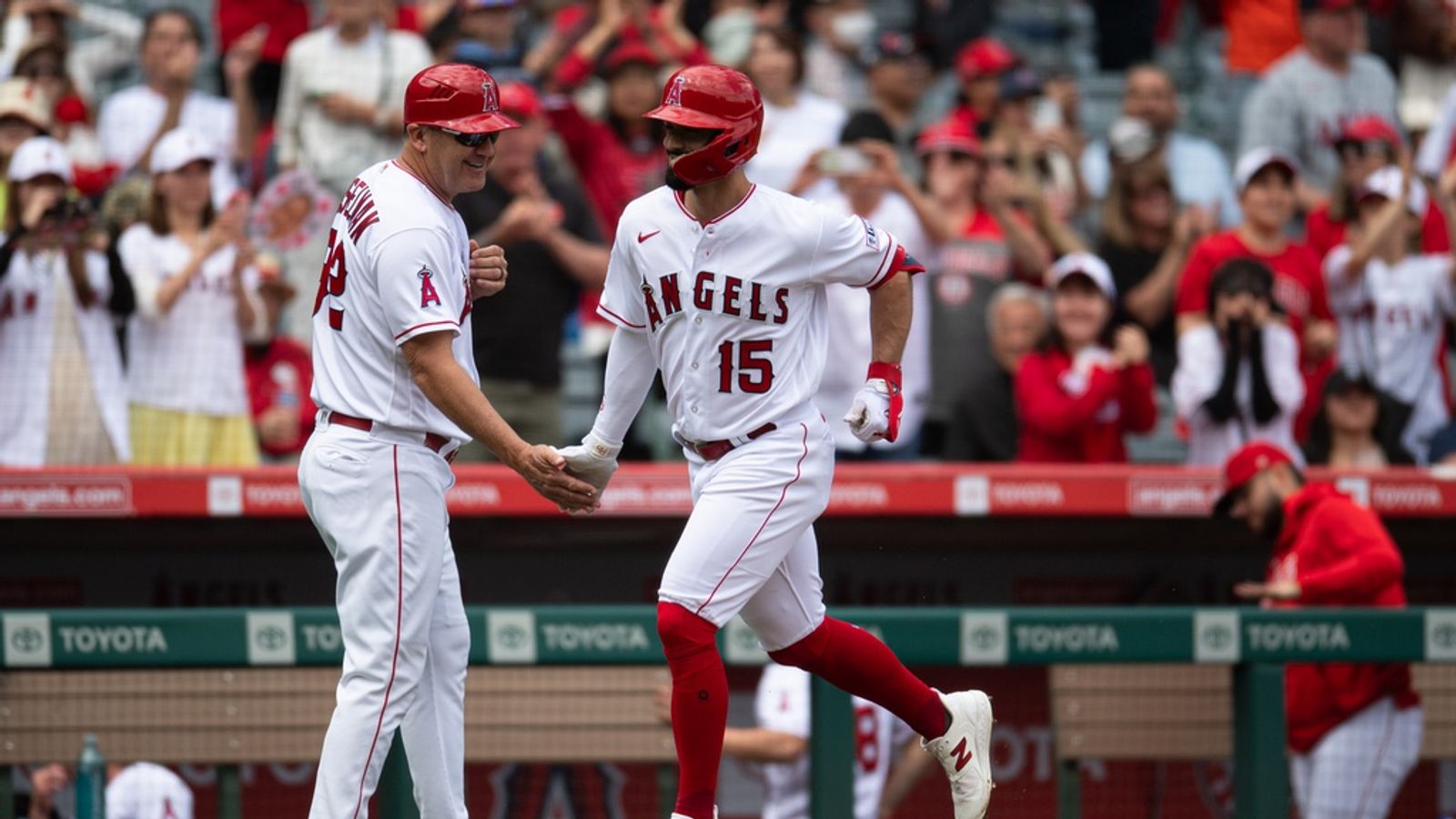
The Los Angeles Angels entered the 2024 MLB season with a postseason probability of approximately 5% to 15% according to major projection systems. Ultimately, those chances vanished early as the team finished with a franchise-worst 63-99 record, plagued by the departure of Shohei Ohtani, recurring injuries to Mike Trout, and a lack of pitching depth.
The 2024 season was always destined to be a transitional period for the Los Angeles Angels, but few anticipated the historical depths the franchise would reach. Looking back from the vantage point of 2026, the 2024 campaign stands as a pivotal moment of realization for the organization. For a decade, the team had attempted to build around generational superstars while neglecting the foundational elements of a winning roster. In 2024, the bill finally came due.
The narrative of the 2024 Angels was defined by a "post-superstar" identity crisis. After losing two-way sensation Shohei Ohtani to the crosstown Dodgers in free agency, the Angels were forced to confront a roster that lacked both top-end talent and organizational depth. This analysis explores the mathematical playoff chances the team held at the start of that year, the factors that led to their rapid decline, and the internal developments that shaped their eventual 99-loss outcome.
Initial Projections: Hope vs. Mathematical Reality
Before a single pitch was thrown in the 2024 season, statistical models were largely pessimistic about the Angels' chances of competing in a rigorous American League West. Systems like FanGraphs’ Dan Szymborski’s ZiPS and Baseball Prospectus’s PECOTA suggested a team that would likely finish fourth or fifth in the division.
In March 2024, the consensus playoff odds for the Angels hovered around 10.2%. This was significantly lower than division rivals like the Houston Astros (85%) and the Seattle Mariners (55%). The logic behind these low odds was multifaceted. First, the departure of Ohtani removed nearly 10 Wins Above Replacement (WAR) from the roster in a single stroke. Second, the Angels chose not to replace that production with high-end free agents, instead opting for veteran "bridge" players like Aaron Hicks and Willie Calhoun.
The path to the playoffs for the 2024 Angels relied on a "perfect storm" scenario: Mike Trout remaining healthy for 150 games, Anthony Rendon returning to All-Star form, and a group of young starters like Reid Detmers and Patrick Sandoval taking massive leaps forward. When none of these conditions were met, the mathematical probability of a postseason berth plummeted to near zero by early June.
The Mike Trout and Anthony Rendon Factor
The playoff viability of the 2024 Angels was inextricably linked to the health of their two highest-paid players. Mike Trout, still widely regarded as one of the best players in baseball when healthy, began the season with a flash of his former dominance. However, the recurring theme of his late career struck again in late April when he suffered a torn meniscus that required surgery.
Trout's absence was a catastrophic blow to the team’s offensive floor. Without his presence in the middle of the lineup, opposing pitchers were able to navigate the Angels' batting order with far less caution. At the time of his injury, the Angels were still hovering near a .450 winning percentage; after his departure, that number collapsed.
Parallel to Trout was the situation with Anthony Rendon. The veteran third baseman's 2024 season was another chapter in a series of injury-marred years. Rendon struggled with a high-grade hamstring strain and other ailments, limiting him to a fraction of the season. The lack of production from the third base position meant the Angels were effectively playing with a massive hole in their payroll and their lineup. The combined "lost WAR" from these two players essentially sealed the team's fate before the All-Star break.
Pitching Instability and the Rotation Collapse
A team’s playoff chances are often a direct reflection of its starting rotation stability. In 2024, the Angels' pitching staff was characterized by volatility. While veteran Tyler Anderson provided a surprising bounce-back season, becoming an All-Star and keeping the team competitive in his individual starts, the rest of the rotation struggled.
Reid Detmers, who was expected to be a cornerstone of the staff, saw his ERA balloon in the first half of the season, leading to a mid-season demotion to Triple-A Salt Lake. Patrick Sandoval, another key lefty, suffered a season-ending elbow injury that eventually required surgery. These losses forced the Angels to rely on a revolving door of minor league call-ups and waiver wire additions.
2024 Angels Starting Pitching Performance Summary
| Pitcher | 2024 Role | Statistical Impact | Resulting Status |
|---|---|---|---|
| Tyler Anderson | Ace / Veteran | 3.81 ERA (Approx.) | Lone All-Star representative |
| Reid Detmers | Young Core | High 6.00+ ERA early | Demoted to Triple-A |
| Patrick Sandoval | Mid-Rotation | 16 Starts | Season-ending injury (June) |
| Jose Soriano | Emerging Starter | Mid-3.00 ERA | Bright spot / Future rotation piece |
| Griffin Canning | Back-end | Over 5.00 ERA | Struggled with consistency |
The bullpen also faced significant regression. Carlos Estévez, the team's closer, performed well enough to be a valuable trade chip, but he was eventually dealt to the Philadelphia Phillies at the trade deadline. This signaled the official end of any "playoff" aspirations for the 2024 season, as the front office pivoted toward a total rebuild.
The Ron Washington Era and Cultural Shifts
The 2024 season marked the first year of Ron Washington’s tenure as manager. Known for his "fungo-hitting" intensity and focus on fundamental infield play, Washington was hired to instill a new culture in a clubhouse that had grown accustomed to losing.
While Washington’s impact was visible in the development of young players like Zach Neto and Logan O'Hoppe, it did not translate to immediate wins. The team’s playoff chances were hindered by defensive lapses and a lack of situational hitting—areas Washington worked tirelessly to address. However, as the veteran talent on the roster diminished due to injuries and trades, Washington was left managing what was essentially a Triple-A roster by August.
The decision-making process during 2024 also reflected a team in transition. The front office, led by Perry Minasian, faced criticism for not being "all-in" on a rebuild earlier, but the 2024 season forced their hand. The trade deadline departures of Estévez and Luis García were necessary steps, but they further reduced the team's slim mathematical chances of finishing anywhere but last in the AL West.
Emerging Talent: The Silver Lining of 2024
If there was a reason for fans to remain engaged during the 2024 season, it was the emergence of a young core. While these players were not yet ready to carry the team to a playoff berth, their growth was the most significant development of the year.
- Zach Neto (Shortstop): Neto established himself as a legitimate everyday shortstop, showing improved power and elite defensive instincts. His 2024 campaign suggested he would be a fixture of the franchise through 2026 and beyond.
- Logan O'Hoppe (Catcher): O'Hoppe proved he could handle a heavy workload behind the plate and provided much-needed power in the middle of the order.
- Nolan Schanuel (First Base): The 2023 first-round pick showed elite plate discipline, though his power numbers remained a work in progress during his first full MLB season.
Despite the individual success of these players, a team cannot make the playoffs on the backs of three or four young contributors when the rest of the roster is underperforming. The 2024 Angels lacked the "middle class" of veteran contributors that typically define playoff contenders.
The Competitive Landscape: Why the AL West Was Too Tough
The Angels' playoff chances were also a victim of their geography. The American League West in 2024 was a gauntlet. The Houston Astros, despite a slow start, eventually reclaimed the division crown. The Seattle Mariners boasted one of the best rotations in baseball, and the Texas Rangers were the defending World Series champions.
For the Angels to have made the playoffs, they would have needed to play roughly .600 baseball against these divisional opponents. Instead, they struggled significantly in intra-division play. The gap in talent between the Angels and the top of the AL West was not just a matter of star power; it was a matter of organizational depth. While the Astros could lose a key starter and replace him with a viable internal candidate, an injury to an Angels starter often resulted in a catastrophic drop-off in performance.
Final Standings and Post-Season Elimination
The mathematical elimination of the Angels occurred relatively early in the grand scheme of the 162-game season. By early September, the team was officially out of the running for both the AL West title and the Wild Card spots.
The final record of 63-99 was not just a disappointment; it was a record-breaking failure for the franchise. It eclipsed the previous low-water mark of 95 losses set in 1968 and 1980. The 2024 season proved that "hope" is not a strategy in Major League Baseball. The team's playoff chances, which had been low at the start, were obliterated by a combination of poor roster construction, bad luck with health, and a division that gave them no room for error.
Frequently Asked Questions
What were the Angels' playoff odds at the start of 2024?
Most projection systems, including FanGraphs and PECOTA, placed the Angels' playoff odds between 5% and 15%. They were widely predicted to finish fourth or fifth in the AL West, trailing the Astros, Rangers, and Mariners by a significant margin.
When were the Angels officially eliminated from the 2024 playoffs?
The Angels were mathematically eliminated from the American League West race in early September and from Wild Card contention shortly thereafter. They were one of the first teams in the American League to be officially removed from postseason consideration.
How did Shohei Ohtani's departure affect the team's 2024 chances?
Ohtani's departure was the primary reason for the drop in playoff expectations. He provided elite production as both a designated hitter and a starting pitcher. Replacing that 10-WAR (Wins Above Replacement) production was impossible with the team's existing roster or their off-season acquisitions, leading to a massive void in their competitive capabilities.
Who were the most productive players for the Angels in 2024?
The bright spots included catcher Logan O'Hoppe, shortstop Zach Neto, and starting pitcher Tyler Anderson. While these players performed well individually, the overall lack of depth across the 26-man roster prevented their contributions from translating into a winning season.
Did Mike Trout play in the 2024 postseason?
No. Mike Trout’s season was cut short by a torn meniscus in late April. Although there was hope for a return late in the season, he suffered a setback in his rehab, and the team’s position in the standings made a late-season return unnecessary and risky.
Next Steps for the Franchise
For the Angels to move past the failures of the 2024 season, the organization must prioritize a complete overhaul of its player development system and pitching philosophy. The 2024 season served as a clear indicator that the "stars and scrubs" approach to roster building is no longer viable in the modern MLB. Fans should look toward the development of the 2024 and 2025 draft classes as the primary indicators of when the team might next see October baseball.