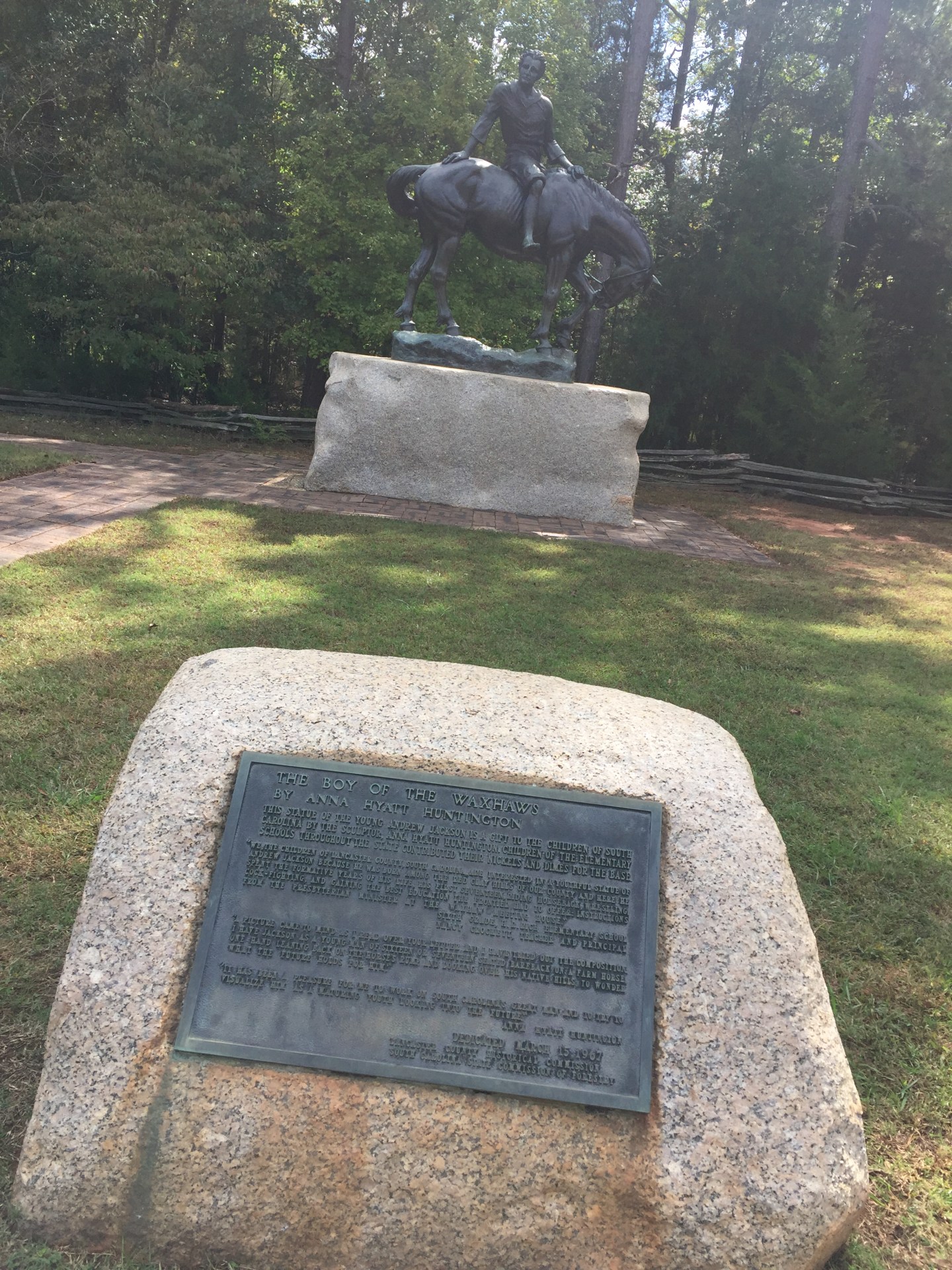
An Andrew Jackson plaque typically refers to one of several historic bronze, cast iron, or stone commemorative markers erected across the United States to honor the seventh American president. These markers delineate key events in Jackson's life, including his birth in the Waxhaws region, his military victory at the Battle of New Orleans, his residency at The Hermitage in Tennessee, and early military encampments along historic trails.
Overview of Andrew Jackson Historical Markers and Plaques
Commemorative markers honoring Andrew Jackson (1767–1845) serve as physical touchstones for early nineteenth-century American history. Installed by civic organizations, state historical commissions, and local preservation societies throughout the late nineteenth and twentieth centuries, these plaques mark critical turning points in Jackson’s trajectory from frontier lawyer to major general and national leader.
Because Jackson’s career spanned military strategy, legal administration, and national politics, commemorative plaques exist across multiple states, primarily in North Carolina, South Carolina, Louisiana, Tennessee, Alabama, Mississippi, and New York. While each plaque highlights a local connection to Jackson's narrative, contemporary museum curators and historic preservationists increasingly evaluate these markers through both historical context and ongoing material conservation efforts.
Major Andrew Jackson Plaques Across the United States
1. The Waxhaws Birthplace Markers (North Carolina and South Carolina)
One of the oldest debates in presidential history involves the exact birthplace of Andrew Jackson, who was born on March 15, 1767, in the remote Waxhaws region along the border of North and South Carolina. Consequently, two primary historical markers address his birth:
- Andrew Jackson State Park Marker (Lancaster County, South Carolina): Placed within Andrew Jackson State Park, this plaque marks the local tradition that Jackson was born at his uncle Crawford’s plantation on the South Carolina side of the border. The park features a dedicated museum, bronze statuary, and interpretive signage explaining the regional settlement history of Scottish-Irish immigrants in the 1760s.
- Union County Historical Plaque (North Carolina): Located near Mineral Springs, North Carolina, a companion plaque asserts that Jackson was born on the North Carolina side at the home of George McKemey.
Both markers provide structural documentation of how regional pride shaped early state historical marker programs during the early twentieth century.
2. Battle of New Orleans Headquarters and Victory Plaques (Louisiana)
Jackson’s military reputation was cemented on January 8, 1815, when his command defeated British forces at the Battle of New Orleans. Several prominent plaques commemorate his leadership in southern Louisiana:
- Jackson Square Plaque (New Orleans French Quarter): Located near the central equestrian monument designed by Clark Mills and dedicated in 1856, historical plaques in Jackson Square detail Jackson's military mobilization of a diverse defense force comprising regular U.S. troops, militia, free people of color, and local privateers.
- The Cabildo and Royal Street Markers: Additional bronze plaques mark Jackson’s headquarters at 106 Royal Street and his official commendations recorded at the historic Cabildo building adjacent to St. Louis Cathedral.
- Jean Lafitte National Historical Park and Preserve (Chalmette Battlefield): Marker plaques situated across the Chalmette battlefield map out the defensive earthen ramparts (Rampart Jackson) and the tactical artillery positions utilized during the engagement.
- French Quarter / Royal Street HQ
- Jackson Square Monument & Plaque
- Chalmette Battlefield Markers
3. Fort Hamilton / St. John’s Episcopal Church Plaque (Brooklyn, New York)
In the late nineteenth century, a commemorative plaque was installed on the grounds of St. John’s Episcopal Church in Fort Hamilton, Brooklyn, New York. The marker noted that Jackson had visited and served as a vestryman or benefactor during his military duties supervising coastal defenses in the region prior to his presidency.
In recent years, this specific plaque became the subject of national public discussion regarding historic commemoration and contextualization. In 2017, church officials and diocesan leaders voted to remove the physical plaque from the exterior grounds, citing Jackson’s legislative signature on the Indian Removal Act of 1830 and his status as an enslaver. The removal highlighted a broader movement within historic preservation to evaluate whether outdoor civic markers accurately reflect public values or require updated educational framing.
4. The Hermitage Estate Plaques and Tombs (Nashville, Tennessee)
The Hermitage, Jackson’s 1,120-acre plantation in Davidson County, Tennessee, contains the highest concentration of authenticated Jackson-related plaques and architectural inscriptions. Managed by the Ladies' Hermitage Association (now Andrew Jackson’s Hermitage), key markers include:
- The Tomb Inscription Plaque: Located in the Greek revival garden tomb designed by Joseph Coleman, the main marble tablet bears the formal epitaph written for Jackson following his death on June 8, 1845.
- National Historic Landmark Plaque: Designated in 1960 by the U.S. Department of the Interior, this bronze marker documents the structural preservation of the main mansion, outbuildings, and original agricultural landscape.
- Slave Quarter Interpretive Plaques: Modern plaque additions across the property document the lives, labor, and lineage of the enslaved men, women, and children who built and operated the plantation, providing essential historical balance to the site.
5. Jackson Military Road and Natchez Trace Markers (Alabama and Mississippi)
During the War of 1812 and the Creek War (1813–1814), Jackson commanded infantry forces along wilderness trails that later became major federal roads.
State highway departments and historical societies across Alabama and Mississippi installed cast-iron roadside markers detailing "Jackson's Military Road." These markers designate stopover points, supply depots, and river crossings used by Jackson’s troops between Nashville, Mobile, and New Orleans.
Comparative Matrix of Notable Andrew Jackson Plaques
The following table summarizes the primary public plaques and markers dedicated to Andrew Jackson, detailing their location, primary entity responsible, and historical focus.
| Plaque / Marker Name | Location | Primary Managing Entity | Key Historical Focus | Current Status |
|---|---|---|---|---|
| Waxhaws Birthplace Marker | Lancaster County, SC | SC State Parks | Early life and 1767 birthplace dispute | Active / Accessible |
| Jackson Square Commemorative Plaque | New Orleans, LA | City of New Orleans / National Park Service | 1815 Battle of New Orleans victory | Active / Accessible |
| Chalmette Battlefield Markers | Chalmette, LA | Jean Lafitte National Historical Park | Military defense lines and tactical maneuvers | Active / Accessible |
| St. John's Fort Hamilton Plaque | Brooklyn, NY | Episcopal Diocese of Long Island | Military presence in New York | Removed (2017) |
| The Hermitage National Historic Landmark Plaque | Nashville, TN | Andrew Jackson's Hermitage | Presidential estate and preservation | Active / Accessible |
| Jackson Military Road Markers | AL & MS Highway Routes | State Depts. of Transportation / Local Historical Societies | Creek War and War of 1812 troop movements | Active / Variable Condition |
| Presidential Birthplace Monument Plaque | Mineral Springs, NC | Union County Historical Society | Alternative North Carolina birthplace claim | Active / Accessible |
Material Composition and Physical Conservation of Historical Plaques
Historical markers honoring Andrew Jackson were fabricated using materials standard to nineteenth- and twentieth-century civic works. Preserving these artifacts requires distinct architectural treatments depending on their material baseline:
Cast Bronze Plaques
Cast bronze was the preferred material for high-profile civic monuments installed between 1880 and 1950. Bronze plaques feature raised lettering and detailed low-relief portraiture. Over decades of outdoor exposure, bronze forms a natural green or blue-green copper carbonate patina.
- Conservation Protocol: Professional conservators avoid harsh chemical cleaners or abrasive blasting. Instead, bronze plaques are washed with non-ionic detergents, rinsed with distilled water, and sealed with microcrystalline wax (such as Renaissance Wax) to prevent acid rain corrosion and environmental degradation.
Cast Iron Roadside Markers
Commonly installed by state historical commissions during the mid-twentieth century, cast iron markers feature painted high-contrast raised text (typically gold or white lettering over dark blue, black, or brown backgrounds).
- Conservation Protocol: Cast iron is subject to ferrous oxide rust if paint layers fail. Restoration involves removing flaking paint via mechanical brushing, applying an anti-corrosive primer, and applying two coats of weather-resistant industrial enamel.
Inscribed Marble and Granite Tablets
Found primarily at cemetery sites and architectural installations (such as The Hermitage tomb), stone markers rely on incised or carved lettering.
- Conservation Protocol: Biological growth like lichen, algae, and moss can break down soft marble surfaces over time. Conservators utilize biological cleaners (such as D/2 Biological Solution) combined with soft-bristle brushes. High-pressure washing is strictly avoided, as it strips historical stone grain.
Contemporary Perspectives and Preservation Context
In contemporary public history practice, historical plaques are viewed not as permanent, unquestioned statements of absolute fact, but as historical artifacts of the era in which they were created.
Contextualization vs. Removal
Preservation boards face two primary methodologies when addressing older Jackson plaques that omit significant historical context:
- Additive Contextualization: Installing supplementary interpretive signage adjacent to older plaques. This approach preserves the original artifact while adding verified details regarding the Indian Removal Act, the Trail of Tears, and the institution of plantation slavery.
- Relocation or Retirement: Moving legacy plaques from public outdoor spaces to museum interiors, where curated displays can place the object’s creation date and political context within proper historical perspective.
State agencies and preservation foundations continue to audit historical roadside markers to ensure factual accuracy and balanced historical representation.
Guide for Researchers, Genealogists, and Visitors
For historians, tourists, and genealogists planning to locate or photograph Andrew Jackson plaques:
- Verify Access and Property Ownership: While many markers stand on public park grounds or along state highway rights-of-way, several legacy plaques sit on church property or private land. Always confirm public accessibility prior to visiting.
- Consult State Historic Preservation Offices (SHPO): State SHPO databases maintain precise GIS coordinates and transcription records for officially registered cast-iron roadside markers.
- Document Inscriptions Accurately: When photographing markers for academic research or historical documentation, capture both a wide-angle context shot of the surrounding site and a clear, high-resolution straight-on photograph of the inscription.
- Report Damage or Vandalism: If an official state marker is damaged, leaning, or heavily weathered, notify the respective state department of transportation or historical commission rather than attempting DIY repairs.
Frequently Asked Questions
Where is the primary Andrew Jackson birthplace plaque located?
There are two primary markers: one inside Andrew Jackson State Park in Lancaster County, South Carolina, and another in Union County, North Carolina. Because birth records were not formalized in the remote Waxhaws frontier in 1767, both states maintain historical claims supported by distinct family traditions.
Why was the Andrew Jackson plaque at St. John's Church in Brooklyn removed?
The plaque at St. John’s Episcopal Church in Fort Hamilton, Brooklyn, was removed in 2017 by church authorities. The decision was made following public discussions regarding Jackson’s role in signing the Indian Removal Act of 1830 and his ownership of enslaved labor.
What material was used to make mid-twentieth-century Jackson historical markers?
Most mid-twentieth-century state highway historical markers were manufactured using heavy cast iron finished with weather-resistant painted enamels. Urban and architectural plaques were typically cast in bronze or incised into localized stone slabs like marble or granite.
How can local communities request restoration for a weathered Jackson historic plaque?
Community members should contact their State Historic Preservation Office (SHPO) or local county historical society. Most state marker programs maintain scheduled maintenance budgets or formal volunteer repainting guidelines for authorized historic preservation groups.
Are all Andrew Jackson plaques managed by the federal government?
No. Management is divided across federal, state, municipal, and private entities. National park sites (such as Chalmette Battlefield) are managed by the National Park Service, state park markers fall under state jurisdiction, and private estates like The Hermitage are managed by independent historical foundations.
Recommended Next Actions for Historical Research
To further explore or document historical markers related to Andrew Jackson:
- Review Official Registries: Access the Historical Marker Database (HMdb.org) or individual state SHPO portals to cross-reference marker transcriptions, GPS coordinates, and installation dates.
- Visit Primary Historic Sites: Plan visits to key institutional repositories such as Andrew Jackson’s Hermitage in Nashville, Tennessee, or the Jean Lafitte National Historical Park in Louisiana for verified primary source documents and museum-grade interpretations.
- Engage Local Historical Societies: When researching lesser-known markers along the Jackson Military Road, contact local county historical societies in Alabama and Mississippi for local mapping archives and oral history records.