Ancestry is a legitimate, industry-leading platform with over 25 million DNA profiles and 40 billion historical records. Owned by Blackstone, it uses accredited laboratory testing and standard privacy controls. While highly accurate for relative matching, users must navigate recurring subscription fees, evolving ethnicity estimates, and specific privacy settings regarding genetic data.
What Is Ancestry and How Does It Work?
Ancestry (commonly known through its web platform Ancestry.com and its genetic division AncestryDNA) is the world's largest commercial genealogy company. Founded originally as a print publishing operation in the late 20th century, the organization transitioned into digital record hosting in the late 1990s and launched its direct-to-consumer DNA testing service in 2012.
The platform operates on two distinct but interconnected pillars: historical record archival research and autosomal DNA testing. Understanding how these two branches function helps clarify what the platform can—and cannot—deliver for family historians, adopted individuals, and curious consumers.
- Ancestry Platform
- Historical Records
- Census & Voters
- Vital (Birth/Death)
- Military & Passenger
- 40+ Billion Documents
- AncestryDNA
- Saliva Sample (SNPs)
- Ethnicity Estimates
- Centimorgan Matching
- 25+ Million Database
- Historical Records
Historical Record Archiving and Indexing
Ancestry’s digital archive contains over 40 billion digitized historical records spanning more than 80 countries. These records include:
- Federal and State Census Records: Population schedules detailing households, occupations, ages, and immigration statuses (such as the complete U.S. Federal Census records from 1790 through 1950).
- Vital Statistics: Digitized certificates of birth, marriage, and death issued by regional civil registries.
- Immigration and Naturalization Manifests: Passenger arrival lists, border crossings, and citizenship petitions from major ports of entry.
- Military and Tax Lists: Draft registration cards, enlistment rosters, service records, and real estate assessment rolls.
Ancestry uses Optical Character Recognition (OCR) and human indexing to turn physical paper, microfilm, and microfiche images into searchable digital entries. When users build a digital family tree on the site, automated algorithms match names, birth dates, and geographical locations in the user’s tree against this massive document index, generating subtle hints (symbolized by a leaf icon).
How AncestryDNA Autosomal Testing Works
AncestryDNA relies on autosomal DNA testing. Unlike Y-chromosome (Y-DNA) tests (which follow only the direct paternal line) or mitochondrial DNA (mtDNA) tests (which follow only the direct maternal line), autosomal testing analyzes the 22 pairs of non-sex chromosomes inherited from both parents.
When a customer submits a saliva sample, the laboratory extracts genomic DNA from skin cells present in the saliva. The genomic material is processed using a custom Illumina microarray chip that scans hundreds of thousands of single nucleotide polymorphisms (SNPs)—specific locations along the genome known to vary between individuals. The resulting SNP data allows Ancestry’s software to make two principal analyses:
- Ethnicity Estimation: Comparing the customer's SNP patterns against a reference panel of thousands of individuals with deep, verified ancestral roots in specific global regions.
- DNA Match Comparison: Comparing the customer's genomic file against every other profile in Ancestry's DNA database to detect shared segments of DNA, measured in units called centimorgans (cM).
Is Ancestry Legit? Evaluating Platform Credibility
Concerns about legitimacy usually stem from aggressive subscription marketing, unexpected auto-renewals, or confusion over shifting ethnicity estimates. However, from corporate, legal, scientific, and operational perspectives, Ancestry is a fully legitimate enterprise.
Enterprise Ownership and Industry Standing
Ancestry operates as a corporate entity headquartered in Lehi, Utah. In 2020, global investment firm private equity group Blackstone acquired a majority stake in Ancestry in a transaction valuing the enterprise at approximately $4.7 billion. The company maintains standard corporate accreditation, operates within U.S. commercial law, and is subject to oversight by federal consumer protection agencies, including the U.S. Federal Trade Commission (FTC).
The service holds high industry market share, serving millions of active paying subscribers and maintaining an active DNA network exceeding 25 million tested individuals.
Laboratory Accreditation and Testing Rigor
AncestryDNA does not process biological samples in unverified facilities. Instead, saliva samples are sent to independent, third-party clinical laboratories in the United States. These facilities hold certifications under the Clinical Laboratory Improvement Amendments (CLIA) of 1988 and maintain accreditation from the College of American Pathologists (CAP).
CLIA certification requires laboratories to meet strict federal standards for accuracy, reliability, and quality control. CAP accreditation involves rigorous peer-based inspections of laboratory protocols, equipment calibration, and personnel qualifications. This ensures that the raw data generated from saliva samples meets medical-grade processing criteria, minimizing laboratory errors during genomic sequencing.
AncestryDNA Accuracy: Science vs. Expectations
Evaluating Ancestry’s accuracy requires separating its two main deliverables: DNA Matching (identifying living relatives) and Ethnicity Estimates (assigning percentage breakdowns to geographic regions).
Ethnicity Estimates and Reference Populations
Ethnicity estimates are statistical predictions, not fixed, absolute facts. To generate an ethnicity estimate, Ancestry compares an individual's DNA sample against a proprietary reference panel. This panel consists of long-standing native populations whose family trees demonstrate deep, unbroken regional ancestry.
Ethnicity Estimation Process:
- Customer Saliva Sample extracted and sequenced on SNP Microarray.
- Raw DNA array compared against Reference Panel (verified native).
- Algorithm assigns probability weights to geographic regions.
- Final percentages reported (e.g., 42% Scotland, 35% England).
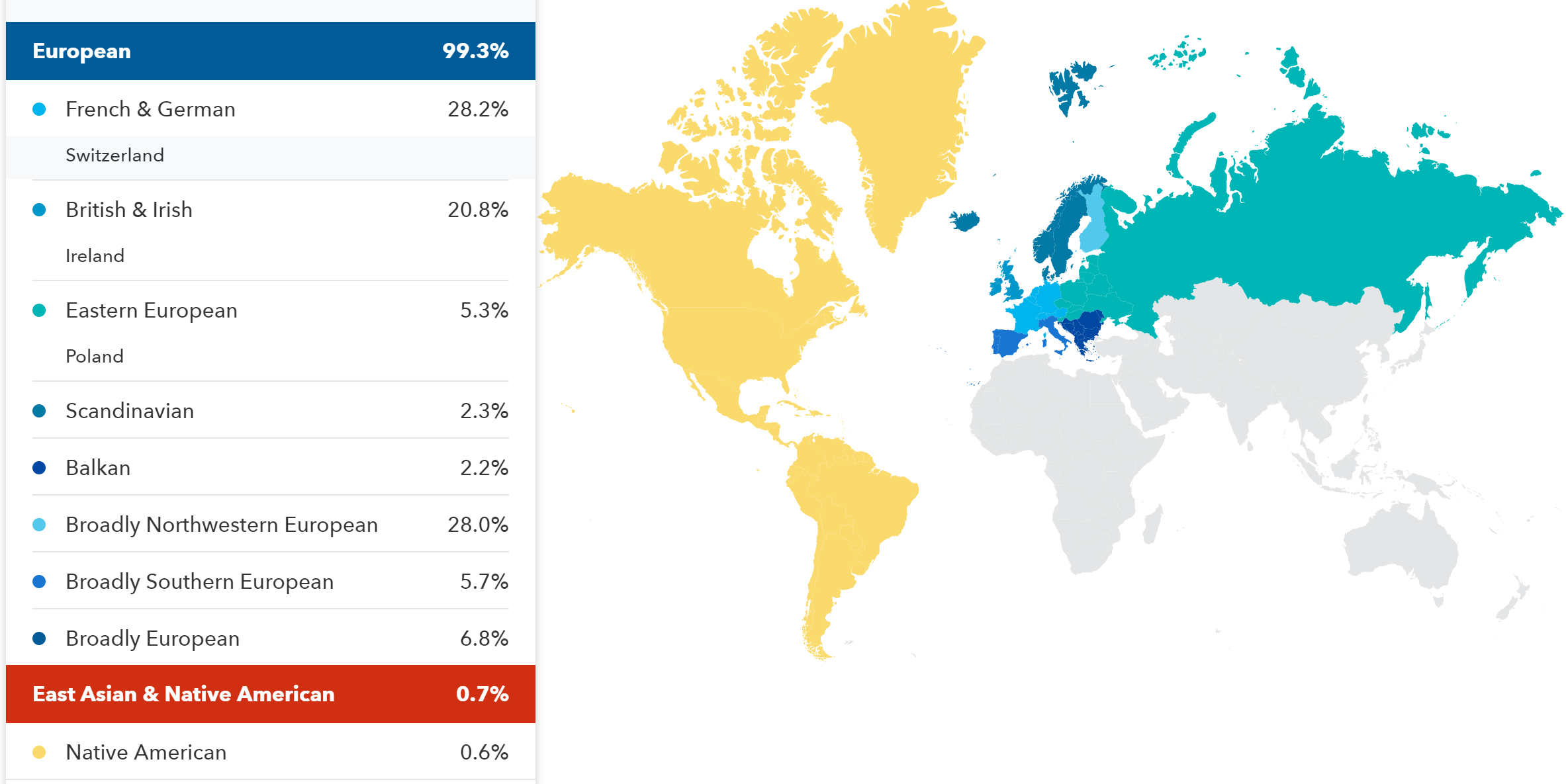
While ethnicity estimates for broad continental populations (e.g., East Asian, Sub-Saharan African, European) demonstrate accuracy rates near 99%, distinctions between adjacent, geographically overlapping populations (e.g., differentiating English from Northwestern European, or Scottish from Irish) rely on statistical modeling.
Because human populations have migrated, intermarried, and traded across borders for millennia, genetic boundaries rarely align perfectly with modern political borders.
DNA Matching: The Gold Standard of Legitimacy
Unlike ethnicity estimates, DNA relative matching is mathematically deterministic. If two individuals share a substantial amount of identical DNA segments across their autosomal chromosomes, they unequivocally share a recent biological ancestor.
Ancestry calculates relationship closeness using centimorgans (cM). The higher the total number of shared cM and the larger the individual matching segments, the closer the biological relationship:
- Parent/Child: ~3,400 cM (50% shared DNA)
- Full Sibling: ~2,200–3,300 cM
- First Cousin: ~680–1,150 cM
- Second Cousin: ~43–230 cM
- Fourth Cousin: ~18–57 cM
For close relationships (first cousins or closer), the match accuracy approaches 100%. For distant relationships (such as fifth to eighth cousins), random genetic variation can cause false positives or obscure real connections due to genetic recombination—the process by which parental DNA randomly reshuffles before passing to offspring.
Why Ethnicity Estimates Update Over Time
Users often wonder why their regional breakdowns change when Ancestry updates its platform. These changes do not indicate that the original test was fraudulent.
Instead, updates occur because Ancestry routinely expands its reference panel size, incorporates higher-density genetic markers, and refines its algorithmic algorithms. As reference datasets grow, the statistical precision of regional assignments improves, resulting in recalculated percentages for existing users at no extra charge.
Ancestry Costs, Tiers, and Subscription Mechanics
Understanding Ancestry's cost structure is critical to avoiding unexpected charges. The service separates physical DNA kit purchases from ongoing digital database subscriptions.
- Ancestry Service Architecture
- Ancestry DNA Kit (One-time fee)
- Yields: Ethnicity percentages, DNA match list, basic traits.
- Subscription Tiers (Recurring monthly/semi-annual fee)
- U.S. Discovery: U.S. Census, vital records, passenger lists.
- World Explorer: Global archives across 80+ countries.
- All Access: Adds Newspapers.com & Fold3 military records.
- Ancestry DNA Kit (One-time fee)
Standalone AncestryDNA Kit Costs
Purchasing an AncestryDNA kit involves a single, one-time payment (typically ranging between $99 and $119 MSRP, though frequently discounted during holiday sales).
Buying the kit gives you permanent access to:
- Your full DNA ethnicity breakdown and genetic community assignments.
- Your living DNA match list within the Ancestry network.
- Basic direct-messaging tools to contact matched genetic relatives.
A recurring paid subscription is not required to view your DNA matches or ethnicity updates. However, without an active subscription, you cannot view the historical family trees linked by your matches or examine historical records attached to those relatives.
Breakdown of Ancestry Subscription Tiers
To access indexed historical documents, build detailed trees with auto-generated record hints, and inspect other users’ records, Ancestry requires a membership tier. Pricing structures typically offer monthly or six-month auto-renewing options:
- U.S. Discovery: Access to all public U.S. records, including historical state/federal censuses, draft cards, vital statistics, and passenger lists.
- World Explorer: Includes everything in U.S. Discovery plus over 3 billion international historical records from Europe, the UK, Canada, Australia, Mexico, and beyond.
- All Access: Includes all World Explorer benefits plus premium accounts on sister sites: Fold3 (specialized military history documents) and Newspapers.com (digitized local and national historical press archives).
Auto-Renewal and Cancellation Policies
The most common consumer complaint regarding Ancestry involves billing. Memberships are designed as auto-renewing subscriptions. When signing up for a standard trial or a discounted introductory term, the service automatically charges the full renewal rate at the end of the promotional period unless canceled manually.
To avoid unwanted billing:
- Cancel at least 2 days prior to the trial or billing period expiration date.
- Review your subscription status directly inside your account settings rather than relying solely on email reminders.
- Note that canceling a subscription does not delete your family tree or your DNA data; it simply reverts your profile to a free guest account.
Privacy, Security, and Data Ownership
Because genetic information is deeply personal, privacy policies and security frameworks are critical factors in assessing whether Ancestry is safe and legitimate.
Who Owns Your Genetic Data?
Under Ancestry’s legal Terms of Service, you retain ownership of your DNA data and biological sample. By purchasing a kit, you grant Ancestry a royalty-free, worldwide license to host, transfer, and process your anonymized genetic data specifically to deliver the service’s features to you.
Users maintain the right to:
- Download their raw DNA data file (in
.txtor zip format) at any time. - Delete their DNA test results permanently from the platform database.
- Request the physical destruction of their stored saliva sample at the laboratory.
Third-Party Research Opt-Ins
During kit activation, Ancestry asks users whether they wish to participate in the optional Ancestry Human Diversity Project.
If you opt in, your anonymized genetic data and survey responses may be aggregated with thousands of others and shared with academic researchers, geneticists, and corporate research partners studying population health, human migration, and traits. This opt-in is entirely voluntary. Declining participation in human research does not restrict your access to your ethnicity estimates, matches, or historical tools.
Law Enforcement Policies and Transparency Reports
Unlike public DNA databases (such as GEDmatch or FamilyTreeDNA, which permit investigative genetic genealogy under defined conditions), Ancestry maintains a strict policy regarding law enforcement access.
Ancestry’s formal law enforcement guidelines state that the platform does not voluntarily permit law enforcement agencies to search its DNA database to solve cold cases or run familial searches.
Ancestry requires valid legal process—such as a court-ordered search warrant or federal subpoena—before releasing any user data to law enforcement authorities. The company regularly publishes an annual Transparency Report detailing the exact number of legal requests received, the government entities issuing them, and whether data was legally compelled to be disclosed.
Ancestry vs. Leading Genealogy Competitors
Choosing the right testing platform depends on whether your primary objective is finding living relatives, building a deep family tree, or exploring personal health risks.
| Platform | DNA Database Size | Historical Record Archive | Primary Focus | Best Used For | Key Trade-Off / Limitation |
|---|---|---|---|---|---|
| AncestryDNA | ~25+ Million | ~40+ Billion Documents | Genealogy & Relative Matching | Building verified family trees & finding U.S./UK living relatives | High subscription costs for full record access |
| 23andMe | ~14+ Million | None (No document archives) | Genetic Health & Ancestry Traits | Health risk screenings, carrier status, & trait analysis | Cannot attach historical records or build traditional family trees |
| MyHeritage | ~7+ Million | ~20+ Billion Documents | European Records & Tree Matching | Global research, European matching, & automatic tree syncing | Smaller overall U.S. DNA match database compared to Ancestry |
| FamilyTreeDNA | ~1.5+ Million | Minimal (Focuses on trees) | Advanced Y-DNA & mtDNA Lineages | Deep surname tracing along direct paternal/maternal lines | Steeper learning curve; significantly smaller autosomal DNA pool |
Common Pitfalls and How to Avoid Them
Even on a legitimate platform, users frequently encounter frustrating misunderstandings or user errors.
- Common User Mistakes
- Ethnicity Confusion: Treating updates as errors rather than improved scientific models
- Auto-Renew Trap: Forgetting trial expiration dates and incurring unexpected charges
- Match Misconception: Assuming small cM matches are definitive close blood relatives
Assuming Ethnicity Estimates Equal Exact Family Trees
A common point of confusion occurs when a user’s DNA ethnicity report lists a region (such as 15% Scandinavian) that does not appear anywhere in their documented paper trail.
This mismatch happens because genetic inheritance is random due to crossover events during meiosis. You inherit exactly 50% of your DNA from each parent, but which 50% you receive from each grandparent is random. Over multiple generations, DNA from certain ancestral branches can be completely washed out, while historical regional overlaps between neighbouring populations (e.g., Scandinavia, North Germany, and coastal Britain) share deeply identical markers.
Overlooking Monthly Subscription Auto-Renewals
Many users sign up for a 14-day free trial to view records linked to a DNA match, then forget to cancel before the trial converts to a paid six-month commitment.
To prevent this, immediately calendar your renewal date upon activation, or cancel the auto-renewal feature inside your account management panel right after signing up. Your trial features remain active until the designated expiration date even after disabling automatic billing.
Misinterpreting Shared Centimorgans
When reviewing DNA matches, remember that shared centimorgans define range brackets rather than singular relationship types.
For example, sharing 200 cM could indicate a second cousin, a half-first cousin, a first cousin twice removed, or a great-great-uncle. Always cross-reference the shared cM amount with age gaps, ancestral locations, and traditional record evidence before concluding a match's exact position on your tree.
Step-by-Step Guide to Using Ancestry Safely
If you decide to proceed with Ancestry, following a structured setup routine ensures your personal data remains protected while optimizing your research potential.
- Purchase the Physical DNA Kit: Order directly from Ancestry's official website or authorized retailers to ensure the collection tube seal is untampered.
- Register the Kit Code: Before mailing your saliva sample, log into your online account and enter the unique barcode printed on the collection tube. Without registering this code, the lab cannot link the sample to your account.
- Set Privacy Preferences During Registration:
- Choose whether your full name or an anonymous username is displayed to DNA matches.
- Select whether you want to be visible in DNA search matching lists.
- Decide whether to opt into or out of the optional Human Diversity Research Project.
- Provide the Saliva Sample Correctly: Do not eat, drink, smoke, chew gum, or brush your teeth for at least 30 minutes before spitting into the collection tube. Ensure the fluid reaches the fill line (excluding bubbles) before sealing the cap to avoid sample rejection.
- Build a Seed Family Tree: While waiting the 4 to 6 weeks for lab processing, manually input your direct parents, grandparents, and great-grandparents into a private family tree. Linking this tree to your DNA kit once results arrive accelerates automated matching.
- Manage Subscriptions Proactively: If you use a free trial to evaluate document archives, track your trial end-date closely to manage or cancel auto-renewals as needed.
Frequently Asked Questions
Is Ancestry.com safe to use for personal privacy?
Yes. Ancestry uses industry-standard encryption, CLIA-certified processing labs, and strict user privacy settings. Users maintain full data ownership, can opt out of research programs, can download raw DNA data, and have the right to request sample destruction or complete account deletion at any time.
Can AncestryDNA reveal unexpected family relationships?
Yes. Because autosomal DNA matching is scientifically accurate, taking a test can uncover unexpected non-paternal events (NPEs), undisclosed adoptions, half-siblings, or unknown close biological relatives. Users should prepare emotionally for potential unexpected findings before testing.
What happens to your saliva sample after testing?
After processing your sample on the microarray chip, the lab securely stores the remaining physical biological sample in a temperature-controlled archive, unless you opt out during registration or request its physical destruction through your privacy settings.
Do you need a paid subscription to use AncestryDNA?
No. Buying an AncestryDNA kit gives you permanent access to your ethnicity estimates, genetic community reports, and living DNA relative match list. A subscription is only required if you want to view linked historical documents, inspect public family trees created by other members, or access indexed census records.
How does Ancestry compare to 23andMe for family research?
Ancestry is superior for traditional genealogy and relative matching because it holds a significantly larger DNA database (25+ million vs. 14+ million) and integrates directly with 40+ billion historical records. 23andMe is better suited for users primarily interested in genetic health risks, carrier status, and trait reports.
Final Verdict and Actionable Guidance
Ancestry is a fully legitimate, scientifically valid, and secure platform for family history research and genetic match discovery. Its massive database size makes it the single most powerful direct-to-consumer tool available for resolving brick-wall genealogical mysteries, identifying unknown biological relatives, and tracing ancestral origin points.
Who should use Ancestry:
- Individuals seeking to discover unknown biological family members (such as adoptees or NPEs).
- Genealogists building deep, record-backed family trees who require access to global census, vital, and military archives.
- Casual researchers who want the most expansive relative match network available in direct-to-consumer testing.
Who should consider alternatives:
- Consumers whose sole objective is checking medical health risks or disease carrier status (who should consider 23andMe or specialized clinical genetics tests).
- Researchers focused purely on deep direct paternal or maternal lineages via Y-DNA or mtDNA haplogroups (who should consider FamilyTreeDNA).
If you choose to use Ancestry, start with a standalone AncestryDNA kit, set your privacy settings to match your personal comfort level, and utilize trial subscriptions strategically to build your family tree without incurring unintended long-term charges.