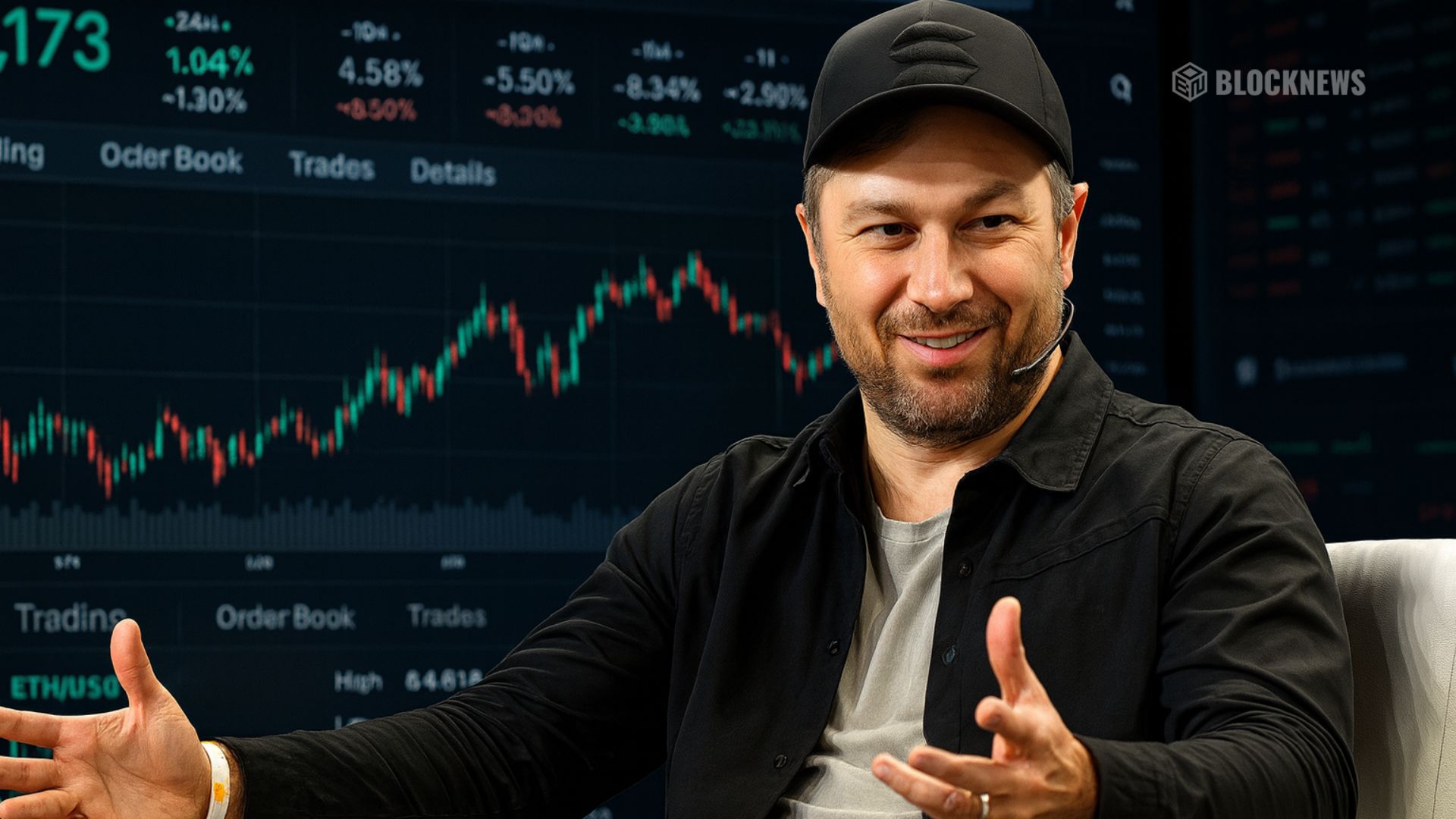
Estimates of Anatoly Yakovenko's net worth place his wealth between $100 million and $500 million, heavily contingent on market volatility, token valuations, and equity pricing. As the co-founder of Solana and CEO of Solana Labs, his financial standing relies primarily on SOL token allocations, private equity in Solana Labs, and earnings from an extensive tech career at Qualcomm and Dropbox.
Anatoly Yakovenko Net Worth Overview
Analyzing the net worth of prominent cryptocurrency founders requires distinguishing between static fiat holdings and dynamic digital asset portfolios. Anatoly Yakovenko, best known as the creator of the high-performance Solana blockchain, derives the majority of his financial equity from the crypto ecosystem he helped build.
Unlike executive wealth in traditional publicly traded companies—where holdings are recorded in periodic filings with the U.S. Securities and Exchange Commission (SEC)—cryptocurrency founders operate in an environment of non-disclosed private wallet addresses and private venture valuations. As a result, Yakovenko’s overall net worth fluctuates significantly based on the prevailing spot market price of the native Solana token (SOL).
During peak cryptocurrency market cycles, valuation metrics suggest Yakovenko's paper net worth has periodically approached billionaire status. However, conservative financial analyses account for asset illiquidity, token lockup protocols, tax obligations, and market downturns.
Anatoly Yakovenko Wealth Composition
- Solana (SOL) Token Allocations (Primary Value Engine)
- Initial Team Distributions
- Staking Yields & Network Governance Rights
- Solana Labs Equity (Private Venture Asset)
- Core Development Company Ownership
- Early Venture Round Valuations
- Tech Career Capital (Base Liquidity Foundation)
- 13 Years at Qualcomm (Senior Staff Engineer Manager)
- Engineering Tenure at Mesosphere & Dropbox
The table below outlines key financial metrics and structural components shaping current estimations of Anatoly Yakovenko’s wealth profile.
| Financial Metric / Asset Category | Estimated Range / Description | Key Valuation Factors |
|---|---|---|
| Estimated Net Worth Range | $100 Million – $500 Million+ | SOL market price, equity valuations, secondary liquidity |
| Primary Wealth Source | Solana (SOL) Tokens & Solana Labs Equity | Core founder allocation, ongoing protocol development |
| Early Career Equity & Cash | $5 Million – $15 Million (Estimated accumulated base) | 13 years at Qualcomm, stock options at Dropbox/Mesosphere |
| Token Illiquidity Factors | Vesting schedules, lockup periods, market impact | High slippage risks if large token blocks are liquidated |
| Primary Entities | Solana Labs, Solana Foundation | Distinction between commercial dev firm and non-profit |
Primary Wealth Drivers: Solana (SOL) and Solana Labs
The core foundation of Anatoly Yakovenko’s financial holdings stems from his pivotal role in creating the Solana protocol and leading Solana Labs. Understanding how these entities generate and hold value offers insight into the composition of his overall balance sheet.
SOL Token Allocation and Founder Holdings
When Solana was established in 2018, the initial tokenomics structure for the SOL cryptocurrency established specific distribution channels across early investors, core contributors, and ecosystem development pools.
- Initial Distribution Architecture: According to historic distribution records, roughly 12.8% of the initial SOL token supply was earmarked for core team members and founders, including Yakovenko and co-founder Raj Gokal.
- Vesting Schedules: Team tokens were made subject to multi-year vesting schedules to align long-term incentives. As these lockup schedules expire, vested tokens enter liquid status or remain deployed in network staking contracts.
- Staking Rewards: By delegating native SOL holdings to validator nodes within the network, major token holders earn recurring staking yields. This protocol-level yield provides ongoing asset expansion independent of spot market transactions.
Because personal blockchain addresses are not publicly linked to real-world identities by default, exact personal wallet balances remain confidential. However, changes in the market capitalization of SOL directly dictate the baseline evaluation of Yakovenko's digital portfolio.
Solana Labs Private Equity Valuation
While the SOL token serves as the utility asset of the decentralized network, Solana Labs operates as a private software venture responsible for building core protocol architecture, client software, and peripheral hardware solutions like the Saga and Seeker crypto smartphones.
Solana Labs has conducted significant fundraising rounds with prominent venture capital firms, including Andreessen Horowitz (a16z), Multicoin Capital, and Polychain Capital. As CEO and co-founder, Yakovenko retains substantial equity in Solana Labs. Private equity valuations of Solana Labs provide an alternative source of wealth that is less immediately sensitive to daily crypto spot market fluctuations than direct token holdings.
Career Trajectory and Technical Foundations
Before entering the blockchain space, Anatoly Yakovenko established a career in system architecture, wireless communications, and operating system design. This technical background laid the foundation for Solana's creation.
Career Timeline & Venture Progression
- 2003 – 2016: Qualcomm
- Senior Staff Engineer
- Operating system design
- Wireless technologies
- 13 double-patented tech
- 2016 – 2017: Mesosphere & Dropbox
- Systems & Distributed Infrastructure
- 2017: Proof of History Whitepaper
- Conceptualized distributed clock mechanism
- 2018 – Present: Solana Labs
- Co-Founder & CEO
- High-throughput L1
- Mobile hardware
- Global scaling
Early Life and Education
Born in Ukraine, Yakovenko moved to the United States at a young age. He developed a deep interest in computer programming during his youth, eventually pursuing formal higher education in software engineering. He attended the University of Illinois Urbana-Champaign, graduating with a Bachelor of Science in Computer Science. His academic focus centered on distributed systems, compiler design, and hardware-software optimization.
The Qualcomm Engineering Years (2003–2016)
Yakovenko spent nearly 13 years at Qualcomm, a multinational technology enterprise specializing in wireless telecommunications and semiconductors.
- Role and Responsibilities: Rising to the position of Senior Staff Engineer Manager, Yakovenko led teams focused on operating systems development, hardware execution optimizations, and advanced wireless protocols.
- Patents and Intellectual Property: During his tenure at Qualcomm, Yakovenko authored multiple patents covering advanced operating system compression, hardware power management, and wireless data streaming.
- Financial Accumulation: Over more than a decade in a senior engineering capacity at a Fortune 500 technology firm, Yakovenko earned a substantial tech salary, complemented by stock option grants and corporate bonuses, providing early personal investment capital.
Mesosphere and Dropbox
Following his departure from Qualcomm in 2016, Yakovenko worked as a software engineer at Mesosphere (now D2iQ), a company specializing in distributed systems and cluster management. He later transitioned to Dropbox, where he focused on distributed systems engineering and storage optimization.
His background in operating systems and high-density distributed data management directly influenced his later work in blockchain architecture.
The Birth of Solana and Technological Breakthroughs
In late 2017, while evaluating the throughput limitations of early public blockchains like Bitcoin and Ethereum, Yakovenko conceptualized a novel solution to the decentralized synchronization problem: Proof of History (PoH).
Solving the Distributed Time Problem
In traditional public networks, nodes must communicate extensively to agree on the chronological order of transactions, creating performance bottlenecks. Yakovenko recognized that integrating a cryptographic clock into the blockchain would enable nodes to verify the sequence and passage of time automatically.
- Proof of History (PoH): A high-frequency verifiable delay function (VDF) that allows nodes to append transactions to the ledger without waiting for network-wide consensus synchronization at every step.
- Throughput and Efficiency: Combined with Proof of Stake (PoS), PoH enabled Solana to process theoretical capacities exceeding 50,000 to 65,000 transactions per second (TPS) with sub-second finality.
Founding Loom to Solana
In late 2017, Yakovenko authored the Solana whitepaper. He teamed up with former Qualcomm colleagues, including Greg Fitzgerald and Stephen Akridge, along with co-founder Raj Gokal, to establish a company initially called Loom. To avoid confusion with Loom Network, an existing Ethereum Layer 2 project, the entity was rebranded to Solana, named after Solana Beach, California, where the founders had lived and worked while at Qualcomm.
The launch of the Solana mainnet beta in March 2020 transformed Yakovenko from a silicon-valley systems engineer into the leader of one of the largest decentralized networks by market capitalization.
Market Dynamics Affecting Founder Net Worth
Quantifying the wealth of a major cryptocurrency executive requires evaluating macro and microeconomic factors that affect market valuations over time.
Market Cycles and Volatility
Cryptocurrency markets experience pronounced market cycles. These macro swings heavily affect paper valuations:
- The 2021 Expansion: Driven by rapid adoption of decentralized finance (DeFi) protocols and non-fungible tokens (NFTs), the price of SOL rose from under $2.00 in early 2021 to an all-time high above $260 in November 2021. During this period, founder token allocations placed Yakovenko's theoretical paper wealth at or near billionaire levels.
- The 2022 Contagion & FTX Collapse: Following the failure of major industry counterparties, including Alameda Research and FTX—which had held significant quantities of SOL—the token's market price dropped below $10 in late 2022. This severe market contraction reduced the estimated paper value of Yakovenko's holdings.
- Ecosystem Recovery and Expansion (2024–2026): The subsequent growth of high-frequency trading infrastructure, decentralized physical infrastructure networks (DePIN), memecoin activity, and mobile web3 hardware integrations led to a substantial recovery in Solana’s market capitalization and daily network revenue, restoring higher overall wealth estimates.
Historical SOL Token Price & Founder Wealth Impact
- 2020 (Mainnet Launch)
- Price: $0
- Wealth Impact: Initial Capital Establishment
- 2021 (Peak)
- Price: $300
- Wealth Impact: Paper Valuation Peak
- 2022
- Price: Drawdown ($0 range)
- Wealth Impact: Market Drawdown
- 2024–2026 (Recovery)
- Price: $200
- Wealth Impact: Sustained High Valuation Pool
Liquidity Realization vs. Paper Wealth
A common oversight in wealth assessment is treating paper asset value as liquid cash. If a founder attempts to sell a substantial block of native tokens on the open market, several structural barriers arise:
- Slippage and Market Impact: Liquidating tens of millions of dollars in a single asset can depress the spot price, reducing realized proceeds.
- Reputational and Signal Risk: Large-scale insider sales are tracked by on-chain analytics firms. Unannounced liquidations by core founders can weaken investor confidence and lower the asset's market cap.
- Lockups and Custody Rules: Vested tokens held by founders are often deployed in long-term staking pools or managed via institutional multi-signature custody arrangements, limiting immediate conversion into fiat currency.
Challenges in Calculating Crypto Founder Net Worth
Evaluating the exact financial position of cryptocurrency figures involves methodological limitations. The following factors explain why net worth estimates remain directional rather than precise.
1. Pseudonymity of On-Chain Assets
While public blockchains offer transaction transparency, wallet addresses are not inherently tied to real-world names. Unless a founder publicly verifies a personal wallet address or transfers funds through a centralized exchange requiring Know-Your-Customer (KYC) identity checks, tracking private token balances relies on structural estimations rather than direct auditing.
2. Corporate Structure Distinctions
It is crucial to distinguish between Solana Labs and the Solana Foundation:
- Solana Labs: A private, for-profit technology firm incorporated in the United States. Founders hold formal equity shares in this entity.
- Solana Foundation: A non-profit organization based in Zug, Switzerland, dedicated to the decentralization, growth, and security of the Solana ecosystem. The Foundation manages community treasury allocations, grant programs, and protocol research. Assets held within the Solana Foundation treasury do not constitute personal wealth for founders or employees.
3. Tax and Regulatory Obligations
Token vesting events trigger tax liabilities depending on local tax jurisdiction rules. In the United States, receiving crypto tokens as compensation or vesting equity creates taxable income events based on the fair market value of the assets at the time of receipt. Capital gains taxes apply upon liquidating those assets for fiat currency. These tax obligations require founders to convert portions of their holdings to cover fiscal liabilities over time.
Frequently Asked Questions
What is Anatoly Yakovenko's estimated net worth?
Anatoly Yakovenko's net worth is estimated between $100 million and $500 million. Because the majority of his wealth is tied to SOL tokens and private equity in Solana Labs, his net worth fluctuates alongside broader cryptocurrency market prices.
How did Anatoly Yakovenko accumulate his wealth?
Yakovenko accumulated his initial capital through a 13-year engineering career at Qualcomm, followed by senior engineering roles at Mesosphere and Dropbox. His wealth increased significantly after co-founding Solana in 2017 and receiving initial founder token allocations alongside equity in Solana Labs.
How much SOL does Anatoly Yakovenko own?
The exact number of SOL tokens held in Yakovenko's personal wallets is not publicly disclosed. Initial protocol distributions allocated approximately 12.8% of the initial supply across the entire founding team and early employees, subject to multi-year vesting schedules.
Is Anatoly Yakovenko a billionaire?
During major cryptocurrency bull markets—such as the peak in late 2021—Yakovenko’s paper net worth was estimated to approach or temporarily cross the $1 billion mark based on peak SOL spot prices. However, accounting for illiquidity, tax liabilities, and market volatility, standard conservative evaluations place his ongoing net worth below the billionaire threshold.
What is the difference between Solana Labs and the Solana Foundation?
Solana Labs is a private, U.S.-based software company that builds development tools and hardware, in which Yakovenko holds private equity and serves as CEO. The Solana Foundation is a Swiss non-profit organization focused on ecosystem decentralization and grants; its treasury assets are independent of founder net worth.
What technical background does Anatoly Yakovenko have?
Yakovenko holds a Bachelor of Science in Computer Science from the University of Illinois Urbana-Champaign. He worked for nearly 13 years at Qualcomm as a Senior Staff Engineer Manager, holding multiple patents in operating systems, power management, and distributed systems architecture.
Conclusion and Strategic Takeaways
Anatoly Yakovenko’s journey from a systems engineer at Qualcomm to the co-founder of Solana illustrates how technical innovation in decentralized systems can create substantial wealth. His net worth—ranging between $100 million and $500 million+ depending on market cycles—is driven by founder token allocations, long-term staking participation, and private equity in Solana Labs.
For observers analyzing executive wealth within the blockchain industry, several core realities apply:
- Market Correlation: Founder net worth in Web3 is tightly tied to native token performance, leading to larger swings than traditional corporate equity valuations.
- Paper Value vs. Realized Cash: Published estimates reflect total asset values rather than liquid bank balances, subject to token lockups, market impact costs, and tax liabilities.
- Engineering-Led Value Creation: Unlike non-technical founders, Yakovenko’s net worth was derived from a specific architectural breakthrough—Proof of History—which solved fundamental throughput challenges in distributed ledgers.
Disclaimer: Financial estimates presented in this article are derived from publicly available token distribution documentation, historical funding round disclosures, software patent filings, and industry analytical models. These values are intended solely for educational and informational purposes and do not constitute formal financial advice, tax guidance, or investment recommendations.