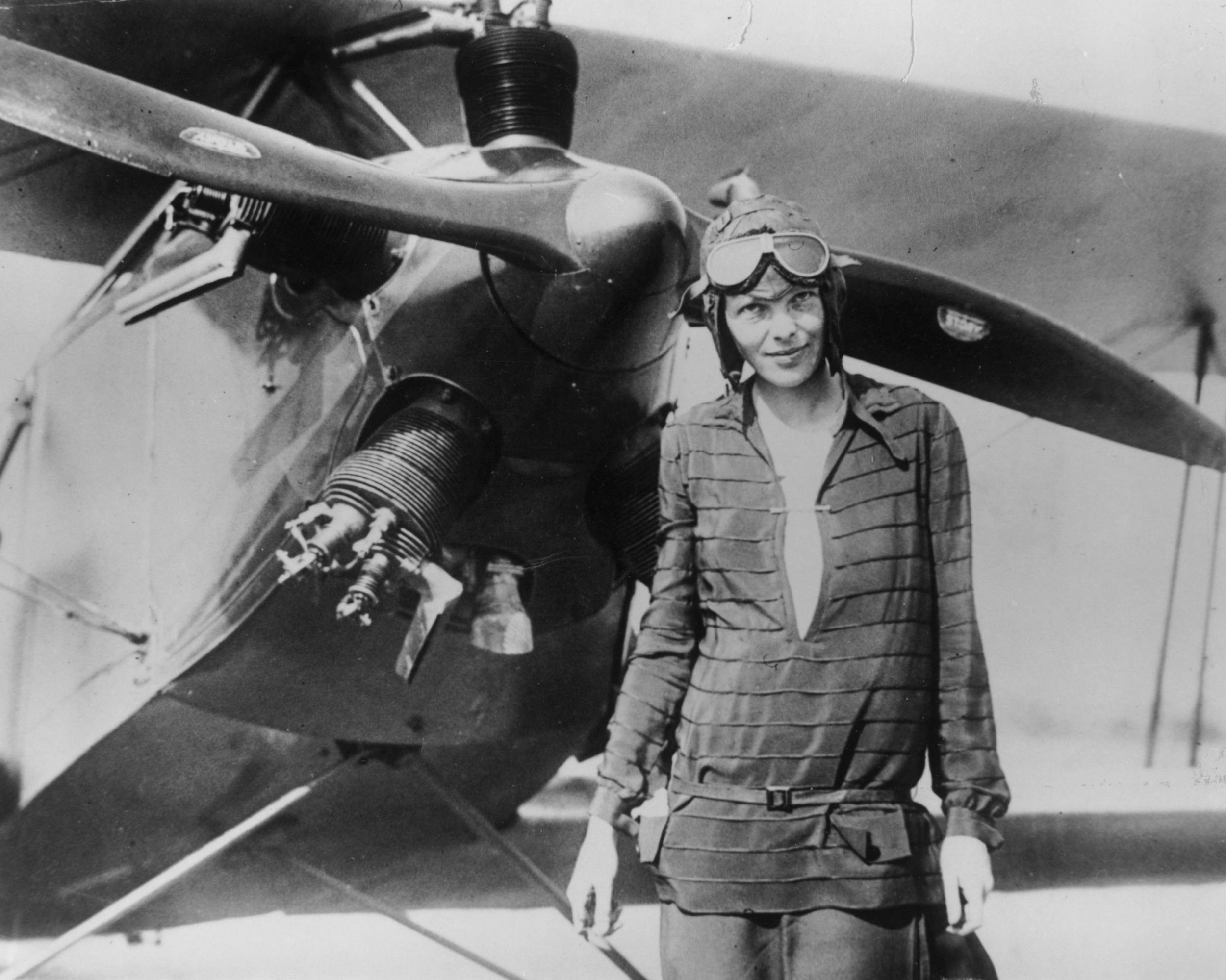
Amelia Earhart likely died in July 1937 following a failed attempt to locate Howland Island during her circumnavigation flight. While the official U.S. government position remains that she ran out of fuel and crashed into the Pacific Ocean, substantial evidence supports her landing on the remote atoll of Nikumaroro, where she may have survived briefly as a castaway.
On July 2, 1937, Amelia Earhart and her navigator, Fred Noonan, vanished while flying a Lockheed Electra 10E from Lae, New Guinea, to Howland Island. This disappearance remains the most enduring mystery in aviation history. As of 2026, scientific advancements in sonar mapping and forensic DNA analysis have brought us closer to a definitive answer, yet the "unsettling truth" lies in the combination of technical failures, environmental challenges, and the grueling reality of survival in the uninhabited Pacific.
The Technical Reality of the 1937 Disappearance
To understand the death of Amelia Earhart, one must first analyze the technical constraints of her final flight. The journey from Lae to Howland Island was a 2,556-mile trek across open water—the longest leg of her journey.
The Radio Communication Failure
The primary factor in Earhart's disappearance was a catastrophic breakdown in radio communication. The Lockheed Electra 10E was equipped with a Western Electric Model 13C transmitter and a Model 20B receiver. However, several critical errors occurred before takeoff:
- Antenna Loss: Evidence suggests that the Electra’s belly-mounted receiving antenna was ripped off during the bumpy takeoff from the grass runway at Lae. This meant Earhart could transmit messages but could not hear the directional voice signals or the Morse code "A" and "N" homing signals sent by the U.S. Coast Guard Cutter Itasca, stationed at Howland.
- Frequency Mismatch: Earhart preferred using a 6210 kHz frequency for her transmissions, which was not optimal for the direction-finding equipment available on the Itasca. The ship was prepared to track her on 500 kHz or 3105 kHz, but signal interference and power limitations plagued the communication attempts.
The "Line of Position" 157 337
Earhart’s final confirmed transmission at 8:43 AM local time was: "We are on the line 157 337. We will repeat this message. We will repeat this on 6210 kilocycles. Wait." This line of position (LOP) passed directly through Howland Island and ran north-northwest to south-southeast. If she could not see the tiny island, her only option was to fly along this line until she spotted land. This line also leads directly to Nikumaroro (then called Gardner Island), approximately 350 miles to the south-southeast.
The "Crash and Sink" Theory: Deep Sea Vision Evidence
For decades, the most widely accepted explanation for Amelia Earhart's death was that the Lockheed Electra ran out of fuel and plummeted into the four-mile-deep waters surrounding Howland Island. This theory posits that neither Earhart nor Noonan survived the initial impact or that they drowned shortly thereafter as the heavy aircraft sank.
The 2024 Sonar Discovery
In early 2024, Deep Sea Vision, an ocean exploration firm led by Tony Romeo, released sonar imagery captured near Howland Island. The imagery depicts an object roughly the size and shape of a Lockheed Electra, lying approximately 16,000 feet below the surface. As of 2026, this site remains a focal point for deep-sea archaeological verification.
The "Crash and Sink" theory is supported by the fact that the Itasca never received any further radio transmissions after 8:43 AM that could be definitively linked to the aircraft. If the plane hit the water, the radio would have been immediately disabled. The unsettling truth within this theory is the isolation; if they crashed here, death would have been instantaneous or would have occurred within minutes in the vast, unforgiving expanse of the Pacific.
The Nikumaroro Hypothesis: The Castaway Reality
The most compelling alternative to the "Crash and Sink" theory is the Nikumaroro Hypothesis, championed by The International Group for Historic Aircraft Recovery (TIGHAR). This theory suggests that Earhart, unable to find Howland, flew south-southeast along the 157 337 line and landed the Electra on the flat coral reef surrounding Gardner Island (Nikumaroro).
The Post-Loss Radio Signals
Between July 2 and July 6, 1937, more than 100 radio transmissions were reported by credible operators across the Pacific and the United States. While many were dismissed as hoaxes, several contained details that only Earhart could have known. These signals suggest the aircraft was on dry land, as the radio required the right engine to be running to charge the batteries—something impossible if the plane were submerged.
Forensic Evidence on the Island
The unsettling nature of the Nikumaroro theory involves the potential survival of Earhart as a castaway. Evidence found on the island over several decades includes:
- The 1940 Bones: In 1940, British colonial officer Gerald Gallagher discovered a human skull and partial skeleton on the island. A 2018 forensic re-evaluation by Dr. Richard Jantz concluded that the bones were more consistent with Earhart’s measurements than with 99% of the general population.
- Artifacts: Researchers have found a woman's shoe heel (consistent with those Earhart wore), a piece of Plexiglas from an Electra window, and a 1930s-era ointment jar used for freckle cream—something Earhart was known to use.
- Survival Traces: Evidence of small campfires and bird/fish bones organized in a manner suggesting a Western survivor were found at the "Seven Site" on the island.
The unsettling truth here is a slow death. Without a reliable source of fresh water, and with the Electra eventually being swept off the reef into the deep ocean by high tides, Earhart and Noonan would have faced extreme dehydration, heat exhaustion, and starvation.
Comparative Analysis of Major Theories
The following table summarizes the primary theories regarding Amelia Earhart's death, evaluated against the available evidence as of 2026.
| Theory | Location | Primary Evidence | Major Obstacles | Status (2026) |
|---|---|---|---|---|
| Crash and Sink | Near Howland Island | 2024 Sonar imagery; lack of confirmed signals after 08:43. | No physical wreckage recovered; sonar image is unverified. | Primary Official Theory |
| Nikumaroro Castaway | Nikumaroro Atoll | 1940 bones; post-loss radio signals; 1930s artifacts. | Bones were lost in the 1940s; DNA testing is currently impossible. | Leading Scientific Theory |
| Japanese Capture | Marshall Islands / Saipan | Eyewitness accounts from locals; 1935 photo "discovery" (later debunked). | No physical evidence of the plane; U.S. and Japanese records lack confirmation. | Largely Discredited |
| New Guinea Return | Solomon Sea | Theory that she turned back due to mechanical failure. | Contradicts the 157 337 LOP transmission. | Highly Unlikely |
The Marshall Islands and the Japanese Capture Theory
A third, more controversial theory suggests that Earhart and Noonan deviated from their course, landed in the Marshall Islands (then a Japanese Mandate), and were captured as spies. This theory gained significant traction due to various eyewitness accounts from Marshallese locals who claimed to have seen a "white lady flyer" and a tall man in Japanese custody.
The Photograph Controversy
In 2017, a History Channel documentary presented a photograph found in the National Archives that allegedly showed Earhart and Noonan on a dock in Jaluit Atoll. However, researchers later discovered the same photograph in a Japanese travelogue published in 1935—two years before Earhart vanished.
While the "Japanese Capture" theory provides a dramatic narrative of international intrigue, it lacks the material evidence found in the Nikumaroro or Crash and Sink theories. Historians generally agree that if the Japanese had captured the world's most famous female pilot, it would have been impossible to keep it a secret for decades, even through the height of World War II.
The Unsettling Truth: A Convergence of Errors
Regardless of the specific location of her death, the truth behind Amelia Earhart's demise is a story of "cascading failures." In aviation safety, a single error rarely leads to a disaster; instead, it is a chain of events.
- Preparation Gaps: Earhart and Noonan were exhausted after weeks of flying. Their preparation for the complex radio navigation required for Howland Island was insufficient.
- Environmental Factors: Unforeseen headwinds of 25-30 mph significantly slowed the Electra, meaning they reached the vicinity of Howland Island with far less fuel than anticipated.
- Visual Limitations: Howland Island is a flat, treeless strip of land only 1.5 miles long. From an altitude of 1,000 feet, it is essentially invisible if there is any cloud cover or sun glare on the water.
- The "Line of Position" Trap: By the time Earhart reached the 157 337 line, she was likely flying "on fumes." Whether she ditched immediately or flew toward Nikumaroro, her fate was sealed by the vastness of the Pacific.
Frequently Asked Questions
Was Amelia Earhart's plane ever found?
As of 2026, no piece of wreckage has been definitively and universally confirmed as belonging to the Lockheed Electra 10E, registration NR16020. While the 2024 sonar imagery from Deep Sea Vision is a promising candidate, it requires physical verification by a Remotely Operated Vehicle (ROV) to confirm the manufacturer's serial numbers.
Did Amelia Earhart die in 1937?
Yes. Both the U.S. government and independent researchers agree that Earhart died in July 1937. The U.S. Navy officially declared her dead in 1939, two years after her disappearance, to settle her estate. There is no credible evidence that she survived past the 1930s or returned to the U.S. under an assumed identity.
What happened to Fred Noonan?
Fred Noonan, an expert navigator with a history of working for Pan Am, disappeared alongside Earhart. If they landed on Nikumaroro, it is hypothesized that Noonan may have died first, as Earhart was the primary figure described in many of the survival-site analyses. If the plane crashed into the ocean, both likely perished at the same time.
Why didn't the U.S. Navy find her?
The 1937 search was the most expensive and extensive in U.S. history at the time, involving the aircraft carrier USS Lexington and the battleship USS Colorado. However, the search area was over 250,000 square miles of open ocean. The Navy focused heavily on the water and only briefly performed aerial flyovers of the surrounding islands. They did fly over Nikumaroro but reported seeing no signs of habitation, though they did note "signs of recent occupancy" which they mistakenly attributed to local residents.
Could DNA ever solve the mystery?
The "Gallagher bones" found in 1940 were lost in Fiji during the chaos of World War II. Unless those original bones are found, or new biological samples are recovered from Nikumaroro (such as hair in a brush or skin cells on an artifact), DNA testing remains a dead end. Researchers continue to hope that environmental DNA (eDNA) from the soil at the Seven Site might one day provide a match.
Recommendation for Further Inquiry
To truly grasp the gravity of Amelia Earhart's final days, one should examine the original radio logs from the Coast Guard Cutter Itasca and the technical specifications of the Lockheed Electra 10E. The mystery is not just a matter of "where" she died, but a lesson in the limits of early 20th-century technology.
For those interested in the ongoing search, monitoring the updates from the National Oceanic and Atmospheric Administration (NOAA) and the Smithsonian National Air and Space Museum provides the most factually grounded information. The most productive next step for the historical community is the high-resolution imaging and physical sampling of the sonar targets identified in the deep waters near Howland Island, which remains the most likely site of the aircraft’s final resting place.