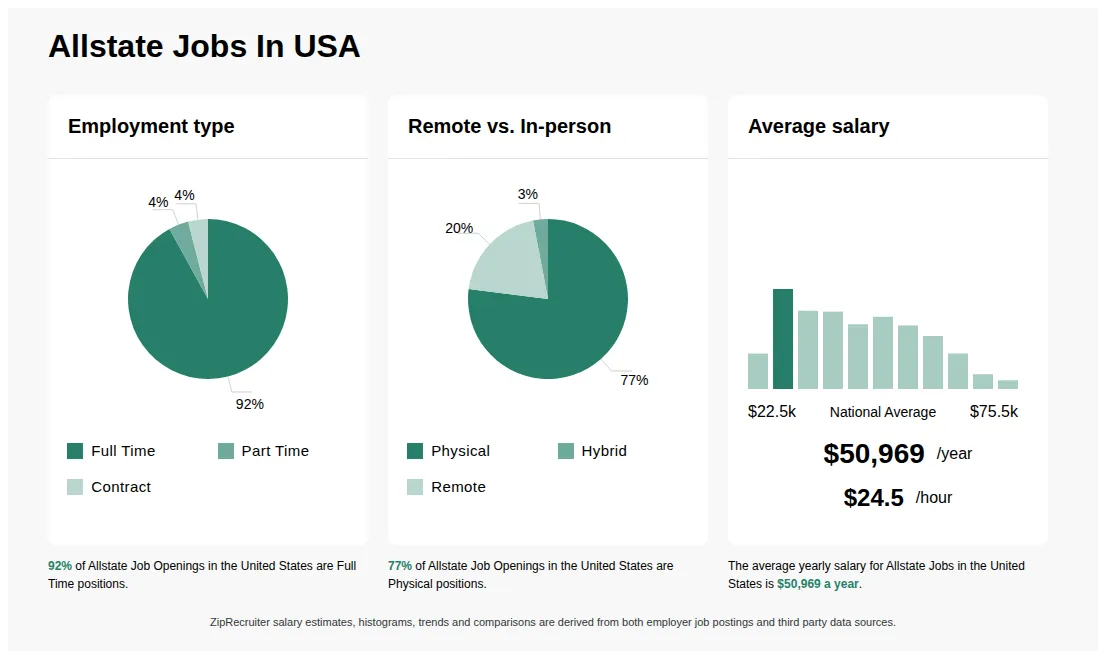
Allstate provides a wide array of career opportunities ranging from technology and data science to claims handling and corporate strategy. As a predominantly remote-first organization in 2026, the company emphasizes flexible work environments, comprehensive employee benefits, and professional development, catering to a diverse workforce looking for stability in the evolving insurance sector.
The Current Landscape of Employment at Allstate
As we navigate 2026, The Allstate Corporation remains a titan in the personal lines insurance market, but its identity as an employer has undergone a significant transformation. Once known primarily for its brick-and-mortar local agencies, the "Good Hands" company has pivoted into a tech-forward, data-driven organization. This shift has fundamentally altered the types of roles available and the skills required to succeed within the firm.
The employment landscape at Allstate is currently defined by three primary pillars: digital innovation, customer-centricity, and operational resilience. For job seekers, this means that while traditional insurance roles—like claims adjusters and underwriters—remain essential, there is a massive and growing demand for software engineers, cybersecurity experts, and machine learning specialists. These technical roles are tasked with maintaining the sophisticated telematics platforms and automated claims processing systems that now define the modern insurance experience.
Allstate’s workforce is highly distributed. Following a strategic shift that began earlier this decade, the company has largely moved away from massive centralized office campuses in favor of a flexible work model. This allows the company to source talent from across the country, rather than being limited to specific geographic hubs like Northbrook or Chicago. This "work from almost anywhere" approach has become a cornerstone of their recruitment strategy, making them a top choice for professionals seeking geographical flexibility.
Core Career Tracks and Specialized Roles
To understand the breadth of Allstate jobs, it is helpful to categorize them into functional tracks. Each track requires a specific set of competencies and offers different paths for upward mobility.
Technology and Data Science
Allstate operates one of the most sophisticated technology stacks in the financial services industry. Much of this work is centralized under its specialized subsidiaries and departments, such as Arity, Allstate’s mobility data and analytics company.
- Software Engineering: Engineers at Allstate build the customer-facing mobile applications and the backend systems that manage millions of policies. They work primarily with cloud-native technologies (AWS and Azure) and emphasize agile methodologies.
- Data Science and Analytics: Data is the lifeblood of insurance. Data scientists develop predictive models for risk assessment, pricing, and fraud detection. In 2026, much of this work focuses on refining AI models to provide real-time pricing based on telematics data.
- Cybersecurity: With the increasing digitalization of personal data, the security team is paramount. Roles here focus on threat intelligence, identity access management, and incident response.
Claims and Customer Service
Claims handling is the "moment of truth" in the insurance industry. This department is often the largest in terms of headcount and offers a variety of entry-level and experienced positions.
- Claims Adjusters: These professionals investigate insurance claims, determine liability, and negotiate settlements. While many adjusters now work remotely using photo-based estimation tools, field adjusters still exist for complex or large-scale property damage.
- Customer Contact Centers: These roles are the frontline of customer interaction. Employees assist with policy changes, billing questions, and initial claim reports. Allstate has invested heavily in training these teams to handle complex inquiries that automated chatbots cannot resolve.
Sales and Agency Support
It is important to distinguish between corporate Allstate employees and Independent Agency owners. While agency owners are entrepreneurs who run their own businesses, Allstate employs thousands of people to support these agencies.
- Sales Leaders: These corporate employees work with agency owners to drive growth and ensure compliance with brand standards.
- Marketing and Communications: This team manages the massive "Good Hands" brand presence, digital advertising, and internal corporate communications.
Actuarial and Underwriting
The traditional heart of insurance, these roles focus on the math and logic of risk.
- Actuaries: Using advanced mathematics and statistics, actuaries calculate the probability of events and help set the premiums that keep the company solvent and competitive.
- Underwriters: These professionals evaluate individual applications for insurance, deciding whether to accept the risk and under what terms. In 2026, underwriting is increasingly "augmented," where AI handles standard cases while human underwriters focus on high-value or complex exceptions.
Remote and Hybrid Work Environments in 2026
The "Allstate Enterprise" work model is a defining feature of the company's employee value proposition in 2026. Recognizing that the nature of work has changed, Allstate has categorized most roles into one of three formats:
- Remote-First: The vast majority of corporate and technology roles are remote. Employees are provided with a home-office stipend and are expected to maintain a professional workspace, but they are not required to live near an Allstate facility.
- Hybrid: Some roles, particularly those in specialized leadership or collaborative design, may follow a hybrid schedule. These employees spend a portion of their time in regional "collaboration hubs" and the rest working from home.
- Resident: A very small percentage of roles remain tied to physical locations, such as facilities management or specific roles in high-security data centers.
This flexibility has significantly increased Allstate's retention rates. By allowing employees to design their workdays around their lives—rather than the other way around—Allstate has positioned itself as a modern employer that values output over "desk time." However, the company maintains a strong culture of connection through virtual town halls, regional meet-ups, and robust digital collaboration tools like Microsoft Teams and Slack.
Compensation, Benefits, and Employee Wellbeing
Allstate’s compensation philosophy in 2026 is designed to be competitive with both the insurance and tech industries. The total rewards package is comprehensive, focusing on long-term financial security and holistic health.
Financial Benefits
- 401(k) Matching: Allstate typically offers a highly competitive 401(k) plan with a company match that is immediate or has a very short vesting period.
- Pension Plan: Unlike many modern corporations, Allstate has historically maintained a pension plan for eligible employees, though terms vary based on the date of hire and specific business unit.
- Incentive Compensation: Most corporate roles are eligible for an annual bonus based on both individual performance and the company’s overall financial health.
Health and Wellness
The company’s health insurance options are extensive, often including multiple PPO and HDHP plans to suit different family needs. In 2026, there is a heightened focus on Mental Health Support, including free access to therapy apps, an Employee Assistance Program (EAP), and "well-being days" off that do not count against standard PTO.
Education and Development
Allstate is a strong proponent of internal mobility. They provide significant tuition reimbursement for employees pursuing degrees relevant to the business. Additionally, the "Allstate University" internal platform offers thousands of certifications in coding, leadership, and insurance-specific designations like the Chartered Property Casualty Underwriter (CPCU).
The Allstate Hiring and Interview Process
Applying for a job at Allstate is a structured, multi-step process designed to ensure both technical competency and cultural alignment.
Application Submission
The journey begins at the official Allstate Careers portal. Candidates should ensure their resumes are optimized for Applicant Tracking Systems (ATS) by using keywords found in the specific job description. Allstate frequently uses AI screening tools to match resumes with role requirements.
Assessment and Screening
For many roles, particularly in technology or customer service, candidates may be asked to complete an online assessment.
- Technical Roles: May require a coding challenge or a system design exercise.
- Customer-Facing Roles: Often involve a situational judgment test (SJT) to see how the candidate handles difficult customer interactions.
The Interview Stages
- Recruiter Screen: A 20-30 minute conversation focused on basic qualifications, salary expectations, and interest in Allstate.
- Hiring Manager Interview: A deeper dive into the candidate’s experience and specific skills. This is usually a behavioral interview using the STAR method (Situation, Task, Action, Result).
- Peer/Panel Interviews: Candidates meet with potential teammates to assess cultural fit and collaborative ability.
- Final Review and Offer: After the interviews, the hiring team consolidates feedback. If selected, a verbal offer is usually followed by a formal written offer and a background check.
Corporate Culture and Diversity Initiatives
Allstate’s culture in 2026 is anchored in its "Shared Purpose" statement. The company emphasizes "Inclusive Diversity," which is more than just a HR policy; it is integrated into their business strategy. Allstate maintains several Employee Resource Groups (ERGs), including groups for Black, Hispanic, LGBTQ+, and Veteran employees, as well as an active Women's Information Network.
Sustainability is another major cultural driver. Allstate has made public commitments to net-zero emissions in its operations and frequently encourages employees to participate in community volunteer programs through the Allstate Foundation. These initiatives help foster a sense of purpose among the workforce, which is a key factor in employee engagement scores.
Comparison of Major Departments at Allstate
The following table provides a high-level comparison of the primary employment tracks at Allstate to help applicants identify where their skills might best fit.
| Department | Typical Roles | Primary Skillset | Work Environment | Growth Potential |
|---|---|---|---|---|
| Technology | Software Engineer, Data Scientist | Python, Java, Cloud, AI | Remote-First | High - Tech leadership tracks |
| Claims | Claims Adjuster, Estimator | Negotiation, Empathy, Detail | Remote / Field | Moderate - Management tracks |
| Actuarial | Actuary, Risk Analyst | Statistics, R, SAS, Finance | Remote / Hybrid | Very High - Specialist path |
| Customer Service | Support Rep, Billing Specialist | Communication, Problem-solving | Remote (Call Center) | High - Internal mobility to HQ |
| Legal/Compliance | Counsel, Compliance Officer | Law, Regulatory Knowledge | Hybrid | Stable - Specialized expertise |
Professional Development and Internal Mobility
A unique aspect of working at Allstate is the "Gig" program, which allows employees to spend a small percentage of their time working on projects outside their primary department. For example, a claims adjuster interested in data analytics might spend 5 hours a week helping the analytics team with a specific project.
This program serves two purposes: it helps the company solve cross-functional problems and it allows employees to "test drive" new career paths without leaving their current roles. In 2026, this has become a major driver of internal mobility, with over 20% of open positions being filled by internal candidates moving between different functional areas.
Frequently Asked Questions (FAQs)
Does Allstate hire people without prior insurance experience?
Yes, Allstate frequently hires individuals without a background in insurance for roles in technology, marketing, HR, and entry-level customer service. The company provides extensive on-the-job training and "Insurance 101" courses to help new hires understand the industry. For specialized roles like Actuaries or Underwriters, however, relevant education or certification is usually required.
What is Allstate's policy on remote work in 2026?
Allstate is primarily a remote-first organization for corporate and technology positions. This means that for the vast majority of office-based roles, employees are not required to live near a specific physical office. The company provides the necessary hardware (laptops, monitors) and a stipend for home internet and office setup.
How long does the Allstate hiring process typically take?
The timeline varies depending on the seniority and complexity of the role. On average, the process from application to offer takes between four and eight weeks. Technical roles with multiple assessment stages may take longer, while high-volume roles like customer service reps may move through the pipeline in as little as three weeks.
What kind of background check does Allstate perform?
As a financial services company, Allstate conducts thorough background checks. This typically includes verification of employment history, education, criminal background, and, for certain roles handling sensitive financial data, a credit check. All offers of employment are contingent upon the successful completion of this process.
Are there internship opportunities for students?
Allstate has a robust internship program, particularly in technology, data science, and actuarial tracks. These internships are typically paid and occur during the summer. Many interns receive full-time offers upon graduation, making it a primary talent pipeline for the company’s early-career programs.
Practical Recommendations for Applicants
If you are considering a career at Allstate, your first step should be to identify the functional track that aligns with your long-term goals. Do not just look at the job title; read the "Preferred Qualifications" section of the job postings carefully, as these often reveal the specific tools and methodologies (such as Agile, Python, or specific claims software) the team uses daily.
Before applying, update your LinkedIn profile to reflect the skills mentioned in Allstate’s job descriptions. Networking with current employees can also be beneficial; Allstate has a strong internal referral program, and a recommendation from a current staff member can often help your application get a closer look by the recruiting team. Finally, prepare for your interview by researching Allstate's recent financial performance and sustainability goals, as demonstrating an understanding of the company's broader mission is highly valued.