Purple and pink M&M’s are not part of the standard permanent color rotation found in traditional milk chocolate bags. Purple appeared briefly after winning a 2002 global vote and returned in 2022 as a brand character, while pink is primarily reserved for seasonal Valentine’s Day mixes and Breast Cancer Awareness campaigns.
The Historical Context of M&M Color Palettes
To understand why purple and pink M&M’s occupy such a specific niche in the confectionery world, one must first look at the evolution of the M&M’s color palette. Since their inception in 1941, M&M’s have undergone several significant transformations. Originally, the candies were sold in cardboard tubes and featured a color mix of brown, yellow, orange, red, and violet.
Violet was part of the original lineup, but it was discontinued fairly early in the brand’s history, replaced by tan. For decades, the "standard" bag remained relatively static until 1995, when a massive public marketing campaign allowed consumers to vote on a new color to replace tan. Blue won that contest, cementing its place in every standard bag of milk chocolate M&M’s. This historical backdrop is essential because it established the precedent for "limited edition" and "fan-voted" colors, which is exactly where the modern purple and pink varieties fit in.
By 2026, the brand has mastered the art of using color as a tool for both seasonal marketing and social messaging. While consumers often expect to find a rainbow in every bag, Mars Wrigley maintains a strict distinction between the "Permanent Six" (Brown, Yellow, Green, Red, Orange, and Blue) and the "Specialty Palette" (Purple, Pink, and others).
The 2002 Global Color Vote and the Return of Purple
The most significant moment for the purple M&M occurred in 2002. In an ambitious global campaign, Mars invited fans from over 200 countries to choose a new color that would be added to the mix for a limited time. The contenders were purple, pink, and aqua.
After more than 10 million votes were cast, purple emerged as the clear winner with approximately 41% of the vote. Pink trailed significantly, and aqua came in third. Consequently, purple M&M’s were added to bags worldwide, but there was a catch: they were never intended to be permanent. They remained in the mix only through the end of 2002. This created a lasting "mythology" around the purple candy, as an entire generation of consumers remembered seeing them but could no longer find them on store shelves.
The 2022 Reintroduction of Purple as a Character
In 2022, the brand took a different approach to the color purple. Rather than just adding a candy to the bag, they introduced "Purple" as a new spokescandy—the first female Peanut M&M character. This move was designed to represent inclusivity and authenticity.
From a product perspective, this did not result in purple candies being added to every standard yellow bag of Peanut M&M’s. Instead, Purple appeared in special "Spokescandy" mixes and limited-edition promotional packaging. In 2026, Purple remains a core part of the brand's marketing identity, symbolizing a modern, inclusive era for the company, even if she isn't a permanent fixture in the snack-sized bag you buy at a gas station.
Pink M&M’s: Seasonal Traditions and Charitable Initiatives
Unlike purple, which had a singular "big bang" moment in 2002, pink M&M’s have followed a more rhythmic, seasonal availability. You will almost never find a pink M&M in a standard "M" branded bag during the summer or autumn months unless it is a custom order.
Valentine’s Day and Seasonal Mixes
The primary window for pink M&M’s is the January-to-February corridor. For decades, Mars has released a "Cupid’s Mix," which typically features red, white, and various shades of pink (often a light pastel pink and a deeper rose). These are highly sought after for candy bowls and baking. The pink color in these mixes is achieved using specific food dyes that are adjusted to maintain the brand's aesthetic standards while ensuring they don't bleed into the white candies in the same bag.
Breast Cancer Awareness
Pink has also played a role in philanthropic efforts. Mars has historically released special pink-and-white mixes to coincide with Breast Cancer Awareness Month in October. These limited runs are often tied to donations to research organizations. Because of this association, the pink M&M has gained a reputation as a "purpose-driven" color, rather than just a snack.
How to Get Purple and Pink M&M’s Year-Round
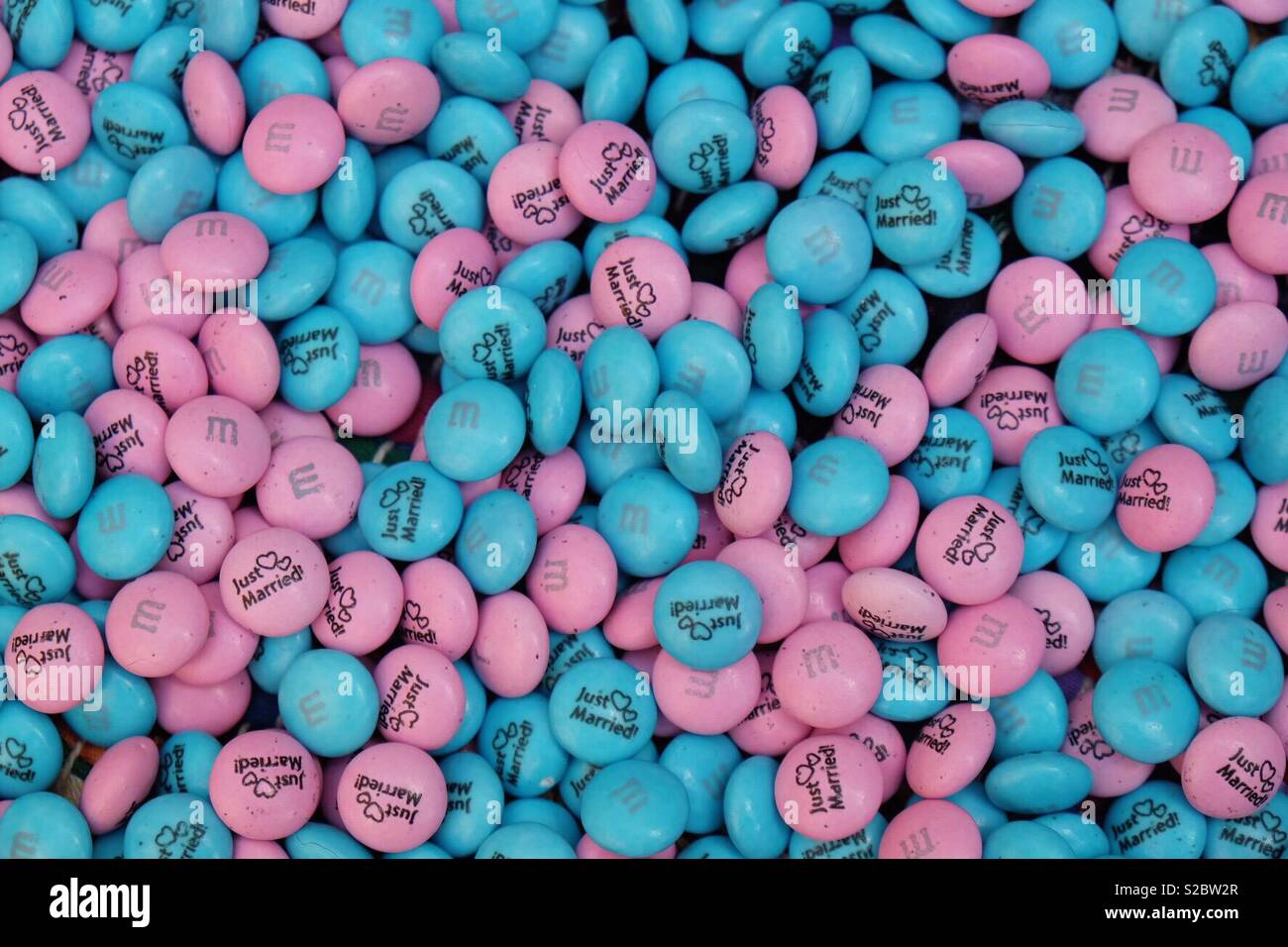
For consumers who need these specific colors outside of seasonal windows—such as for weddings, baby showers, or corporate branding—the "My M&M’s" platform is the primary solution. This service allows for the purchase of bulk M&M’s in single-color batches.
On the customization platform, the color options are far more extensive than what is found in retail stores. As of 2026, the available shades typically include:
- Pink: A standard light pink.
- Shimmer Pink: A pearlized version often used for formal events.
- Fuchsia: A deeper, more vibrant pink.
- Purple: A royal purple shade.
- Light Purple/Lavender: A softer pastel version.
The availability of these colors through the custom portal explains why people see them at events and assume they are part of the standard production line. In reality, these are produced in smaller batches and sold at a premium price point compared to the mass-market bags.
Comparing M&M Color Categories and Availability
The following table outlines the status of various "non-standard" colors, focusing on purple and pink compared to the permanent lineup.
| Color | Category | Primary Source | Current Status (2026) |
|---|---|---|---|
| Purple | Limited/Character | 2002 Vote / Special Mixes | Available in Character-specific bags and custom orders. |
| Pink | Seasonal | Valentine's Day / Awareness | Available annually in Feb/Oct and custom orders. |
| Blue | Permanent | Standard Retail Bags | Permanent since 1995. |
| Tan | Discontinued | Historical Archives | Replaced by Blue in 1995; no longer produced. |
| White | Seasonal/Custom | Christmas/Wedding Mixes | Available in seasonal mixes and custom orders. |
| Fuchsia | Custom | My M&M’s Portal | Exclusive to custom orders. |
The Psychology and Production of Specialty Colors
The decision to keep purple and pink out of the permanent mix is not arbitrary. It involves complex considerations of food science, supply chain logistics, and consumer psychology.
Food Coloring and Dye Challenges
Creating a consistent purple or pink shell requires specific ratios of Red 40, Blue 1, and sometimes titanium dioxide for opacity. While these dyes are standard in the industry, maintaining the exact brand-matching shade across millions of candies per hour is a rigorous task. By limiting these colors to seasonal or custom runs, Mars can maintain tighter quality control over the specific hues, which are more prone to "fading" or "mottling" than the more robust brown or yellow dyes.
Scarcity as a Marketing Tool
There is also the "scarcity effect." By keeping pink and purple as "special" colors, Mars creates annual demand. If pink were available year-round in every bag, its value as a Valentine’s Day staple would diminish. This strategy of "controlled availability" ensures that consumers look forward to specific times of the year to purchase these varieties, driving seasonal spikes in revenue.
Common Misconceptions About Purple and Pink M&M’s
There are several persistent myths regarding these colors that frequently confuse consumers.
Myth 1: Purple M&M's were "banned" due to dye safety. This is incorrect. There is a common urban legend that certain dyes used for purple candies were linked to health issues, leading to their removal. In reality, the violet M&M was removed decades ago simply to streamline the color palette, and the 2002 purple was always advertised as a limited edition. All dyes currently used by Mars Wrigley meet FDA and international safety standards.
Myth 2: Pink M&M's taste like strawberry. Despite the color association, standard pink M&M’s (whether in Cupid’s Mix or custom orders) are plain milk chocolate. The shell is a sugar-based coating with no added flavoring. While Mars does occasionally release flavored limited editions (like Strawberry Nut or Raspberry), those are distinct products and are always labeled as such.
Myth 3: You can find Purple in a regular bag if you look hard enough. Unless you are buying a special "Spokescandy" promotional bag, you will not find a purple M&M in a standard 1.69 oz milk chocolate or peanut bag. If you do find one, it is likely a manufacturing anomaly where a stray candy from a custom or seasonal run ended up on the wrong packaging line—a rare occurrence given the high-tech sorting sensors used in modern plants.
Technical Specifications: The M&M Coating Process
To understand how these colors are applied, one must look at the "panning" process. M&M’s start as chocolate centers that are tumbled in large rotating drums. A sugar syrup is sprayed onto the centers, and as the water evaporates, a thin layer of sugar remains.
For purple and pink varieties, the pigment is added in the final stages of this process. To achieve the "shimmer" versions of pink and purple often seen at weddings, a mica-based pearlescent pigment is applied as a finishing coat. This adds a reflective quality that is not present on the matte finish of standard red or green candies. This additional step is why shimmer colors are typically only available through the premium "My M&M's" service.
FAQ: Frequently Asked Questions
Are there purple M&M's in regular bags in 2026?
No, purple M&M's are not part of the standard permanent mix in regular milk chocolate or peanut bags. They are available in special promotional "Purple" character bags, seasonal mixes, or through custom orders on the official M&M’s website.
When did pink M&M's first appear?
Pink M&M's began appearing as a seasonal color for Valentine's Day in the late 1980s and early 1990s. They gained significant prominence in the mid-2000s when Mars began partnering with breast cancer awareness foundations for special October "pink-only" or "pink-and-white" campaigns.
Why did Blue win the vote over Purple in 1995?
In the 1995 color vote, the choices were blue, pink, and purple. Blue won by a landslide (54% of the vote). Consumer research at the time suggested that blue was perceived as more "fun" and "modern," whereas purple and pink were seen as more "seasonal" or "niche." However, the strong showing for purple in 1995 laid the groundwork for its eventual victory in the 2002 vote.
Can I buy just pink or just purple M&M's at a grocery store?
Generally, no. Grocery stores typically carry the standard mix or seasonal mixes. To get a bag containing only pink or only purple candies, you would need to visit an "M&M’s World" retail store (located in cities like Las Vegas, New York, or London) or order them directly from the M&M’s online customization portal.
Is the "Purple" character a different flavor?
The "Purple" character represents the Peanut M&M variety. While the character herself is purple, the candies inside a bag featuring her image may still be the standard peanut mix colors unless the bag is specifically labeled as a "Purple Color Mix."
Summary of Next Actions for Consumers
If you are looking for purple or pink M&M’s for a specific purpose, your best course of action depends on the time of year and your budget:
- For Events (Weddings/Parties): Use the official custom M&M’s website. This is the only way to guarantee a specific shade like lavender or fuchsia year-round and allows you to add custom text or images.
- For Seasonal Decor: Wait for the Valentine’s Day (January) or Breast Cancer Awareness (October) retail windows. You can purchase these in bulk at most major retailers at standard prices.
- For Collectors: Look for "Character Edition" bags featuring the Purple spokescandy. These often contain unique color blends that include the elusive purple candy.
- In-Person Experience: If you are near an M&M's World store, you can use the "Color Mood" walls to dispense individual colors into a container of your choice, allowing you to mix and match purple and pink to your exact preference.