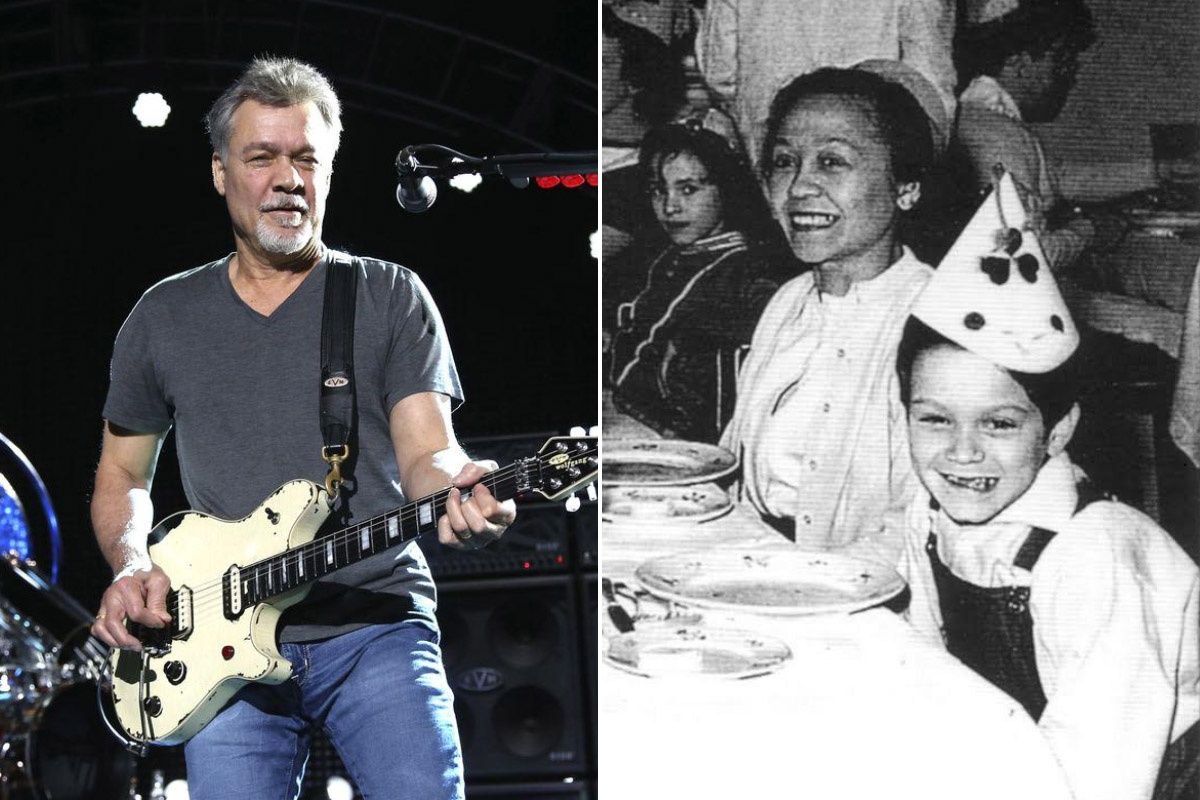
The birth of Van Halen was a decade-long evolution rooted in the symbiotic relationship between brothers Alex and Eddie Van Halen. From their 1962 migration from the Netherlands to Pasadena, California, the brothers transitioned from classical piano students to rock innovators, forming the band Mammoth before solidifying the classic Van Halen lineup in 1974.
The story of Van Halen is not merely the chronicle of a successful rock band; it is a narrative of immigrant ambition, fraternal bond, and a fundamental shift in the DNA of heavy metal and hard rock. In 2026, as we look back on the half-century since their rise, the technical and cultural impact of the Van Halen brothers remains the gold standard for instrumental excellence and group chemistry.
The Foundation: From Nijmegen to Pasadena
The genesis of the Van Halen sound began long before the brothers ever picked up an electric guitar or a drumstick. Born in Nijmegen, Netherlands, to Jan and Eugenia Van Halen, Alex (born 1953) and Eddie (born 1955) were raised in a household where music was a profession, not just a hobby. Their father, Jan, was a classically trained clarinetist and saxophonist who performed in jazz and big bands. This exposure to professional musicianship provided the brothers with a foundational understanding of theory, improvisation, and the grueling reality of a musician's life.
In February 1962, the family moved to Pasadena, California. This move was pivotal. Arriving with only $75 and a piano, the brothers were forced to adapt quickly to American culture. To help support the family, the brothers performed classical piano duets, winning local competitions. However, the burgeoning rock and roll scene of the 1960s soon captured their attention.
The most famous anecdote in the birth of Van Halen is the "instrument swap." Initially, Eddie bought a drum kit and Alex bought a guitar. While Eddie was out delivering newspapers to pay for his drums, Alex would practice on the kit. By the time Eddie returned, Alex had surpassed him in skill. Eddie, realizing his brother’s natural aptitude for rhythm, picked up Alex’s guitar and found his true calling. This swap was the catalyst for the specific "Van Halen sound"—a guitar style that was inherently percussive and a drumming style that was unusually melodic.
The Early Iterations: From The Broken Combs to Mammoth
Before the world knew them as Van Halen, the brothers honed their craft in a series of local bands throughout the late 1960s and early 1970s. Their first group, formed in elementary school, was called The Broken Combs. By the time they reached high school, their ambitions had grown. They formed a power trio called Genesis, which was eventually renamed Mammoth in 1972 after they discovered a popular British band already using the Genesis moniker.
Mammoth was the laboratory where the Van Halen brothers developed their stage presence and technical proficiency. At this stage, the band consisted of Eddie on guitar and lead vocals, Alex on drums, and Mark Stone on bass. They became a staple of the Pasadena "backyard party" scene. These parties were legendary, often drawing hundreds of teenagers and occasionally ending in police intervention. It was during this period that Eddie began experimenting with the "Brown Sound"—a warm, saturated, yet clear guitar tone that would eventually redefine the industry.
The struggle of the Mammoth era was the dual responsibility Eddie held as both lead guitarist and lead vocalist. Eddie was a reluctant singer, preferring to focus entirely on the technical demands of his instrument. This necessity for a dedicated frontman led to the recruitment of a local rival vocalist who would change the trajectory of the band forever.
The Convergence: David Lee Roth and Michael Anthony
The transformation from Mammoth to Van Halen occurred through two critical personnel changes between 1973 and 1974. The first was the addition of David Lee Roth. Roth had been fronting a band called Red Ball Jets and had frequently rented his PA system to Mammoth. Eventually, the brothers realized it was more cost-effective to hire Roth as their singer than to keep paying for his equipment.
Roth brought more than just a sound system; he brought a vaudevillian sense of showmanship and a keen marketing mind. It was Roth who suggested changing the name from Mammoth to Van Halen, arguing that the family name had a power and legacy similar to Santana. While Alex was initially hesitant, the brothers eventually agreed, recognizing that the name gave them a unique, branded identity.
The final piece of the puzzle was the recruitment of Michael Anthony. In 1974, the band sought a bassist who could provide a solid rhythmic foundation and, more importantly, high-register backing vocals to complement Roth’s mid-range delivery. Anthony, who was playing in a band called Snake, was recruited to replace Mark Stone. With Anthony’s inclusion, the "classic quartet" was complete, and the band’s signature three-part vocal harmonies became a defining characteristic of their sound, often overlooked in the shadow of Eddie’s guitar work.
Technical Innovation: The Birth of the Frankenstrat and the Double-Kick
During the mid-1970s, as the band moved from backyard parties to West Hollywood clubs like Gazzarri’s and the Starwood, Eddie and Alex were pushing the boundaries of their equipment. Eddie’s dissatisfaction with off-the-shelf guitars led him to build the Frankenstrat. By combining the body of a Stratocaster-style guitar with the electronics and humbucking pickup of a Gibson, he created a hybrid that allowed for extreme tremolo bar usage while maintaining a heavy, thick tone.
Alex Van Halen was equally innovative. He was one of the early pioneers of the double-bass drum setup in a hard rock context, using it not just for speed, but to create a rolling, polyrhythmic foundation that allowed Eddie’s guitar solos to soar. His use of oversized Ludwig drum kits and fire-extinguisher tanks as percussion instruments added a visual and auditory grandiosity to the band’s performances.
| Component | Eddie Van Halen's Contribution | Alex Van Halen's Contribution |
|---|---|---|
| Primary Instrument | Custom "Frankenstrat" (Hybrid build) | Oversized Ludwig Double-Bass Kit |
| Technical Signature | Two-handed tapping, "Brown Sound" | Linear drumming, complex syncopation |
| Amplification | Modded Marshall 100-watt Plexi with Variac | Custom rack-mounted acoustic triggers |
| Role in "Birth" | Primary songwriter and melodic architect | Rhythmic anchor and band manager/leader |
| Innovation | Floyd Rose Tremolo refinement | Signature 11-drum setups with pyrotechnics |
The Starwood and the Gene Simmons Demo
By 1976, Van Halen was the undisputed king of the Los Angeles club circuit. Their residency at the Starwood lured industry scouts and established rock stars. One such star was Gene Simmons of KISS. Simmons was struck by the band’s energy and Eddie’s revolutionary technique. He offered to produce a demo for them, flying the band to New York City to record at Electric Lady Studios.
The 1976 demo included early versions of tracks like "Runnin' with the Devil" and "House of Pain." Despite the high quality of the recordings, Simmons was unable to secure them a record deal with his own management or label. He eventually had to return to his duties with KISS, leaving the band back in L.A. However, this experience solidified the band's professional resolve and provided them with a high-quality tape that they could use to court other labels.
Signing with Warner Bros. and the 1978 Debut
The breakthrough finally came in 1977. Mo Ostin and Ted Templeman of Warner Bros. Records attended a performance at the Starwood on a rainy Monday night. Despite the small crowd, the band performed with the intensity of a stadium act. Templeman was particularly mesmerized by Eddie’s guitar playing, later stating that he had never heard anything like it.
They were signed to Warner Bros. and entered Sunset Sound Recorders to track their debut album. Templeman’s production philosophy was to capture the raw energy of their live set. The album, Van Halen, was recorded in roughly three weeks with minimal overdubs. When it was released in February 1978, it sent shockwaves through the music world. "Eruption," a 1:42 solo piece by Eddie, effectively ended the era of blues-based rock solos and ushered in the era of technical shredding.
The Symbiosis: Why the Brothers Were the Core
While David Lee Roth and Michael Anthony were essential to the band’s commercial success, the "birth" of the band was fundamentally a family affair. The chemistry between Alex and Eddie was telepathic. Because they had practiced together daily since childhood, they possessed a rhythmic "swing" that other rock bands lacked.
Alex often served as the gatekeeper of the Van Halen sound. He was frequently the one to push Eddie to refine riffs or to keep the arrangements concise. Eddie, in turn, provided the melodic vocabulary that made Alex’s aggressive drumming accessible. This fraternal bond acted as a shield against the pressures of the industry and the internal frictions that would eventually lead to lineup changes in the 1980s.
The Cultural Landscape of 1974–1978
To understand the birth of Van Halen, one must look at the state of rock music in the mid-70s. The genre was split between the fading remnants of psychedelic rock, the rise of disco, and the raw aggression of the burgeoning punk scene in New York and London. Van Halen occupied a unique middle ground. They had the technical proficiency of "prog" bands, the "party-at-all-costs" attitude of glam rock, and a sheer sonic power that rivaled heavy metal.
They provided an optimistic, California-centric alternative to the darker themes prevalent in 1970s hard rock. This "sunshine metal" approach was largely a product of the brothers' immigrant experience—a desire to embrace the American dream through loud, celebratory music.
FAQs
Why did Eddie and Alex Van Halen switch instruments?
Eddie originally played drums and Alex played guitar. While Eddie worked a paper route to pay for his drum kit, Alex would sneak onto the drums and practice. Alex eventually became more proficient than Eddie, leading Eddie to pick up the guitar. This switch proved fortuitous, as both brothers found the instruments that suited their natural talents perfectly.
What was the "Brown Sound"?
The "Brown Sound" is a term Eddie Van Halen coined to describe his ideal guitar tone. He characterized it as warm, organic, and "brown" like his brother Alex's snare drum sound. Technically, it was achieved by using a Variac (a variable transformer) to lower the voltage to his Marshall amplifier, creating a saturated, compressed distortion that remained clear and articulate.
Who was the original bassist before Michael Anthony?
The original bassist in the brothers' band, Mammoth, was Mark Stone. He was a childhood friend and a capable player, but as the band’s sound evolved toward the "classic" Van Halen style, they required a bassist with stronger vocal abilities. Michael Anthony was recruited because his high-tenor backing vocals were essential for the band's signature harmony sound.
Did Gene Simmons "discover" Van Halen?
Gene Simmons did not discover them in a legal or contractual sense, but he was the first major industry figure to provide them with a professional recording opportunity. He produced their 1976 demo tape and attempted to get them signed to his management. While the deal didn't happen, the demo helped build the momentum that led to their signing with Warner Bros. a year later.
What happened to the band Mammoth?
Mammoth didn't break up; it simply evolved into Van Halen. Once David Lee Roth joined the group, he pointed out that another band was already using the name Mammoth. He suggested "Van Halen" because he felt it had an aristocratic and powerful ring to it, similar to other successful family-named bands.
Recommendation for Further Exploration
To fully appreciate the birth of Van Halen as of 2026, music historians and fans should focus on the 1976 Zero Demo (the Gene Simmons sessions). While the 1978 debut album is the polished realization of their sound, the demos reveal the raw, unbridled energy of the brothers before professional production smoothed their edges. Additionally, studying the "Pasadena Backyard" era through archival photographs and local testimonials provides the best context for how the brothers built a grassroots empire that eventually conquered the world.