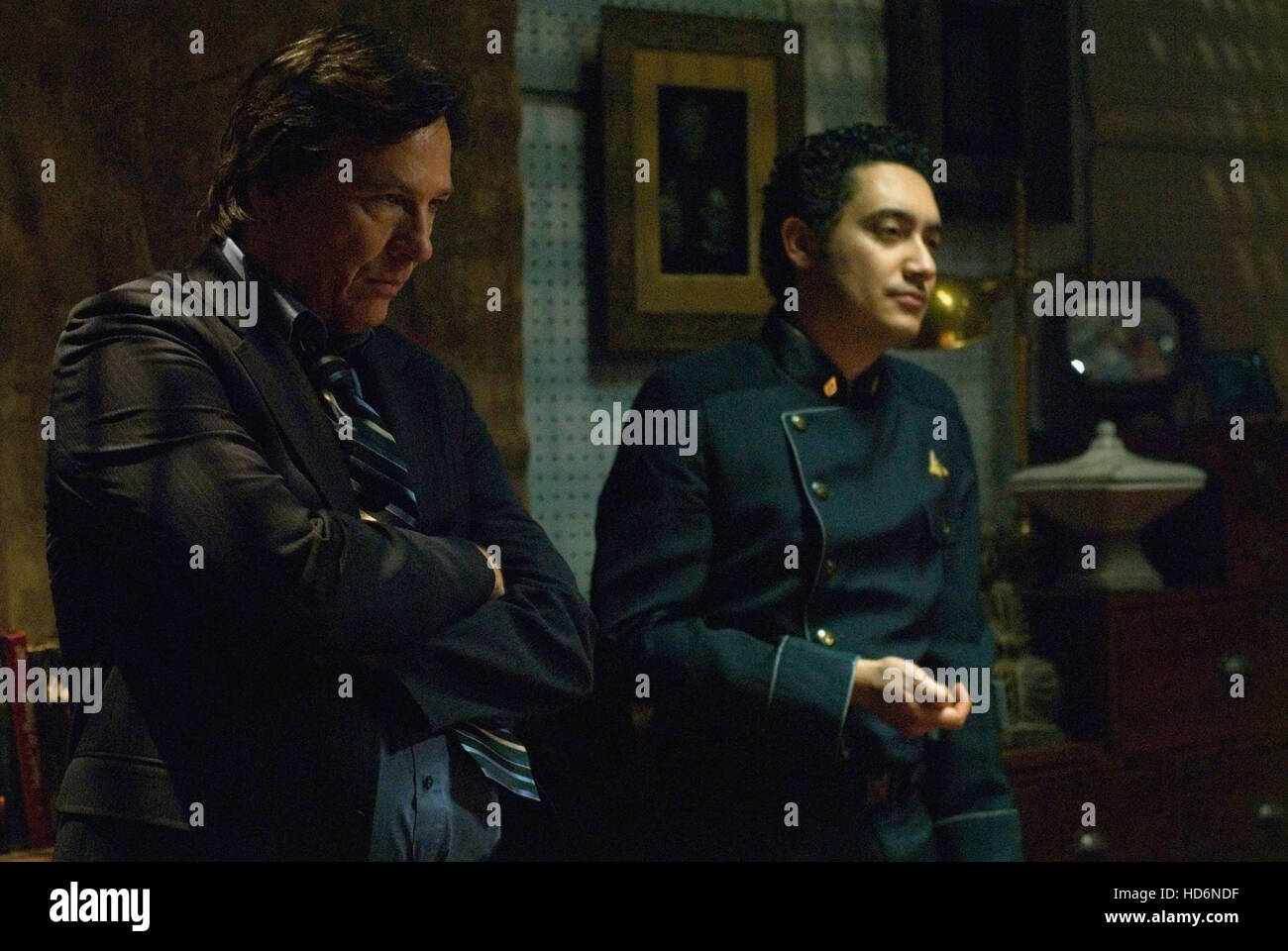
Alessandro Juliani is the acclaimed Canadian actor who provided the English voice for L Lawliet in the iconic anime series Death Note. His performance is widely recognized for its unique deadpan delivery, intellectual depth, and ability to capture the character’s eccentricities, helping to define the "Vancouver sound" of mid-2000s anime dubbing.
The Cultural Impact of the Death Note English Dub
As of 2026, Death Note remains a cornerstone of global pop culture, nearly two decades after its initial release. While many anime fans debate the merits of subtitles versus dubbing, the Death Note English dub is frequently cited as one of the few instances where the English voice cast is considered equal to, or in some circles superior to, the original Japanese performance. Central to this success was the casting of Alessandro Juliani as L, the world’s greatest detective.
The role of L presented a significant challenge for any voice actor. The character is a bundle of contradictions: he is socially awkward yet hyper-perceptive; he is physically frail-looking yet possesses immense mental stamina; and he is deeply secretive while being the center of a global manhunt. Juliani’s ability to navigate these nuances created a performance that felt grounded and hauntingly human, rather than a caricature of a "weird" detective. In the context of 2026, where voice acting has become a highly scrutinized art form, Juliani’s work stands as a masterclass in subtlety and character-driven performance.
Who is Alessandro Juliani?
To understand his performance as L, one must look at Alessandro Juliani’s broader career. Born in Vancouver, British Columbia, Juliani is a classically trained actor and singer with a background that spans stage, screen, and sound booth. Before and during his time on Death Note, he was perhaps best known to North American audiences for his live-action role as Lt. Felix Gaeta on the reimagined Battlestar Galactica.
This background in high-stakes, dramatic television likely informed his approach to voice acting. Unlike some voice actors who rely on exaggerated vocal tropes, Juliani brought a theatrical sensibility to his roles. His training as a singer (specifically a baritone) gave him exceptional control over his breathing and pitch, which allowed him to maintain L's signature low-energy, monotone delivery without losing the clarity of the dialogue.
Beyond Death Note, Juliani has contributed to numerous major franchises, including Ninjago (as Kapau and various voices) and several entries in the X-Men: Evolution and Transformers universes. However, his portrayal of L Lawliet remains his most discussed and analyzed contribution to the medium of animation.
The Vocal Crafting of L Lawliet
The "voice" of L is not merely about the pitch of the actor's throat; it is about the psychology behind the speech. When Alessandro Juliani stepped into the booth at Ocean Productions in Vancouver, he had to translate the specific mannerisms of a character who speaks with a perpetual lack of affect.
Cadence and Rhythm: The Sound of Genius
L’s speech patterns are erratic. He often pauses in the middle of sentences to process information or shifts his focus mid-thought. Juliani captured this by utilizing "vocal fry" and a soft, breathy delivery that suggested L was speaking more to himself than to the people in the room. This choice made L’s rare moments of intensity feel significantly more impactful. When L finally loses his cool or makes a definitive statement—such as the famous "I am L" reveal—the contrast in Juliani’s tone creates a palpable sense of tension.
The Internal Monologue Challenge
A significant portion of Death Note consists of internal monologues. In these scenes, L is not speaking aloud but is thinking through complex logical puzzles. Juliani had to differentiate between L’s "public" voice—which is often guarded and intentionally vague—and his "internal" voice, which is sharper and more decisive. By making these subtle shifts, Juliani helped the audience follow the intricate intellectual battle between L and Light Yagami (voiced by Brad Swaile).
Critical Comparison: Kappei Yamaguchi vs. Alessandro Juliani
In the world of anime, the original Japanese seiyuu (voice actor) often sets the template for the character. For L, that actor was Kappei Yamaguchi, a legend in the industry known for roles like Inuyasha and Usopp. Yamaguchi’s L was raspier and perhaps slightly more "alien" in its detachment.
Juliani took a different approach. He grounded L in a specific type of intellectual weariness. While Yamaguchi’s L felt like a creature from another world, Juliani’s L felt like a man who had simply stayed up for three weeks straight on a diet of pure sugar. This "exhausted genius" aesthetic resonated deeply with Western audiences and helped make L one of the most cosplayed and beloved characters in the 2000s anime boom. In retrospective reviews up to 2026, critics often note that Juliani’s performance feels more "modern" and less reliant on typical anime archetypes than many of his contemporaries.
Essential Episodes for Juliani’s Performance
To truly appreciate the range Alessandro Juliani brought to the role, viewers should look at specific pivotal episodes. The performance evolves from a mysterious voice behind a computer screen to a tragic figure facing his own mortality.
- Episode 2: "Confrontation" – This is the audience's first real introduction to L's intellect. Juliani’s delivery during the Lind L. Tailor broadcast is masterful, moving from calm explanation to a chilling declaration of war against Kira.
- Episode 9: "Encounter" – The scene where L introduces himself to Light at the university entrance exam. The casual, almost bored way Juliani says, "I am L," is one of the most iconic moments in voice acting history.
- Episode 25: "Silence" – The emotional climax of L’s arc. Juliani’s performance here is subdued and melancholic, capturing the character’s unspoken realization of his fate. The scene on the roof in the rain, where L talks about the sound of bells, remains a high-water mark for the series.
Historical Context: The Ocean Productions Era
The success of Juliani as L cannot be separated from the environment in which it was created. During the mid-2000s, Ocean Productions (based in Vancouver) was a powerhouse in the anime industry. They were known for a "naturalistic" style of dubbing that differed from the more cartoony or high-energy styles often found in US-based dubs of the time.
Under the direction of Karl Willems, the Death Note dub benefited from a cast of actors who had extensive experience in live-action film and theater. This resulted in a series that felt more like a prestige television drama than a standard animated show. The chemistry between Alessandro Juliani and Brad Swaile (Light) is legendary, despite the fact that in voice acting, performers often record their lines separately. Their voices complemented each other perfectly: Swaile’s sharp, arrogant, and increasingly manic tone provided the perfect foil to Juliani’s low-key, analytical, and steady delivery.
Technical Specifications of the Role
The technical demands of voicing L involved rigorous adherence to lip-syncing (ADR) while maintaining a very specific vocal texture. Below is a summary of the technical and career highlights related to this role.
| Feature | Details |
|---|---|
| Series | Death Note (2006–2007) |
| Studio | Ocean Productions (Vancouver, Canada) |
| Voice Director | Karl Willems |
| Primary Foil | Brad Swaile (Light Yagami) |
| Vocal Style | Deadpan, monotone, intellectual, breathy |
| Key Awards/Recognition | Multiple "Best Male Lead" nominations in fan polls |
| Other Major Roles | Felix Gaeta (Battlestar Galactica), Kapau (Ninjago) |
| Musical Training | Operatic Baritone / Musical Theater |
The Legacy in 2026: Why It Still Matters
As we look back from 2026, the anime industry has changed significantly. AI-assisted dubbing and simultaneous global releases have become the norm. However, the performance of Alessandro Juliani as L remains a primary argument for the irreplaceable value of human acting. There are nuances in Juliani's performance—the slight tremor in a voice when L is frustrated, the rhythmic clicking of his tongue, the precise timing of a sigh—that represent the peak of the craft.
Furthermore, Juliani’s L helped bridge the gap for many people who were not traditional anime fans. The "prestige" feel of the dub made it accessible to fans of crime procedurals and psychological thrillers. Even two decades later, when new fans discover Death Note on streaming platforms, the English dub remains the preferred way to watch for a vast segment of the population, largely due to the iconic status of the L and Light performances.
Alessandro Juliani’s Perspective on the Role
In various interviews and convention appearances over the years, Juliani has expressed a deep fondness for the character. He has noted that playing L was a unique experience because the character is so physically restricted—always hunched over, crouching on chairs—which required Juliani to find ways to convey all of that physical tension through sound alone. He has often joked about the amount of "sugar-eating" sounds he had to record, which became a staple of the character’s auditory identity.
For fans, Juliani’s accessibility and his respect for the source material have cemented his status as a "fan favorite." He has appeared at numerous "Death Note Reunions" and retrospective panels, consistently highlighting the collaborative nature of the Vancouver voice acting community.
Frequently Asked Questions
Did Alessandro Juliani voice L in the live-action Death Note movies?
Yes, Alessandro Juliani reprised his role as the English voice of L in the English dubs of the Japanese live-action films, specifically Death Note (2006) and Death Note: The Last Name. This provided a sense of continuity for fans of the anime who wanted to see the live-action versions.
How did Juliani get the role of L?
Juliani was a regular performer at Ocean Productions. During the casting for Death Note, the directors were looking for someone who could sound highly intelligent without sounding arrogant. Juliani's ability to balance curiosity with a detached monotone won him the role during the audition process.
Is Alessandro Juliani still voice acting in 2026?
Yes, as of 2026, Alessandro Juliani remains active in the entertainment industry. While his focus has shifted at times toward stage acting and musical performance, he continues to provide voices for major animated series and video games, often sought after for characters that require an intellectual or sophisticated vocal presence.
What is the "Vancouver Sound" in anime dubbing?
The "Vancouver Sound" refers to the specific style of dubbing produced by studios like Ocean Productions in the late 90s and 2000s. It is characterized by naturalistic acting, high-quality scripts, and the use of actors with significant live-action and theatrical backgrounds, of which Alessandro Juliani is a prime example.
Who voiced L in the Japanese version?
In the original Japanese version of the Death Note anime, L is voiced by Kappei Yamaguchi. Both Yamaguchi and Juliani are highly respected for their different but equally valid interpretations of the character.
Summary and Recommendation
For anyone interested in the art of voice acting or the history of anime in the West, Alessandro Juliani’s performance as L Lawliet is essential viewing. It serves as a benchmark for how to adapt a complex, beloved character for a different language and culture without losing the essence of what made the character special in the first place.
If you are a new fan starting Death Note in 2026, it is highly recommended to experience the series with the English dub at least once. Pay close attention to the way Juliani handles the "internal logic" scenes; it provides a deeper layer of understanding to L’s character that is often lost in translation. For seasoned fans, revisiting the series with a focus on Juliani’s vocal technicality offers a fresh appreciation for a show that has truly stood the test of time.