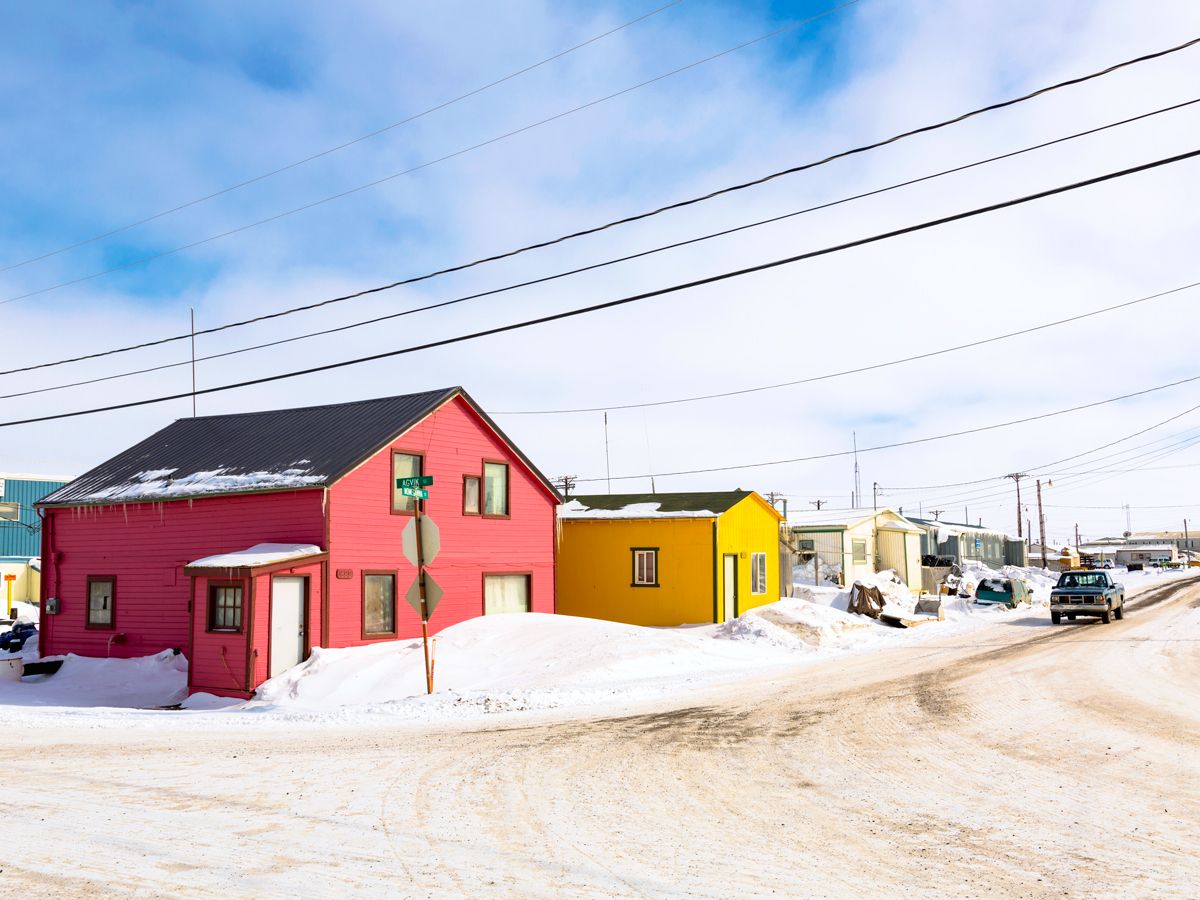
Alaska’s 24-hour darkness, scientifically known as the Polar Night, occurs when the sun remains below the horizon for more than 24 hours. This phenomenon is caused by the Earth’s 23.5-degree axial tilt, which tilts the Northern Hemisphere away from the sun during winter, preventing sunlight from reaching regions north of the Arctic Circle.
The Mechanics of the Polar Night: Why Alaska Goes Dark
To understand why portions of Alaska experience 24-hour darkness, one must first look at the relationship between the Earth and the sun. Our planet does not sit upright as it orbits the sun; instead, it is tilted on its axis at an angle of approximately 23.5 degrees. As the Earth makes its annual journey, this tilt remains constant in its orientation relative to distant stars, which means different parts of the planet receive varying amounts of direct sunlight throughout the year.
During the winter solstice—the point at which the Northern Hemisphere is tilted at its maximum distance away from the sun—the region around the North Pole is shrouded in shadow. The Arctic Circle, located at approximately 66.33° North latitude, marks the southernmost boundary where the sun does not rise at least once a year. As you move further north from this line toward the pole, the duration of this darkness increases significantly.
In 2026, as in every year, the geometry of the solar system dictates that the sun’s rays simply cannot "bend" over the curve of the Earth to reach these high latitudes during the winter months. Because the sun stays below the horizon, these regions enter a period of prolonged night. However, it is a common misconception that "24-hour darkness" means pitch-black conditions for the entire duration. In reality, atmospheric conditions and the specific latitude of a town determine exactly how much light is visible.
Understanding the Role of Axial Tilt and Orbit
The Earth’s orbit is slightly elliptical, but the primary driver of the seasons—and the Polar Night—is the axial tilt. If the Earth had no tilt, every location on the planet would experience roughly 12 hours of daylight and 12 hours of darkness every day of the year. Because of the tilt, the "subsolar point" (the spot on Earth where the sun is directly overhead) migrates between the Tropic of Cancer in the north and the Tropic of Capricorn in the south.
When the subsolar point is in the Southern Hemisphere (during the Northern Hemisphere's winter), the Arctic is effectively "behind" the curve of the Earth relative to the sun. This creates a shadow zone. The further north a city like Utqiagvik (formerly Barrow) is, the deeper it sits within that shadow zone.
According to NASA’s Earth Observatory, this tilt is also responsible for the Midnight Sun in the summer. The two phenomena are two sides of the same coin: in June, the North Pole is tilted toward the sun, resulting in 24 hours of light; in December, it is tilted away, resulting in 24 hours of darkness.
Defining the Shades of Darkness: Civil, Nautical, and Astronomical Twilight
One of the most important aspects of "Alaska's 24-hour darkness" is that it is rarely completely black for 24 hours a day. Meteorologists and astronomers divide twilight into three distinct phases based on how many degrees the sun is below the horizon. Even when the sun does not "rise," its light still hits the upper atmosphere, scattering blue and pink hues across the sky.
Civil Twilight
This is the brightest phase of twilight. It occurs when the sun is between 0 and 6 degrees below the horizon. During civil twilight, there is enough natural light to perform most outdoor activities without artificial lighting. In many Northern Alaskan communities, several hours of "noon" are actually civil twilight, creating a surreal, perpetual dawn or dusk appearance.
Nautical Twilight
Nautical twilight occurs when the sun is between 6 and 12 degrees below the horizon. At this stage, the horizon is still visible at sea, and the outlines of landmasses can be seen, but most outdoor activities require artificial light. The sky is a deep, dark blue.
Astronomical Twilight
This occurs when the sun is between 12 and 18 degrees below the horizon. To the naked eye, the sky appears completely black, and it is dark enough for astronomers to observe faint stars and nebulae. Only during this phase—and when the sun is even lower—does Alaska experience "true" 24-hour darkness.
Geographic Variance: Where the Darkness Hits Hardest
The experience of the Polar Night varies wildly depending on where you are in the state. Alaska is massive, spanning over 18 degrees of latitude. While the northernmost tip experiences months of darkness, the southern panhandle (like Juneau or Ketchikan) never experiences a true Polar Night, though their winter days are incredibly short.
| Location | Latitude | Approx. Start Date | Approx. End Date | Total Days of Polar Night |
|---|---|---|---|---|
| Utqiagvik (Barrow) | 71.3° N | Nov 18/19 | Jan 22/23 | ~65–67 Days |
| Prudhoe Bay | 70.3° N | Nov 24 | Jan 18 | ~55 Days |
| Kaktovik | 70.1° N | Nov 25 | Jan 17 | ~53 Days |
| Kotzebue | 66.9° N | Dec 21 | Dec 22 | ~1–2 Days |
| Fairbanks | 64.8° N | N/A | N/A | 0 (Min. 3.5 hrs light) |
| Anchorage | 61.2° N | N/A | N/A | 0 (Min. 5.5 hrs light) |
Utqiagvik: The Epicenter of the Polar Night
As the northernmost city in the United States, Utqiagvik is the most famous location for 24-hour darkness. In mid-November, residents gather to watch the final sunset of the year. The sun will not peek over the horizon again until late January. In 2026, the community continues its tradition of celebrating the "return of the sun" with festivals and school events once the first sliver of light appears on the horizon.
Kotzebue and the Arctic Circle Boundary
Kotzebue sits just barely north of the Arctic Circle. Because of its position, it only experiences the Polar Night for a very brief window around the Winter Solstice (December 21). In some years, due to atmospheric refraction—where the Earth's atmosphere bends the sun's rays—the sun may technically be visible even when it is geometrically below the horizon, potentially reducing the "true" darkness to just a single day or even a few hours.
Living in the Shadow: The Biological and Psychological Impact
Human biology is deeply tied to the cycle of light and dark. The absence of sunlight for months at a time presents significant challenges for the residents of Northern Alaska. The primary concern is the disruption of the circadian rhythm, the internal clock that regulates sleep, hormone production, and mood.
Seasonal Affective Disorder (SAD)
Many Alaskans experience a form of depression known as Seasonal Affective Disorder (SAD). Without sunlight, the brain produces less serotonin (the "feel-good" hormone) and more melatonin (the hormone that induces sleep). This can lead to lethargy, oversleeping, and persistent low mood. To combat this, light therapy—using "happy lamps" that mimic 10,000 lux of sunlight—is a standard part of life in the north.
Vitamin D Deficiency
Sunlight is the primary source of Vitamin D for most humans. During the Polar Night, it is impossible for the body to synthesize Vitamin D naturally. Residents must rely on supplements and diets rich in fatty fish (like salmon or muktuk) to maintain bone health and immune function. The National Institutes of Health (NIH) emphasizes that Vitamin D is crucial for preventing a host of long-term health issues, making supplementation mandatory for those living in the Arctic.
Cultural Adaptation and Daily Life
Despite the challenges, Alaskans have adapted to the darkness with resilience and creativity. In 2026, infrastructure in cities like Utqiagvik is designed specifically for these conditions.
- Bright Utilities: High-intensity discharge (HID) and LED streetlights are utilized to keep public spaces safe. Many buildings use warm-spectrum lighting to make interiors feel more inviting.
- Indoor Recreation: Because outdoor activities are limited by both darkness and extreme cold, community centers and school gyms become the heart of social life. High school basketball is a major event during the winter months, drawing entire towns together.
- The "Slow" Season: For some, the Polar Night is a time for reflection, traditional crafts (like ivory carving or skin sewing), and storytelling. It is a period of rest after the frantic activity of the summer whaling and fishing seasons.
Wildlife and the Environment
Animals in Northern Alaska have evolved unique strategies to handle the 24-hour darkness. While humans struggle with the lack of light, many predators thrive.
- Polar Bears: The darkness provides excellent cover for hunting seals on the sea ice. Polar bears do not hibernate in the traditional sense; they remain active throughout the winter, utilizing their keen sense of smell.
- Arctic Foxes: Their coats turn snow-white to provide camouflage against the dark, snowy landscape. They often follow polar bears to scavenge remains.
- Hibernation: Many smaller mammals, such as the Arctic ground squirrel, enter a state of true hibernation, dropping their body temperature below freezing to survive the months of darkness and cold.
According to the Alaska Department of Fish and Game, the lack of light also affects the marine ecosystem. Phytoplankton growth stalls during the darkness, which in turn slows the entire food chain, leading to a period of "biological dormancy" in the Arctic waters.
The Tourism Perspective: Chasing the Aurora
While 24-hour darkness might sound unappealing to some, it is the peak season for Aurora Borealis (Northern Lights) tourism. Because the sky remains dark for so much of the day, the window for viewing the aurora is vastly expanded. In Fairbanks or further north, it is possible to see the lights as early as 4:00 PM or as late as 9:00 AM.
The contrast of the vibrant green and purple lights against the absolute black of the Polar Night is a primary draw for photographers and travelers. In 2026, aurora forecasting has become highly sophisticated, allowing visitors to time their trips to coincide with solar maximum cycles, which increase the frequency and intensity of the lights.
Common Misconceptions About Alaska's Darkness
1. Is it dark in the whole state? No. This is the most common myth. Only the roughly one-third of Alaska that lies north of the Arctic Circle experiences 24-hour darkness. Anchorage and Fairbanks still see the sun every day, even if only for a few hours.
2. Is it always "pitch black"? As discussed, twilight provides a significant amount of light. Even in the middle of the Polar Night, there are usually 3–6 hours of "functional" light where the sky glows with deep blues and oranges, even if the sun's disk is not visible.
3. Does the darkness cause permanent health issues? While the lack of light is a stressor, most residents find that with proper Vitamin D supplementation and light therapy, the effects are temporary and manageable.
FAQ: Alaska's 24-Hour Darkness
What is the official name for 24-hour darkness?
The scientific term is Polar Night. It refers specifically to any period where the sun remains below the horizon for more than 24 hours. The opposite phenomenon, where the sun never sets, is called the Midnight Sun or Polar Day.
When does the darkness start and end in Alaska?
The timing depends on the latitude. In the northernmost town of Utqiagvik, it begins around November 18 and ends around January 23. Further south, near the Arctic Circle, it may only occur for a day or two around the Winter Solstice on December 21.
Can you see the Northern Lights during the 24-hour darkness?
Yes, this is actually the best time to see them. Because the sky is dark for a longer period, the opportunity to view the Aurora Borealis is much higher than in the shoulder seasons or the summer, when the sky is too bright.
Is it 24-hour darkness in Fairbanks?
No. Fairbanks is located south of the Arctic Circle at approximately 64.8° N. While its winter days are very short—reaching a minimum of about 3 hours and 41 minutes of sunlight on the solstice—the sun still rises and sets every single day.
How do people wake up without the sun?
Most residents use light-up alarm clocks (sunrise simulators) that gradually brighten the room with artificial light to simulate a natural sunrise. This helps regulate the body’s internal clock and makes it easier to wake up in the absence of natural daylight.
Practical Recommendations for Visitors or New Residents
If you find yourself in Northern Alaska during the Polar Night, preparation is essential. To maintain your health and morale, prioritize Vitamin D3 supplements and invest in a high-quality SAD lamp. Establish a strict routine; without the sun to signal the start and end of the day, it is easy to slip into an irregular sleep schedule, which can exacerbate the "winter blues."
For those visiting for tourism, focus on the unique beauty of the "Blue Hour"—that period of deep twilight that creates stunning photographic opportunities. Embrace the local culture of indoor gatherings and community events, which are designed to keep spirits high during the longest nights of the year.