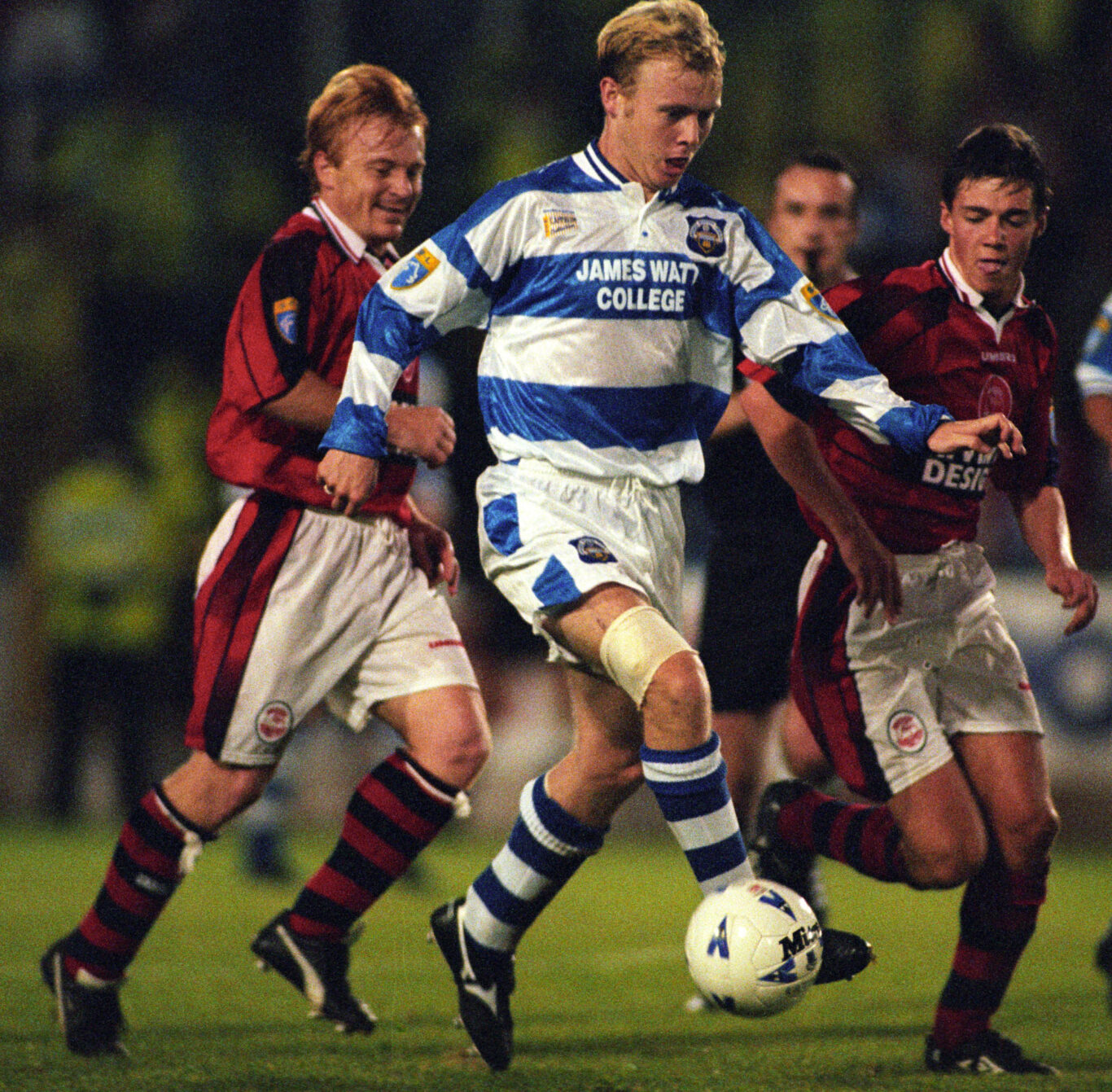
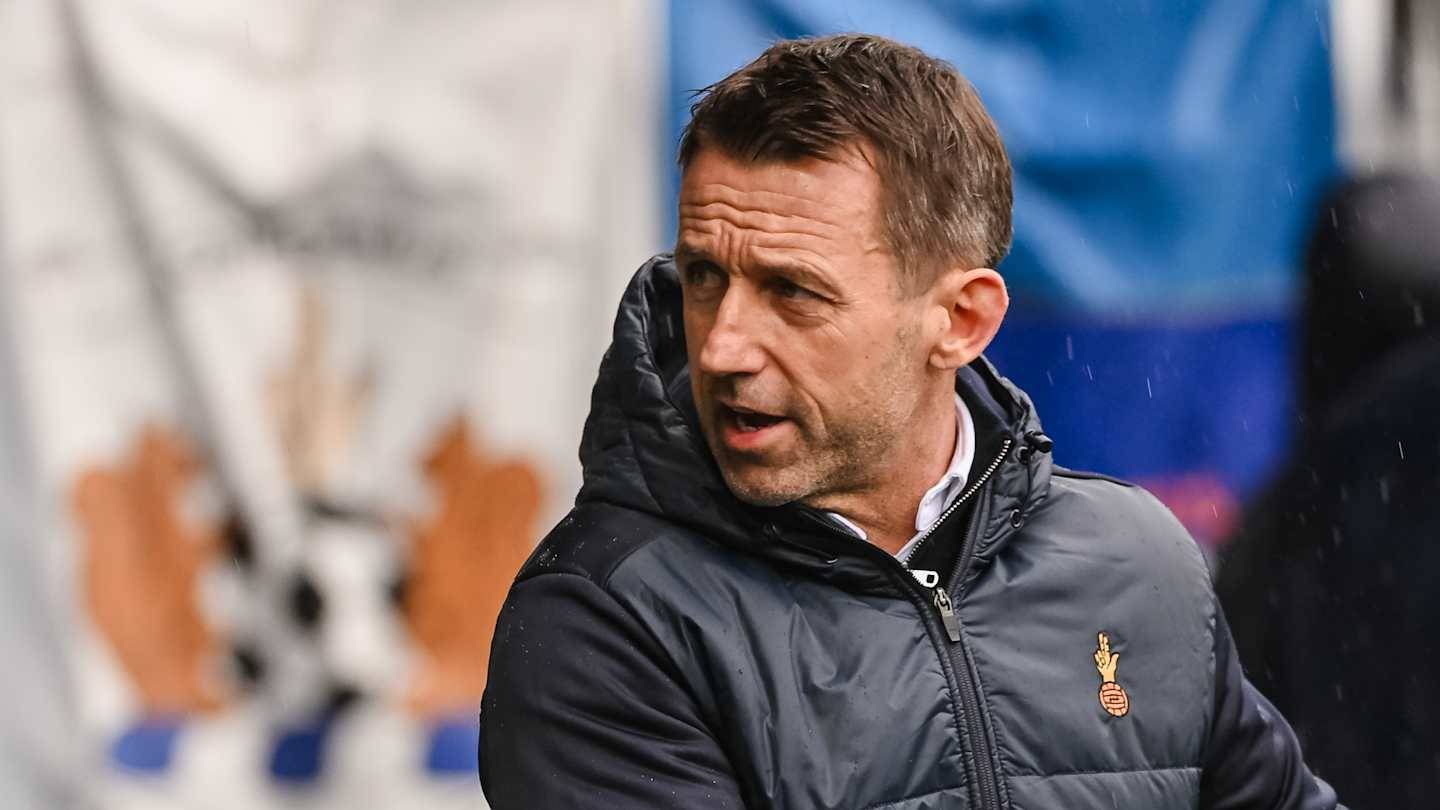
Alan Robertson is a cornerstone of Kilmarnock Football Club’s history, serving as a record-breaking defender and a visionary Head of Youth Development. With over 570 appearances as a player and decades spent nurturing international-caliber talent, he remains the primary architect of the club’s modern professional standards and player-pathway success.
The Formative Years: From Prospect to Permanent Fixture
To understand the legend of Alan Robertson, one must look back to the early 1970s, a period of significant transition for Scottish football. Robertson joined Kilmarnock as a young defender at a time when the club was striving to maintain its status among the elite of the Scottish game. His debut in the 1971-72 season marked the beginning of an era characterized by remarkable physical durability and an unwavering loyalty that has become increasingly rare in the modern professional landscape.
During his initial seasons, Robertson established himself not through flashy theatrics, but through the "honest" defending that defined the Scottish First Division. He was a player who excelled in the air and possessed a keen sense of positional awareness, often neutralizing more physically imposing strikers through anticipation rather than brute force. By the mid-1970s, he was no longer just a prospect; he was the first name on the team sheet, representing the backbone of a side that navigated the highs of top-flight competition and the lows of relegation battles.
Defensive Prowess and Tactical Reliability
Robertson’s playing style was a masterclass in the traditional Scottish "centre-half" or "full-back" roles, depending on the tactical needs of the manager. In an era where pitches were often heavy and tackles were uncompromising, Robertson managed to maintain a level of consistency that stabilized the Kilmarnock backline for nearly two decades.
His ability to read the game allowed him to intercept passes and clear danger before it necessitated a desperate challenge. This tactical intelligence was a precursor to his later success as a coach. He understood the nuances of the offside trap, the importance of defensive communication, and the necessity of providing an outlet for midfielders when transitioning from defense to attack. For the fans at Rugby Park, Robertson represented security—a reliable presence who could be trusted to perform regardless of the opposition.
A Titan of the 572-Club: Robertson’s Playing Career
The most cited statistic regarding Alan Robertson is his extraordinary number of appearances. Totaling 572 competitive matches for Kilmarnock, he sits at the very top of the club’s all-time appearance list. Achieving this milestone required more than just talent; it required a professional discipline that saw him avoid major injuries and maintain peak fitness well into his thirties.
His playing career at Kilmarnock spanned from 1971 to 1988. During these seventeen years, Robertson witnessed the restructuring of the Scottish league system and the evolution of the game from a semi-professional atmosphere to a fully modernized industry. He was part of the 1973-74 and 1975-76 squads that earned promotion to the Premier Division, proving his worth as a leader during high-stakes campaigns.
Weathering the Storm: Relegations and Resurgence
A true legend is often defined by how they handle adversity. Kilmarnock suffered several relegations during Robertson’s tenure, yet his commitment to the blue and white stripes never wavered. While other players sought transfers to remain in the top flight, Robertson remained at Rugby Park, serving as the cultural glue that held the team together during difficult transitions.
This loyalty earned him a unique bond with the "Killie" faithful. He was a constant in a changing world, a bridge between the successful era of the 1960s and the rebuilding phases of the 1980s. When he finally moved on to brief spells with Exeter City and then into the junior ranks with Glenafton Athletic, he did so with the universal respect of every person associated with Ayrshire football.
The Architect of the Future: Transitioning to Youth Development
While his playing career alone would have secured his status as a legend, Alan Robertson’s second act at Kilmarnock was arguably even more influential. Upon returning to the club in a coaching capacity, he eventually took the reins as the Head of Youth Development. It was in this role that Robertson shaped the future of the club and, by extension, the Scottish National Team.
Under his guidance, the Kilmarnock youth academy became one of the most productive in Scotland. Robertson understood that a club of Kilmarnock’s size could not always compete financially with the Glasgow giants. Instead, the club had to "grow its own" talent. He implemented a scouting and training regime that prioritized technical ability, tactical flexibility, and, most importantly, professional character.
The "Naismith and Boyd" Era: Proof of Concept
The mid-2000s saw the fruition of Robertson’s labors. Players who had been scouted and mentored by him began to dominate the first team and eventually move on for significant transfer fees, ensuring the club's financial stability.
- Kris Boyd: Under Robertson’s watchful eye, Boyd developed into one of the most prolific goalscorers in Scottish history. Robertson’s influence was key in honing Boyd’s movement in the box and his psychological approach to the game.
- Steven Naismith: Perhaps the quintessential Robertson success story, Naismith’s technical skill and work rate were nurtured through the Kilmarnock youth ranks. His eventual move to Rangers and then the English Premier League (Everton, Norwich) provided a blueprint for other academy players.
- Craig Bryson and Shaun Dillon: These players exemplified the Robertson philosophy of being "ready for the first team." They weren't just talented; they were tactically prepared for the rigors of professional football.
The Alan Robertson Philosophy: Discipline and Development
Alan Robertson’s approach to youth coaching was never about immediate results on the pitch; it was about the long-term trajectory of the individual player. He was known for his firm but fair demeanor. He expected his youth players to adhere to strict standards of punctuality, dress, and conduct, believing that discipline off the pitch translated to discipline on it.
He also championed the idea of the "all-around footballer." Even if a player was a natural attacker, Robertson ensured they understood defensive responsibilities. This holistic approach ensured that when a Kilmarnock youth graduate reached the first team, they were not a "luxury" player but a functional part of a professional unit.
Integrating Academy Graduates into the First Team
One of the hardest hurdles in football is the gap between the U-18s and the senior squad. Robertson worked tirelessly to bridge this gap, maintaining constant communication with first-team managers like Jim Jefferies and later Kenny Shiels. He acted as an advocate for the youth players, ensuring they received opportunities in the first team when their development warranted it.
This synergy between the academy and the senior squad became the hallmark of Kilmarnock FC. It created a culture where local boys believed they could progress from the local parks to Rugby Park, a dream that Robertson himself had lived and then facilitated for others.
Recognition and the Kilmarnock Hall of Fame
In recognition of his immense service, Alan Robertson was an inaugural inductee into the Kilmarnock FC Hall of Fame. This honor was not merely for his 572 appearances but for the half-century of life he dedicated to the institution. His name is frequently mentioned alongside other greats like Willie Culley and Eddie Morrison, yet Robertson’s dual impact as player and developer gives him a unique standing.
In 2026, looking back at his legacy, it is clear that the modern infrastructure of Kilmarnock owes much to the foundations he laid. Even after his formal retirement from his youth development role, his influence persists in the coaching manuals and the professional standards still utilized at the club's training grounds.
| Metric | Detail | Significance |
|---|---|---|
| Total Appearances | 572 (Competitive) | All-time club record holder. |
| Years as Player | 1971 – 1988 | Spanned nearly two decades of Scottish football history. |
| Primary Position | Defender (Centre-half/Full-back) | Known for reliability and tactical intelligence. |
| Key Role Post-Playing | Head of Youth Development | Mentored international stars and generated club revenue. |
| Notable Graduates | Kris Boyd, Steven Naismith, Craig Bryson | Proved the efficacy of the Kilmarnock Academy. |
| Honors | Hall of Fame Inductee | Permanent recognition of legendary status. |
Comparative Analysis: Robertson vs. The Modern Era
To appreciate Robertson’s 572 games, one must compare it to the modern era of player mobility. In 2026, it is rare for a player to reach 200 games for a single club before seeking a transfer. Robertson’s tenure represents a level of loyalty that is nearly extinct. He played through an era where the financial rewards were modest compared to today, driven instead by a genuine connection to the local community and the club.
Furthermore, his transition into youth development sets him apart from many "legends" who simply retire and leave the game. Robertson chose the difficult path of mentorship. Coaching youth is often a thankless task with no immediate glory, yet he dedicated decades to it because he understood it was the lifeblood of Kilmarnock FC.
Common Misconceptions and Troubleshooting the Legacy
When researching "Alan Robertson," beginners sometimes confuse him with other public figures of the same name. It is vital to specify "Alan Robertson Kilmarnock" to find his footballing records.
Another common point of confusion is his total game count. Some sources may cite different numbers depending on whether they include "friendlies" or "minor cup" matches. However, the official club record for competitive matches stands at 572. This includes League, Scottish Cup, and League Cup matches. Any figure significantly lower likely omits one of these categories.
Frequently Asked Questions
How many goals did Alan Robertson score for Kilmarnock? As a defender, scoring was not his primary duty. He scored approximately 13 league goals during his career. His most famous contributions were defensive blocks and leadership rather than goal-scoring prowess.
When did Alan Robertson retire from his coaching role? Alan Robertson stepped down from his full-time role as Head of Youth Development in the early 2010s, though he remained a consultant and a familiar face at Rugby Park for several years thereafter. His retirement marked the end of an era for the youth academy.
Did Alan Robertson ever play for the Scotland National Team? While he was widely respected as one of the most consistent defenders in the league, he did not earn a full senior cap for Scotland. This is often attributed to the incredible depth of defensive talent Scotland possessed during the 1970s and 80s (the era of Miller, McLeish, and Hansen).
Who succeeded Alan Robertson in the youth department? Several coaches have taken the mantle since his departure, but the structure he built remains the foundation. The club continues to prioritize the "Robertson Model" of integrating youth into the first team to remain competitive in the Scottish Premiership.
Was Alan Robertson ever the first-team manager? No, Robertson never took the permanent role of first-team manager. He preferred the developmental aspect of the game, focusing on molding young players rather than the high-pressure, result-oriented environment of senior management.
Practical Recommendation for Fans and Historians
For those looking to honor or learn more about Alan Robertson’s legacy in 2026, the best course of action is to visit the Kilmarnock FC Museum at Rugby Park. The museum houses memorabilia from his playing days, including match-worn jerseys and documents from his coaching tenure. Additionally, the club’s official "Hall of Fame" publications provide in-depth interviews and statistical breakdowns of his 572 appearances.
If you are a young coach or aspiring player, studying the "Robertson Era" of the Kilmarnock academy provides a masterclass in how to build a sustainable footballing career through discipline, loyalty, and a commitment to fundamentals. His life serves as a reminder that being a "legend" is not just about what you do for yourself, but what you leave behind for the next generation.