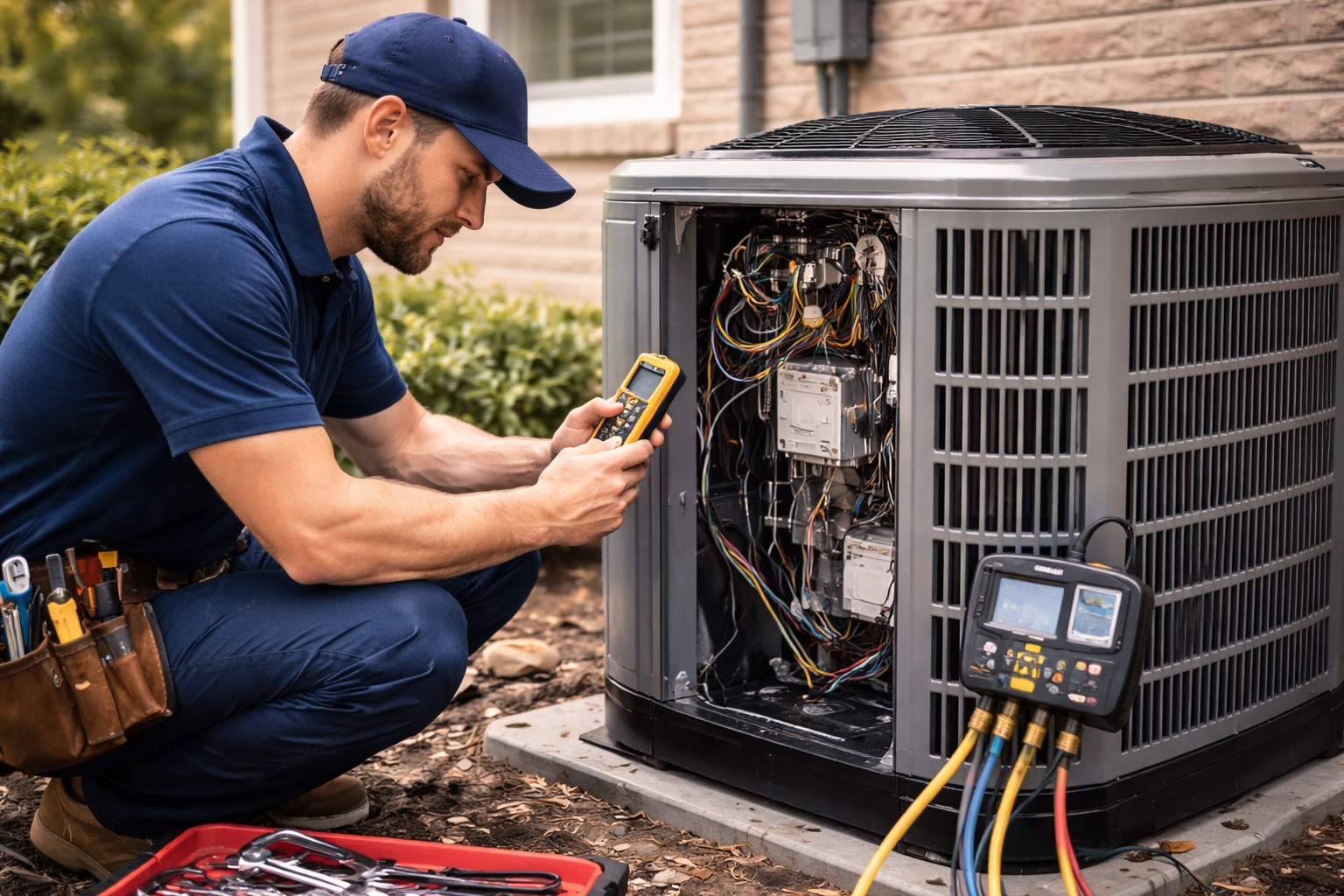
Air conditioning service in Jacksonville, Florida, is a comprehensive professional intervention designed to maintain, diagnose, or repair HVAC systems in a high-humidity, subtropical environment. It encompasses preventative maintenance, refrigerant management, and mechanical repairs to ensure peak efficiency and indoor air quality during the region's extended cooling season.
The necessity of air conditioning in Northeast Florida cannot be overstated. With Jacksonville’s average summer temperatures frequently climbing into the 90s and humidity levels often exceeding 70%, an HVAC system is not merely a luxury; it is critical infrastructure for health and property preservation. In 2026, the complexity of these systems has increased due to evolving environmental regulations and advanced smart-home integrations, making professional service more technical than ever before.
Understanding the Unique Demands of the Jacksonville Climate
Jacksonville’s geography creates a specific set of challenges for residential and commercial cooling systems. As a coastal city, the air contains a high concentration of salt, particularly in areas like Jacksonville Beach, Atlantic Beach, and Neptune Beach. Salt air is highly corrosive to the aluminum fins and copper tubing found in outdoor condenser units. Without regular service to rinse away salt deposits and apply protective coatings, a system that might last 15 years inland may fail in as few as seven to ten years near the coast.
Furthermore, Jacksonville sits in a "humid subtropical" zone. This means the air conditioner's primary job isn't just lowering the temperature; it is dehumidification. When a system is not serviced correctly, it fails to remove moisture effectively, leading to "sticky" indoor air and, eventually, biological growth (mold and mildew) within the ductwork and on the evaporator coils. Professional service in 2026 prioritizes the latent heat load (moisture removal) as much as the sensible heat load (temperature reduction).
The Core Components of Professional AC Service
When a technician arrives for an "AC service" call in Duval County, the scope of work generally falls into three categories: preventative maintenance, diagnostic troubleshooting, and corrective repair.
Preventative Maintenance (The Tune-Up)
Preventative maintenance is a scheduled visit, usually performed twice a year—once before the grueling summer heat and once before the brief winter cooling period. In 2026, standard maintenance protocols include:
- Condensation Management: Technicians clear the primary and secondary drain lines. In Florida’s humidity, algae and sludge buildup in these lines are the leading causes of indoor water damage and system shutdowns.
- Coil Sanitization: The evaporator coil (indoor) and condenser coil (outdoor) are cleaned. Dirt on these coils acts as an insulator, forcing the compressor to work harder and increasing energy bills.
- Electrical Inspection: This involves checking the "tightness" of connections and measuring the "draw" of motors. Capacitors, which store energy to start the motors, are tested for capacitance levels, as they are the most common component to fail during a Jacksonville heatwave.
- Refrigerant Level Verification: Technicians check the system’s charge. Too little refrigerant indicates a leak; too much can damage the compressor.
Diagnostic Inspections
If a system is not cooling or is making unusual noises, the service shifts to a diagnostic phase. Technicians use specialized tools, such as digital manifold gauges and thermal imaging cameras, to identify the root cause. In 2026, many units in Jacksonville are equipped with Bluetooth-enabled diagnostic boards that allow technicians to see a history of error codes, much like a mechanic scanning a car’s computer.
Corrective Repairs
Once a fault is identified, the service involves the physical replacement of parts. This might range from simple contactor replacements to complex "heavy lifts" like replacing a variable-speed blower motor or a failed compressor. In the Jacksonville market, repair speed is critical, and most reputable service providers maintain local warehouses to combat supply chain delays that can be dangerous during peak summer.
Why Humidity Management is the Priority in Northeast Florida
In Jacksonville, the "S" in HVAC (Specialization) often focuses on the condensate system. A central air conditioner can pull several gallons of water out of the air in a single day. If the service technician does not ensure the system is level and the P-trap is clear, that water stays in the unit.
Service in 2026 often includes the installation or cleaning of "UV lights" or "Ionizers" within the air handler. These devices are essential in Florida because the damp environment inside an AC closet is a breeding ground for microbes. A technician will check these bulbs and ensure the air filtration system—whether it is a standard MERV 8 filter or a high-efficiency electronic air cleaner—is not restricting airflow, which would otherwise cause the coils to freeze over.
Licensing and Certification Requirements for Jacksonville Technicians
In the state of Florida, air conditioning service is strictly regulated. Homeowners should verify that any service provider is licensed through the Florida Department of Business and Professional Regulation (DBPR).
There are two primary license types:
- Class A State Certified Contractor: Can work on any size unit anywhere in the state.
- Class B State Certified Contractor: Limited to systems up to 20 tons (generally sufficient for all residential and most light commercial work).
Beyond state licensing, technicians must hold an EPA 608 Certification. This is a federal requirement under the Clean Air Act for any individual who handles refrigerants. In 2026, this is particularly important as the industry transitions away from R-410A toward newer A2L refrigerants (like R-454B and R-32), which have lower Global Warming Potential but require specific handling due to mild flammability.
Comparing AC Service Types: Maintenance vs. Repair vs. Installation
Understanding the difference between these services helps Jacksonville residents budget correctly and set expectations.
| Service Type | Primary Goal | Frequency | Estimated Cost Range (2026) |
|---|---|---|---|
| Routine Maintenance | Longevity & Efficiency | Bi-Annually | $125 – $250 per visit |
| Diagnostic/Service Call | Identifying a Fault | As Needed | $85 – $180 (Diagnostic fee) |
| Minor Repair | Fix electrical/small parts | As Needed | $200 – $600 |
| Major Repair | Compressor/Coil/Motor | As Needed | $800 – $2,500 |
| System Replacement | New equipment installation | Every 10–15 Years | $7,000 – $15,000+ |
The Impact of the 2026 Refrigerant Transition
By 2026, the HVAC landscape in Jacksonville has been significantly altered by the EPA’s AIM Act. The production of R-410A, the standard refrigerant for the previous two decades, has been drastically reduced.
For homeowners seeking service, this means:
- Increased Costs for Older Systems: Recharging an older R-410A system is more expensive as the supply of that refrigerant dwindles.
- New Equipment Standards: If a service technician determines a system is beyond repair, the new installation will likely use A2L refrigerants. These systems require new leak-detection sensors and specific venting, which are checked during a standard service call to ensure safety compliance.
Common Problems Specific to Jacksonville Homes
Service calls in the "Bold New City of the South" often encounter issues rarely seen in drier climates:
- Corroded Coils (Ants and Salt): Jacksonville is home to several species of ants that are strangely attracted to the electromagnetic fields in AC contactors. They can crawl into the electrical components and cause a short circuit. Service includes checking for pest intrusion.
- Float Switch Tripping: Because of the high humidity, if a drain line slows down even slightly, the "float switch" (a safety device) will cut power to the unit to prevent an overflow. This is the #1 reason for "my AC just stopped working" calls in Florida.
- Duct Sweating: When cold air passes through ducts located in a 130-degree Jacksonville attic, the exterior of the duct can "sweat" if the insulation is compromised. This can lead to ceiling stains and mold. Professional service involves inspecting the integrity of duct insulation.
How to Choose a Reliable HVAC Contractor in Duval County
When seeking "air conditioning service in jacksonville florida," residents should look for indicators of stability and expertise.
- Local Knowledge: A company based in Southside or Mandarin will understand the specific water table and soil issues (which affect outdoor unit leveling) better than a national conglomerate.
- NATE Certification: North American Technician Excellence (NATE) is the gold standard for individual technician knowledge.
- Load Calculations: If the service transitions into a recommendation for a new unit, ensure the company performs a "Manual J" load calculation. Jacksonville’s older homes in Riverside or Avondale have very different thermal properties than new builds in Nocatee.
- Emergency Availability: In Jacksonville, a broken AC in July is an emergency. Prioritize companies that offer 24/7 service or "preferred" status for maintenance plan members.
Energy Efficiency Standards and Rebates in 2026
Efficiency is measured by SEER2 (Seasonal Energy Efficiency Ratio 2). In the Southeast United States, the minimum SEER2 for new systems is 14.3 (equivalent to the old 15 SEER).
During a service visit, a technician can evaluate your system’s current efficiency. In 2026, many Jacksonville residents are eligible for federal tax credits under the Inflation Reduction Act, which provides significant incentives for switching to high-efficiency heat pumps. Service technicians should be able to provide the AHRI (Air-Conditioning, Heating, and Refrigeration Institute) certificate needed to claim these credits.
Frequently Asked Questions
How often should I change my air filter in Jacksonville?
In the Jacksonville climate, you should check your filter every 30 days. Because the system runs almost year-round, filters accumulate dust, pet dander, and pollen (which is particularly heavy in Florida) faster than in other regions. Using a high-quality pleated filter can help, but avoid "ultra-restrictive" filters unless your system’s blower motor is designed to handle the increased static pressure.
Is a maintenance plan worth the cost?
Yes, especially in Florida. Most Jacksonville HVAC companies offer "Maintenance Agreements" that include two visits per year, discounts on repairs, and priority service. Given that the average diagnostic fee is $100+, and a maintenance plan usually costs around $200 annually, the plan pays for itself if it prevents even one emergency repair.
Why is my AC freezing up in the middle of a Jacksonville summer?
A frozen evaporator coil is usually caused by one of two things: restricted airflow (a dirty filter or collapsed duct) or low refrigerant. In Jacksonville’s humidity, the ice can build up rapidly, eventually blocking all airflow and potentially damaging the compressor. Turn the system off immediately and call for service.
Can I perform my own AC service?
Homeowners can safely change filters and clear debris from the outdoor unit. However, legally and for safety, you should not attempt to service the electrical components or the refrigerant system. Florida law requires a licensed professional for these tasks, and DIY attempts often void manufacturer warranties.
Why does my AC smell like "dirty socks"?
This is known in the industry as "Dirty Sock Syndrome." It is caused by bacteria buildup on the evaporator coil. In Jacksonville’s damp environment, this is common. A professional service technician can treat the coils with a specialized antimicrobial cleaner to eliminate the odor.
Practical Recommendation
For Jacksonville residents, the most effective strategy for managing air conditioning is to move from a reactive to a proactive mindset. Do not wait for the system to fail during a July heatwave. Schedule a "Pre-Summer Performance Audit" in March or April. Ensure the technician specifically focuses on the condensate drain line and the "draw" of the capacitor. If your system is more than 12 years old, 2026 is an ideal time to consult with a licensed professional about the long-term viability of your unit versus the energy-saving benefits of a modern SEER2-compliant heat pump.