There is no universal age at which everyone should stop paying for life insurance; the decision depends on whether your financial obligations—such as debt, dependent support, or estate tax liabilities—have been fully met. Many individuals find that between ages 60 and 75, their need for coverage diminishes as mortgages are paid off, children become independent, and retirement savings grow sufficient to self-insure.
Understanding the Lifecycle of Life Insurance Needs
Life insurance is primarily a tool designed to replace lost income and cover financial liabilities during your peak earning and family-rearing years. As you transition through different life stages, your risk profile changes significantly. Understanding these shifts is the first step in determining when you can safely terminate your policy.
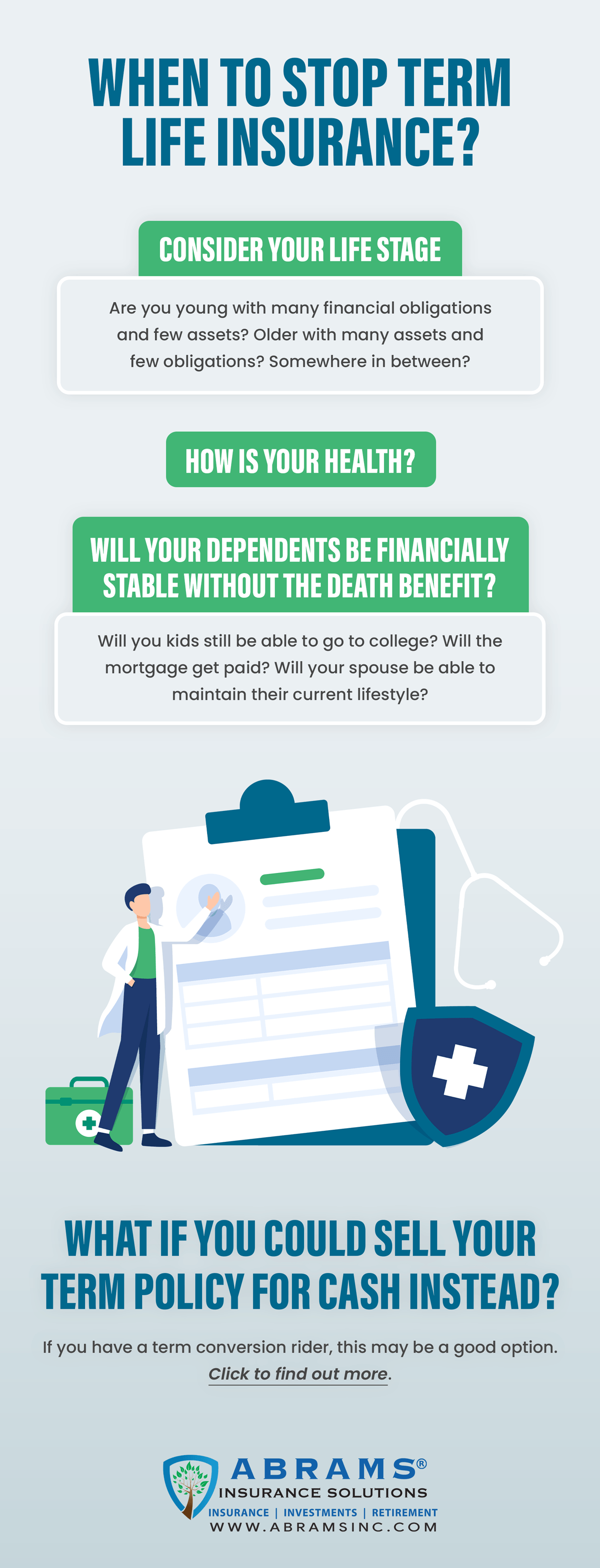
In your younger years, the purpose of life insurance is almost exclusively protection. If you have a mortgage, student loans, or young children, your death would create an immediate financial catastrophe for your dependents. In this phase, term life insurance is the standard, as it provides high coverage amounts at low premiums.
As you move into your 50s and 60s, you typically enter a "decumulation" phase regarding your liabilities. Your children have likely graduated, your home equity has increased, and your retirement portfolio is maturing. At this junction, the "human life value" calculation—the total expected earnings you would have provided to your family—drops toward zero. When your assets exceed your potential future debts and your dependents are financially self-sufficient, the fundamental reason for holding a traditional term life insurance policy effectively disappears.
Differentiating Policy Types: Term vs. Permanent Coverage
The strategy for "quitting" or stopping payments varies drastically based on the type of policy you hold. It is vital to recognize that term life and permanent (whole or universal) life insurance function under entirely different contractual frameworks.
Term Life Insurance Term policies are simple contracts. You pay a premium for a set number of years (e.g., 10, 20, or 30 years). Once the term expires, the coverage ends unless you renew it—usually at a significantly higher, age-adjusted premium. Most people stop paying for term insurance when the term expires or when they decide that they no longer need the death benefit. Because these policies have no cash value, "quitting" is as simple as stopping your premium payments; the policy will lapse, and no further obligation exists.
Permanent Life Insurance Whole and universal life insurance are designed to last your entire life. These policies include a savings component known as "cash value." If you stop paying premiums on these policies, you do not simply lose everything. Depending on the policy’s provisions, you may be able to:
- Surrender the policy: You receive the accumulated cash value minus any surrender charges.
- Reduced Paid-Up Option: You use the existing cash value to buy a smaller, "paid-up" death benefit that requires no future premiums.
- Premium Offset: If your cash value has grown sufficiently, some policies allow you to pay future premiums using the interest and dividends generated by the policy itself.
Key Financial Benchmarks for Stopping Coverage
Before canceling a policy, you must conduct a thorough financial audit. Do not rely on age alone as a metric; instead, rely on the status of your financial pillars.
- Debt Liquidation: If your mortgage is paid off and you have no significant personal or business debt, the primary reason for a large death benefit is gone.
- Spousal Security: Ensure that your spouse is not dependent on your income to maintain their standard of living. If your retirement savings and Social Security benefits (or pension) are sufficient to support them in your absence, you are "self-insured."
- Liquidity for Taxes: High-net-worth individuals sometimes use life insurance to pay estate taxes. If your estate is large enough to trigger federal or state inheritance taxes, you may need the policy to remain active to provide liquidity to your heirs, even well into your 80s.
- Final Expenses: Some people maintain a small permanent policy to cover funeral costs and burial expenses. However, if you have a liquid emergency fund or a dedicated savings account for these costs, a life insurance policy is often an inefficient way to pay for a funeral.
The Impact of Health Changes
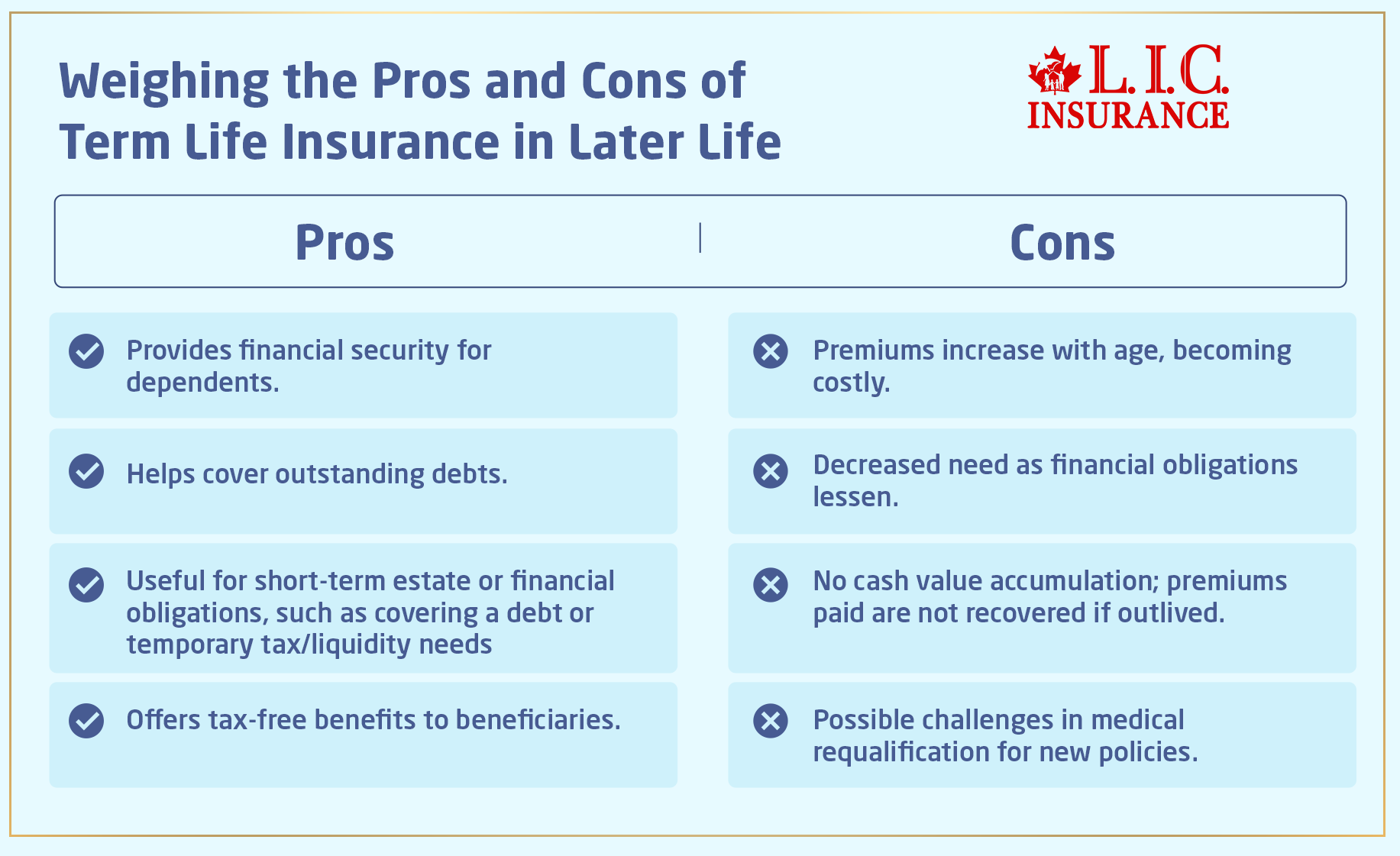
One often overlooked aspect of cancelling life insurance is the "insurability risk." If you are 65 and healthy, you might be tempted to cancel your policy because you feel you no longer need it. However, if your health declines unexpectedly at 70, you may regret losing that coverage.
While it is expensive to purchase new insurance in your later years, keeping an existing policy often locks in a premium rate based on your health at the time of original purchase. Before you stop paying, perform a "what-if" analysis: If you were to pass away in the next five years, would your current savings be enough to pay off all debts, maintain your spouse's lifestyle, and cover final expenses? If the answer is no, keeping the policy is a form of risk management, even if the premiums seem high.
Comparison of Financial Strategies
| Situation | Recommended Action | Risk Factor |
|---|---|---|
| Term policy expiring soon | Let it expire naturally | High (if debt is still present) |
| High-net-worth estate | Keep for tax liquidity | Low |
| Significant unpaid mortgage | Keep until balance is low | High |
| Children still in college | Keep until graduation | High |
| Financial independence | Cancel or surrender | Low |
Managing the Transition: Steps to Take
When you determine that you are ready to stop paying for insurance, follow a disciplined process to ensure you do not inadvertently trigger negative tax consequences or leave a gap in your estate planning.
- Request an In-Force Illustration: Contact your insurance carrier and request a current "in-force illustration." This document outlines how your policy will perform if you continue paying, what the surrender value is, and what happens if you stop paying premiums.
- Review the Surrender Charges: Many permanent policies have declining surrender charge schedules. If you are in the middle of a high-fee period, it may be financially wiser to wait two or three years before canceling.
- Consult a Fee-Only Financial Planner: An objective advisor can run a Monte Carlo simulation or a retirement cash-flow analysis to confirm that your assets are sufficient to withstand the loss of the death benefit.
- Execute the Cancellation in Writing: Never simply stop paying a permanent policy. If you have cash value, you should formally request a surrender or a policy conversion. Stopping payments on a policy with cash value can sometimes lead to a "forced" policy loan or other complications that you may want to avoid.
Common Mistakes to Avoid
The most common mistake is canceling a policy based on the "sunk cost fallacy." Many people think, "I have paid into this for 30 years, so I should keep it forever." This is incorrect. If the policy no longer serves a purpose, the premiums are effectively a waste of capital that could be better deployed in a high-yield savings account, an investment portfolio, or spent on retirement lifestyle improvements.
Another mistake is failing to account for inflation. A $250,000 policy might have seemed like a massive sum 25 years ago, but it buys significantly less today. If your goal is to leave a legacy to your children, analyze the purchasing power of the death benefit against the total premiums you will pay over the next decade. You may find that simply investing the premium amount annually yields a higher terminal value for your heirs than the insurance payout.
Frequently Asked Questions
Can I keep my term policy after the term expires? Most term policies offer a conversion privilege, allowing you to convert the term policy into a permanent policy without a new medical exam. However, the premiums for permanent insurance are significantly higher. Evaluate the cost-to-benefit ratio carefully before converting.
What happens if I stop paying my permanent policy premiums? Most permanent policies have a "Non-Forfeiture" clause. If you have enough cash value, the policy may use that value to pay premiums automatically. Once the cash value is exhausted, the policy will lapse unless you have specifically requested a "Reduced Paid-Up" option.
Should I keep life insurance for funeral costs? Generally, no. It is usually more cost-effective to set aside money in a high-yield savings account specifically for final expenses. Life insurance premiums, especially at older ages, often total more than the death benefit you would eventually receive.
Does social security affect my need for life insurance? Yes. For many, Social Security and pension income act as a "survivor benefit." If your spouse is eligible for a portion of your benefit after you pass, that income stream reduces the amount of life insurance capital required to maintain their standard of living.
Is it ever too late to stop paying? It is never too late to stop paying if the policy no longer serves a purpose. However, if you are nearing the end of your life and have a permanent policy, consider the tax implications of the death benefit versus the cash surrender value. In some cases, the death benefit is a more efficient transfer of wealth to heirs than the cash value.
Final Recommendation
The decision to stop paying for life insurance should be treated as a transition from a risk-transfer strategy to a self-insurance strategy. Begin by calculating your "net financial requirement"—your total assets minus your liabilities and your spouse’s necessary retirement income. If this number is positive and growing, you have reached the point where life insurance is an optional financial luxury rather than a necessity.
Before making a final decision, verify your policy's current cash value and potential tax obligations with your insurance provider. If you determine your policy is no longer needed, prioritize a formal surrender or conversion over a simple lapse to ensure you capture any remaining equity.