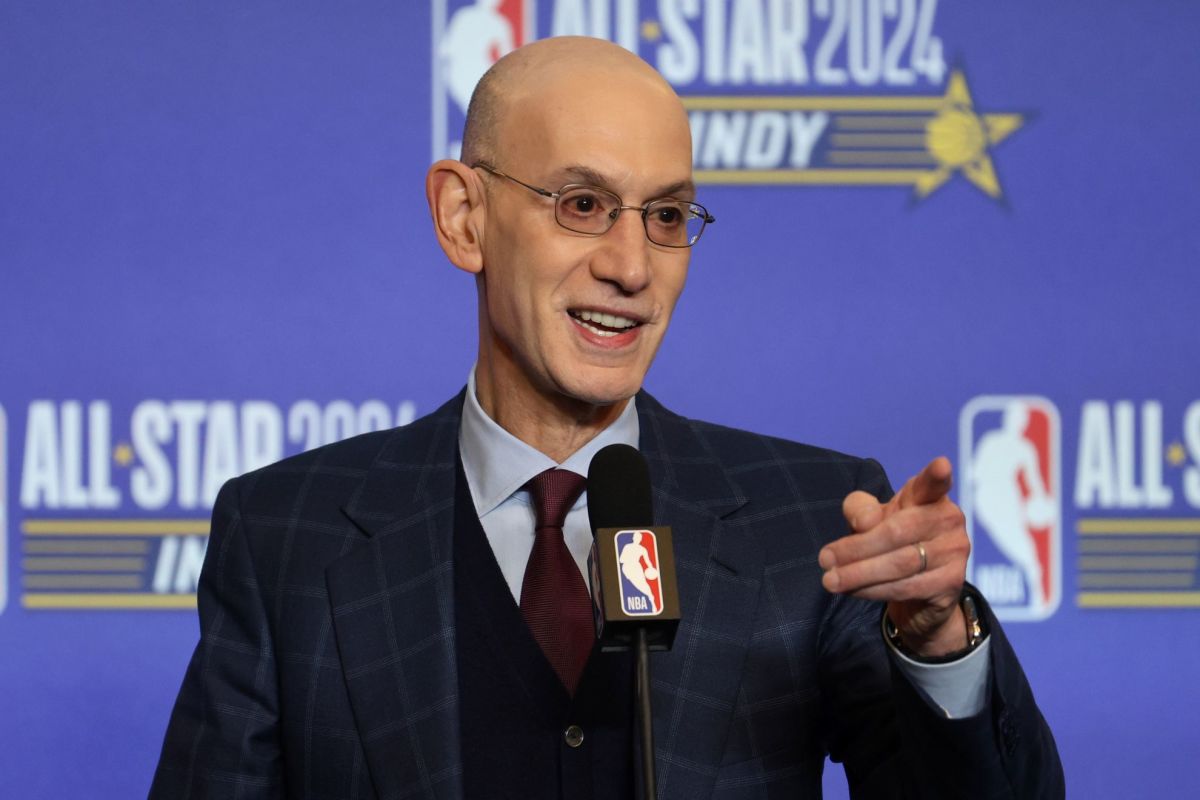
Adam Silver’s ascension to the role of NBA Commissioner was not the result of a sudden pivot but the culmination of a deliberate, two-decade career trajectory defined by legal expertise, strategic business development, and an intimate understanding of the league’s operational mechanics. Before leading the organization, Silver served in pivotal roles that bridged the gap between the league office and the global basketball marketplace.
Early Life and Academic Background
Adam Silver’s journey toward the NBA commissioner’s chair began in Rye, New York. Born in 1962, he was raised in a household that valued civic engagement and legal precision; his father, Edward Silver, was a prominent attorney and a partner at the law firm Proskauer Rose. This environment fostered an early interest in the intersection of law, governance, and organizational management.
Silver pursued his undergraduate studies at Duke University, graduating in 1984 with a Bachelor of Arts in political science. Following his time at Duke, he worked as a legislative aide for United States Congressman Les AuCoin. This brief foray into the public sector provided him with essential experience in navigating complex legislative environments and understanding the mechanisms of public policy—a skill set that would prove invaluable later in his career when managing the NBA’s relationship with governmental bodies, unions, and international regulators.
He returned to academia to attend the University of Chicago Law School, earning his Juris Doctor in 1988. His legal training provided the structural rigor necessary to handle the high-stakes contractual and labor negotiations that define the modern professional sports landscape.
Entry into the Legal Profession
Upon graduating from law school, Silver did not head directly into sports management. He spent time as a law clerk for Judge Kimba Wood in the United States District Court for the Southern District of New York. Following his clerkship, he joined the law firm Cravath, Swaine & Moore.
His tenure at a top-tier litigation firm provided a crash course in high-stakes corporate law. During this period, he developed a reputation for meticulous preparation and an ability to distill complex legal issues into actionable strategy. This period of his career was essential for his transition into the NBA, as it allowed him to view the business of sports not merely as a spectacle, but as a sophisticated commercial enterprise subject to stringent legal, labor, and broadcast regulations.
Transition to the NBA: The Early Years
Silver joined the NBA in 1992, initially serving as a special assistant to the Commissioner. This role was transformative. Working directly under David Stern, the legendary commissioner who grew the NBA into a global brand, Silver was granted an apprenticeship in the art of league management.
Unlike executives who specialize in one area—such as marketing, finance, or operations—Silver was tasked with broad responsibilities that spanned the entire organization. His early projects included:
- NBA Entertainment (NBAE): Silver eventually became the president and COO of NBA Entertainment. This was a critical developmental period. He oversaw the production and distribution of NBA content, which was becoming increasingly important as the league sought to globalize its reach.
- Media Strategy: Under his leadership, NBAE focused on leveraging digital media and broadcast partnerships, effectively turning the league into a content-first organization long before the term was ubiquitous.
- Merchandising and Global Expansion: He was instrumental in developing the league’s global merchandising strategies and coordinating with international partners to establish the NBA’s footprint outside of North America.
Table: Key Milestones in Adam Silver’s Professional Path
| Period | Organization/Role | Primary Focus |
|---|---|---|
| 1984–1985 | Office of Les AuCoin | Legislative assistance and research |
| 1988–1992 | Cravath, Swaine & Moore | Corporate law and litigation |
| 1992–1996 | NBA (League Office) | Special Assistant to the Commissioner |
| 1996–2003 | NBA Entertainment | President and COO; content strategy |
| 2003–2006 | NBA (League Office) | President, NBA Entertainment & Global Ops |
| 2006–2014 | NBA (League Office) | Deputy Commissioner and COO |
From Deputy Commissioner to the Commissioner’s Seat
In 2006, David Stern appointed Silver as the Deputy Commissioner and Chief Operating Officer. For the next eight years, Silver served as Stern’s right hand, managing the league’s day-to-day business affairs. This period was characterized by some of the most significant challenges in the league’s history, including the 2011 NBA lockout.
Silver’s role during the lockout negotiations was instrumental. As the lead negotiator for the owners, he engaged in protracted, high-intensity discussions with the National Basketball Players Association (NBPA). His ability to maintain composure under pressure and find common ground between disparate factions cemented his standing among the league’s team owners. By 2014, when David Stern announced his retirement, the transition of power to Silver was widely viewed as a natural progression rather than a disruption.
The Influence of the "Stern-Silver" Era
The significance of Silver’s path cannot be fully understood without examining the continuity of leadership. Working for over two decades under Stern meant that Silver did not just learn the history of the league; he helped write it. He was a primary architect of the league’s digital transformation, the growth of the NBA’s international profile, and the professionalization of the league’s internal management structures.
When Silver assumed the role of Commissioner on February 1, 2014, he was not a newcomer trying to reshape the league; he was an institutionalist who understood every lever and gear within the NBA ecosystem. This background allowed him to immediately pivot toward modernization, including player relations, social justice initiatives, and advanced data analytics, because he had already cleared the foundational work during his years as Deputy Commissioner.
Strategic Competencies Developed
Throughout his path before becoming Commissioner, Silver honed three core competencies that define his leadership today:
- Legal Rigor: His background in law ensures that every league decision—whether regarding disciplinary action, broadcasting contracts, or collective bargaining—is handled with a focus on precedent and risk mitigation.
- Technological Foresight: By leading NBA Entertainment, Silver was ahead of the curve regarding how fans consume content. His focus on highlights, social media integration, and streaming accessibility was rooted in his earlier experience at NBAE.
- Global Business Development: Silver recognized early on that the NBA’s long-term growth was not limited to the domestic market. His efforts in expanding the league’s presence in China, Europe, and Africa were foundational efforts that began long before his tenure as Commissioner.
Frequently Asked Questions
Did Adam Silver ever play professional basketball?
No, Adam Silver was not a professional basketball player. His background is firmly rooted in legal practice and corporate sports management. His expertise lies in the business, legal, and operational aspects of the league rather than on-court performance.
How did his time at NBA Entertainment prepare him for the commissioner role?
NBA Entertainment was the vehicle through which the league modernized its image. By managing this department, Silver gained experience in media production, global distribution, and brand management. This experience allowed him to treat the NBA not just as a sports league, but as a premier global media and entertainment company.
Was he immediately tapped as the next commissioner?
While he was the clear heir apparent for several years, the official announcement of his succession followed a long, deliberate transition period. His years as Deputy Commissioner and COO were designed to provide him with total oversight of the league’s business, making him the only logical successor when David Stern stepped down in 2014.
How did the 2011 lockout shape his leadership style?
The 2011 lockout was a critical training ground for Silver. It forced him to navigate high-stakes labor disputes and manage the conflicting interests of multi-billionaire owners and the players' union. The experience solidified his reputation as a pragmatist who prioritizes long-term stability and partnership over short-term wins.
What is the most significant aspect of his pre-NBA career?
His background in corporate law at Cravath, Swaine & Moore is arguably the most significant, as it provided the analytical framework for his later work in collective bargaining and complex contract negotiations. It provided him with the necessary mental discipline to oversee a multi-billion dollar, multi-national corporation.
Recommendation for Further Context
To gain a deeper understanding of the professional standards Adam Silver brought to the league, review the published minutes and official statements from the 2011 collective bargaining negotiations. These documents illustrate the technical complexity of modern sports management and underscore how his path through the legal and operations departments prepared him for the most difficult challenges a commissioner faces. His career path remains a masterclass in internal institutional development, emphasizing that the most effective leaders of complex organizations are often those who have spent years navigating the layers of that organization before taking the helm.