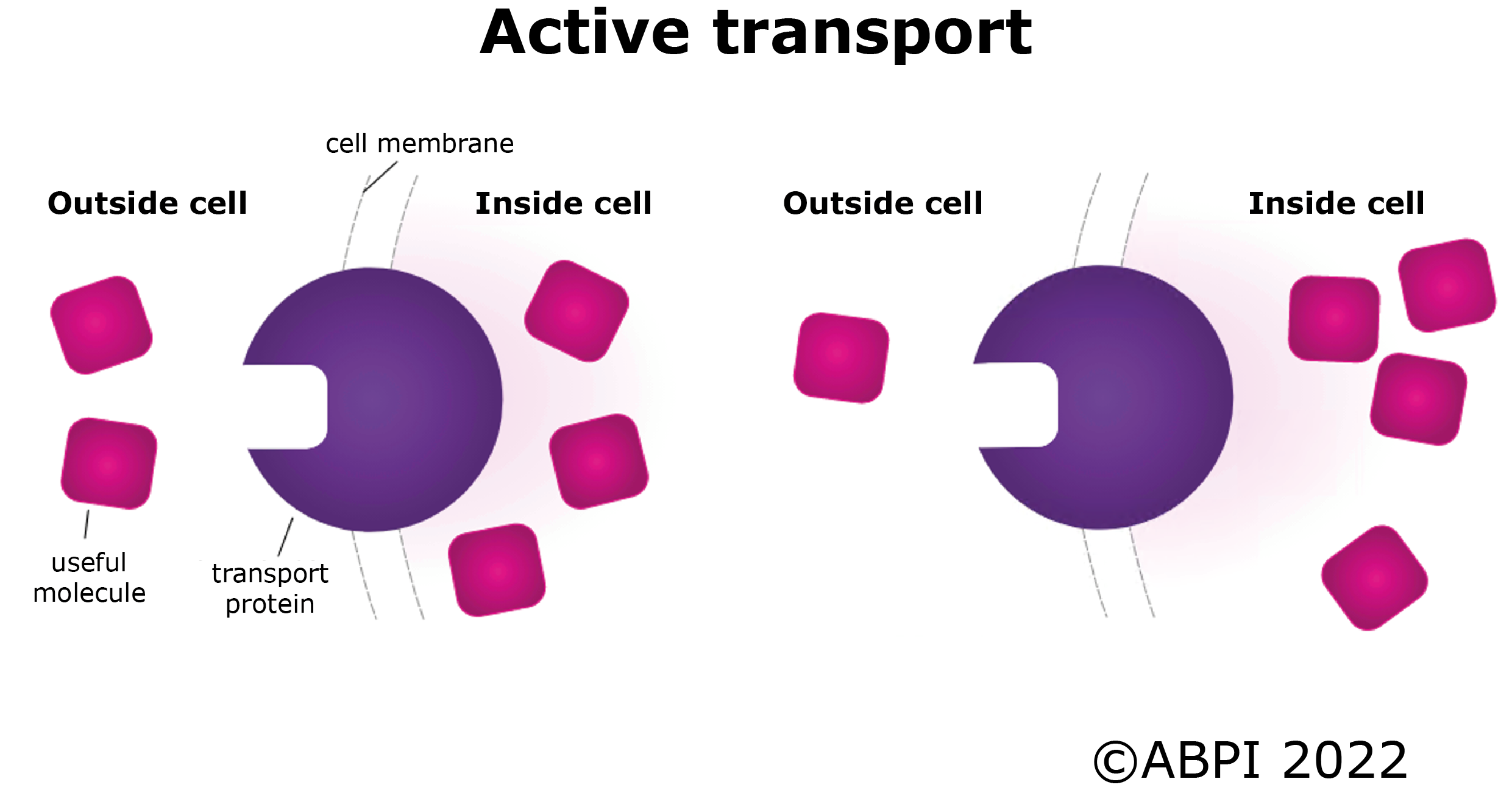
Active transport is the process by which cells move ions or molecules across a semi-permeable membrane against their concentration gradient. Unlike passive processes, this mechanism requires cellular energy, typically in the form of adenosine triphosphate (ATP), to pump substances from an area of lower concentration to an area of higher concentration, maintaining essential internal chemical environments.
The Biological Necessity of Active Transport
To understand why active transport is essential, one must first look at the principle of diffusion. In a natural, unmediated state, molecules tend to move from regions of high concentration to regions of low concentration until an equilibrium is reached. This is a spontaneous, entropy-driven process known as passive transport. However, living organisms are defined by their ability to maintain internal conditions that are distinctly different from their external environment.
If cells relied solely on passive movement, they would eventually reach chemical equilibrium with their surroundings, which would lead to the death of the cell. For example, nerve cells must maintain a high concentration of potassium ions inside and a high concentration of sodium ions outside. Because these ions constantly leak across the membrane, the cell must continuously "push" them back against their gradients to maintain the electrochemical potential required for nerve signaling. Active transport is the cellular "pump" that makes this homeostasis possible.
The Role of Energy and ATP
The defining characteristic of active transport is its energy dependency. Adenosine triphosphate, or ATP, acts as the primary "energy currency" for these cellular operations. When a cell identifies a substance that needs to be moved against its gradient, specific transmembrane proteins—often called pumps or carriers—bind to the target molecule.
The hydrolysis of ATP—the breaking of a phosphate bond—releases the energy required for the protein to undergo a conformational change. This shape-shifting action effectively moves the molecule across the membrane and releases it on the other side. This process is highly regulated; the cell possesses sophisticated feedback mechanisms to ensure that energy is only expended when it is necessary for physiological function, preventing the wasteful depletion of ATP stores.
Primary Types of Active Transport
Biologists categorize active transport based on the source of energy and the mechanics of the movement. Understanding these categories is vital for grasping how different cells perform specialized functions, such as nutrient uptake or neurotransmitter recycling.
Primary Active Transport
In primary active transport, the movement of solutes is directly coupled to the hydrolysis of ATP. The protein involved is typically an ATPase—an enzyme that breaks down ATP to facilitate the mechanical movement of ions. A classic example is the sodium-potassium pump (Na⁺/K⁺-ATPase). This pump pushes three sodium ions out of the cell and brings two potassium ions in, consuming one ATP molecule per cycle. This specific pump is responsible for about 20% to 40% of the energy consumption in a typical animal cell.
Secondary Active Transport (Co-transport)
Secondary active transport, or coupled transport, does not use ATP directly. Instead, it relies on the electrochemical gradient established by primary active transport. By allowing one molecule to move "downhill" (with its concentration gradient), the cell provides the kinetic energy needed to pull a second molecule "uphill" (against its gradient). This is categorized into two types:
- Symport: Both molecules move in the same direction across the membrane.
- Antiport: The driving molecule moves in one direction while the target molecule moves in the opposite direction.
Comparison of Transport Mechanisms
To clarify the distinction between active and passive transport, it is helpful to visualize the mechanical differences in how substances traverse the cellular barrier.
| Feature | Passive Transport | Active Transport |
|---|---|---|
| Energy Requirement | None (kinetic energy only) | ATP (metabolic energy) |
| Direction | With the gradient (High to Low) | Against the gradient (Low to High) |
| Protein Requirement | Optional (channels/carriers) | Always required (pumps) |
| Equilibrium | Reaches equilibrium | Maintains disequilibrium |
| Primary Examples | Diffusion, Osmosis | Ion pumps, Endocytosis |
Physiological Applications and Clinical Significance
Active transport is not just a theoretical concept; it is the engine of human and animal physiology. Without these mechanisms, organ systems would cease to function almost instantaneously.
- Nutrient Absorption: In the human digestive tract, glucose and amino acids are often moved from the gut lumen into intestinal cells using secondary active transport (sodium-glucose symporters). This ensures that the body captures as many nutrients as possible, even when concentrations in the gut are low.
- Renal Function: The kidneys utilize active transport to reabsorb essential ions and water from urine before it is excreted. This process is highly sensitive to blood pressure and systemic electrolyte levels.
- Neurotransmission: After a signal is sent between neurons, neurotransmitters are cleared from the synapse via active transport pumps. If this process fails, it can lead to overstimulation of the nerves, which is a factor in several neurological disorders.
Limitations and Regulatory Constraints
While active transport is powerful, it is limited by the availability of proteins and energy. If a cell is starved of oxygen—the primary fuel source for generating ATP—active transport systems begin to fail. This is why tissues with high metabolic activity, such as the brain and heart, are highly sensitive to lack of blood flow (ischemia).
Furthermore, these processes are subject to inhibition. Many pharmacological agents work by specifically blocking active transport proteins. For instance, cardiac glycosides like digoxin are used to treat heart conditions by inhibiting the sodium-potassium pump, which indirectly increases the force of heart muscle contraction. Understanding the mechanics of these pumps is thus a cornerstone of modern pharmacology and drug development.
Common Misconceptions
One common confusion involves the distinction between active transport and bulk transport (endocytosis/exocytosis). While both are energy-intensive processes, they differ in scope. Active transport typically involves the movement of individual ions or small molecules through specific protein channels or pumps. Bulk transport involves the cell membrane folding in on itself to engulf or expel large particles, such as proteins or even other cells. Both are active, but they utilize different structural machinery and occupy different roles within the cell's daily lifecycle.
Troubleshooting Cellular Health
In a research or clinical setting, assessing the efficiency of active transport is often done by monitoring ion flux or ATP-to-ADP ratios. If a cell shows signs of swelling or an inability to maintain its internal pH, it is often a diagnostic indicator that the active transport mechanisms are struggling. Maintaining proper extracellular concentrations of minerals—specifically sodium, potassium, and calcium—is the most effective way to ensure that cellular pumps can operate within their optimal kinetic parameters.
Frequently Asked Questions
Does active transport require ATP for every molecule moved? Yes, in the context of primary active transport, each cycle of the transport protein is linked to the hydrolysis of an ATP molecule. In secondary active transport, the energy is "pre-stored" in an electrochemical gradient, but that gradient itself was created through a primary process that consumed ATP.
Can active transport occur without a membrane protein? No. Unlike simple diffusion, where small nonpolar molecules can slip directly through the lipid bilayer, active transport always requires specialized transmembrane carrier proteins or pumps to facilitate the movement of ions against the gradient.
What is the difference between an ion channel and an active pump? An ion channel acts like a gate that, when open, allows ions to move passively based on their concentration gradient. A pump is an active device that uses energy to force ions against their gradient. Channels facilitate high-speed passive flow; pumps facilitate regulated active control.
Why is active transport essential for homeostasis? Homeostasis is the maintenance of a stable internal environment. Because the external environment is constantly changing, cells must actively counteract the natural tendency of molecules to equalize (diffuse) across the cell membrane. Active transport allows cells to maintain the specific concentrations of ions and nutrients necessary for survival.
Are there instances where active transport is detrimental? In some cases, cancer cells utilize active transport mechanisms to pump chemotherapy drugs out of the cell, leading to drug resistance. These "efflux pumps" are a major area of study in oncology, as they allow cells to survive treatments that would otherwise be lethal.
Practical Next Steps for Learners
If you are studying biological sciences, the best way to master this concept is to diagram the sodium-potassium pump. Label the high-concentration zones, the low-concentration zones, and the moment of ATP hydrolysis. Visualizing the conformational change of the protein—from open-inside to open-outside—will solidify your understanding of how this mechanical process maintains the integrity of the cellular environment.