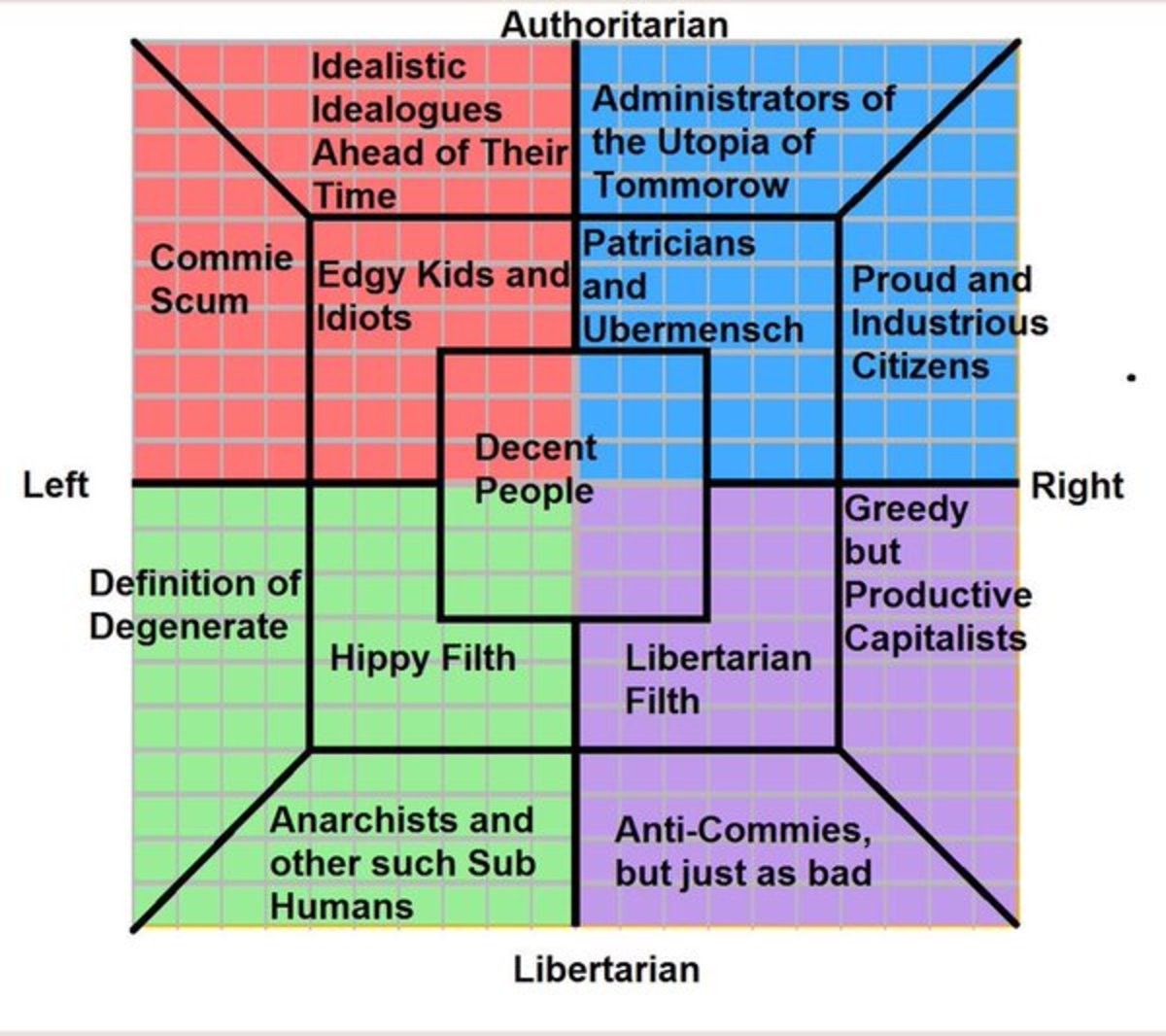
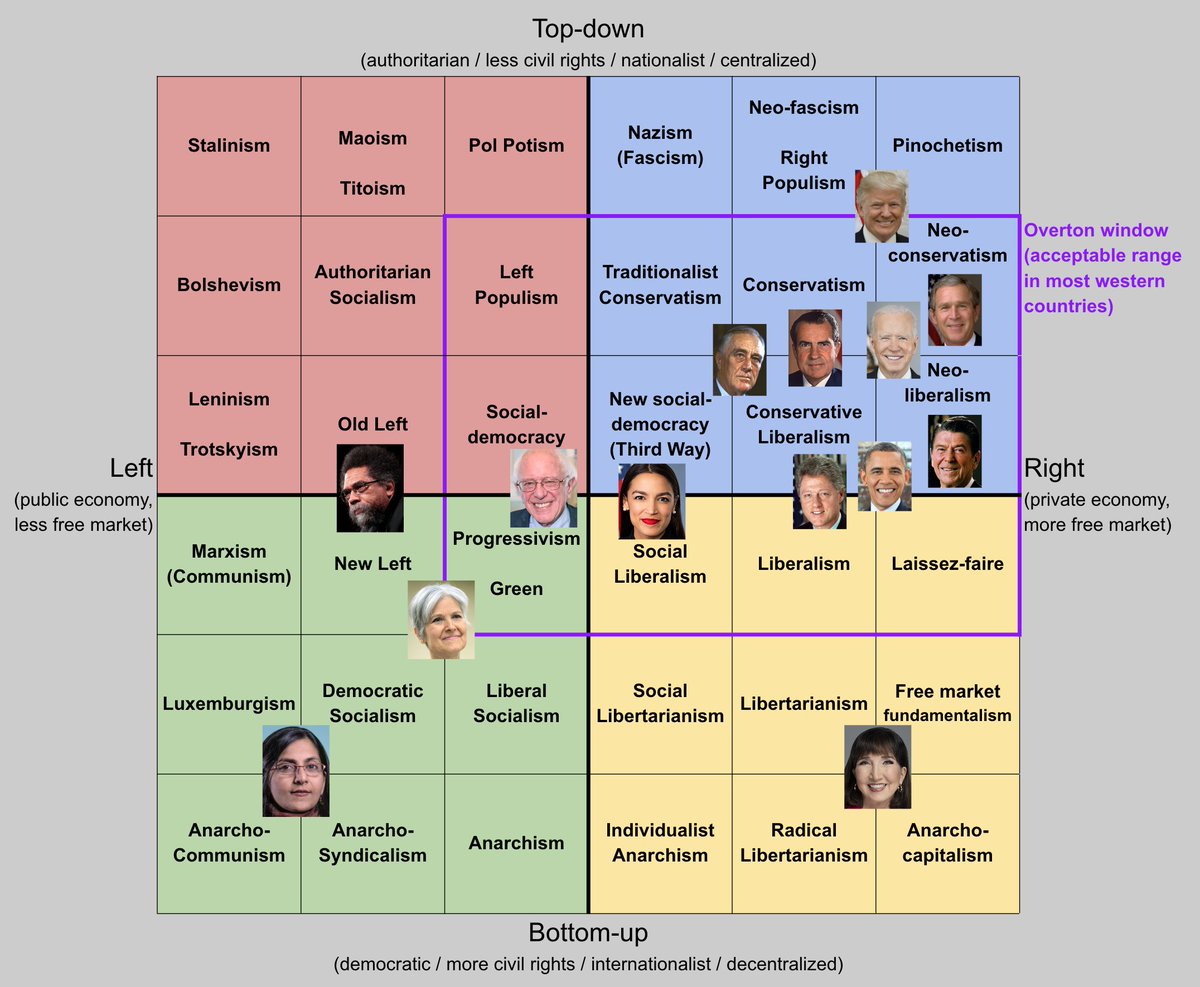
An accurate political compass test identifies your ideological position by measuring responses across multiple axes, typically distinguishing between economic beliefs (Left vs. Right) and social preferences (Authoritarian vs. Libertarian). To achieve the most reliable results in 2026, users should prioritize multidimensional models like SapplyValues or 8values, which separate social progressivism from state authority to provide a more nuanced profile than traditional two-axis charts.
The Evolution of Political Mapping and the Quest for Accuracy
For decades, political discourse was confined to a simplistic one-dimensional spectrum: Left vs. Right. This linear model, originating from the seating arrangements of the French National Assembly in 1789, has long been criticized by political scientists for its inability to represent the complexities of modern governance. A person might support high taxes and universal healthcare (traditionally Left) but also favor strict border controls and traditional social values (traditionally Right). The one-dimensional line fails to account for these "diagonal" positions.
The introduction of the "Political Compass" in the early 2000s revolutionized online political self-identification by adding a second axis. This created a grid that separated economic policy from social policy. However, as we move through 2026, the demand for accuracy has pushed these tools even further. Modern users recognize that "social policy" is itself a broad category that can be broken down into views on state power (liberty vs. authority) and views on cultural tradition (progressivism vs. conservatism).
Accuracy in a political compass test is not just about where you land on a map; it is about how the test handles the nuances of your specific worldview without forcing you into boxes defined by binary logic.
Key Criteria for Determining Test Accuracy
When evaluating whether a political compass test is accurate, several technical and methodological factors must be considered. Not all online quizzes are created equal, and many are designed with inherent biases that steer users toward specific quadrants.
Question Framing and Neutrality
The most significant hurdle to accuracy is the "framing effect." If a question is worded as "Should the government stop greedy corporations from destroying the environment?", the language is emotionally charged. An accurate test uses neutral, objective phrasing that allows the respondent to answer based on principle rather than a reaction to loaded adjectives. In 2026, the most respected tests have undergone rigorous peer-review or community auditing to strip away leading language.
The Problem of the Middle Ground
Many early iterations of political tests forced users to choose between "Agree" and "Disagree," with no "Neutral" or "Unsure" option. While this forces a result, it often leads to an inaccurate one. Conversely, allowing too much neutrality can result in every user landing exactly in the center (Centrism). The most accurate tests utilize a Likert scale—usually five or seven points ranging from "Strongly Disagree" to "Strongly Agree"—while weighting certain "deal-breaker" questions more heavily than others.
Axial Depth and Multi-Dimensionality
A two-axis test is better than a one-axis test, but a three-axis or even eight-axis test provides significantly higher resolution. For example, the "SapplyValues" model is often cited by political science enthusiasts as more accurate than the original Political Compass because it adds a third "Progressive vs. Conservative" axis. This prevents a person with traditional social values from being erroneously labeled "Authoritarian" simply because they value social stability.
Leading Political Compass Tests in 2026
As of 2026, several platforms have emerged as the gold standard for ideological mapping. Each serves a slightly different purpose, depending on whether the user wants a quick snapshot or a deep-dive data analysis of their beliefs.
1. SapplyValues: The Gold Standard for Precision
SapplyValues remains the most recommended tool for those seeking an accurate two-dimensional plot. Unlike the original Political Compass, SapplyValues separates the social axis into two distinct components: Authority and Culture.
- Why it works: It prevents "ideological bleeding." In many other tests, if you support traditional marriage, the test assumes you want the government to mandate it, pushing you toward Authoritarianism. SapplyValues recognizes that one can be socially conservative while remaining a civil libertarian.
- Target Audience: Students and political junkies who want a reliable, replicable result.
2. 8values and 9Axes: Granular Data Analysis
For those who find a grid too limiting, 8values (and its more complex cousin, 9Axes) provides a percentage-based breakdown of your leanings. Instead of a single dot on a map, you receive scores across categories such as:
- Economic (Equality vs. Markets)
- Diplomatic (Nation vs. World)
- Civil (Liberty vs. Authority)
- Societal (Tradition vs. Progress)
This format is particularly useful in 2026 as global politics becomes more fragmented. It allows users to see exactly where they diverge from the "standard" version of their ideology.
3. ISideWith: Practical Policy Mapping
While not a "compass" in the traditional geometric sense, ISideWith is arguably the most accurate tool for relating abstract ideology to real-world politics. It asks users about specific pieces of legislation, tax rates, and foreign policy maneuvers.
- Accuracy Factor: It weighs your answers based on how important each issue is to you. This mirrors real-life voting behavior, where a single "wedge issue" might outweigh ten minor disagreements.
Comparison of Popular Political Assessment Tools
The following table compares the most prominent tests available in 2026 based on their methodology and output.
| Test Name | Primary Methodology | Number of Axes | Best For | Estimated Time |
|---|---|---|---|---|
| SapplyValues | Likert Scale / Grid | 3 (Economic, Civil, Cultural) | Balanced accuracy and visual clarity | 10–15 Minutes |
| 8values | Percentage / Tickers | 4 (8 distinct values) | Detailed ideological labeling | 10 Minutes |
| Political Compass | Original 2D Grid | 2 (Economic, Social) | Historical comparison and simplicity | 5–10 Minutes |
| 9Axes | High-Resolution Tickers | 9 (18 distinct values) | Extreme nuance and data depth | 20–30 Minutes |
| ISideWith | Policy-Specific Survey | Variable (matches to parties) | Voting guidance and real-world application | 15–25 Minutes |
| Filteries | Interactive Slider | Custom | Exploring "What If" policy scenarios | Variable |
Technical Challenges: The Overton Window and Cultural Bias
Even the most "accurate" political compass test faces the challenge of the Overton Window—the range of policies politically acceptable to the mainstream population at a given time. A test designed for a US audience in 2026 might categorize a "Socialist" based on American standards, whereas that same person might be considered a "Centrist" in a Nordic country.
Furthermore, cultural bias is a persistent issue. Most political compass tests are developed by Western programmers and academics. Questions regarding "The State," "Religion," and "Family" carry different weights in Eastern or Global South contexts. When taking a test, it is vital to check if the tool offers localized versions or if it uses a "Global" scale. A truly accurate test in 2026 should provide context for its definitions, explaining, for instance, that "Liberalism" in Europe refers to free-market economics, whereas in the US it refers to social progressivism.
How to Take a Political Test for Maximum Accuracy
To ensure the result you receive is a true reflection of your beliefs rather than a product of temporary frustration or misunderstanding, follow these guidelines:
- Define your terms: Before starting, understand that "Authoritarian" doesn't necessarily mean "Dictatorship"—it often refers to the belief that the state should have a role in regulating behavior for the common good.
- Avoid the "Neutral" trap: While tempting, selecting "Neutral" for every difficult question will result in a centrist "dead zone" result. Try to lean one way or the other unless you truly have no opinion.
- Consider the "Why," not just the "What": If a question asks if you support high taxes, think about whether you support them in principle for redistribution or in practice for specific services.
- Be honest about your "Ugly" opinions: Online tests are anonymous. For the most accurate mapping, you must answer based on your actual beliefs, not what you think a "good person" would say. This mitigates "Social Desirability Bias."
Data Privacy and Ethics in 2026
In 2026, your political data is highly valuable. Many free political compass tests are used as data-harvesting tools for political consulting firms or AI training sets. Before clicking "Start," check the site's privacy policy.
- Look for anonymity: Accurate, ethical tests do not require your email, name, or zip code to show you your results.
- Check for data selling: Avoid tests that include lengthy "demographic" surveys at the end unless they explicitly state the data is used for academic research and is not sold to third-party advertisers.
- Open Source preference: Tests like 8values are often open-source (hosted on platforms like GitHub), meaning the community can verify that the code isn't doing anything malicious with your responses.
Frequently Asked Questions
Is the original Political Compass test still accurate?
The original Political Compass (the-political-compass.com) is a foundational tool but is often criticized for a "Lib-Left" bias. Critics argue the questions are framed in a way that pushes most modern respondents into the bottom-left quadrant. While it is useful for historical context, newer models like SapplyValues are generally considered more accurate for modern political landscapes.
Why do I get different results on different tests?
Differences occur because of how each test weights specific axes. One test might weigh environmental issues as "Social," while another weighs them as "Economic." Additionally, the number of axes changes the "resolution" of your result. A 2D test is a low-resolution photo; an 8-axis test is a high-definition video of your ideology.
Can an AI political compass test be more accurate?
In 2026, AI-driven tests that use Natural Language Processing (NLP) are becoming popular. These allow you to write short paragraphs instead of clicking buttons. These can be more accurate because they capture the reasoning behind your stance, though they are also subject to the biases of the AI's training data.
How often should I retake a political compass test?
Political scientists suggest that individual ideologies are relatively stable but can shift due to major life events or global shifts. Retaking a test every 1-2 years is a good way to track your "political journey."
What is the "Social Desirability Bias" in these tests?
This is a psychological phenomenon where respondents answer questions in a way that will be viewed favorably by others, even in an anonymous test. To get an accurate result, you must consciously combat the urge to "pick the right answer" and instead pick your actual answer.
Final Recommendation: Which Test Should You Use?
If you are looking for the single most accurate and balanced representation of your political identity in 2026, start with SapplyValues. It provides the best compromise between depth and ease of use, and its three-axis model (Economic, Civil, and Cultural) solves the most common mapping errors found in older tests. For those who want to see how their beliefs translate into actual policy and voting, follow up by taking the ISideWith quiz. By triangulating your results across these two different methodologies—one abstract and one practical—you will achieve the most comprehensive and accurate understanding of your place on the political spectrum.