On the third day of the Genesis creation account, God performed two distinct creative acts: the separation of dry land from the oceans and the creation of all forms of vegetation. This day is unique as it completes the initial "forming" phase of the universe, establishing the biological and geological foundations for life.
The Structural Framework of the First Three Days
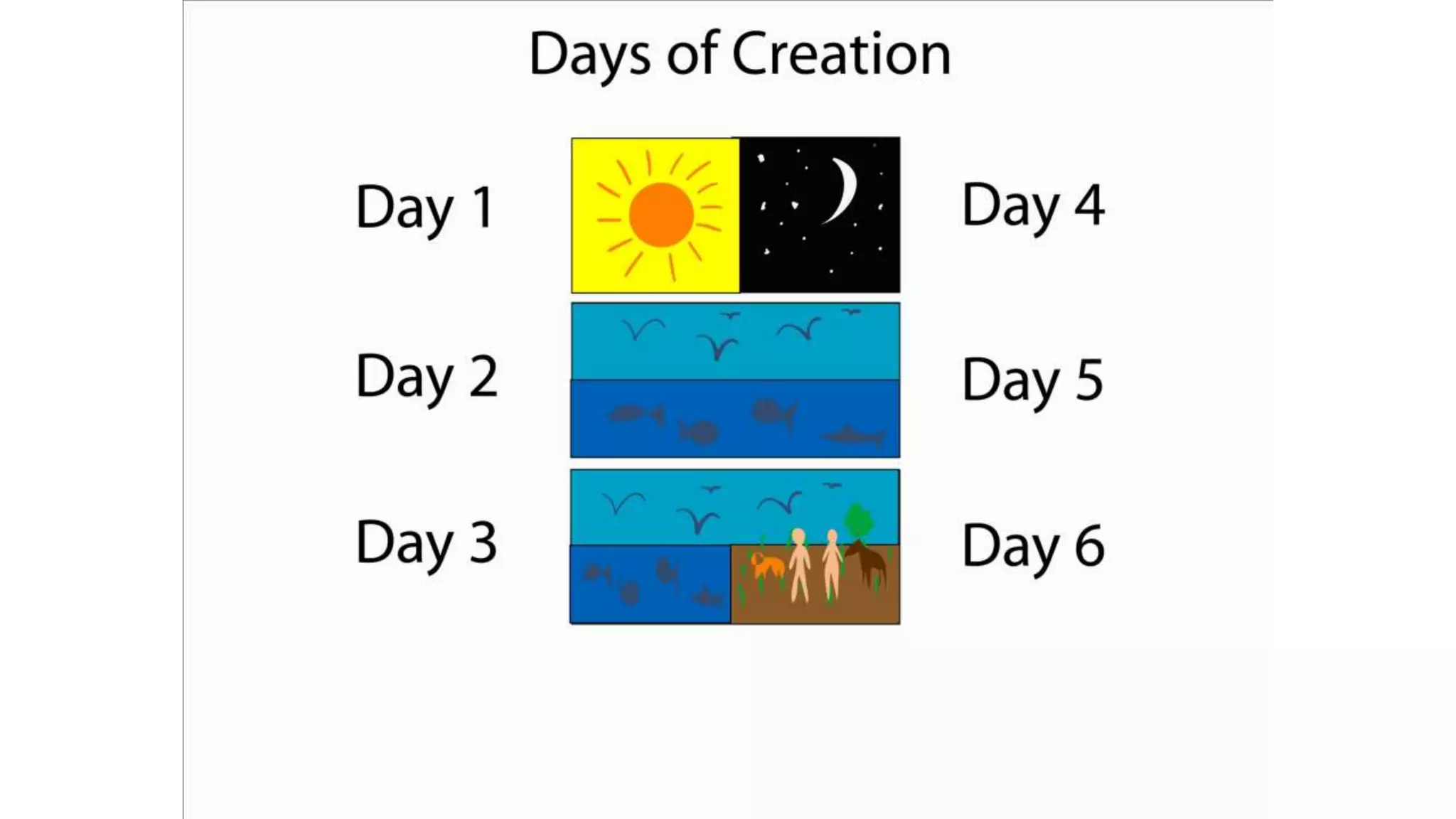
To understand the third day of Genesis, one must view it within the context of the first three days of the creation week. Biblical scholars often categorize the six days of creation into two triads: the "Days of Forming" (Days 1–3) and the "Days of Filling" (Days 4–6).
On Day One, God created light and separated it from darkness, establishing the dimension of time. On Day Two, He created the firmament or expanse, separating the "waters above" from the "waters below," thereby establishing the atmosphere and the hydrological cycle. Day Three serves as the climax of this first triad. It is the day when the formless and chaotic state of the Earth (Tohu wa-Bohu) is finally resolved into a habitable environment.
By the end of the third day, the stage is fully set. The world has light, an atmosphere, dry land, and a primary food source. As of 2026, theological scholarship continues to emphasize this structural symmetry, noting that what is formed on Day 3 (the land and plants) is specifically inhabited or "filled" on Day 6 (land animals and humans).
The First Act of Day Three: The Emergence of Dry Land
The first decree of the third day is found in Genesis 1:9: "Let the waters under the heavens be gathered together into one place, and let the dry land appear."
The Gathering of the Waters
In the initial state of creation, the Earth was covered entirely by water. The divine command to "gather the waters" indicates a massive geological shift. In an ancient Near Eastern context, this represents the imposition of order over the primordial "deep" (tehom). The waters are not destroyed, but they are bounded. This boundary is a recurring theme in biblical literature, signifying God’s sovereignty over the chaotic elements of nature.
The result of this gathering is the creation of the Seas (Yamim). The plural form suggests that while the waters are "gathered into one place" (connected), they occupy diverse regions.
The Appearance of the Earth
The term for dry land, Eretz, is the same word used for "Earth" in Genesis 1:1. However, on the third day, it takes on a specific physical definition: the habitable ground. The emergence of land was not merely a passive receding of water but is often described in poetic biblical texts, such as Psalm 104, as the mountains rising and the valleys sinking to the place God assigned for them.
By establishing the land, God created a stable platform for terrestrial life. This separation was the final prerequisite for the biological life that was about to be introduced.
The Second Act of Day Three: The Sprouting of Vegetation
Unlike the previous two days, the third day includes a second distinct act of creation. This is the first instance in the Genesis narrative where the Earth itself is commanded to participate in the creative process.
The Divine Mandate to the Earth
In Genesis 1:11, God says, "Let the earth sprout vegetation, plants yielding seed, and fruit trees bearing fruit in which is their seed, each according to its kind."
This act is significant for several reasons:
- Biological Self-Sustenance: By creating plants with "seed," God established a system of reproduction. Life was designed to continue and multiply without requiring a new "creation" event for every generation.
- Diversity of Species: The text categorizes vegetation into three broad groups: grasses/herbage, seed-bearing plants, and fruit trees. This highlights the diversity and functional utility of the plant kingdom.
- The Concept of "Kinds": The phrase "according to its kind" (l’mino) is used repeatedly. In the context of 2026 biological and theological discussions, this remains a focal point for debating the boundaries of macro-evolution versus micro-adaptation within the biblical framework.
The Purpose of Vegetation
Vegetation serves as the foundational energy source for the entire ecosystem. By creating plants before animals (Day 5 and 6), the Genesis narrative follows a logical ecological progression. The plants provide the oxygen and nutrients necessary for the sentient creatures that would follow.
Comparative Overview: The First Three Days
The following table illustrates the progression of the first three days and how Day Three serves as the culmination of the "forming" phase of creation.
| Day | Element Created | Primary Separation | Operational Purpose |
|---|---|---|---|
| Day 1 | Light | Light from Darkness | Establishes the cycle of Time (Day/Night). |
| Day 2 | Firmament (Sky) | Waters Above from Waters Below | Establishes the Atmosphere and Weather. |
| Day 3 (Part A) | Dry Land & Seas | Land from Water | Establishes Geography and Habitable Space. |
| Day 3 (Part B) | Vegetation | Life from Non-Life (Biological) | Establishes the Food Chain and Ecosystem. |
The Theological Significance of the "Double Good"
A unique feature of the third day is the repetition of the divine approval. In the Genesis account, God typically pronounces His work as "good" (ki tov) once per day. However, on the second day, there is no such pronouncement, possibly because the work of separating the waters was not "finished" until the waters were gathered into seas on the third day.
On the third day, God sees that it is good twice:
- First, after the separation of the land and the seas (Genesis 1:10).
- Second, after the earth brought forth vegetation (Genesis 1:12).
In Jewish tradition, this "double blessing" has led to the third day of the week (Tuesday) being considered an especially auspicious day for weddings and new beginnings. Theologically, it emphasizes that the completion of the physical world (the land) and the introduction of life (the plants) are both essential and distinct milestones in the divine plan.
Exegetical Challenges and Interpretations
The description of the third day presents several points of discussion for historians, theologians, and scientists.
The Source of Light for Photosynthesis
A common question in biblical studies is how plants (created on Day 3) could survive without the sun (created on Day 4). Traditional interpretations suggest that the light created on Day 1 was sufficient to sustain the vegetation until the sun and moon were "appointed" to their roles on Day 4. Others view the sequence as topical or literary rather than strictly chronological, intended to show that God, not the sun, is the ultimate source of life.
The Meaning of "Day" (Yom)
As of 2026, the debate between the Literal 24-Hour View and the Day-Age Theory continues.
- Literal View: Advocates argue that the use of "evening and morning" clearly indicates a standard solar day.
- Day-Age/Framework View: Scholars point out that "day" (yom) in Hebrew can refer to an era or an undisclosed period. In this view, the third day represents a vast geological and biological epoch during which the continents formed and plant life proliferated.
For more detailed linguistic analysis of these terms, the Society of Biblical Literature provides extensive peer-reviewed resources on Hebrew philology.
Historical and Scientific Contexts
While Genesis is a theological document, its description of the third day intersects with modern scientific understanding of Earth’s early history. The transition from a water-dominated "waterworld" to one with emerging continents (the formation of Rodinia or earlier supercontinents) mirrors the biblical description of land appearing from the waters.
Furthermore, the emergence of photosynthetic life is recognized by science as the "Great Oxidation Event," which transformed the atmosphere. While the timelines differ between a literal reading and geological records, the order of events—water, then land, then plants—remains a point of interest for those seeking to harmonize faith and science. The Smithsonian National Museum of Natural History offers comprehensive data on the transition of the Earth's surface and the arrival of early plant life.
Common Misunderstandings of Day Three
- The Earth "Created" the Plants: Some readers assume the Earth acted independently. However, the text says God commanded the Earth to sprout. It is a delegated authority, where the creator uses the medium of the "land" He just created to bring forth new life.
- Only Three Types of Plants: The "grass, herbs, and trees" mentioned are not exhaustive taxonomic categories but rather functional descriptions of the types of vegetation relevant to the human experience—food, shelter, and ground cover.
- The Absence of Animals: Day three is strictly botanical. No sentient life (nephesh chayah) is created until the fifth day. This distinction is vital in the biblical hierarchy of life, where plants are seen as the "green carpet" or sustenance, while animals and humans possess "breath."
FAQ: Understanding the Third Day
Why did God create plants before the sun?
Theologically, this serves to demonstrate that God is the provider of life and light, independent of celestial bodies. It was a polemic against ancient pagan cultures that worshipped the sun as a god of fertility. In the Genesis narrative, the sun is merely a "lamp" or servant to the life God has already established.
What does "after their kind" mean in 2026 scholarship?
In 2026, most biblical scholars interpret "after their kind" as a statement of order and predictability in nature. It implies that a vine will always produce grapes and a fig tree will always produce figs, establishing a reliable natural law that allows for agriculture and the study of biology.
Is the "third day" related to the resurrection of Jesus?
Many theologians see a symbolic link between the third day of creation (the day life first emerged from the earth) and the "third day" of the New Testament, when Jesus rose from the dead (the "firstfruits" of new life). This provides a thematic bridge between the Old and New Testaments regarding the theme of life overcoming the void.
Does Genesis 1:9 imply there was originally only one ocean?
The text says the waters were gathered into "one place," which has led some to speculate about an original single landmass (similar to the scientific concept of Pangea). While the text doesn't explicitly name a supercontinent, the description of "dry land" appearing as a singular entity is consistent with that idea.
Why is there no "Good" on Day Two?
The most widely accepted explanation is that the work of the second day—the separation of the waters—was not truly complete until the waters were gathered into their designated "seas" on the third day. Thus, the "Good" on the third day covers both the finished arrangement of the waters and the new creation of the land.
Final Recommendation for Study
To gain a deeper understanding of the first three days of Genesis, readers should compare the account in Genesis 1 with the poetic reflections found in Job 38 and Psalm 104. These passages provide a more descriptive, "behind-the-scenes" look at the divine architecture of the third day, emphasizing the joy and wisdom inherent in the separation of the boundaries of the world. For those interested in the Hebrew linguistics, utilizing an interlinear Bible to study the words Eretz (Land) and Dasha (Sprout) will reveal the active, vibrant nature of the creation of the third day.