Receiving an approval notice for Form I-130, Petition for Alien Relative, is a significant milestone, but it does not grant immediate legal status or a Green Card. The path forward depends entirely on whether the beneficiary is currently inside the United States (Adjustment of Status) or abroad (Consular Processing), requiring specific filings with the NVC or USCIS to complete the residency process.
The I-130 approval signifies that the U.S. Citizenship and Immigration Services (USCIS) has verified the qualifying relationship between a U.S. citizen or Lawful Permanent Resident (the petitioner) and a foreign national (the beneficiary). However, this is only "Step One" of a two-step process. In 2026, the immigration landscape remains rigorous, with digital filing and strict evidentiary standards. Understanding the specific procedural requirements that follow this approval is essential to avoid delays, denials, or loss of filing fees.
Understanding the I-130 Approval Notice (Form I-797)
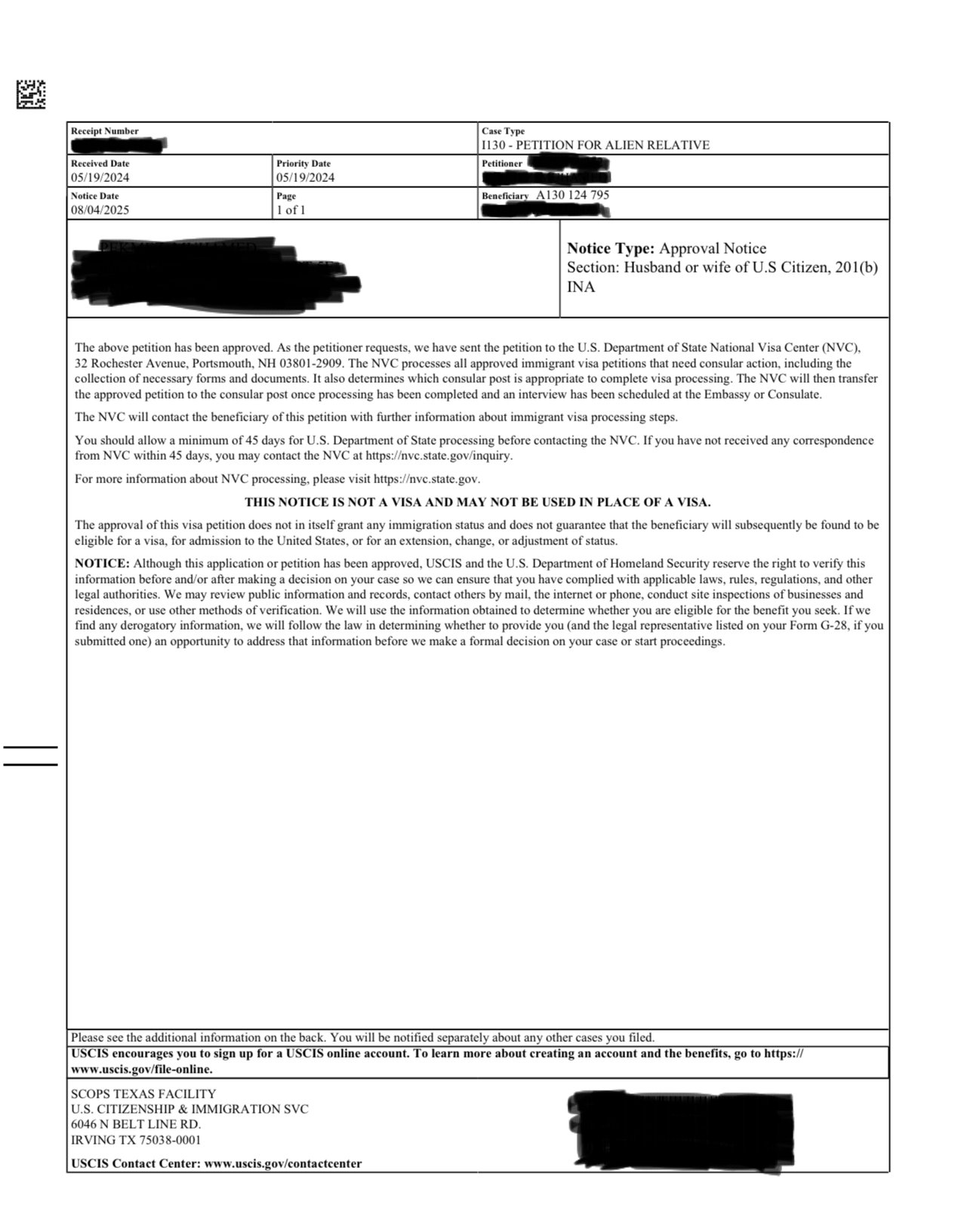
When USCIS approves the I-130 petition, they issue a Form I-797, Notice of Action. This document is the official proof that the underlying familial relationship has been legally recognized for immigration purposes. It contains the Priority Date, which is the date the petition was originally filed.
The priority date is critical for those in "Family Preference" categories (such as siblings of U.S. citizens or adult children of Green Card holders). For "Immediate Relatives" (spouses, unmarried children under 21, and parents of U.S. citizens), a visa is always immediately available, meaning they can proceed to the next step as soon as the I-130 is approved. For others, the priority date must be "current" according to the Department of State’s Visa Bulletin before the final stage can begin.
The Fork in the Road: Consular Processing vs. Adjustment of Status
The single most important factor determining your path after I-130 approval is the physical location and legal status of the beneficiary. There is no "universal" next step; rather, the process splits into two distinct channels.
Path A: Consular Processing (Beneficiary is Outside the U.S.)
If the beneficiary is living abroad, the case moves from USCIS to the National Visa Center (NVC), which is part of the Department of State. This path culminates in an interview at a U.S. Embassy or Consulate in the beneficiary's home country. This is the most common path for family reunification.
Path B: Adjustment of Status (Beneficiary is Inside the U.S.)
If the beneficiary is already in the United States on a valid non-immigrant visa (such as an H-1B, L-1, or F-1) and maintains legal status, they may be eligible to "Adjust Status" to permanent residency without leaving the country. This process is handled entirely by USCIS via Form I-485.
Detailed Steps for Consular Processing (Path A)
For most families, the path after I-130 approval leads to the NVC. This transition can take anywhere from 30 to 60 days. In 2026, the NVC primarily uses the Consular Electronic Application Center (CEAC) for all document submissions.
1. NVC Case Creation and the Welcome Letter
Once the NVC receives the approved petition from USCIS, they create a case file and assign a Case Number and an Invoice I.D. Number. These are sent to the petitioner and beneficiary via a "Welcome Letter" (usually via email). This letter provides the credentials needed to log into the CEAC portal.
2. Payment of Fees
Before any documents can be uploaded, two primary fees must be paid through the portal:
- Immigrant Visa Application Processing Fee: Paid for each beneficiary.
- Affidavit of Support Fee: Usually one fee per petitioning household.
Payments can take several business days to "clear" in the system. Only after the status changes to "Paid" will the portal allow the submission of forms and documents.
3. Form DS-260: The Immigrant Visa Electronic Application
The beneficiary must complete Form DS-260. This is a comprehensive biographical form that asks for employment history, residential history for the last ten years, and detailed security and background questions. It is vital that the information on the DS-260 matches the information previously provided on the I-130 to avoid allegations of misrepresentation.
4. The Affidavit of Support (Form I-864)
The petitioner must prove they have the financial means to support the beneficiary at 125% of the Federal Poverty Guidelines. This involves submitting Form I-864 along with:
- Federal income tax returns (or transcripts) for the most recent tax year.
- W-2s or 1099s.
- Recent pay stubs or an employment verification letter.
If the petitioner does not meet the income requirements, a Joint Sponsor may be used. The joint sponsor must be a U.S. citizen or Green Card holder living in the U.S. and must also submit a complete Form I-864 and supporting financial evidence.
5. Civil Documents
The beneficiary must upload digital scans of original civil documents. Requirements vary by country but generally include:
- Birth certificates.
- Marriage certificates (and divorce decrees from all prior marriages).
- Police certificates from every country where the beneficiary has lived for more than six months since age 16.
- Military records (if applicable).
- A scanned copy of the passport biographic data page.
6. Being "Documentarily Qualified"
Once all fees are paid and all documents are uploaded, the NVC reviews the file. If everything is in order, the NVC sends an email stating the case is "Documentarily Qualified." This means the case is now waiting for an interview slot to open at the designated U.S. Embassy or Consulate.
Detailed Steps for Adjustment of Status (Path B)
If the beneficiary is inside the U.S. and eligible to adjust status, they do not interact with the NVC. Instead, the focus remains on USCIS.
1. Filing Form I-485
The beneficiary submits Form I-485, Application to Register Permanent Residence or Adjust Status. In 2026, many applicants choose to file this concurrently with the I-130, but if the I-130 was filed first and then approved, the I-485 is filed with a copy of the I-130 approval notice.
2. Ancillary Benefits: I-765 and I-131
While the I-485 is pending, the applicant can also apply for an Employment Authorization Document (EAD) via Form I-765 and Advance Parole (travel document) via Form I-131. These "interim benefits" allow the beneficiary to work and travel while waiting for the Green Card.
3. The Medical Examination (Form I-693)
All adjustment applicants must undergo a medical exam by a USCIS-designated "Civil Surgeon." The surgeon checks for required vaccinations and communicable diseases. The results are sealed in an envelope (Form I-693) and submitted to USCIS. In 2026, these results are generally valid for two years from the date the surgeon signs the form.
4. Biometrics Appointment
Shortly after filing the I-485, the beneficiary will receive an appointment notice for biometrics (fingerprinting and a photograph) at a local USCIS Application Support Center (ASC). This information is used for background and security checks.
The Role of the Visa Bulletin in 2026
For those not classified as "Immediate Relatives," the I-130 approval is just the beginning of a potentially long wait. The U.S. limits the number of immigrant visas issued each year to "Preference Categories" (F1, F2A, F2B, F3, and F4).
- Priority Date: Your place in the "queue."
- Final Action Date: The date that determines when a visa can actually be issued.
- Date for Filing: The date that determines when you can start submitting documents to the NVC or filing an I-485.
Applicants must monitor the Department of State’s Monthly Visa Bulletin. Even if the I-130 is approved, Path A or Path B cannot reach completion until the priority date is "current."
Comparison: Consular Processing vs. Adjustment of Status
| Feature | Consular Processing (Path A) | Adjustment of Status (Path B) |
|---|---|---|
| Location of Beneficiary | Outside the United States | Inside the United States |
| Primary Agency | National Visa Center (NVC) / Dept. of State | USCIS |
| Key Form | DS-260 | I-485 |
| Travel Restrictions | No restriction on living abroad | Should not travel until I-131 is approved |
| Work Authorization | Granted upon entry with visa | Requires Form I-765 approval |
| Interview Location | U.S. Embassy/Consulate in home country | Local USCIS Field Office |
| Standard Fees (2026) | Approx. $1,200 - $1,500 (total) | Approx. $1,440+ (I-485 fee) |
The Final Step: The Interview and Visa Issuance
Regardless of the path taken, a personal interview is usually the final hurdle.
The Consular Interview
The beneficiary attends the interview at the U.S. Embassy. The officer will verify the relationship and ensure the beneficiary is not "inadmissible" due to criminal history, health issues, or prior immigration violations. If approved, the visa is placed in the passport. The beneficiary then has six months to enter the United States. Important: Before traveling, the beneficiary must pay the USCIS Immigrant Fee (currently $235 in 2026) online to trigger the production of the physical Green Card.
The USCIS Interview
For Adjustment of Status, the petitioner and beneficiary may be called to a local USCIS office. For marriage-based cases, both must attend. The officer will review the original documents and ask questions to verify the "bona fides" of the marriage. If approved, the status is adjusted to Permanent Resident immediately, and the Green Card arrives in the mail within a few weeks.
Common Mistakes and Challenges After I-130 Approval
Even with a clear path, certain errors can derail the process:
- Failure to Update Address: If the petitioner or beneficiary moves, they must notify USCIS and/or the NVC immediately. If a "Welcome Letter" or interview notice is sent to an old address and missed, the case could be terminated for abandonment.
- Incomplete Financial Evidence: The I-864 is a frequent source of "Requests for Evidence" (RFEs). Using the wrong tax year or failing to include all schedules of a tax return can cause months of delays.
- The "90-Day Rule" (Path B): Beneficiaries who enter the U.S. on a tourist visa (B1/B2) or via the Visa Waiver Program and file for Adjustment of Status shortly after arrival may face scrutiny regarding "preconceived intent" to immigrate. Generally, waiting at least 90 days after entry is advised to mitigate this risk.
- Administrative Processing (Section 221(g)): Following a consular interview, some cases are put into "Administrative Processing" for further background checks. This is not a denial but can add weeks or months to the timeline.
Frequently Asked Questions
Does I-130 approval allow the beneficiary to live in the U.S.?
No. The I-130 approval only establishes the relationship. It does not provide legal status, a work permit, or the right to reside in the United States. The beneficiary must complete the Adjustment of Status or Consular Processing first.
How long after I-130 approval is the interview scheduled?
For immediate relatives, the NVC stage takes 3–6 months, and the interview is scheduled shortly thereafter depending on the backlog at the specific embassy. For preference categories, the wait depends on the Visa Bulletin, which can range from months to years.
What happens if the petitioner dies after I-130 approval?
Under certain circumstances (Section 204(l)), a beneficiary may still be able to immigrate if they were residing in the U.S. at the time of the petitioner's death and continue to reside there. Alternatively, a substitute sponsor can often be used to fulfill the I-864 requirement.
Can I change from Consular Processing to Adjustment of Status?
Yes. If the beneficiary is already abroad but later enters the U.S. on a valid dual-intent visa (like an H-1B), they can notify the NVC and file an I-485 with USCIS. However, you generally cannot "jump" into the U.S. on a tourist visa specifically to change paths, as this may be considered visa fraud.
Is a lawyer necessary for the post-approval steps?
While not legally required, the NVC and I-485 stages involve significantly more complex documentation than the initial I-130. Many applicants find professional guidance helpful to navigate the financial sponsorship requirements and ensure all civil documents meet the specific standards of the Department of State.
Final Recommendations for 2026 Applicants
As you move forward from your I-130 approval, the most critical action is to maintain a perfect digital paper trail. In 2026, the NVC and USCIS rely almost exclusively on digital uploads. Ensure every scan is clear, color-accurate, and complete (including back pages of documents).
If you are following Path A, log into the CEAC portal at least once every few months, even if you are waiting for your priority date to become current. This prevents the NVC from terminating your case under the "one-year contact" rule. If you are following Path B, ensure you do not depart the United States until you have your Advance Parole document in hand, or your application will be considered abandoned.