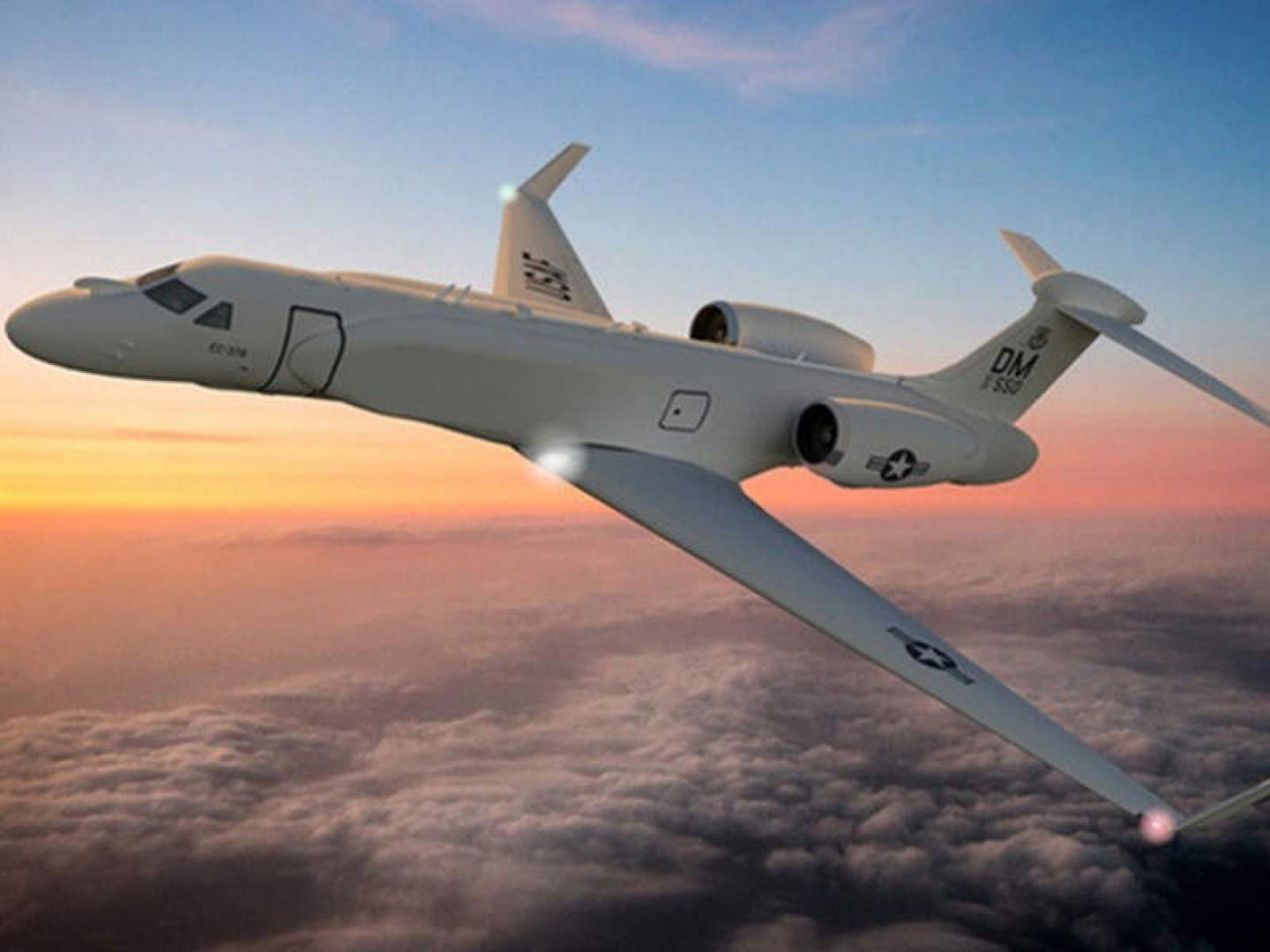
In 2026, large military aircraft—predominantly strategic airlifters like the C-17 Globemaster III and the Airbus A400M—function as the indispensable backbone of global power projection and logistics. These massive platforms enable the rapid movement of heavy armor, personnel, and humanitarian aid across intercontinental distances, while increasingly serving as versatile "arsenal planes" capable of launching palletized munitions in contested environments.
The Evolution of Heavy Lift in 2026 Warfare
The concept of a "large army plane" has evolved significantly from the simple cargo haulers of the mid-20th century. While technically operated by Air Force branches in most nations, these aircraft exist primarily to support Army maneuverability. In the current 2026 operational landscape, the ability to move a main battle tank or a battery of High Mobility Artillery Rocket Systems (HIMARS) from a home base to a forward-deployed location in a matter of hours is a primary deterrent against regional aggression.
Modern air warfare is no longer defined solely by dogfights or stealth bombers. Instead, it is a game of endurance and logistical depth. Large aircraft provide the "reach" required for Agile Combat Employment (ACE), a strategy where forces are dispersed across numerous small, austere airfields rather than concentrated in large, vulnerable bases. The large airlifter must, therefore, be capable of landing on semi-prepared runways—dirt, gravel, or cracked concrete—while carrying tens of thousands of pounds of equipment.
The Strategic vs. Tactical Divide
To understand these aircraft, one must distinguish between strategic and tactical roles. Strategic lifters, such as the Lockheed Martin C-5M Super Galaxy, are designed for long-range, high-volume transport between major hubs. Tactical lifters, like the Lockheed Martin C-130J Super Hercules, focus on the "last mile" of delivery, often dropping supplies via parachute or landing in combat zones.
However, 2026 has seen the blurring of these lines. The Boeing C-17 Globemaster III remains the gold standard because it performs both roles. it can carry outsize cargo (like an M1A2 Abrams tank) across the Atlantic and land directly on a short, unpaved strip near the front lines. This "strategic-to-tactical" capability reduces the need for transloading cargo, which is a major bottleneck in high-tempo operations.
Key Platforms Dominating the Skies in 2026
Several key aircraft define the heavy-lift category today. Each represents a different philosophy of logistics and regional power.
The C-17 Globemaster III: The Versatile Workhorse
Despite production having ended years ago, the C-17 remains the most relevant large aircraft in modern warfare due to its balance of volume and agility. In 2026, the fleet has undergone extensive avionics upgrades to integrate with Joint All-Domain Command and Control (JADC2) networks. This allows the C-17 to act as a data relay node while in flight, sharing sensor data with ground forces and fighter jets.
The C-5M Super Galaxy: The Giant of the Skies
The C-5M is the largest aircraft in the U.S. inventory. With its "kneeling" landing gear and nose-opening cargo door, it can swallow two Abrams tanks or six Apache helicopters simultaneously. In 2026, its role is strictly strategic, moving massive amounts of material from the United States to "lily pad" bases in Europe or the Indo-Pacific.
The Airbus A400M Atlas: The European Standard
The A400M has matured into a formidable multi-role platform for NATO allies. It fills the gap between the C-130 and the C-17. Its unique "down-between-engines" propeller rotation provides symmetrical airflow over the wings, improving handling at low speeds—a critical feature for heavy drops and short-field landings.
The Xian Y-20 "Kunpeng": The Eastern Challenger
China's Y-20 has become a frequent sight in international airspaces by 2026. Representing a massive leap in indigenous aerospace capability, the Y-20B variant, equipped with high-bypass WS-20 engines, provides the People's Liberation Army with a true global reach, capable of transporting the Type 99A main battle tank over long distances.
Technical Specifications and Comparative Capacity
The following table compares the primary heavy-lift aircraft currently active in 2026. These figures represent standard configurations for military operations.
| Aircraft Model | Country of Origin | Max Payload (lbs) | Range with Max Payload (nmi) | Takeoff Distance (Full Load) | Primary Role |
|---|---|---|---|---|---|
| C-5M Super Galaxy | USA | 281,000 | 2,300 | 8,300 ft | Strategic Heavy Lift |
| C-17 Globemaster III | USA | 170,900 | 2,400 | 7,600 ft | Strategic/Tactical |
| Y-20B | China | 145,000 | 2,350 | 7,900 ft | Strategic Heavy Lift |
| An-124 Ruslan | Ukraine/International | 330,000 | 2,000 | 9,000+ ft | Specialized Heavy Lift |
| Airbus A400M | EU / Multi-national | 81,600 | 1,780 | 3,200 ft | Tactical/Strategic |
| Il-76MD-90A | Russia | 132,000 | 2,100 | 5,500 ft | Strategic/Tactical |
Survivability in Contested Airspace
In 2026, a large aircraft is a high-value target. Opponents utilize long-range Surface-to-Air Missiles (SAMs) and fifth-generation interceptors to deny airspace. Consequently, "large army planes" are no longer defenseless cargo boxes; they are equipped with sophisticated self-protection suites.
Large Aircraft Infrared Countermeasures (LAIRCM)
The most significant threat to these planes is the Heat-Seeking Missile (IR). Systems like the AN/AAQ-24(V) Nemesis use laser technology to track and "dazzle" the seeker head of an incoming missile. By 2026, these systems are fully automated, capable of identifying and neutralizing multiple threats simultaneously without pilot intervention.
Electronic Warfare and Radar Warning
Modern airlifters carry Radar Warning Receivers (RWR) and advanced chaff/flare dispensers. However, the 2026 standard includes active electronic jamming. By emitting signals that "ghost" the aircraft’s radar signature, these planes can complicate the targeting solutions of enemy radar operators, providing a crucial window for evasion or for friendly SEAD (Suppression of Enemy Air Defenses) aircraft to intervene.
Connectivity and Situational Awareness
Survival often depends on knowing where the threat is before it fires. Through Link 16 and satellite-based data links, a C-17 pilot in 2026 can see a real-time tactical map that includes enemy SAM sites and fighter positions, often provided by remote F-35 sensors or orbiting satellites. This allows the "large plane" to navigate around "red bubbles" of high-threat zones.
The Palletized Munitions Revolution: Rapid Dragon
One of the most radical shifts in modern air warfare is the transformation of transport planes into offensive strike platforms. The Rapid Dragon program, which reached full operational maturity by 2026, allows standard cargo planes to deploy long-range cruise missiles.
The process involves loading missiles onto specially designed pallets. When the aircraft reaches the release zone, the pallets are pushed out of the rear cargo ramp. Once clear of the aircraft, the pallets stabilize via parachute, and the missiles (such as the AGM-158B JASSM-ER) ignite their engines and fly toward their targets.
This capability turns a single C-17 or A400M into a "bomb truck" that can carry more cruise missiles than many dedicated bombers. It forces an adversary to treat every "cargo" flight as a potential massive missile strike, complicating their defensive calculus and providing "mass" to air campaigns without the need for additional expensive stealth bombers.
Operational Logistics: The Lifeblood of the Army
While the combat roles are glamorous, the primary function of a large army plane remains logistics. In 2026, the 463L Master Pallet system is still the universal standard, allowing for seamless transition from ships to trucks to aircraft.
Outsize Cargo Challenges
"Outsize" cargo refers to items that exceed the dimensions of a standard pallet and cannot fit on most commercial aircraft. This includes:
- M1A2 SEPv4 Abrams Tanks: Requiring the massive floor strength and width of a C-5 or C-17.
- CH-47 Chinook Helicopters: Often transported with rotors removed to facilitate rapid deployment.
- Bridge Layer Vehicles: Essential for ground maneuver but notoriously difficult to transport.
The engineering of a large military plane involves more than just a large hold; it requires a reinforced floor capable of withstanding thousands of pounds of pressure per square inch and a ramp system that can support the weight of a rolling tank.
Environmental and Economic Considerations in 2026
Operating a fleet of massive aircraft is prohibitively expensive. In 2026, air forces are grappling with the "Cost per Flight Hour" (CPFH), which for a C-5M can exceed $100,000.
To mitigate this, there is an increased reliance on Predictive Maintenance. Using thousands of onboard sensors, the aircraft’s computer can predict when a part—such as a hydraulic pump or a turbofan blade—is likely to fail. This data is transmitted to ground crews before the plane even lands, allowing for "just-in-time" repairs that keep the fleet availability rates high during times of conflict.
Furthermore, the integration of Sustainable Aviation Fuel (SAF) blends has become a requirement for many Western air forces in 2026, aiming to reduce the logistical "tail" of fuel delivery and minimize the environmental footprint of massive global deployments.
Future Trends: Towards Autonomy
As we look beyond 2026, the concept of the "Large Unmanned Cargo Aircraft" (LUCA) is gaining traction. While the current C-17s and A400Ms are piloted, experimental programs are testing autonomous flight for the "high-risk" portions of the flight path. The goal is to eventually have a "lead" piloted aircraft followed by several autonomous "wingman" cargo planes, significantly increasing the volume of supplies delivered per mission while reducing the risk to human aircrews in contested zones.
Common Questions Regarding Large Military Aircraft
Can a large army plane land on a regular highway?
In many cases, yes. Aircraft like the C-17 and A400M are specifically designed for "austere" operations. During exercises, air forces frequently practice Highway Strips operations, where sections of civilian highways are used as temporary runways. This is a core component of the Agile Combat Employment strategy to ensure that even if major airbases are destroyed, the large planes can still deliver supplies to ground forces.
How do these planes refuel in the air?
Most large military transport aircraft are equipped with a refueling receptacle (for the "Boom" method) or a probe (for the "Drogue" method). In 2026, Multi-Role Tanker Transports (MRTT) like the Airbus A330 MRTT or the Boeing KC-46A Pegasus provide the fuel. This allows a strategic lifter to fly halfway around the world without ever touching the ground, provided there is tanker support along the route.
What is the difference between a C-17 and a C-130?
The C-17 is a jet-powered "Strategic" lifter, much larger and capable of carrying tanks and heavy machinery over thousands of miles. The C-130 is a turboprop "Tactical" lifter, smaller and optimized for shorter hops, rugged terrain, and dropping paratroopers. The C-130 cannot carry a main battle tank, whereas the C-17 can.
Are these aircraft vulnerable to cyberattacks?
Yes. In the 2026 environment, "Cyber-Electromagnetic Activities" (CEMA) are a major concern. Because modern planes rely on networked data for navigation and maintenance, they are potential targets for hacking. Air forces use "hardened" flight control systems and encrypted satellite links to prevent adversaries from interfering with the aircraft’s avionics or misdirecting its cargo.
Why does the Army not own these large planes?
In the United States and many other nations, a "Key West Agreement" or similar military doctrine usually dictates that fixed-wing airlift belongs to the Air Force to centralize command and maintenance. The Army focuses on rotary-wing (helicopters) and tilt-rotor aircraft for its organic aviation. However, the Air Force's "Air Mobility Command" exists almost exclusively to serve the Army's movement requirements.
Practical Recommendation for Military Logistics Observers
For those tracking the movement and utility of large military aircraft in 2026, it is essential to monitor Flight Tracking Services and Official Defense Ministry Bulletins. Observing the deployment patterns of C-17 and Y-20 fleets provides a "leading indicator" of geopolitical shifts. When large numbers of these aircraft begin moving toward a specific region, it often signals a shift from diplomatic tension to active military preparation. For students of strategy, focusing on the "turnaround time" at airfields and the "mission capable rates" of these fleets provides the most accurate picture of a nation's true combat readiness.