In football, ATT primarily stands for Attempts in American football statistical sheets—measuring pass attempts, rush attempts, or field goal attempts—and Attacker or Attendance in association football (soccer). The exact meaning depends on whether you are reading an NFL stat line, viewing a soccer tactical lineup, or checking match attendance graphics.
Understanding "ATT" in American Football (NFL & College Football)
In American football (both the NFL and NCAA college football), ATT is almost universally used as an abbreviation for Attempts. It serves as a foundational volume metric in offensive statistics, allowing coaches, analysts, and fans to evaluate how frequently a team or individual player executes a specific type of play.
Because American football relies heavily on situational play-calling and discrete downs, tracking the total number of play attempts is critical for calculating efficiency metrics such as averages, success rates, and completion percentages.
Metric Formula Example: Yards Per Attempt (YPA) = Total Gained Yards ÷ ATT (Total Attempts)
1. Passing Attempts (Pass Att)
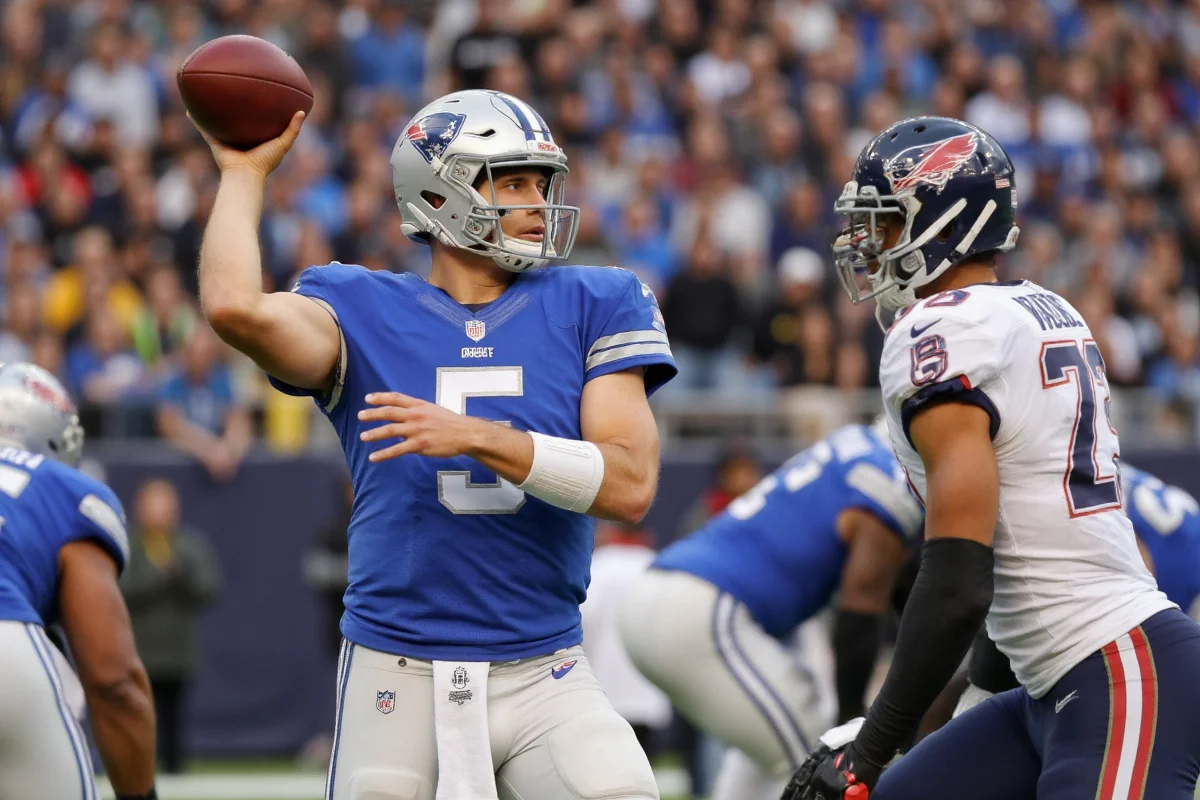
In a quarterback’s stat box, ATT represents the total number of forward passes thrown during a game or season, regardless of whether the pass was completed, dropped, thrown away, or intercepted.
Passing attempts are recorded the moment a forward throw leaves the quarterback's hand toward an intended receiver beyond or behind the line of scrimmage, provided the play is not negated by a penalty pre-snap (such as false start or illegal formation).
- Completions vs. Attempts (CMP / ATT): On box scores, passing statistics are commonly displayed in a
CMP/ATTformat (e.g.,24/36). This means the quarterback completed 24 passes out of 36 total attempts. - Calculating Completion Percentage: Passing attempts form the denominator when calculating completion rate: $$\text{Completion Percentage (%)} = \left( \frac{\text{Completions}}{\text{ATT}} \right) \times 100$$
- Impact on Yards Per Attempt (YPA): Analysts heavily emphasize Yards Per Attempt (YPA) rather than total passing yards because YPA adjusts for play volume. A quarterback who throws for 300 yards on 50 attempts (6.0 YPA) is generally considered less efficient than one who achieves 300 yards on only 25 attempts (12.0 YPA).
2. Rushing Attempts (Rush Att / Carries)
For running backs, quarterbacks executing designed runs or scrambles, and wide receivers on jet sweeps, ATT represents Rushing Attempts (frequently referred to as "carries").
A rushing attempt occurs whenever a ball-carrier takes a handoff, lateral, or snap with the intention of advancing the ball past the line of scrimmage on a running play.
- Yards Per Carry (YPC or Y/A): Dividing total rushing yards by rushing attempts yields the average yards gained per rush attempt.
- Volume and Workload Analysis: In talent evaluation and sports medicine, tracking high rushing ATT counts helps gauge player workload, durability, and touch distribution across a backfield.
3. Kicking and Special Teams Attempts (FG Att, XP Att, Punt Att)
On special teams statistical summary sheets, ATT tracks the volume of kicked balls:
- Field Goal Attempts (FGA / FG ATT): The number of times a placekicker attempts to kick the ball through the goalposts for three points. A kick that is blocked, hits the uprights, or falls short still counts as an attempt.
- Extra Point Attempts (XPA / XP ATT): The number of point-after-touchdown (PAT) kick attempts following a touchdown.
- Punt Attempts (Punt ATT): The number of times the punting unit boots the ball downfield on fourth down.
Understanding "ATT" in Association Football (Soccer)
In global association football (soccer), the acronym ATT carries distinct meanings depending on whether it appears on a tactical pitch diagram, a video game screen, a broadcast graphic, or a stadium summary screen.
Soccer Context Quick-Guide: • Tactical / Lineup Display ➔ ATT = Attacker / Forward • Match Summary / Graphic ➔ ATT = Attendance (Crowd Count) • Detailed Match Statistics ➔ ATT = Attempts (Shots / Attempts on Goal)
1. ATT as "Attacker" or "Attacking" Position
In tactical formations, scouting reports, and sports management applications (such as EA Sports FC/FIFA or Football Manager), ATT denotes an Attacker or an Attacking positional role.
Soccer formations categorize players into main units: Goalkeeper (GK), Defenders (DEF), Midfielders (MID), and Attackers/Forwards (ATT).
- Central Attacking Midfielder (CAM / ATT MID): Players stationed behind the primary strikers whose main role is creative chance creation and direct forward distribution.
- Attacking Wingers (LW/RW or ATT): Wide forwards responsible for driving into the penalty box, delivering crosses, and scoring goals.
- Tactical Style (Attacking Mentality): Broadcast analysts often use "ATT" on team tactical screens to indicate an aggressive, forward-leaning team mentality (e.g., "Attacking 4-3-3").
2. ATT as Match Attendance
When watching a live broadcast of a soccer match or reading an official stadium report, ATT frequently stands for Attendance.
Stadium public address systems and television broadcast overlays display this figure late in the second half to officially declare how many ticketed spectators and hospitality guests are inside the venue.
- Example Broadcast Display:
ATT: 62,450indicates that 62,450 spectators are attending the match live at the venue. - Commercial Importance: Attendance figures are audited by leagues (such as the Premier League, MLS, or UEFA) to track fan engagement, ticket revenue, stadium capacity utilization, and matchday safety compliance.
3. ATT as "Attempts" (Shots on Goal)
In post-match stat boxes published by organizations like UEFA, FIFA, or Opta, ATT can also represent Attempts on Goal (or Total Shots).
This metric measures how many total shots a team took during the game, regardless of whether the shot was on target, off target, or blocked by a defender.
- Attempts On Target (ATT ON / SHOTS ON): Shots that would have entered the goal had they not been saved by the goalkeeper or cleared by a last-line defender.
- Attempts Off Target (ATT OFF / SHOTS OFF): Shots that traveled wide, high over the crossbar, or hit the outer goal frame without entering the net.
Quick Reference: Comparing ATT Definitions Across Football Codes
To help clarify how ATT changes based on context, the table below outlines the primary definitions, common locations, and key formulas across both gridiron football and association football:
| Sport / Setting | Full Term | Context / Usage | Typical Example | Key Formula or Metric |
|---|---|---|---|---|
| American Football | Passing Attempts | Quarterback statistical evaluation | 28 CMP / 42 ATT |
Completion % = (CMP / ATT) × 100 |
| American Football | Rushing Attempts | Running back workload & carries | 18 ATT, 85 YDS |
Yards Per Carry = Rushing Yards / ATT |
| American Football | Kicking Attempts | Field goals and Extra Points | 3/4 FG ATT |
Field Goal % = Made FG / FG ATT |
| Soccer | Attacker / Attacking | Positional role / Pitch lineup | ATT: Forward / Striker |
N/A (Positional designation) |
| Soccer | Attendance | Match day crowd count | ATT: 54,200 |
Stadium Occupancy % = (ATT / Capacity) × 100 |
| Soccer | Attempts on Goal | Total shots taken by a team | 14 ATT (6 on target) |
Shooting Accuracy % = (ATT On Target / ATT) × 100 |
| Venue / Corporate | AT&T Sponsorship | Stadium names & Bowl games | AT&T Stadium |
N/A (Corporate Naming Rights) |
Why "ATT" Volume Metrics Matter in Sports Analytics
Understanding volume metrics like ATT is essential for evaluating athletic performance, tactical tendencies, and efficiency across both codes of football. Raw numbers alone rarely tell the complete story of a match; analyzing attempts provides vital context.
Evaluating Efficiency vs. Volume in American Football
In gridiron football, evaluating a player solely on cumulative statistics (like total passing or rushing yards) can obscure actual performance quality. A quarterback throwing for 350 yards might seem dominant, but if that required 60 ATT, the team's efficiency per play was relatively low.
- Efficiency Context: High attempt counts with low yards-per-attempt metrics often indicate a check-down passing attack or a team trailing late in games that is forced to throw against passive defensive coverage.
- Workload Management: Running backs who consistently log over 25 rushing attempts per game face rapid physical wear. Sports scientists track rushing ATT to monitor player strain and rotation strategy.
- Third-Down Conversion Efficiency: Analysts compare third-down conversion success against total third-down attempts to evaluate play-calling effectiveness under pressure.
Assessing Tactical Dominance and Atmosphere in Soccer
In soccer analytics, combining ATT (Attempts on Goal) with advanced metrics like Expected Goals (xG) helps analysts determine whether a team controlled the match flow.
- Shot Quality vs. Attempt Volume: A team might record 20 shot attempts (ATT), but if those shots were taken from 30 yards away under heavy pressure, their cumulative probability of scoring might be far lower than a team that recorded only 5 high-quality attempts from inside the six-yard box.
- Attendance Revenue and Atmosphere: Tracking stadium ATT over a season provides sporting directors with insights into matchday demand, ticket pricing elasticity, and home-field advantage metrics.
Frequently Asked Questions About ATT in Football
1. What does ATT mean on an NFL stat sheet?
On an NFL stat sheet, ATT stands for Attempts. Depending on the column in which it appears, it refers to Passing Attempts (throws by a quarterback), Rushing Attempts (carries by a ball-carrier), or Field Goal/Extra Point Attempts by a kicker.
2. What is the difference between ATT and CMP in quarterback stats?
ATT represents the total number of pass attempts a quarterback threw, while CMP stands for Completions—the number of those throws that were successfully caught by an eligible receiver. For instance, 20 CMP / 30 ATT means 20 completed passes out of 30 total attempts.
3. What does ATT stand for in soccer lineups?
In soccer tactical lineups and sports video games, ATT stands for Attacker or Attacking. It designates players whose primary role is offensive, such as strikers, center forwards, and attacking wingers.
4. What does ATT mean next to stadium crowd figures on broadcast screens?
When ATT is shown alongside a number during a sports broadcast (e.g., ATT: 48,500), it stands for Attendance. It indicates the total verified number of spectators present at the stadium for that match.
5. How does ATT affect Yards Per Attempt (YPA)?
Yards Per Attempt (YPA) is calculated by dividing total passing yards by total passing ATT. Because attempts serve as the divisor in the formula, having fewer attempts while maintaining high yardage results in a higher, more efficient YPA figure.
Key Takeaways for Sports Fans and Analysts
Whether analyzing gridiron tactics or soccer match reports, recognizing how ATT functions ensures accurate interpretation of sports data:
- In American Football, treat ATT as a measurement of play volume. Always pair attempt totals with yards or completion data to assess actual efficiency.
- In Soccer, look at the surrounding screen context: on player cards and lineups, ATT means Attacker; on match summaries, it represents Attendance or total shot Attempts.
- When comparing athletes, remember that high volume (high ATT) does not automatically equal high effectiveness—efficiency metrics like yards per attempt or conversion percentages provide the true measure of performance.