The standard duration for the Federal Army Officer Candidate School (OCS) at Fort Moore, Georgia, is 12 weeks. For National Guard candidates, the timeline varies between an 8-week accelerated program and a 15-to-18-month traditional program conducted during drill weekends. These durations represent the core OCS training and do not include the 10 weeks of Basic Combat Training required for non-prior service enlistees.
Understanding the Federal OCS Timeline
As of 2026, the Federal OCS remains the primary commissioning source for college graduates and prior-service enlisted soldiers seeking to become officers in the active-duty U.S. Army. The 12-week curriculum is notoriously intense, designed to transform candidates from followers into tactical leaders capable of commanding a platoon. While the calendar says 12 weeks, the experience is divided into three distinct phases, each with its own psychological and physical milestones.
Phase 1: The Basic Phase (Weeks 1–4)
Commonly referred to as the "Bold Phase" or "Black Phase," the first month of OCS is designed to strip away civilian habits and establish a baseline of military discipline. During this period, candidates are under constant scrutiny. The primary focus is on physical fitness, land navigation, and the fundamentals of leadership.
The most significant hurdle in Phase 1 is Land Navigation. Candidates must prove they can navigate dense woods using only a compass, a map, and a protractor, both during the day and at night. In 2026, despite advancements in GPS technology, the Army maintains manual land navigation as a graduation requirement to ensure officers can function in "degraded" environments where electronic warfare may disable satellite signals. Failure to pass Land Navigation is one of the most common reasons candidates are "recycled"—meaning they are removed from their current class and sent back to start the phase over with a subsequent class, effectively adding weeks to their total time at Fort Moore.
Phase 2: The Intermediate Phase (Weeks 5–8)
Once candidates transition into the "Blue Phase," the emphasis shifts from individual tasks to squad-level tactics. Candidates begin to take on formal leadership roles within the company. This phase includes the Squad Tactical Exercise (STX), where candidates are graded on their ability to lead a squad through various combat scenarios, such as ambushes or reconnaissance missions.
A critical component of this phase is the "Blue Card" system—a peer and instructor evaluation process. Candidates are graded not just on their tactical knowledge, but on their ability to motivate peers who are equally exhausted and stressed. This is often the most mentally taxing portion of the 12 weeks, as candidates must balance the technical requirements of the field with the interpersonal challenges of leadership.
Phase 3: The Senior Phase (Weeks 9–12)
The final "White Phase" is where candidates finalize their branching—the process of being assigned to a specific career field like Infantry, Intelligence, or Logistics—and prepare for the transition to the Officer Corps. The training culminates in a large-scale field exercise that tests all skills learned in the previous two months.
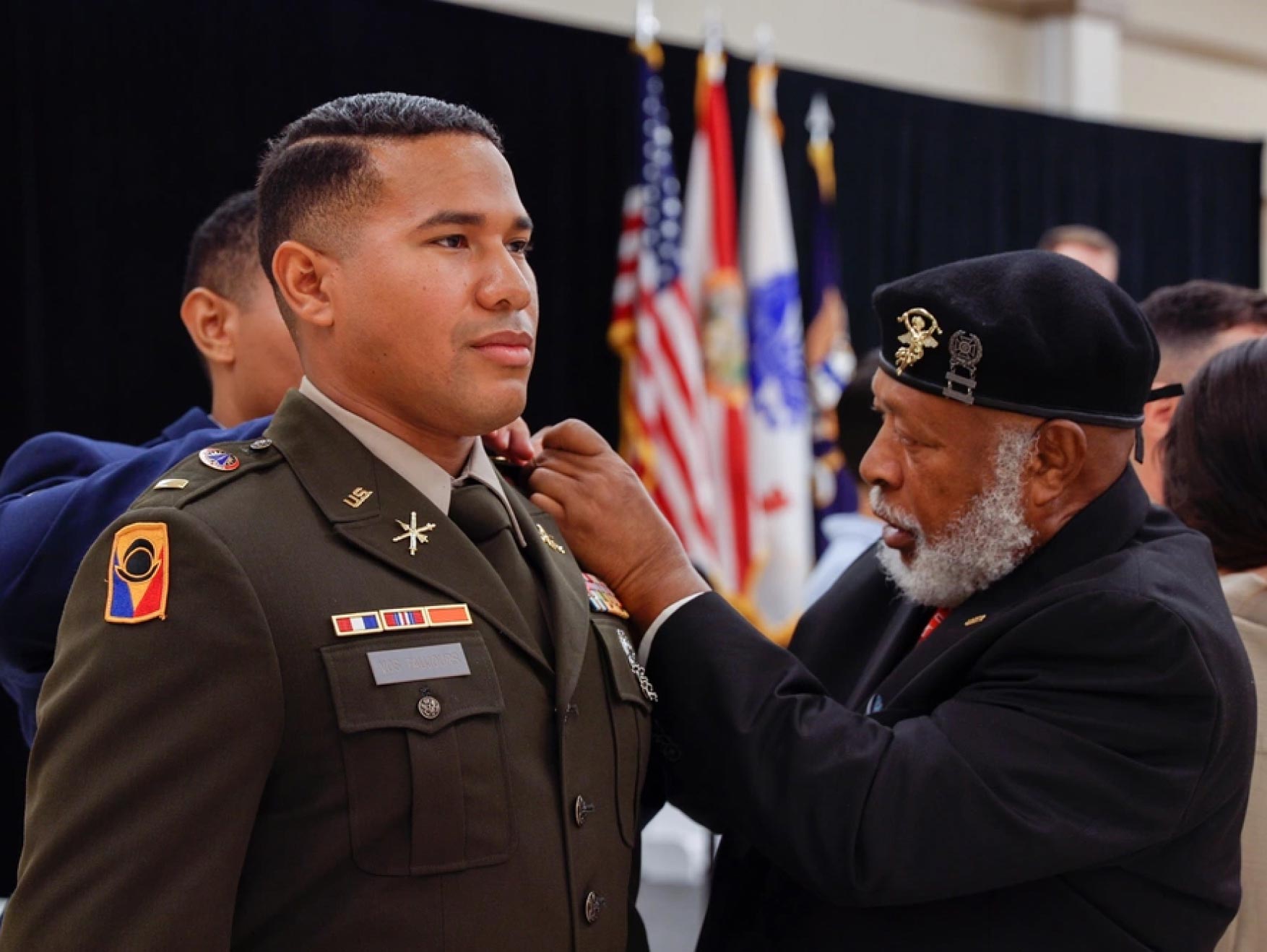
During the final week, candidates participate in formal events, including the "Sign on the Line" ceremony and finally the commissioning ceremony where they receive their "Gold Bars" as Second Lieutenants. For those who pass everything on the first attempt, the total time from Day 1 to graduation is exactly 84 days.
National Guard OCS: Two Distinct Paths
For those serving in the Army National Guard, the length of OCS depends heavily on the candidate's civilian career and the needs of their specific state. The Guard offers more flexibility, but that flexibility can lead to a much longer total time commitment.
The Traditional Program (15–18 Months)
The Traditional OCS program is designed for "citizen-soldiers" who cannot leave their civilian jobs for three months straight. This program is conducted at State Regional Training Institutes (RTIs).
- Phase 1: A 15-day annual training (AT) period during the first summer.
- Phase 2: One weekend per month for approximately 12 to 14 months.
- Phase 3: A final 15-day AT period the following summer, concluding with graduation.
While the total number of training days is similar to Federal OCS, the calendar length is significantly longer. This requires a high degree of self-discipline, as candidates must maintain their physical fitness and study their military manuals at home between drill weekends.
The Accelerated Program (8 Weeks)
For National Guard candidates who want to finish quickly, several RTIs across the country offer an Accelerated OCS program. This is a grueling, high-pressure environment where the 12-week Federal curriculum is compressed into roughly 56 days. Candidates do not receive weekends off and training often lasts 18 to 20 hours a day. While this is the fastest way to earn a commission, it has a high attrition rate due to the sheer physical and mental exhaustion.
| OCS Program Type | Total Duration | Location | Typical Candidate |
|---|---|---|---|
| Federal OCS | 12 Weeks | Fort Moore, GA | Active Duty & Reservists |
| National Guard (Traditional) | 15–18 Months | State RTIs | Civilian Professionals |
| National Guard (Accelerated) | 8 Weeks | Select RTIs (e.g., AL, SD) | High-fitness Guard Soldiers |
| Direct Commission Course | 6 Weeks | Fort Moore / Fort Sill | Doctors, Lawyers, Chaplains |
Total Time: From "Street to Seat"
When calculating the "length" of OCS, many prospective candidates overlook the time spent before arriving at the school. Unless you are a prior-service soldier who has already completed Initial Entry Training, you must first attend Basic Combat Training (BCT).
Basic Combat Training (10 Weeks)
Non-prior service candidates (often called "09S" candidates) must complete the standard 10-week BCT. This brings the total "initial" training time to 22 weeks (10 weeks BCT + 12 weeks Federal OCS). Furthermore, there is often a gap between BCT graduation and the start of an OCS class. Candidates may spend two to four weeks in a "holding" company at Fort Moore, performing administrative tasks and maintaining fitness while waiting for their cycle to begin.
Branch-Specific Training (The Aftermath)
Graduating OCS does not mean you are ready to lead soldiers in the field immediately. Every new Second Lieutenant must then attend the Basic Officer Leadership Course (BOLC). The length of BOLC depends on your branch:
- Infantry/Armor: ~19–22 weeks.
- Logistics/Quartermaster: ~14–16 weeks.
- Military Intelligence: ~18 weeks.
Therefore, the journey from civilian to a fully qualified, platoon-ready officer generally takes 9 to 12 months of continuous military training.
Factors That Can Extend Your Stay
Not everyone finishes Federal OCS in 12 weeks. Several factors can lead to a "recycle," which resets a candidate’s timeline.
1. Academic and Tactical Failure
OCS includes rigorous exams on military history, the Uniform Code of Military Justice (UCMJ), and tactical operations. If a candidate fails a major exam twice, or fails their STX lanes, they may be recycled to a junior class. This typically adds 4 weeks to their stay.
2. Physical Fitness and Injuries
The Army Combat Fitness Test (ACFT) is a graduation requirement. If a candidate cannot meet the minimum scoring standards for officers, they will be given time to remediate. However, the most common cause of extended stays is musculoskeletal injury—stress fractures, ligament tears, or severe sprains. If an injury requires more than a few days of "light duty," the candidate is moved to a Medical Holding Company. They remain there until cleared by a doctor, at which point they rejoin a new OCS class at the phase where they left off. It is not uncommon for an injured candidate to spend 6 months at Fort Moore for what should have been a 3-month course.
3. Administrative and Disciplinary Issues
Integrity violations or repeated failure to follow instructions can lead to a candidate being "boarded." An Officer Specialty Board will determine if the candidate should be recycled, or if they should be dropped from the program entirely and returned to the enlisted ranks to finish their contract.
Prerequisites for Attendance in 2026
To ensure you don't waste time by being disqualified during in-processing, you must meet the following criteria before arriving at Fort Moore:
- Education: A four-year degree from an accredited university.
- Citizenship: You must be a U.S. citizen to receive a security clearance.
- Age: Generally between 19 and 35 years old, though waivers for those up to age 40 are possible for high-demand skill sets or prior-service individuals.
- GT Score: A General Technical (GT) score of 110 or higher on the ASVAB.
- Security Clearance: Ability to obtain a Secret clearance (some branches require Top Secret).
- Physicality: Pass the standard Army physical and meet height/weight requirements.
Detailed eligibility requirements can be verified through the official U.S. Army OCS page.
Comparing OCS to Other Commissioning Sources
The length of OCS is its primary selling point when compared to the Reserve Officers' Training Corps (ROTC) or the United States Military Academy (West Point).
- ROTC: Takes 2 to 4 years while completing a college degree.
- West Point: A 4-year immersion and degree program.
- OCS: 12 weeks for those who already have a degree.
For individuals who decided to join the military later in life or after finishing their education, OCS is the most efficient path. However, the intensity is much higher because the Army is attempting to condense years of leadership development into 90 days.
Expert Tips for Navigating the Timeline
To ensure you stay on the 12-week track and avoid recycles, consider the following tactical advice:
- Arrive in Peak Condition: Do not use OCS to "get in shape." You should be able to score a 540+ on the ACFT before you arrive. Physical exhaustion leads to mental errors in Land Navigation and Tactics.
- Master Land Navigation Early: Purchase a lensatic compass and practice in a local state park before leaving for BCT. It is the number one academic reason for failure.
- Study the "OPORD" (Operations Order): Understanding the five-paragraph field order is the backbone of Phase 2. If you can write and brief an order clearly, you will excel in the tactical phases.
- Embrace the "Hold": If you are a National Guard candidate waiting for an accelerated slot, use the "Phase 0" time at your state RTI. Many states offer pre-OCS drills that prepare you for the specific stressors of the 8-week course.
FAQs About OCS Length
Can I leave the base during the 12 weeks?
During Phase 1, you are generally restricted to the company area. As you progress to Phase 3, you may earn "on-post" or "off-post" privileges during the weekends, allowing you to visit the surrounding Columbus, GA area. However, these privileges are earned based on class performance and can be revoked at any time.
What is the "Phase 0" I keep hearing about?
Phase 0 is an unofficial term used primarily by the National Guard. It refers to the months of drill weekends spent at a State RTI before officially starting Phase 1. It is used to screen candidates and ensure they are physically and administratively ready for the rigors of OCS.
Is OCS shorter for prior-service NCOs?
No. Even if you were a Sergeant First Class with 12 years of experience, you must complete the full 12-week Federal OCS program. While prior-service soldiers often find the tactical portions easier, they are required to complete every milestone alongside the non-prior service candidates.
What happens if I fail OCS?
If you fail OCS, your fate depends on your contract. Most "College Option" (09S) candidates are required to serve the remainder of their contract as an enlisted soldier in a MOS (job) based on the "needs of the Army." Prior-service soldiers usually return to their previous unit and rank.
How long is the graduation ceremony?
The graduation events typically span two days. The first day usually includes a formal "Branching Social" and a military ball or dinner. The second day features the formal commissioning ceremony, which lasts about two hours, followed by the "Silver Pinning" where a family member or mentor pins on your new rank.
Next Steps for Prospective Candidates
If you are considering Army OCS in 2026, the first step is to contact a healthcare professional for a sports-physical and then reach out to an Army recruiter or a National Guard Strength Maintenance Officer. Ensure your college transcripts are in order and begin a dedicated ruck-march and strength-training program. Remember that while the course is technically 12 weeks, the mental and physical preparation should begin at least six months in advance to ensure a one-and-done success.