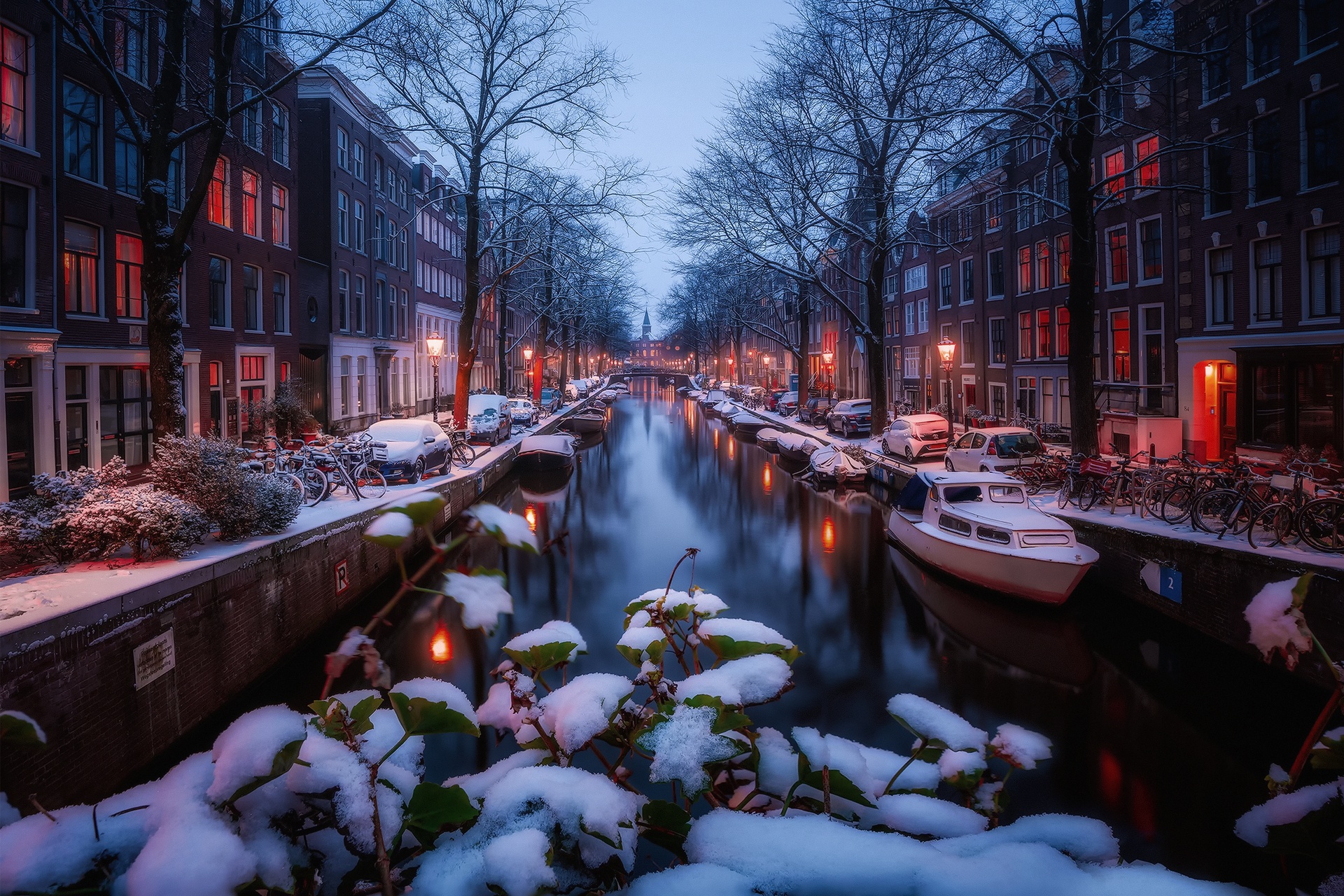
The winter temperature in Amsterdam typically hovers just above freezing, with daytime highs averaging around 5°C to 6°C and nighttime lows dipping to 0°C or slightly below. Maritime influences from the North Sea keep extreme cold at bay, but high humidity, damp winds, and frequent rainfall create a brisk, penetrating chill that makes the city feel much colder than the thermometer indicates.
Meteorological Overview of Amsterdam Winters
Winter in the Dutch capital spans from December through February, bringing a distinct shift in weather patterns characterized by short daylight hours, heavy cloud cover, and prevailing winds from the west or southwest. Understanding the core meteorological dynamics of the city helps travelers and residents adequately prepare for the seasonal transition. While Amsterdam rarely experiences the deep, sustained continental freezes seen further east in Europe, it is subjected to a maritime temperate climate that profoundly dictates daily atmospheric conditions.
The geography of the city heavily influences its microclimate. Situated on low-lying reclaimed land intersected by an extensive network of canals, Amsterdam experiences high relative humidity throughout the winter months. This moisture-laden air interacts with cold fronts moving in from the Atlantic Ocean or the North Sea. Consequently, even when air temperatures remain marginally positive, the presence of ambient humidity and persistent breezes strips heat away from the human body at an accelerated rate, creating a raw, damp cold that penetrates standard clothing if not properly layered.
Furthermore, the urban heat island effect plays a subtle role within the dense inner city. Trapped heat from buildings, vehicular traffic, and paved surfaces can keep the immediate urban core fractionally warmer than the surrounding open polders and rural provinces of North Holland. However, this marginal temperature elevation is often offset by wind tunnels created by historic narrow streets and open expanses along major waterways like the Amstel River and the IJ bay.
Monthly Temperature Breakdown
Analyzing winter conditions requires examining the subtle month-by-month progression from the onset of late autumn into the dead of winter and the eventual thaw toward early spring. Each month presents distinct thermal characteristics, daylight availability, and precipitation profiles.
December: The Transition and Early Chill
December marks the official beginning of meteorological winter, bringing a rapid decline in temperatures and the shortest days of the year.
- Average Daytime Highs: 6°C (43°F)
- Average Nighttime Lows: 1°C (34°F)
- Daylight Hours: Approximately 7 hours and 40 minutes at the winter solstice.
- Atmospheric Character: December is frequently damp, overcast, and windy. Precipitation is common, falling primarily as cold rain, though occasional dusting of wet snow can occur if a cold polar airflow dips southward.
January: The Coldest Month
January is statistically the coldest month of the year in Amsterdam, where sustained freezing conditions occasionally take hold if high-pressure systems over Scandinavia push freezing continental air westward across the North Sea.
- Average Daytime Highs: 5°C (41°F)
- Average Nighttime Lows: 0°C (32°F)
- Daylight Hours: Gradually increasing from 7 hours 45 minutes to nearly 9 hours by month's end.
- Atmospheric Character: Frosty mornings are common, and sheltered canals occasionally develop a thin layer of surface ice. Extended periods of gray, overcast skies dominate, interspersed with crisp, clear days featuring low winter sun.
February: Persistence and Potential Thaw
February maintains the winter chill of January but introduces a gradual lengthening of days and the first subtle signs of shifting seasonal momentum.
- Average Daytime Highs: 6°C (43°F)
- Average Nighttime Lows: 0°C (32°F)
- Daylight Hours: Expanding from 9 hours to over 10.5 hours by the end of February.
- Atmospheric Character: While average temperatures mirror January, February can occasionally bring sudden, volatile weather shifts—ranging from unseasonably mild Atlantic storms to severe late-winter cold snaps known locally as winterse prikken.
| Month | Avg High (°C / °F) | Avg Low (°C / °F) | Mean Precipitation | Prevailing Wind Direction |
|---|---|---|---|---|
| December | 6°C / 43°F | 1°C / 34°F | 81 mm | Southwest / West |
| January | 5°C / 41°F | 0°C / 32°F | 68 mm | Southwest / East |
| February | 6°C / 43°F | 0°C / 32°F | 51 mm | Southwest / Variable |
The Impact of Wind Chill and Humidity
When evaluating the winter temperature in Amsterdam, relying solely on standard thermometer readings provides an incomplete picture. The human body experiences ambient temperature through a complex interaction of wind speed, relative humidity, and solar radiation.
Wind chill is a critical factor in the Dutch capital. Because Amsterdam is a flat, coastal city largely unshielded from major topographical barriers, winds blowing off the North Sea and across open inland lakes can be fierce. A moderate breeze of 20 to 30 kilometers per hour combined with an air temperature of 4°C can easily make conditions feel closer to -1°C or -2°C. This chilling effect accelerates convective heat loss from exposed skin, making proper wind-resistant outerwear essential.
Humidity compounds this sensation. Relative humidity levels throughout the winter frequently exceed 85%. Moist air has a higher thermal conductivity than dry air, meaning it steals body heat more rapidly. This dampness settles deep into clothing fibers, requiring visitors and residents to adopt specific dressing strategies to stay comfortable during extended outdoor exploration.
Weather Anomalies: Ice, Snow, and the Elfstedentocht
While standard winters in Amsterdam feature gray skies, rain, and hovering temperatures just above freezing, the city is subject to rare meteorological anomalies that capture the public imagination.
True heavy snowfall is relatively uncommon in the city center due to the warming influence of the urban environment and the moderating sea temperatures. When snow does fall, it rarely accumulates deeply or lasts for more than a few days before turning into slush. However, easterly continental airflow can occasionally trigger severe cold waves, dropping temperatures well below -10°C for days or weeks at a time.
Under such extreme freezing conditions, the shallow waters of Amsterdam's historic canal ring freeze over. When the ice reaches a safe thickness of at least 12 centimeters (regulated by municipal authorities), sections of the canals are cleared for public ice skating—a cherished Dutch tradition. On a national scale, prolonged severe winters evoke intense cultural focus on the Elfstedentocht (Eleven Cities Tour), a legendary 200-kilometer natural ice skating classic held in the northern province of Friesland, though warming global climate trends have made this event increasingly rare in recent decades.
Practical Wardrobe and Preparation Guidelines
Navigating Amsterdam's winter climate successfully requires adherence to functional layering principles rather than relying on a single heavy garment. Because indoor spaces, museums, trams, and restaurants are heated to comfortable room temperatures, visitors must be able to shed layers easily to avoid overheating indoors before stepping back into the damp outdoor chill.
- Base Layer: Begin with moisture-wicking thermal underwear or merino wool tops and bottoms. Cotton should be avoided as it absorbs sweat and retains moisture against the skin, accelerating heat loss.
- Insulating Layer: Add a mid-layer such as a fleece jacket, a lightweight wool sweater, or a down vest to trap body heat effectively.
- Outer Layer: Invest in a windproof and waterproof coat or parka. Given the frequency of sudden winter rain showers and biting gusts, water resistance is just as critical as thermal insulation.
- Accessories: Protect extremities with a wind-resistant hat that covers the ears, insulated gloves or mittens, and a sturdy scarf.
- Footwear: Wear waterproof, sturdy walking shoes or boots with thick rubber soles. Historic cobblestones throughout the city center become slick and treacherous when wet or lightly frosted.
Frequently Asked Questions
Does it snow frequently in Amsterdam during the winter?
Snow is relatively infrequent and rarely accumulates heavily in the city center. While December through February sees occasional snow flurries or light dustings, maritime influences generally keep precipitation in the form of cold rain. Heavy snowfalls occur only during rare continental cold snaps.
How cold do the Amsterdam canals get in winter?
Water temperatures in the canals drop close to freezing, typically hovering between 2°C and 5°C. For the canals to freeze solidly enough to walk or skate on, sustained sub-freezing air temperatures (consistently below -4°C) are required for several consecutive days, which happens only during exceptional winter seasons.
What is the best month to visit Amsterdam for winter weather?
January offers the most authentic winter atmosphere, with crisp frost, bare trees framing the historic canals, and fewer crowds. However, December is popular for holiday lights, seasonal markets, and festive decorations, despite shorter daylight hours and damp conditions.
How do wind and humidity affect the perceived temperature in Amsterdam?
High relative humidity (often exceeding 85%) combined with brisk winds off the North Sea creates a damp, penetrating chill. This wind chill factor makes actual outdoor conditions feel significantly colder than the official thermometer reading indicates.
Are indoor attractions and public transport heated in Amsterdam?
Yes, all public transportation, including trams, buses, metros, and ferries, as well as museums, shops, and restaurants, are thoroughly heated. Dressing in removable layers is strongly advised to transition comfortably between cold outdoor environments and warm indoor spaces.
Conclusion and Next Actions
A successful winter experience in Amsterdam hinges on respecting the city's unique maritime microclimate. By anticipating damp conditions, biting wind chills, and temperatures hovering just above freezing, travelers can plan their wardrobe and daily itineraries effectively. Prioritize wind-resistant, waterproof outer layers, embrace the city's cozy indoor cultural offerings, and check daily local forecasts from KNMI (Royal Netherlands Meteorological Institute) to stay informed about sudden weather shifts.