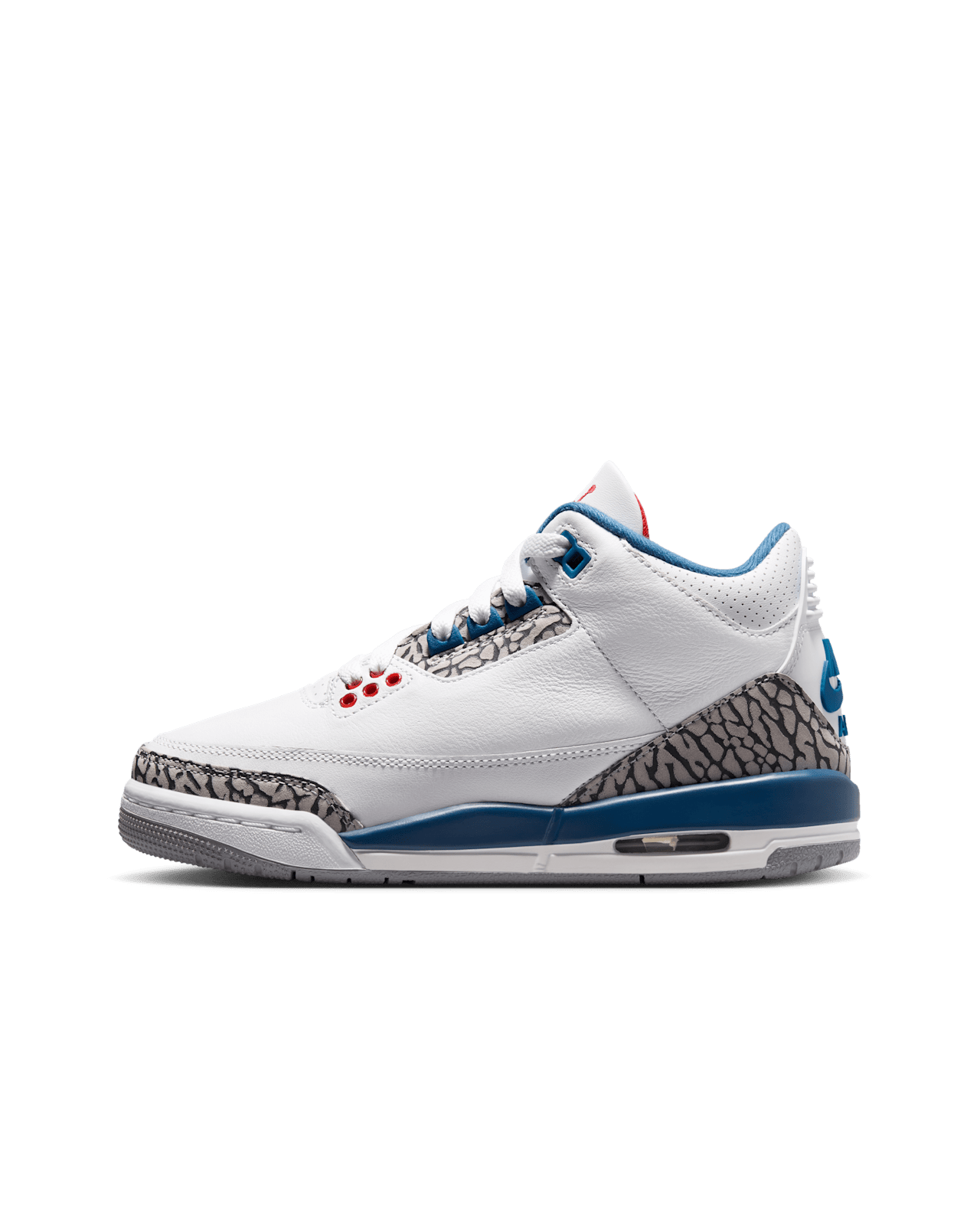
The Air Jordan 3 originally debuted in February 1988, marking a pivotal turning point in sneaker history. Designed by Tinker Hatfield, it introduced the iconic Jumpman logo and visible Air cushioning, effectively convincing Michael Jordan to remain with Nike. Its fusion of luxury aesthetics and performance technology redefined the global footwear market.
The Genesis of a Revolution: The 1987-1988 Landscape
To understand the weight of the Air Jordan 3 (AJ3), one must look at the precarious state of Nike in 1987. The company was reeling from the departure of Peter Moore and Rob Strasser, the primary architects behind the Air Jordan 1 and 2. Michael Jordan’s contract was nearing its expiration, and he was reportedly considering leaving the brand for competitors.
Tinker Hatfield, a former architect turned footwear designer, was tasked with the impossible: create a shoe that would satisfy Jordan’s desire for a lower cut and immediate "broken-in" feel while maintaining high-performance standards. Hatfield’s approach was revolutionary because he actually listened to the athlete. Jordan wanted a mid-cut shoe, something lighter and more flexible than the high-tops of the era.
The result was the first basketball shoe to feature tumbled leather, providing a premium feel right out of the box. By incorporating the elephant print overlays on the toe and heel, Hatfield added a touch of exotic luxury that had never been seen on a hardwood court. This design successfully bridged the gap between a high-stakes athletic tool and a high-fashion statement piece.
The Original Four: Release Dates and Colorway Specifications
The Air Jordan 3 was initially released in four distinct colorways throughout 1988. Each version has since achieved legendary status, frequently re-releasing as "Retros" to massive consumer demand.
- White/Cement (February 1988): This was the colorway Michael Jordan wore during the iconic 1988 Slam Dunk Contest. The crisp white upper contrasted with the gray elephant print, creating a visual identity that remains the gold standard for the silhouette.
- Black/Cement (1988): Often cited by collectors as the greatest sneaker of all time, the Black/Cement version featured a black leather upper with red accents. Jordan wore these during the 1988 All-Star Game, where he earned MVP honors.
- Fire Red (1988): Utilizing a more aggressive color blocking, the Fire Red variant swapped the gray elephant print for a darker, bolder aesthetic, emphasizing the Chicago Bulls' team colors.
- True Blue (1988): This version stood out as it did not adhere to the traditional Bulls color palette. It featured "True Blue" accents and was popularized by Jordan during his later years and by other prominent NBA players of the era.
Technological and Aesthetic Innovations
The AJ3 was not just a visual triumph; it was a feat of engineering. In 1988, sneaker technology was still largely hidden within the midsole. Hatfield made the bold decision to make the Air-Sole unit visible in the heel, a design language borrowed from his work on the Air Max 1. This transparency provided consumers with a tangible sense of the "technology" they were purchasing.
Furthermore, the AJ3 marked the debut of the Jumpman logo on the tongue. In previous iterations, the "Wings" logo was the primary branding. By placing the silhouette of Jordan mid-flight on the tongue, Nike shifted the focus from the shoe as a product of the company to the shoe as an extension of the man himself. This branding shift laid the groundwork for Jordan Brand to eventually become a semi-autonomous subsidiary of Nike.
The use of Elephant Print was equally significant. At the time, athletic shoes were predominantly monochromatic or simple two-tone designs. The introduction of a textured, animal-inspired pattern was a risk that paid off, providing the AJ3 with a distinctive "DNA" that is instantly recognizable even from a distance.
The 1988 All-Star Weekend: A Cultural Pivot Point
The historical context of the AJ3 is inseparable from Michael Jordan’s performance during the 1988 NBA All-Star Weekend in Chicago. On February 6, 1988, Jordan took to the air in the "White/Cement" AJ3, soaring from the free-throw line to defeat Dominique Wilkins in what is arguably the most famous dunk contest in history.
The following day, wearing the "Black/Cement" colorway, Jordan scored 40 points in the All-Star Game, securing the MVP trophy. These back-to-back performances linked the footwear to a sense of superhuman capability. For the consumer, the Air Jordan 3 wasn't just a shoe; it was a piece of the magic that allowed Jordan to defy gravity. This era established the "sneaker moment"—the idea that a specific sporting event could forever elevate the value and desire for a specific piece of footwear.
The "Mars Blackmon" Marketing Revolution
No discussion of the Air Jordan 3's market impact is complete without mentioning the marketing campaign directed by Spike Lee. Lee reprised his character "Mars Blackmon" from the film She's Gotta Have It. The black-and-white commercials featured the fast-talking Mars insisting that Jordan’s success was "all because of the shoes."
This campaign was revolutionary because it injected humor and street culture into athletic marketing. It moved away from the stoic, hyper-serious tone of 1980s sports advertising and embraced the burgeoning hip-hop and urban aesthetic. By 2026, these commercials are still studied in marketing courses as the blueprint for celebrity-athlete branding. The synergy between Spike Lee, Michael Jordan, and Tinker Hatfield created a "holy trinity" of design, performance, and culture that made the AJ3 an inescapable phenomenon.
Long-term Market Impact and the Birth of "Sneakerheads"
The Air Jordan 3 is widely credited with birthing the modern "sneakerhead" culture. Before the AJ3, shoes were largely viewed as disposable athletic equipment. The AJ3 changed that perception, encouraging collectors to preserve their pairs and follow release cycles with religious fervor.
Comparison of Early Air Jordan Models
| Feature | Air Jordan 1 (1985) | Air Jordan 2 (1986) | Air Jordan 3 (1988) |
|---|---|---|---|
| Primary Designer | Peter Moore | Peter Moore & Bruce Kilgore | Tinker Hatfield |
| Key Branding | Wings Logo | Wings Logo | Jumpman Logo |
| Cushioning | Encapsulated Air | Encapsulated Air | Visible Air |
| Cut Profile | High-Top / Low-Top | High-Top / Low-Top | Mid-Cut |
| Materials | Smooth Leather | Faux Lizard Skin | Tumbled Leather / Elephant Print |
| Market Impact | The Beginning | Luxury Experiment | Cultural Icon / Saved Nike |
The resale market for the Air Jordan 3 remains one of the most robust in the industry. As of 2026, original 1988 pairs in "deadstock" (unworn) condition are considered museum-grade artifacts, often fetching five-figure sums at specialized auctions like Sotheby's. Even "Retro" releases—modern recreations of the 1988 specs—consistently sell out within minutes, maintaining a high resale premium on secondary platforms.
The 2026 Resale Economy and Authentication
In the current 2026 market, the Air Jordan 3 continues to dominate. Nike has mastered the "scarcity model," releasing the OG colorways only once every few years to maintain demand. Collectors now look for specific details to verify authenticity and "OG status," including the presence of the "Nike Air" branding on the heel tab versus the later Jumpman-branded heel tabs found on early 2000s retros.
The market impact has also extended into the digital realm. Fractional ownership platforms and sneaker-backed NFTs have used the AJ3 as a primary asset, allowing investors to buy shares of a 1988 original. This financialization of the sneaker highlights how the AJ3 evolved from a basketball shoe into a legitimate alternative asset class.
Common Mistakes for Collectors and Buyers
When entering the market for an Air Jordan 3, especially "OG" styled retros or vintage pairs, several pitfalls exist:
- Midsole Crumbling: Pairs from the 1988 original run or even retros from the early 2010s often suffer from polyurethane hydrolysis. The foam midsole chemically breaks down over time, turning into dust. Collectors must distinguish between "wearable" pairs and "display-only" pairs.
- Heel Tab Misalignment: Low-quality replicas often struggle with the placement of the "Nike Air" logo on the heel. On original-spec pairs, the logo should be centered and the plastic should feel firm, not rubbery.
- Elephant Print Variance: The height and texture of the elephant print vary between different retro years. Serious collectors often prefer the "shorter" print found on the 1988 originals compared to the "tall" print seen on some 2000s-era releases.
- The "Reimagined" Distinction: Recently, Jordan Brand has released "Reimagined" versions that feature pre-aged aesthetics (yellowed midsoles). Buyers should clarify if they are looking for a pristine "new" look or a "vintage" look before purchasing.
Frequently Asked Questions
What was the exact release price of the Air Jordan 3 in 1988?
The Air Jordan 3 retailed for $100 in 1988. At the time, this was considered an exceptionally high price for a basketball sneaker, as most top-tier models were priced between $60 and $75. The $100 price tag reinforced the shoe's status as a luxury performance item.
Did Michael Jordan really want to leave Nike before the AJ3?
Yes. According to numerous historical accounts and interviews with Nike executives, Jordan was extremely unhappy with the Air Jordan 2 and the leadership changes at the company. Tinker Hatfield’s presentation of the AJ3, which incorporated Jordan’s personal design preferences, is widely cited as the specific reason he decided to sign a contract extension with Nike.
Why is the "Nike Air" branding on the heel so important to collectors?
In the late 1990s and early 2000s, Jordan Brand transitioned to using the Jumpman logo on the heel tabs of retro releases. For purists, the original "Nike Air" logo represents the historical accuracy of the 1988 debut. Shoes featuring the "Nike Air" branding generally command higher prices on the secondary market than those with the Jumpman heel.
How do I maintain a pair of Air Jordan 3s to prevent cracking?
To slow the degradation of the midsole, it is recommended to store the shoes in a cool, dry place away from direct sunlight. Using moisture-absorbing packets (silica gel) can help. Interestingly, "wearing" the shoes occasionally can actually help prevent crumbling by compressing the air bubbles in the foam and keeping the material slightly more flexible, though this is only effective for newer retros.
What is the most rare Air Jordan 3 colorway?
While the four OG colorways are the most famous, certain "Player Exclusive" (PE) versions made for colleges like the University of Oregon or specific celebrities (like the DJ Khaled or Eminem collaborations) are significantly rarer, with some having fewer than 100 pairs in existence.
Strategic Recommendation for Enthusiasts
For those looking to acquire a piece of this history in 2026, the recommended course of action is to target the "OG Reimagined" series or high-fidelity retros that feature the "Nike Air" branding. These releases offer the best balance of modern durability and historical accuracy. If you are pursuing a 1988 original, ensure the transaction is handled through a reputable auction house or a platform with a multi-step physical authentication process, as the market for vintage AJ3s is fraught with high-quality "frankensneakers" (authentic parts mixed with replicas).