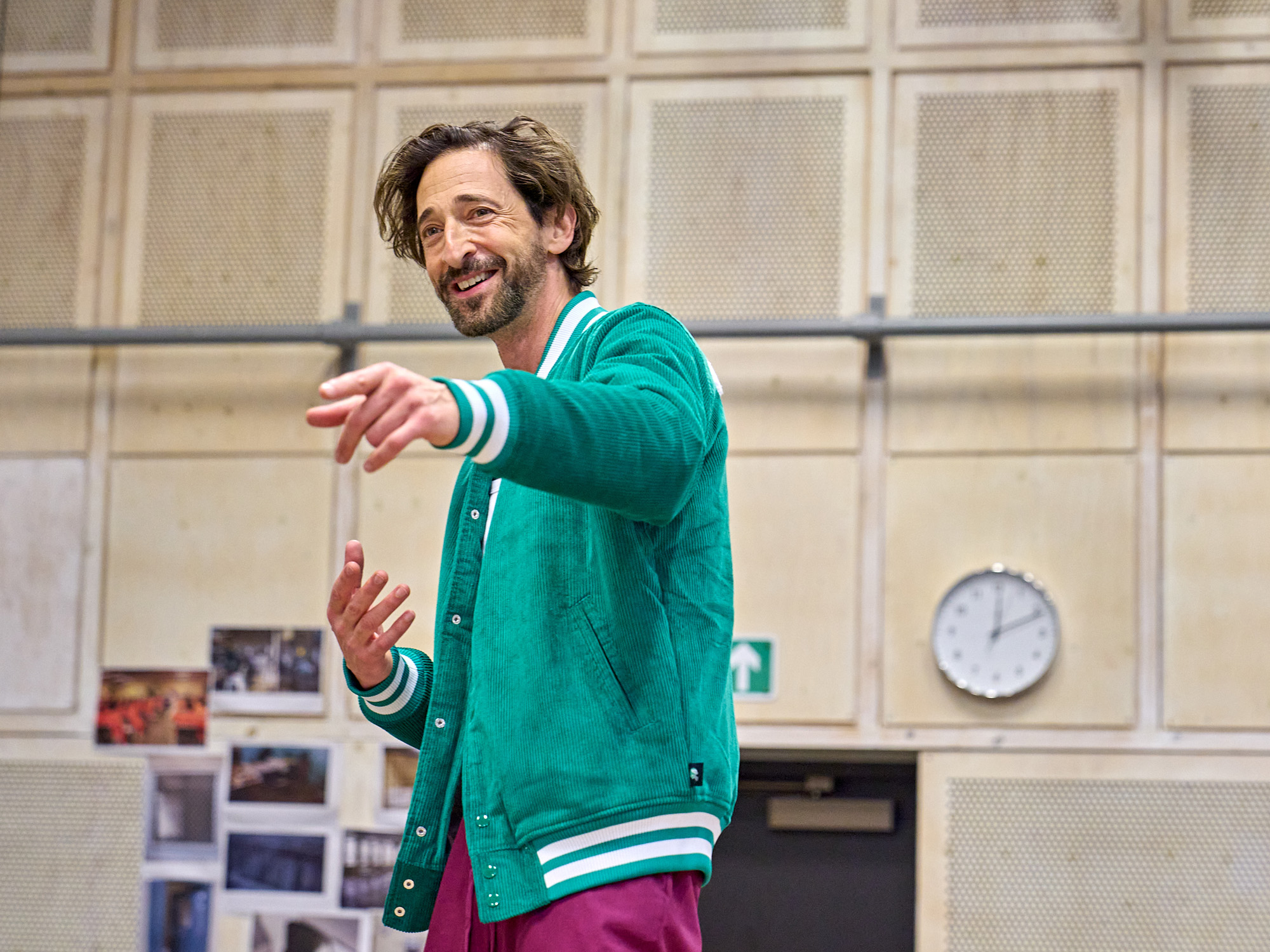
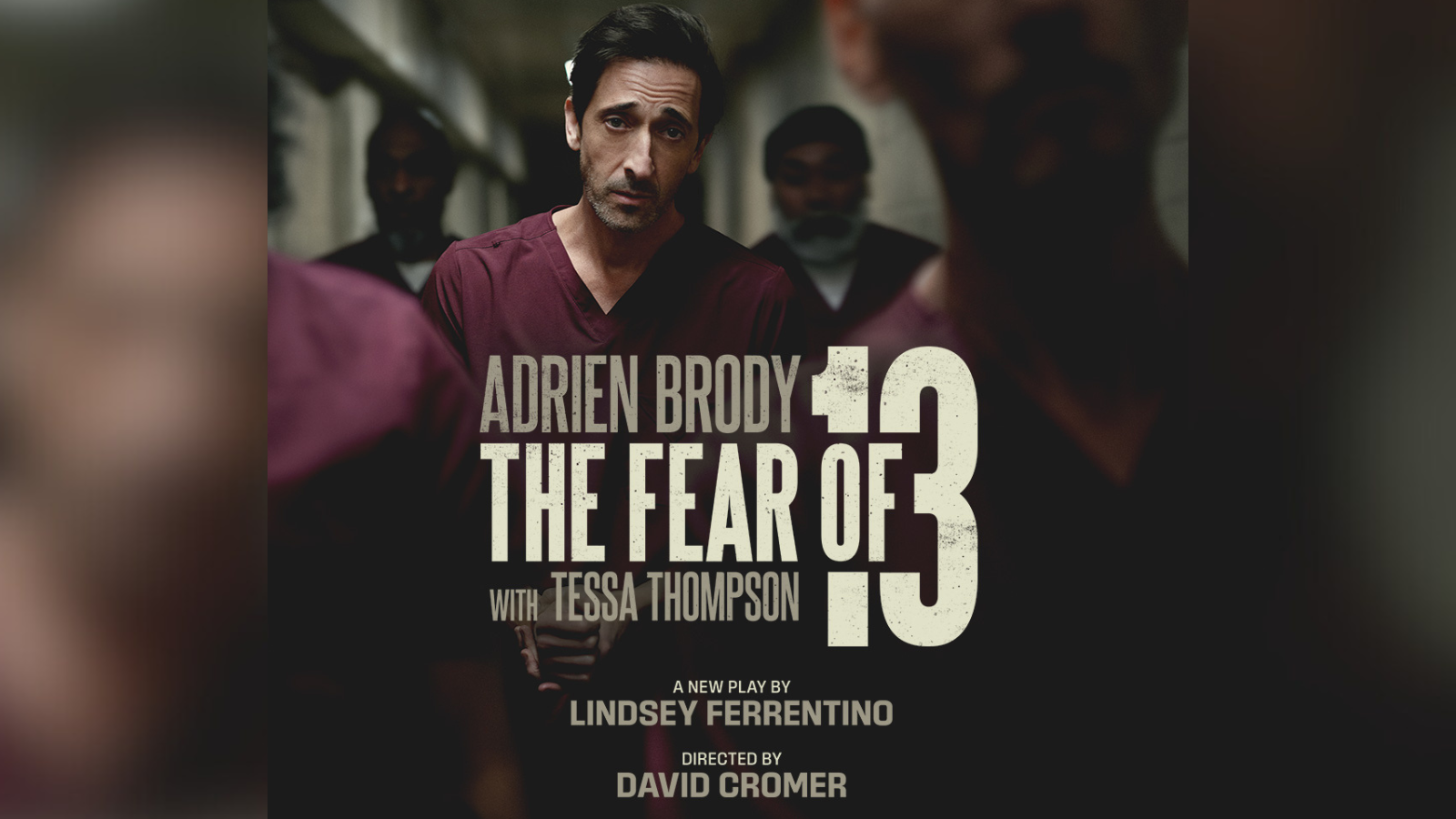
Adrien Brody’s starring role in The Fear of 13 represents a landmark moment in contemporary theatre, marking the Academy Award winner’s highly anticipated London stage debut. Portraying Nick Yarris, a man who spent 22 years on death row for a crime he did not commit, Brody delivers a transformative performance in this stage adaptation of the acclaimed 2015 documentary. The production, which premiered at London’s Donmar Warehouse, explores themes of judicial failure, the power of self-education, and the resilience of the human spirit.
The Origins: From Documentary to the Donmar Warehouse
The journey of The Fear of 13 from a real-life tragedy to a celebrated stage production is as compelling as the story itself. To understand the significance of Adrien Brody’s involvement, one must first look at the source material: the life of Nick Yarris. In 1982, Yarris was convicted of the murder, rape, and abduction of a woman in Pennsylvania. He spent over two decades in solitary confinement, during which he petitioned the court to end his appeals and execute him—not because of guilt, but because of the psychological toll of his environment.
The story first gained international prominence through David Sington’s 2015 documentary, which featured Yarris speaking directly to the camera, weaving a mesmerizing narrative of his life, his mistakes, and his eventual exoneration through DNA evidence in 2003. When the Donmar Warehouse announced a stage adaptation written by Lindsey Ferrentino and directed by Justin Martin, the casting of Adrien Brody signaled a production of immense ambition.
In the 2024–2025 theatrical season, this production became a cultural touchstone. As we look back from 2026, the play is remembered not just as a "star vehicle" for Brody, but as a rigorous interrogation of the American legal system and the redemptive power of language. Ferrentino’s script didn't merely replicate the documentary; it expanded the world of the prison, giving physical form to the memories and "ghosts" that Yarris describes in his monologues.
Adrien Brody’s Return to the Stage
For Adrien Brody, The Fear of 13 was more than just a role; it was a return to his roots and a challenge to his craft. Best known for his Oscar-winning performance in The Pianist, Brody has built a career on physical and emotional immersion. However, the stage requires a different kind of stamina—a nightly vulnerability that film cannot replicate.
Brody’s portrayal of Nick Yarris is characterized by a frantic, poetic energy. He captures Yarris’s unique cadence—a man who taught himself to read and write using a dictionary in a 6x9-foot cell. This self-education gave Yarris a vocabulary that felt almost "too big" for his surroundings, a detail Brody emphasizes through his deliberate, almost musical delivery of complex words.
The Physicality of the Performance
The Donmar Warehouse is an intimate space, with the audience surrounding the stage on three sides. This proximity forced Brody to inhabit the character with every fiber of his being. Critics noted that Brody didn't just play Yarris; he seemed to age and wither under the stage lights, reflecting the 8,057 days the real Yarris spent in captivity. His movement on stage often mimicked the "pacing" of a prisoner, a restless energy that conveyed a mind that was constantly seeking an exit, even when the body was confined.
The Choice of the Donmar Warehouse
Choosing an intimate 250-seat venue like the Donmar over a massive West End house was a strategic artistic decision. It allowed the production to maintain the "confessional" feel of the original documentary. In 2026, theatre historians often point to this production as a prime example of how star power can be used to elevate experimental, high-concept drama in small spaces, creating an "event theatre" atmosphere that sold out months in advance.
Analyzing the Play’s Narrative Structure
Lindsey Ferrentino’s adaptation of The Fear of 13 is a masterclass in non-linear storytelling. While the documentary relied on Yarris’s direct address, the play introduces a supporting ensemble to play the various figures in his life—guards, fellow inmates, family members, and the lawyers who eventually fought for his freedom.
The Role of Language and Literacy
A central pillar of the play is the concept of "triskaidekaphobia," or the fear of the number 13, which provides the title. For Yarris, this word was a turning point in his education. The play meticulously tracks how he moved from a semi-literate young man to a sophisticated orator. This evolution is used as a metaphor for his survival; by mastering the language of his oppressors, he found a way to maintain his dignity.
Brody handles these linguistic shifts with precision. In the early scenes, his speech is rough and reactive. As the play progresses into the years of his incarceration, his speech becomes more measured and ornate. This serves a dual purpose: it shows his intellectual growth and underscores the tragedy of a brilliant mind being wasted in a cage.
Technical Direction and Soundscape
Director Justin Martin, fresh from his success with Stranger Things: The First Shadow, utilized a minimalist yet evocative set design. The use of sound was particularly crucial in establishing the atmosphere of death row. The clanging of metal doors, the low hum of electricity, and the echoing voices of other inmates created a sensory experience that put the audience in the cell with Brody. This "sonic prison" was one of the most praised aspects of the 2024–2025 run, helping the audience understand the psychological sensory deprivation Yarris endured.
Comparison: Documentary vs. Stage Play
| Feature | 2015 Documentary (Nick Yarris) | 2024/2025 Stage Play (Adrien Brody) |
|---|---|---|
| Format | Solo interview/Direct address | Ensemble drama with central lead |
| Perspective | Retrospective monologue | Real-time emotional reenactment |
| Setting | Static background / Reenactment footage | Stylized, intimate "thrust" stage |
| Focus | The "truth" of the story | The "feeling" of the experience |
| Lead Presence | Real-life subject (Nick Yarris) | Interpretive performance (Adrien Brody) |
| Narrative Tool | Editing and archival imagery | Physical movement and live soundscapes |
The Emotional Core: Why This Story Matters in 2026
By 2026, the conversation around criminal justice reform has continued to evolve, and The Fear of 13 remains a vital part of that dialogue. The play does not just tell a story of an innocent man; it tells the story of a flawed man who was treated with structural cruelty. Nick Yarris was not a "perfect" victim—the play is honest about his early life of crime and his struggle with addiction—but it argues that even the most flawed individual deserves the protection of the law and the right to a fair trial.
Adrien Brody’s performance serves as a bridge between the audience and the harsh reality of the American penal system. By the end of the play, the focus shifts from the question of "Did he do it?" to "How do we allow this to happen?" This shift is what made the production a critical success and why it continues to be discussed in acting conservatories and law schools alike.
Supporting Cast and Creative Team
While Brody was the undeniable draw, the supporting cast provided the necessary friction to make his performance shine. Nana Mensah, who played a pivotal role as a volunteer who becomes a lifeline for Yarris, brought a grounded, empathetic contrast to Brody’s high-wire intensity. The chemistry between the two provided the play’s few moments of genuine warmth, making the eventual heartbreak of Yarris’s situation even more palpable.
The creative team's commitment to authenticity was also evident. Extensive research was conducted into the Pennsylvania prison system of the 1980s and 90s, ensuring that the costumes, slang, and procedures depicted on stage felt lived-in and accurate. This attention to detail is a hallmark of Donmar productions and was essential for a story grounded in such a specific, grim reality.
The Legacy of the Production
Looking back at the impact of The Fear of 13 as of 2026, we can see several lasting effects on the industry:
- The "Brody Effect": Adrien Brody’s successful transition to the London stage encouraged other A-list Hollywood actors to seek out challenging, limited-run roles in smaller, artistically driven venues rather than standard West End commercial houses.
- Exoneree Advocacy: The play sparked a renewed interest in the work of the Innocence Project and other organizations dedicated to freeing the wrongfully convicted. Several performances during the original run included post-show Q&A sessions with legal experts and exonerees.
- Lindsey Ferrentino's Rise: Already an established playwright, Ferrentino’s work on The Fear of 13 solidified her reputation as one of the preeminent voices in adapting complex true stories for the stage.
- Streaming and Preservation: Following the success of the live show, there were recorded versions and audio adaptations released in late 2025, allowing those who couldn't secure a ticket to the Donmar Warehouse to experience the production.
Frequently Asked Questions
Is "The Fear of 13" based on a true story?
Yes, the play is based on the real life of Nick Yarris, who spent 22 years on death row in Pennsylvania. He was exonerated by DNA evidence in 2003, making him the first death row inmate in Pennsylvania to be cleared by DNA testing. The stage play adapts these events, focusing on his time in prison and his eventual fight for freedom.
Where was Adrien Brody’s production performed?
The production premiered at the Donmar Warehouse in Covent Garden, London. Its initial run was scheduled from October to December 2024, but its massive popularity led to extensive discussions about transfers and digital broadcasts in 2025 and 2026.
What does the title "The Fear of 13" mean?
The title refers to triskaidekaphobia, which is the morbid fear of the number 13. In the context of Nick Yarris's story, it symbolizes his intellectual awakening. After hearing the word, he became obsessed with learning its meaning and subsequently dedicated his life to learning one new word every day from a dictionary while in solitary confinement.
Did Adrien Brody receive awards for this role?
While award cycles vary, Brody’s performance was widely considered a frontrunner for the Olivier Awards following its 2024 debut. Critics almost universally praised his performance as a "career-best" and a "theatrical tour de force," noting his ability to carry the emotional weight of a heavy, complex narrative.
How does the play differ from the Netflix documentary?
The documentary is a "talking head" style film where Nick Yarris tells his own story directly to the camera. The stage play, however, is a dramatization that uses a full cast to act out the scenes Yarris describes. This adds a layer of theatricality and allows the audience to see the interactions between Yarris and other characters, rather than just hearing about them.
Final Recommendation for Viewers and Readers
For those interested in the intersection of justice, art, and the human condition, The Fear of 13 remains essential study material. If you are an actor or a student of drama, analyzing Adrien Brody’s physical and vocal choices in this role provides a blueprint for how to inhabit a real-life figure without falling into caricature. For the general public, the story serves as a haunting reminder of the fallibility of human institutions.
If you have the opportunity to view a recorded version of the production or read Lindsey Ferrentino’s script, it is highly recommended. The story of Nick Yarris, brought to life by Adrien Brody, is a testament to the idea that no matter how much space is taken away from a person, their mind and their story can remain vast and unbreakable.