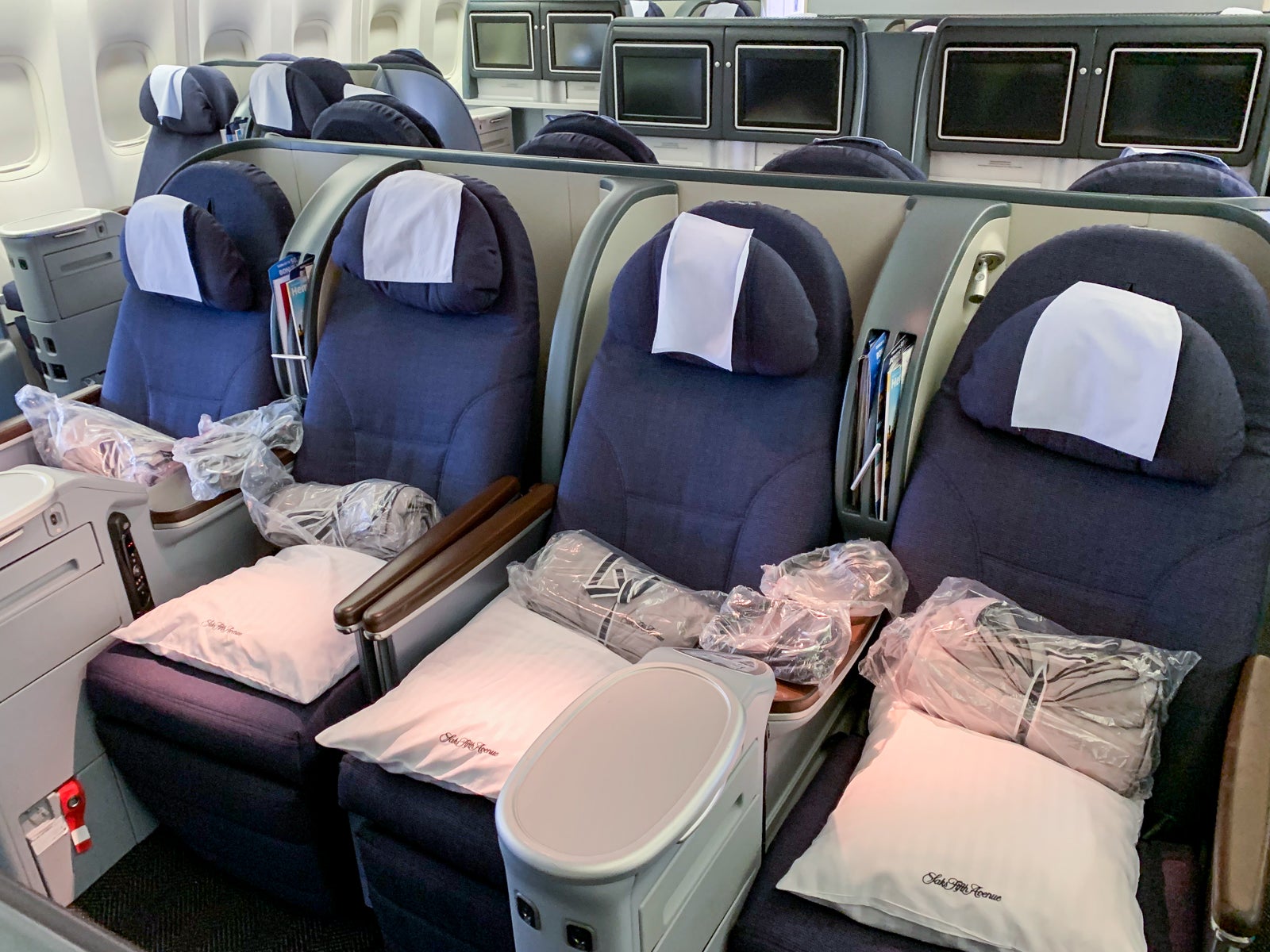
Legroom on a Boeing 777 typically ranges from 31 to 32 inches in standard Economy, while Premium Economy offers a more generous 38 inches. This measurement, known as "seat pitch," varies significantly depending on the specific airline's cabin configuration, the aircraft variant, and the presence of slimline seat technology.
The Boeing 777, affectionately known as the "Triple Seven," has been the backbone of long-haul aviation for decades. As we move through 2026, the fleet has evolved from the classic 777-200 and 777-300ER models to the advanced 777X series. For passengers, the most critical factor in flight comfort is legroom—the physical space between your seat and the one in front of you. Understanding how airlines configure these massive twin-jets is the key to securing a comfortable journey.
Understanding Seat Pitch and Legroom Dynamics
In the aviation industry, "legroom" is technically measured as seat pitch. This is the distance from a specific point on one seat to the exact same point on the seat directly in front of or behind it. While many passengers use the terms interchangeably, seat pitch is the standard metric used by Boeing and airlines to define cabin density.
On a Boeing 777, several factors influence how much actual "knee room" you feel:
- Seat Thickness: Modern "slimline" seats use thinner materials and moved the magazine pocket to the top of the seatback. This can make a 30-inch pitch feel like a 32-inch pitch because there is less physical obstruction near the knees.
- Under-Seat Storage: The placement of entertainment system boxes (IFE boxes) under the seat can severely restrict where you put your feet, effectively reducing usable legroom.
- Seat Width: While not directly legroom, the 777 is often configured in a 10-abreast (3-4-3) layout. The resulting narrower seats can make the legroom feel more cramped because you have less room to shift your body.
Standard Legroom by Cabin Class on the Boeing 777
The Boeing 777 is a versatile wide-body aircraft, allowing airlines to customize interiors extensively. However, industry standards have solidified around specific ranges for each class of service.
Economy Class (Main Cabin)
In Economy, the standard seat pitch on most Boeing 777-300ER and 777-200LR aircraft is 31 to 32 inches. High-density carriers, particularly those operating regional routes or budget-oriented long-haul flights, may drop this to 30 inches. Conversely, premium-focused airlines like Japan Airlines (JAL) have historically maintained a "Sky Wider" economy product on certain 777s with up to 34 inches of pitch.
Premium Economy
This cabin has seen the most growth in recent years. On a 777, Premium Economy usually provides a significant jump in comfort, with a seat pitch of 38 inches. Beyond the extra 6-7 inches of legroom, these seats are often wider and feature dedicated leg rests or footrests, which are crucial for preventing deep vein thrombosis (DVT) on ultra-long-haul flights.
Business Class
The Boeing 777 Business Class experience has transitioned almost entirely to "lie-flat" configurations. Here, "legroom" is replaced by "bed length." Most modern 777 Business Class seats offer a pitch of 60 to 78 inches when upright, which converts into a fully flat sleeping surface. The "footwell" is a common design feature where your feet tuck into a compartment under the side console of the seat in front.
First Class
On airlines that still offer a true First Class on the 777 (such as Emirates or Cathay Pacific), legroom is virtually unlimited. These "suites" often provide a pitch of 80 inches or more, ensuring that even the tallest passengers cannot touch the forward partition while seated.
Comparing Boeing 777 Variants and Configurations
The specific model of the 777 you are flying on can dictate the cabin's spaciousness. As of 2026, the 777X (777-9 and 777-8) is becoming a more common sight at major hubs.
| Airline Category | Aircraft Model | Economy Pitch (Avg) | Layout | Notable Feature |
|---|---|---|---|---|
| Full-Service International | 777-300ER | 32" | 3-3-3 or 3-4-3 | Industry standard workhorse |
| Ultra-Long-Haul | 777-200LR | 31-33" | 3-3-3 | Used for 15+ hour flights |
| Next-Gen (777X) | 777-9 | 31-32" | 3-4-3 | Wider cabin walls for more shoulder room |
| High-Density/Leisure | 777-300 | 30-31" | 3-4-3 | Maximized passenger count |
The 777-300ER: The Global Standard
The 777-300ER is the most successful variant. Initially, many airlines flew this aircraft with 9-abreast seating (3-3-3), which provided 18.5-inch seat widths. However, the industry has almost entirely shifted to 10-abreast (3-4-3). While the legroom (pitch) often stayed the same at 31-32 inches, the reduction in seat width makes the legroom harder to utilize comfortably.
The 777X (777-8 and 777-9)
Boeing redesigned the interior of the 777X to be approximately 4 inches wider than previous models by carving out the interior side panels. For passengers, this means that even with a 10-abreast layout, the seats can be slightly wider (about 18 inches). In terms of legroom, airlines are using the 777X to debut new "cradle" seats in Economy that optimize knee clearance.
Prime Seats for Extra Legroom
If you are stuck in Economy but desperate for more space, certain rows on the Boeing 777 offer significantly more legroom, often for an additional fee.
Exit Row Seats
Located next to the emergency exits, these rows have no seats immediately in front of them, providing several feet of clear space.
- Pros: You can fully stretch your legs; easy aisle access.
- Cons: These seats are often narrower because the tray table is stored in the armrest. They can also be colder due to the door's proximity and lack floor storage during takeoff and landing.
Bulkhead Seats
These are the seats directly behind a wall or galley partition.
- Pros: No one can recline into your space. They are excellent for those who feel claustrophobic.
- Cons: You cannot stretch your legs out under a seat in front of you. For tall passengers, the wall can actually feel more restrictive than a standard seat.
Space-Plus or Preferred Economy
Many airlines now designate the first few rows of the Economy cabin as "Preferred" or "Economy Plus." On a 777, this usually adds 3 to 5 inches of pitch, bringing the total to roughly 35-36 inches. This is often the best value-for-money upgrade for travelers over six feet tall.
Technical Factors: How Cabin Pressure and Humidity Impact Comfort
While seat pitch is a physical measurement, the Boeing 777's environmental systems affect how your body experiences that space. The 777X, following the lead of the 787 Dreamliner, features a lower cabin altitude and higher humidity levels compared to the older 777-200 models.
When your body is better hydrated and the "cabin altitude" is lower (closer to 6,000 feet rather than 8,000 feet), your joints and soft tissues are less likely to swell. Swelling in the legs and feet is a major contributor to the feeling of "cramped" legroom. Therefore, flying on a newer 777 variant can actually make the same 31 inches of legroom feel more tolerable.
Strategies for Securing the Best 777 Legroom
To ensure you get the best possible seat, you must be proactive during the booking and check-in process.
- Consult Updated Seat Maps: Tools like AeroLOPA provide highly accurate, to-scale cabin diagrams of Boeing 777 configurations. They show exactly where windows align and which seats have obstructed legroom due to equipment boxes.
- Monitor the Aircraft Version: Airlines often swap a 777-200 for a 777-300ER. Check your flight details frequently. A "Version 2" of a 777 might have significantly different legroom in the "Extra Space" rows than a "Version 1."
- The Middle-Section Advantage: In a 3-4-3 layout, the middle 4 seats are often the last to fill up. If the flight isn't full, sitting in the middle section of a 777 can sometimes grant you an empty seat next to you, allowing you to stretch diagonally.
- Check-in Timing: Most airlines open the remaining "Preferred" seats for free or a reduced price during the final 24 hours before departure.
Frequently Asked Questions
Which airline has the most legroom on a Boeing 777?
Historically, Japan Airlines (JAL) and Singapore Airlines have offered some of the most generous legroom in Economy on their 777 fleets. JAL’s "Sky Wider" configuration on certain 777-300ERs offers a 34-inch pitch and a 9-abreast layout, which is significantly more spacious than the industry average.
Is the 10-abreast layout on the Boeing 777 uncomfortable?
The 10-abreast (3-4-3) layout reduces seat width to about 17 inches, which can feel tight at the shoulders. However, the legroom (pitch) is usually maintained at the standard 31-32 inches. Passengers often find the width more of an issue than the legroom itself.
How much extra legroom do you get in 777 Premium Economy?
On most Boeing 777s, Premium Economy provides 38 inches of pitch, which is 6-7 inches more than standard Economy. This is usually accompanied by an extra 2 inches of seat width and a deeper recline.
Do 777 exit row seats have more legroom?
Yes, exit row seats on the 777 offer the most legroom in the Economy cabin, often exceeding 50 inches of clear space. However, you must be able-bodied and willing to assist in an emergency to sit there.
Does the Boeing 777X have more legroom than older models?
The 777X does not necessarily have more legroom in terms of pitch (as that is decided by the airline), but it does have a wider cabin. This allows for slightly wider seats in a 10-abreast configuration, which reduces the feeling of being cramped.
Final Recommendations for 777 Travelers
When flying on a Boeing 777 in 2026, your best strategy for legroom is to identify the specific variant of the aircraft. If you are flying on a 777-300ER, prioritize the 3-3-3 layouts if they still exist on your carrier, as they offer more lateral room. For the best legroom-to-price ratio, look for "Economy Plus" or "Main Cabin Select" products that offer a 35-inch pitch. Finally, always check the placement of under-seat entertainment boxes on older 777-200ER models, as these can turn a standard legroom seat into a very uncomfortable experience for your feet.