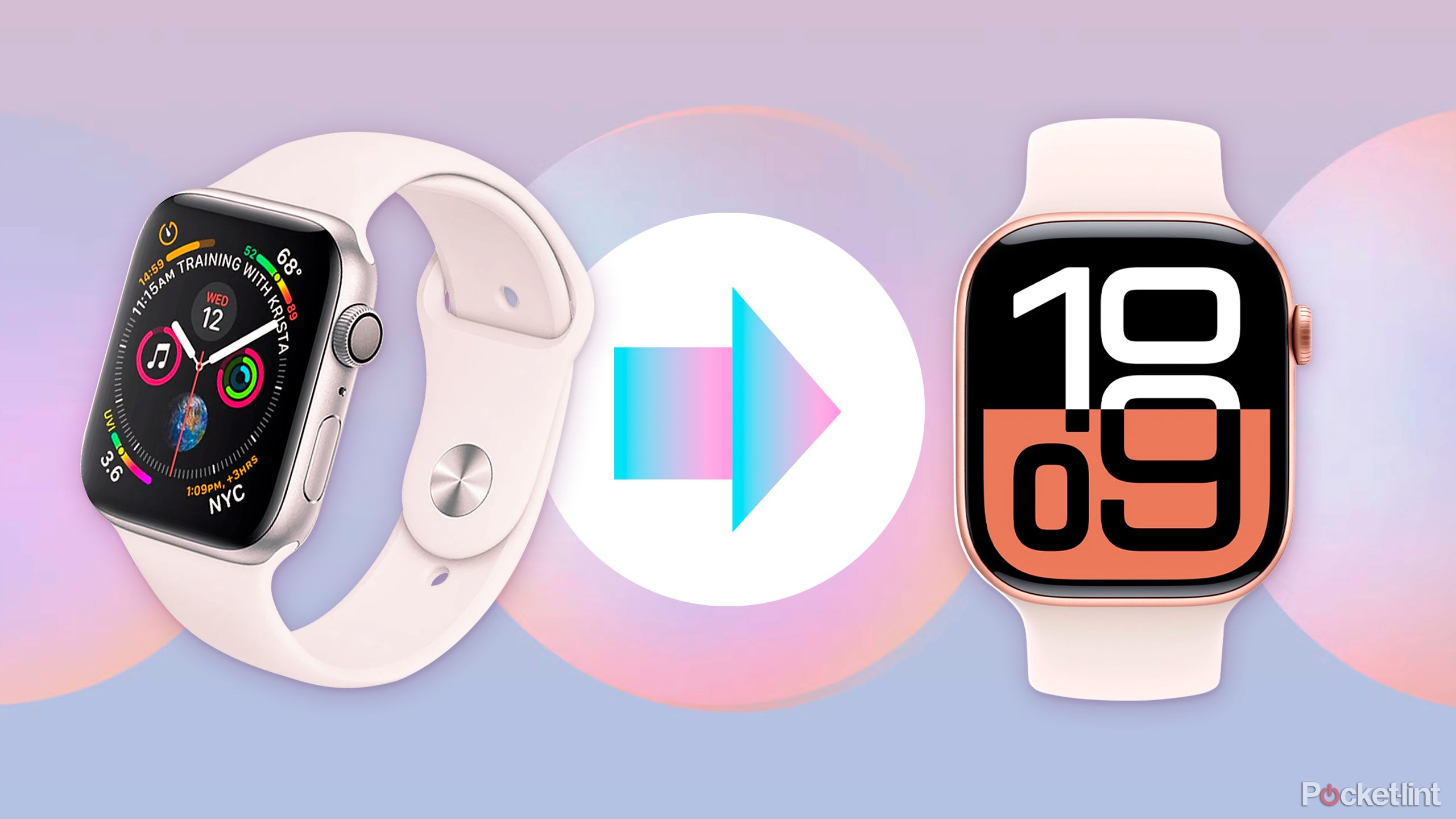
The primary difference between the Apple Watch Series 3 and Series 4 lies in the fundamental redesign introduced with the newer model. The Series 4 debuted a 30% larger display with rounded corners, a faster 64-bit S4 processor, and advanced health sensors including an ECG and Fall Detection, representing a generational leap over the Series 3.
The Significance of the Series 3 and Series 4 Transition
When examining the history of Apple’s wearable line, the transition from the Series 3 to the Series 4 remains one of the most consequential shifts in the product's lifecycle. As of 2026, both devices are considered legacy hardware, yet they serve as important benchmarks for how Apple matured its hardware and software integration. The Series 3 was the pinnacle of the "original" Apple Watch design—a design characterized by thick bezels, a 32-bit architecture, and a rectangular display.
In contrast, the Series 4 was a total "ground-up" redesign. It didn't just iterate on the previous year's success; it redefined what the Apple Watch looked like and how it functioned. For users in 2026 looking at these devices for secondary use, collection, or budget fitness tracking, understanding the technical chasm between these two models is essential. The Series 4 introduced the design language that Apple would use for several subsequent generations, including the Series 5, 6, and the first-generation SE.
Physical Design and Display Architecture
The most immediate difference when placing a Series 3 next to a Series 4 is the display. The Series 3 utilized a display with sharp, 90-degree corners and significant black borders (bezels) surrounding the screen. This model was available in 38mm and 42mm case sizes. While functional, the screen felt cramped, especially when trying to read long text notifications or use complex complications.
The Series 4 moved to 40mm and 44mm case sizes, but the real magic was in the reduction of the bezels. By pushing the display to the edges and rounding the corners to match the curve of the case, Apple increased the viewable area by over 30%. This allowed for the "Infograph" watch faces, which could display up to eight complications simultaneously.
LTPO OLED Technology
The Series 4 also introduced LTPO (Low-Temperature Polycrystalline Oxide) OLED technology. While the Series 4 did not yet feature the "Always-On" display (which arrived with the Series 5), the LTPO backplane was a prerequisite for the power efficiency required for later innovations. The Series 3 used a standard OLED Retina display which, while bright at 1,000 nits, was less efficient in managing variable refresh rates.
Processing Power and Performance (S3 vs. S4)
The internal architecture of these two watches represents a major shift in computing capability. The Series 3 is powered by the Apple S3 SiP (System in Package), which is a 32-bit dual-core processor. By the standards of 2026, 32-bit wearable architecture is virtually obsolete, leading to significant bottlenecks in app loading times and system responsiveness.
The Series 4 introduced the S4 SiP, which moved to a 64-bit dual-core architecture. Apple claimed at launch that the S4 was up to twice as fast as the S3. In practical terms, this wasn't just about speed; it was about longevity. The 64-bit transition allowed the Series 4 to support much more complex versions of watchOS. While the Series 3 struggled to install updates due to its limited internal storage and aging processor, the Series 4 remained fluid for many years longer.
Haptic Feedback and the Digital Crown
Another subtle but vital technical upgrade in the Series 4 was the redesigned Digital Crown. On the Series 3, the crown turned smoothly but lacked tactile feedback. The Series 4 introduced haptic feedback to the crown, providing a mechanical "click" sensation as users scrolled through lists. This made the interface feel more precise and responsive. Additionally, the Series 4 crown included a titanium electrode used for the ECG app, a feature entirely absent on the Series 3.
Health and Safety Features: The Great Divide
The Apple Watch Series 4 was the first consumer wearable to offer an over-the-counter Electrocardiogram (ECG) feature. This was a landmark moment for medical technology in consumer electronics. By touching the Digital Crown, users could complete a circuit that allowed the watch to detect signs of Atrial Fibrillation (AFib). The Series 3 is limited to an optical heart sensor, which can monitor heart rate and provide irregular rhythm notifications but cannot perform a diagnostic-grade ECG.
Fall Detection and Improved Sensors
Safety features also took a massive leap forward with the Series 4. It featured a next-generation accelerometer and gyroscope capable of measuring up to 32 g-forces. This hardware enabled "Fall Detection," a feature that can detect if a user has taken a hard fall and automatically contact emergency services if they remain immobile for one minute. The Series 3 lacks the sensor precision required for this feature, making the Series 4 a significantly better choice for elderly users or those in high-risk environments.
Audio and Connectivity Improvements
Apple also overhauled the audio hardware in the Series 4. The speaker was redesigned to be 50% louder than the Series 3, which improved the clarity of Siri responses and phone calls. To facilitate better audio input, the microphone was moved to the opposite side of the watch (between the Digital Crown and the side button). This placement was intentional: it reduced echo and interference during phone calls by separating the speaker and microphone physically.
In terms of connectivity, the Series 4 upgraded to Bluetooth 5.0, whereas the Series 3 used Bluetooth 4.2. Bluetooth 5.0 offers better range and faster data transfer speeds, which is particularly noticeable when syncing music or receiving large batches of notifications from a paired iPhone.
Technical Specifications Comparison Table
| Feature | Apple Watch Series 3 | Apple Watch Series 4 |
|---|---|---|
| Case Sizes | 38mm, 42mm | 40mm, 44mm |
| Processor | S3 (32-bit Dual-core) | S4 (64-bit Dual-core) |
| Display | Retina OLED (Square corners) | LTPO OLED (Rounded corners) |
| Health Sensors | Optical Heart Sensor | Optical + Electrical (ECG) |
| Fall Detection | No | Yes |
| Digital Crown | Standard | Haptic Feedback + ECG Electrode |
| Bluetooth | 4.2 | 5.0 |
| Storage | 8GB (GPS) / 16GB (LTE) | 16GB (All models) |
| Speaker | Standard | 50% Louder |
| Back Material | Composite (GPS) / Ceramic (LTE) | All-Ceramic and Sapphire Crystal |
Software Support and watchOS Compatibility
From the perspective of 2026, the software gap between these two devices is the most critical factor for any user. The Apple Watch Series 3 reached its "end-of-life" for software updates with watchOS 8. Because the Series 3 only has 8GB of storage in its GPS-only configuration, many users found it nearly impossible to update the software without completely unpairing and restoring the device.
The Series 4, however, enjoyed a much longer lifespan. It supported watchOS 9 and watchOS 10, giving users access to the redesigned interface and new fitness metrics that were introduced in later years. While the Series 4 eventually lost support for the most recent 2026 operating systems, its ability to run more modern versions of watchOS makes it compatible with a wider range of current iPhone models and third-party apps.
Battery Life and Longevity Considerations
Both the Series 3 and Series 4 were originally rated for "all-day" battery life, which Apple defined as 18 hours. However, in 2026, the real-world performance of these devices depends heavily on battery health.
- Series 3 Battery: Because the S3 chip is less efficient, it works harder to perform basic tasks, leading to faster battery drain on older units.
- Series 4 Battery: The S4 chip and LTPO display are more efficient. Even with a degraded battery, a Series 4 often outperforms a Series 3 in standby time.
- Replacement: By 2026, most original batteries in these models will have dropped below 80% capacity. Users should check the Battery Health setting (available on watchOS 7 and later) before relying on either device for a full day of use.
Pricing and Availability in 2026
In 2026, neither of these watches is available for purchase from Apple or major retailers. They are found almost exclusively on the secondary market (eBay, Back Market, or local classifieds).
- Series 3 Value: Generally sold for very low prices, often under $40. It is primarily used by collectors or as a "disposable" fitness tracker for children or high-risk activities.
- Series 4 Value: Holds slightly more value, typically ranging from $60 to $90 depending on condition. Its modern design and ECG capability make it a viable budget option for users who don't need the Always-On display or Blood Oxygen monitoring of newer models.
Frequently Asked Questions
Can the Apple Watch Series 3 still track workouts in 2026?
Yes, the Series 3 can still track basic workouts like walking, running, and cycling. It uses its built-in GPS and optical heart rate sensor to provide data to the Fitness app on your iPhone. However, it will lack the more advanced "Heart Rate Zones" and "Running Power" metrics found in more recent watchOS versions.
Does the Series 4 have the Always-On display?
No, the Series 4 does not have an Always-On display. That feature was introduced with the Series 5. The Series 4 display turns off when you lower your wrist and wakes up when you raise it. This is one of the primary reasons it has better battery life than some of the early Always-On models when the feature is enabled.
Is the Series 4 waterproof?
Both the Series 3 and Series 4 are water-resistant to 50 meters under ISO standard 22810:2010. They are suitable for shallow-water activities like swimming in a pool or ocean. However, by 2026, the water seals on these older devices may have degraded, so caution is advised when exposing them to water.
Why is the Series 4 considered a better "value" than the Series 3?
The Series 4 is considered a better value because it shares the same design language as modern Apple Watches. It supports more recent software, has a much larger and clearer screen, and includes life-saving features like ECG and Fall Detection that the Series 3 simply cannot provide.
Can I use a Series 3 with a modern iPhone (e.g., iPhone 15 or 16)?
Yes, but with limitations. You can pair a Series 3 with a modern iPhone, but because the watch is stuck on watchOS 8, you may miss out on some synchronization features and new app capabilities. The setup process can also be difficult due to the limited storage space on the Series 3.
Final Recommendation: Which One Should You Choose?
In the context of 2026, the Apple Watch Series 4 is the clear winner in every category. The Series 3, while a classic piece of hardware, is fundamentally outdated due to its 32-bit architecture and small, bezel-heavy screen. It serves better as a nostalgic collector's item than a daily wearable.
The Series 4 remains surprisingly usable for basic tasks. Its design still looks modern, its 64-bit processor handles the UI with reasonable smoothness, and its health sensors remain relevant for basic monitoring. If you are choosing between these two legacy models for a budget-friendly entry into the Apple ecosystem, the Series 4 is worth the additional investment for the display alone.