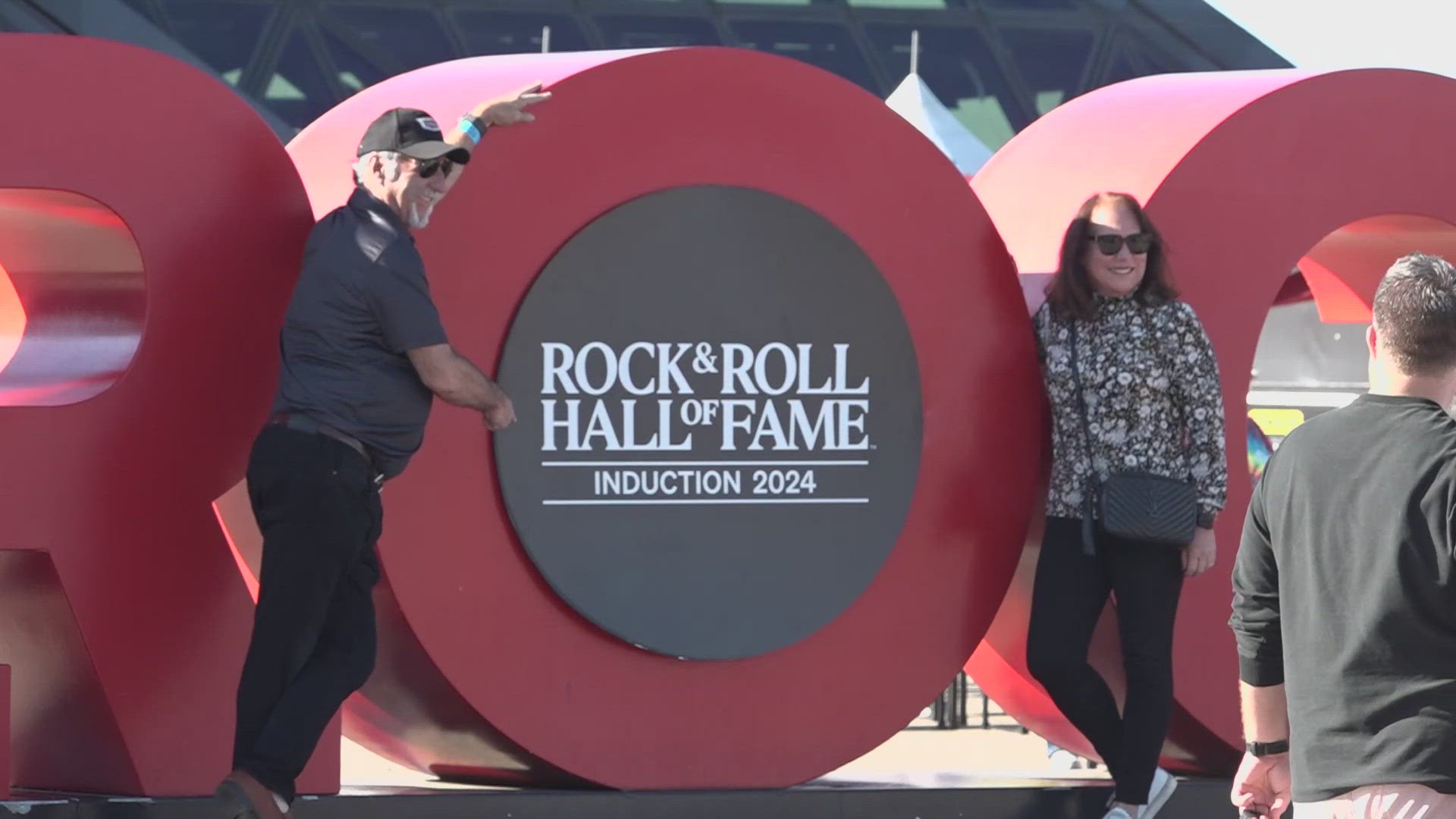
Ozzy Osbourne’s 2024 induction into the Rock and Roll Hall of Fame marked a historic milestone, recognizing his monumental contributions to heavy metal as a solo artist. The ceremony, held at the Rocket Mortgage FieldHouse in Cleveland, featured an emotional tribute performance, a heartfelt acceptance speech delivered by Osbourne himself, and the recognition of his enduring influence on global music culture.
A Legacy Cemented: Understanding the Induction
The Rock and Roll Hall of Fame induction is a significant cultural event that honors artists who have had a substantial impact on the development and perpetuation of rock and roll. While Ozzy Osbourne was previously inducted as a member of Black Sabbath in 2006, his 2024 inclusion was a distinct, individual honor acknowledging his prolific solo career that began in 1980 with the release of Blizzard of Ozz.
For fans and music historians, this induction was not merely about individual accolades; it served as a definitive validation of the solo work that carried the "Prince of Darkness" through four decades. The selection committee highlighted the shift from his foundational years in Birmingham to his transformation into a global solo phenomenon, emphasizing his ability to constantly reinvent his sound while maintaining the aggressive, dark aesthetic that defined the heavy metal genre.
The Ceremony Highlights and Tribute Performances
The induction ceremony served as the emotional centerpiece of the night. Unlike some years where inductees are unable to attend, Osbourne made a significant personal effort to be present in Cleveland, despite ongoing health challenges that have limited his public appearances in recent years.
The tribute portion of the evening was a masterclass in musical curation. Rather than a standard retrospective, the organizers assembled an all-star lineup to perform a medley of his most iconic solo tracks. The performance featured:
- Billy Idol: Stepping in to provide the raw, punk-infused vocal energy necessary for "Crazy Train."
- Maynard James Keenan: Delivering a haunting, technical rendition of "Suicide Solution."
- Chad Smith: Driving the rhythm section with the precision expected of a drummer of his caliber.
- Steve Stevens and Robert Trujillo: Providing the guitar and bass architecture that honored Randy Rhoads’ original compositions while adding modern sonic depth.
These performances underscored a recurring theme of the 2024 ceremony: that Osbourne’s music is not a relic of the past but a foundational language spoken by subsequent generations of hard rock and metal musicians.
Jack Black’s Induction Speech
The induction speech, delivered by actor and musician Jack Black, provided a poignant bridge between the history of the genre and its current state. Black, a lifelong fan and collaborator, focused his remarks on the "mythos" of Ozzy Osbourne. He detailed the impact of the Diary of a Mad Man era and the profound shift Osbourne caused in the cultural landscape of the early 1980s.
Black noted that Osbourne’s strength lay in his vulnerability—the ability to project a terrifying image while maintaining a relatable, human core. By framing the induction through the lens of a fan who had been changed by the music, Black successfully articulated why Osbourne remains the "Godfather of Heavy Metal" long after his peers have either retired or faded from the spotlight.
Ozzy’s Acceptance: A Reflection on the Journey
When Ozzy Osbourne took the stage, the atmosphere was one of profound respect and genuine affection. His acceptance speech was characteristically humble, focusing heavily on his collaborators, the fans, and his late guitarist Randy Rhoads.
Osbourne’s remarks provided a rare, unscripted glimpse into the internal drive that kept him recording and touring for over 40 years. He spoke specifically about the importance of surrounding oneself with musicians who elevate the composition—a nod to the rotating cast of virtuosos who played on his solo albums, from Jake E. Lee to Zakk Wylde. His acceptance was widely viewed as a "victory lap," providing closure to a career defined by extreme peaks and significant personal adversity.
Technical Contributions to the Metal Genre
To understand why the 2024 induction holds such weight, one must analyze the technical innovations Osbourne introduced to the hard rock lexicon. His solo career acted as a laboratory for the evolution of metal guitar playing.
| Element | Impact on Genre |
|---|---|
| Neo-Classical Integration | Used by Randy Rhoads to bridge classical music theory with aggressive distortion. |
| Production Aesthetics | Established the "modern metal" sound of the 1980s via the Max Norman production era. |
| Vocal Melodicism | Shifted away from the blues-shouting of the 1970s toward catchy, pop-informed vocal hooks. |
| The "Zakk Wylde" Sound | Popularized the use of pinch harmonics and aggressive pentatonic shredding in the 90s. |
These contributions represent a technical shift that allowed heavy metal to become commercially viable in the MTV era without sacrificing its intensity. By integrating high-level musicianship with a keen ear for radio-friendly structure, Osbourne successfully expanded the audience for heavy metal, a feat that arguably justifies his solo induction in the eyes of the Hall of Fame voters.
The Role of Fan Bases and Persistence
A notable highlight of the 2024 event was the active engagement of the global fan base. Unlike other inductees who may rely on critical acclaim to secure a nomination, Osbourne’s candidacy was sustained for years by an exceptionally loyal audience. The "Ozzy Army" consistently lobbied for this solo recognition, viewing it as the final, necessary piece of his musical legacy.
This persistence from the fan community played a tangible role in keeping the narrative of his solo career in the public eye. The 2024 ceremony effectively crystallized years of fan-led momentum into a single, official industry acknowledgment.
Common Questions Regarding the 2024 Induction
Was this Ozzy Osbourne’s first Rock and Roll Hall of Fame induction? No. Ozzy was previously inducted as the frontman of Black Sabbath in 2006. The 2024 induction was for his work as a solo artist, recognizing his career from 1980 to the present.
Why did the ceremony include tribute performances instead of an Ozzy performance? Due to his ongoing health issues, performing a full set was not physically feasible. The organizers opted for a tribute performance by world-class musicians to ensure the music was represented with the professional intensity it requires.
How is the "Solo Artist" criteria defined by the Hall of Fame? The Hall of Fame generally requires that an artist must have released their first commercial recording at least 25 years prior to the year of induction. Osbourne’s solo debut, Blizzard of Ozz, was released in 1980, making him eligible for decades.
Did any other members of his solo bands appear at the ceremony? Yes, several key collaborators and musicians associated with his history were in attendance or involved in the tribute segment, highlighting the collaborative nature of his solo discography.
What was the significance of the timing in 2024? The 2024 induction coincided with a period where the music industry is heavily reflecting on the foundational acts of the 1980s. It also provided a timely platform to honor Osbourne while he is still able to participate in the celebration.
Are there plans for an exhibit following the induction? The Rock and Roll Hall of Fame typically incorporates items from new inductees into their permanent collection. Fans can expect to see iconic memorabilia, such as stage costumes and historical instruments, featured in the museum's rotating galleries.
Looking Toward the Future
The 2024 induction is more than a historical footnote; it is a point of reference for future artists. It demonstrates that longevity in the music industry is not solely dependent on a single band or entity, but on the ability of an individual to curate their own vision over decades. For those interested in the history of rock music, the ceremony serves as a repository of knowledge regarding the evolution of guitar-driven sound, the importance of personnel selection in creative projects, and the power of a dedicated, lifelong audience.
The takeaway for the industry is clear: the Rock and Roll Hall of Fame acknowledges not just the talent of an individual, but the sustained impact of their entire body of work. By honoring Ozzy Osbourne as a solo artist, the institution has acknowledged the unique, often complex, path that solo careers take within the framework of rock music history.
As we look back at the highlights of this event in 2026, it remains the gold standard for how a legacy artist should be honored. The induction did not just look back at what was achieved; it solidified the standard for what heavy metal became, ensuring that the influence of the "Prince of Darkness" will be studied and celebrated long into the future.