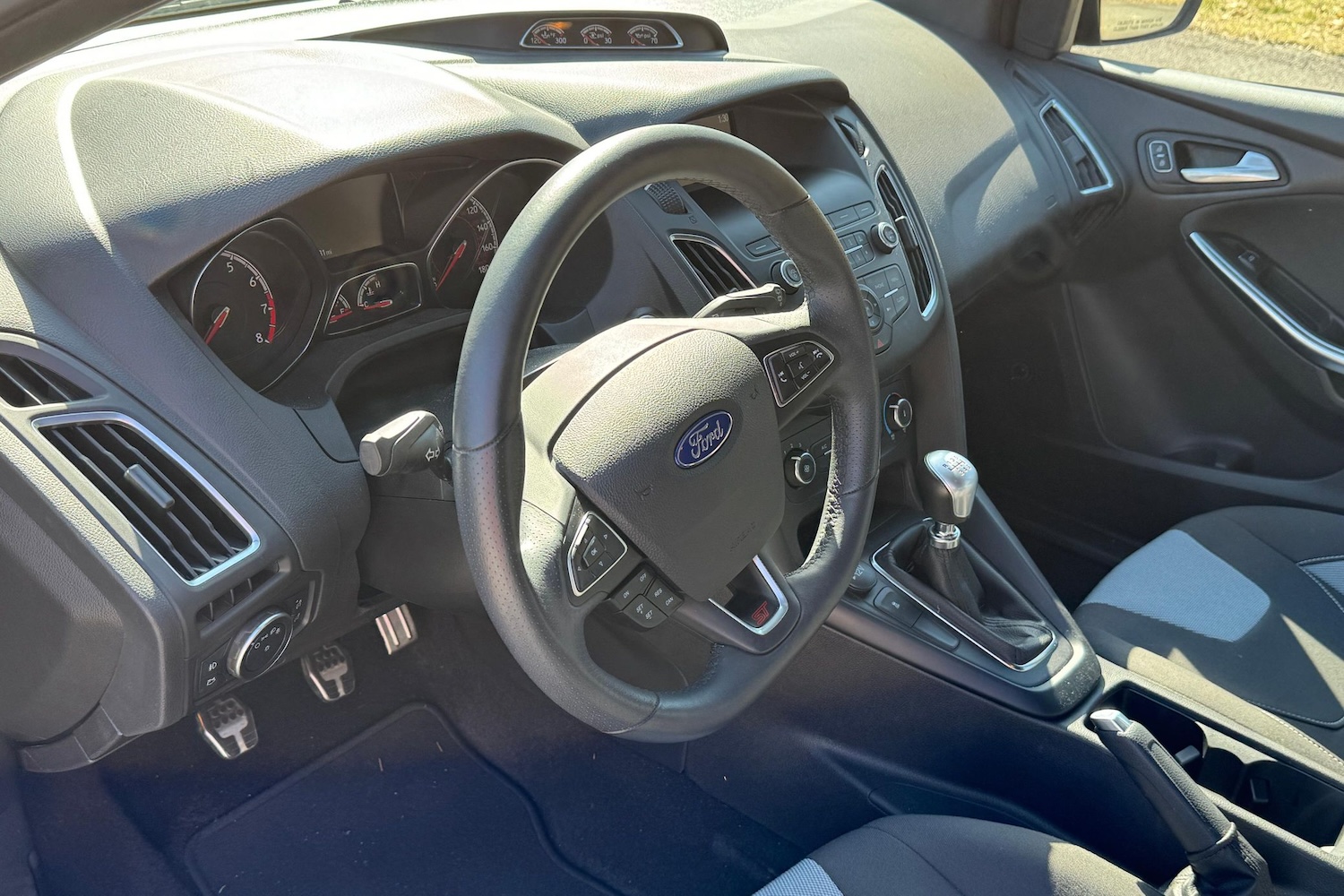
The 2018 Ford Focus ST achieves a 0 to 60 mph acceleration time of approximately 6.3 to 6.5 seconds, depending on track conditions, driver technique, and whether the vehicle is stock or modified. This performance stems from its 2.0-liter EcoBoost turbocharged inline-four engine, which delivers 252 horsepower and 270 lb-ft of torque through a six-speed manual transmission.
Understanding the performance capabilities of the 2018 Ford Focus ST requires a look past raw metrics and into how power delivery, chassis dynamics, and vehicle design interact. As a staple of the hot hatch market during its production era, the Focus ST balanced daily driving practicality with spirited, track-ready responsiveness. To fully comprehend its 0 to 60 mph capability, it is helpful to examine its mechanical specifications, real-world factors affecting acceleration, and how it compared to its contemporary competitors.
Mechanical Specifications of the 2018 Ford Focus ST
The performance foundation of the 2018 Ford Focus ST lies within its powertrain and drivetrain architecture. Unlike standard compact sedans and hatchbacks of its time, the ST model was engineered from the ground up by Ford Performance to deliver sports-car-rivaling dynamics in a versatile, front-wheel-drive package.
At the heart of the vehicle is a 2.0-liter EcoBoost inline-four engine equipped with direct fuel injection and a low-inertia twin-scroll turbocharger. This setup generates 252 horsepower at 5,500 rpm and a robust 270 lb-ft of torque at a low 2,500 rpm. The abundance of low-end torque is critical for the vehicle's acceleration profile, allowing the engine to pull strongly from a standstill without requiring excessive revving.
The engine is paired exclusively with a short-throw six-speed manual transmission. Ford purposefully omitted an automatic transmission option for this generation of the ST, catering directly to driving enthusiasts. Power is sent entirely to the front wheels, managed by an advanced Electronic Torque Vectoring Control system and a sport-tuned stability control system designed to mitigate torque steer—a common physical phenomenon in high-power front-wheel-drive platforms where engine torque inadvertently affects steering angles under hard acceleration.
Breaking Down the 0 to 60 MPH Acceleration Run
Achieving the factory-claimed or instrumented 0 to 60 mph time of roughly 6.3 seconds in a 2018 Focus ST requires a precise sequence of mechanical operations and driver inputs. Because the car is front-wheel-drive, launch technique is the single most variable factor influencing the final timing.
| Phase of Launch | Driver Action & Vehicle Response |
|---|---|
| 1. Preparation | Engine revved to approximately 2,500 - 3,000 RPM |
| 2. Clutch Engagement | Modulated clutch drop to minimize excessive wheel spin |
| 3. First Gear Pull | Rapid boost build; torque peak pushes vehicle past 30 MPH |
| 4. Shift to Second | Quick, clean shift near redline to maintain turbo boost |
| 5. Acceleration to 60 | Second gear carries vehicle past 60 MPH without extra shift |
When launching the Focus ST, a driver must balance engine revs and clutch slip. Dropping the clutch at too high an RPM results in immediate and destructive wheel spin, as the front tires struggle to hook up on standard pavement. Conversely, launching at too low an RPM causes the turbocharger to drop out of its optimal boost threshold, leading to a temporary hesitation known as turbo lag.
Once the vehicle gains traction in first gear, the broad torque curve keeps the car pulling hard. The gearing in the six-speed manual transmission is tuned so that the vehicle can reach 60 mph in second gear, avoiding the time penalty of a shift to third gear right before the target speed is reached.
Factors Influencing Real-World 0 to 60 Times
While automotive journalists and manufacturer specifications establish a baseline 0 to 60 mph time for the 2018 Focus ST, real-world owners frequently experience variations based on environmental and mechanical conditions.
Tire Composition and Temperature
Factory tires on the 2018 Focus ST were performance-oriented summer tires (such as Goodyear Eagle F1 Asymmetric 2 or optional Michelin Pilot Sport 4S tires). Ambient temperature, tire pressure, and tread wear drastically impact traction. Worn tires or cold weather significantly reduce the grip available during a hard launch, increasing 0 to 60 times by several tenths of a second due to wheel hop and slippage.
Elevation and Density Altitude
Naturally aspirated engines suffer from power loss at high altitudes due to lower oxygen density. While turbocharged engines like the 2018 EcoBoost compensate by spinning the compressor faster to maintain manifold pressure, extreme heat and high-density altitude still reduce overall air density, leading to higher intake air temperatures (IATs). Heat soak in the stock intercooler during consecutive hard runs can cause the engine control unit (ECU) to pull timing, reducing peak power output.
Vehicle Modifications
The Ford Focus ST aftermarket community is extensive. Common modifications that alter acceleration times include:
- Cat-back exhaust systems and cold air intakes: Provide minimal horsepower gains primarily focused on sound and top-end breathing.
- Upgraded front-mount intercoolers (FMIC): Keep intake temperatures stable, preventing power loss during repeated acceleration runs.
- ECU remaps (tunes): Unlocks significant torque and horsepower gains safely within stock turbo limitations, often dropping 0 to 60 times below the 6-second threshold.
How the Focus ST Compares to Competitors
In 2018, the hot hatch segment was fiercely competitive. Buyers cross-shopped the Ford Focus ST against several primary rivals, each utilizing different drivetrain layouts and power figures.
| Make and Model | Engine Configuration | Horsepower | Torque (lb-ft) | Est. 0–60 MPH Time | Drivetrain |
|---|---|---|---|---|---|
| 2018 Ford Focus ST | 2.0L Turbo I4 | 252 | 270 | 6.3 - 6.5 sec | Front-Wheel Drive |
| 2018 Volkswagen GTI | 2.0L Turbo I4 | 220 | 258 | 5.8 - 6.1 sec | Front-Wheel Drive |
| 2018 Honda Civic Si | 1.5L Turbo I4 | 205 | 192 | 6.7 - 7.2 sec | Front-Wheel Drive |
| 2018 Subaru WRX | 2.0L Turbo Boxer 4 | 268 | 258 | 5.0 - 5.3 sec | All-Wheel Drive |
While the Volkswagen GTI often posted slightly quicker 0 to 60 mph times due to its lightning-fast dual-clutch transmission (DSG) option and exceptional mid-range tractability, the Focus ST matched or exceeded its responsiveness through direct driver engagement and a higher torque rating. Meanwhile, the Subaru WRX benefited significantly from all-wheel-drive traction, allowing for explosive off-the-line acceleration that front-wheel-drive cars could not replicate on standard road surfaces.
Practical Considerations for Enthusiasts
For prospective buyers or current enthusiasts evaluating a 2018 Ford Focus ST, understanding its performance metrics is only part of the ownership equation. The car was designed to be a daily driver that transforms into a spirited backroad machine at a moment's notice.
Maintenance plays a critical role in preserving performance. Direct-injection engines are prone to carbon buildup on the intake valves over high mileage, which can gradually restrict airflow and reduce efficiency. Using top-tier fuels, performing regular oil changes, and occasionally inspecting the intake tract help maintain optimal power delivery. Furthermore, drivers transitioning from lower-powered vehicles must account for torque steer during aggressive passing maneuvers, requiring a firm grip on the steering wheel when boost hits abruptly in lower gears.
Frequently Asked Questions
Is the 2018 Ford Focus ST faster than the standard Focus?
Yes. The standard Ford Focus features a naturally aspirated 2.0-liter engine producing 160 horsepower, resulting in a 0 to 60 mph time of over 8 seconds. The ST variant adds a turbocharger, upgraded suspension, larger brakes, and a performance-tuned chassis that cuts the 0 to 60 time down to roughly 6.3 seconds.
Can you get a 2018 Focus ST with an automatic transmission?
No. The third-generation Ford Focus ST (including the 2018 model year) was manufactured exclusively with a six-speed manual transmission. Ford did not offer an automatic or dual-clutch transmission option for the ST trim in North America or Europe.
Why does wheel spin happen so easily in a stock Focus ST?
Wheel spin occurs because the car delivers 270 lb-ft of torque at a low 2,500 rpm directly to the front wheels. When the throttle is applied aggressively from a standstill, the sudden surge of power overwhelms the available traction of the front tires before the suspension and electronic stability systems can fully distribute the load.
How does changing the altitude affect the 2018 Ford Focus ST acceleration?
Although turbocharged engines handle high elevations better than naturally aspirated engines by adjusting turbo boost pressure, high density altitudes and elevated ambient temperatures still cause intake air temperatures to rise. This can trigger thermal protection measures in the ECU, slightly reducing power output and lengthening 0 to 60 times.
What is the top speed of a 2018 Ford Focus ST?
The factory-rated top speed for the 2018 Ford Focus ST is electronically limited to approximately 154 mph (248 km/h), achieved in fifth or sixth gear under optimal aerodynamic and road conditions.